
Loading, please wait...
LOT 2139
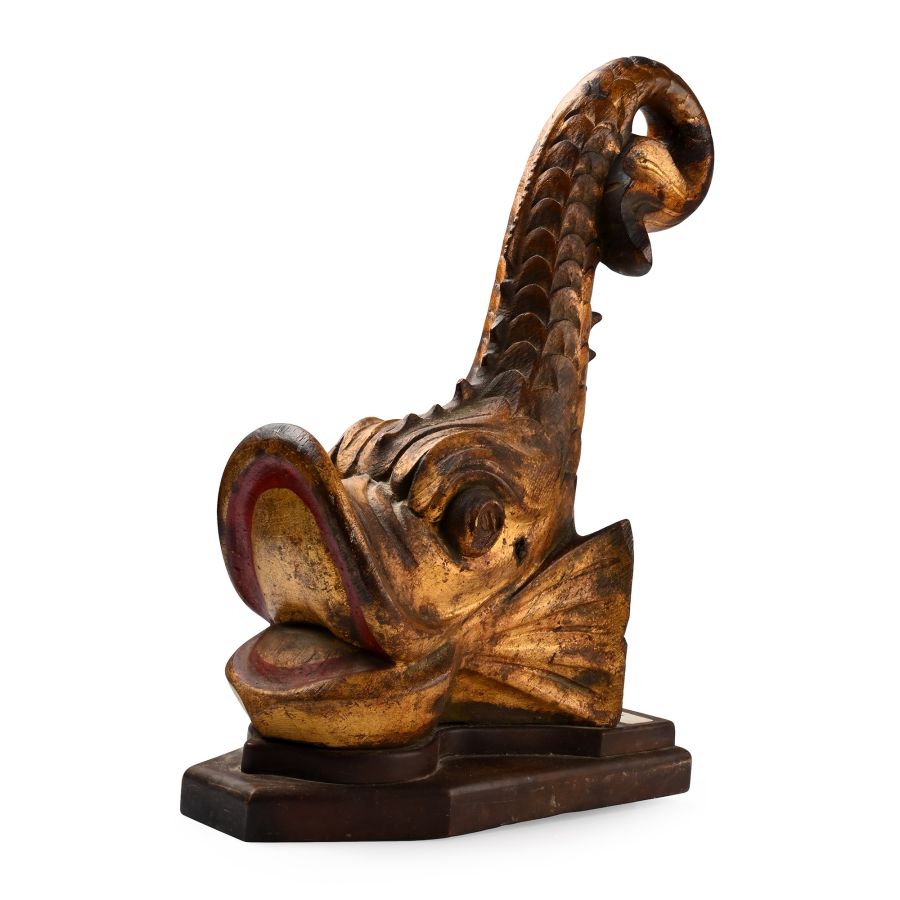
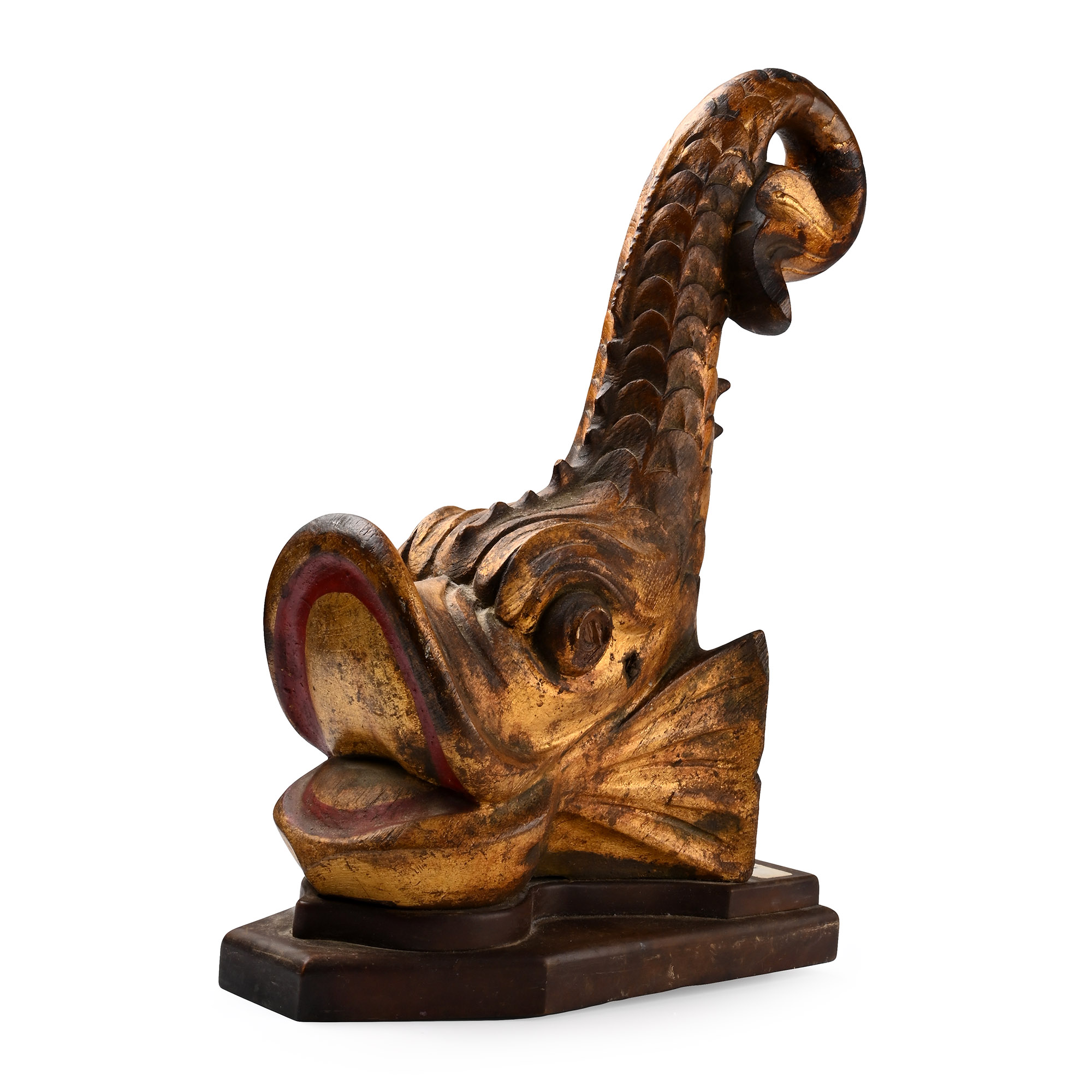
Large Ship's Gilt Wood Dolphin Mount
19TH-EARLY 20TH CENTURY A.D.
15 1/8 in. (2.6 kg total, 38.5 cm including stand).
A Baroque style sculpture in the form of a classical dolphin with looped tail, mounted on a bakelite base; possibly originating from a ship. [No Reserve]
ProvenanceEx Mallams, UK.
Property of a North London, UK, lady.
This lot is accompanied by an illustrated lot declaration signed by the Head of the Antiquities Department, Dr Raffaele D'Amato.
TimeLine Auctions follows a vetting process to ensure the authenticity and legality of all items, reinforcing our commitment to integrity and responsible trading. Each antiquity, antique, and coin lot undergoes thorough examination by a vetting committee of at least ten external specialists, professional trade association members, scientists, and archaeologists: Our Vetting Process
AUCTIONS:
TimeLine is a leading auction house specialising in antiquities, ancient art, collectables, natural history, coins, medals, and books. Our auctions offer museums, collectors, historians, and enthusiasts the opportunity to acquire unique and historically significant pieces.
-
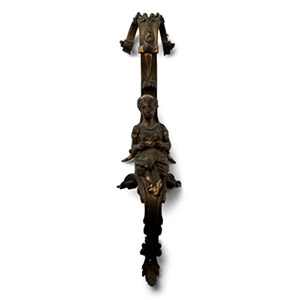
Post Medieval Gilt Bronze Carriage Fitting
19th century A.D.Sold for (Inc. bp): £117
Comprising: a hollow-formed female in peplos garment with parcel-gilt detailing seated on an ornate baroque-style scrolled support with acanthus-leaf detailing. 982 grams, 32 cm
Found Scarlet's Farm, Cambridgeshire, UK, when the moat was cleared. Property of an East Anglia private collector. This lot is accompanied by an illustrated lot declaration signed by the Head of the Antiquities Department, Dr Raffaele D'Amato. -

Women's Rights Vintage Pin Badge Collection
Circa 1980s A.D.Sold for (Inc. bp): £7
Including 'A Woman's Right to Choose' and other types. 20 grams total, 25-56 mm
From the private collection of a S.W. London gentleman, acquired in the 1970s. This lot is accompanied by an illustrated lot declaration signed by the Head of the Antiquities Department, Dr Raffaele D'Amato. -
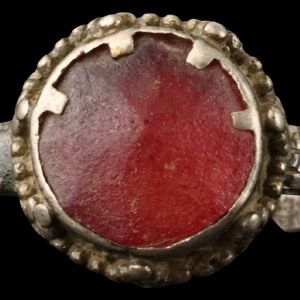
Post Medieval Silver Ring with Cabochon
Circa 18th century A.D.Sold for (Inc. bp): £65
With hatched shoulders, drum-shaped bezel with applied granulation, inset glass cabochon. 4.18 grams, 25.94 mm overall, 18.91 mm internal diameter (approximate size British P, USA 7 1/2, Europe 16.23, Japan 15)
Ex German art market, 2000s. Acquired from an EU collector living in London. From the collection of a Surrey, UK, gentleman. This lot is accompanied by an illustrated lot declaration signed by the Head of the Antiquities Department, Dr Raffaele D'Amato.
