
Loading, please wait...
LOT 1639
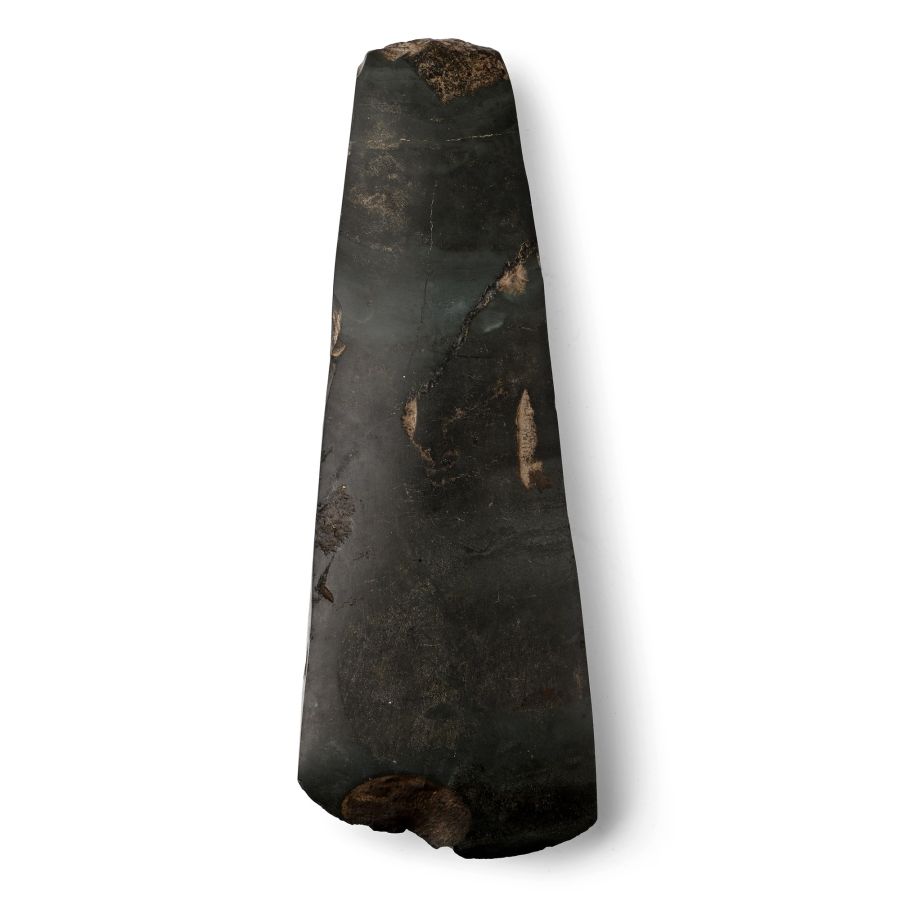
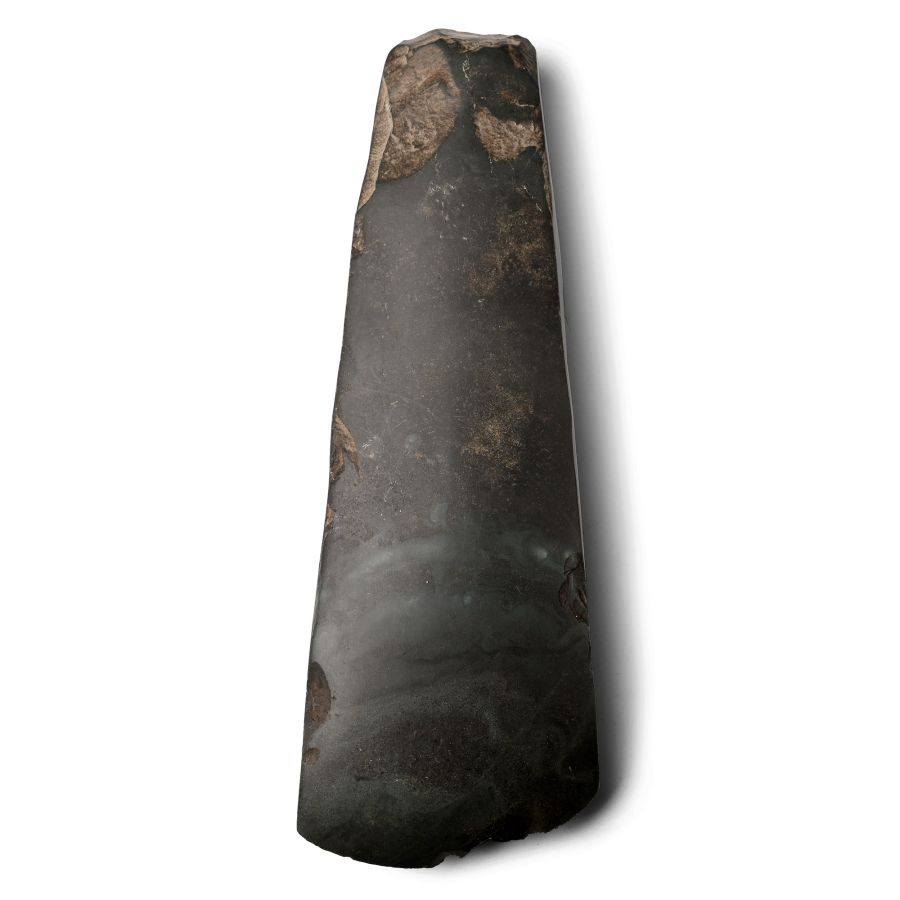
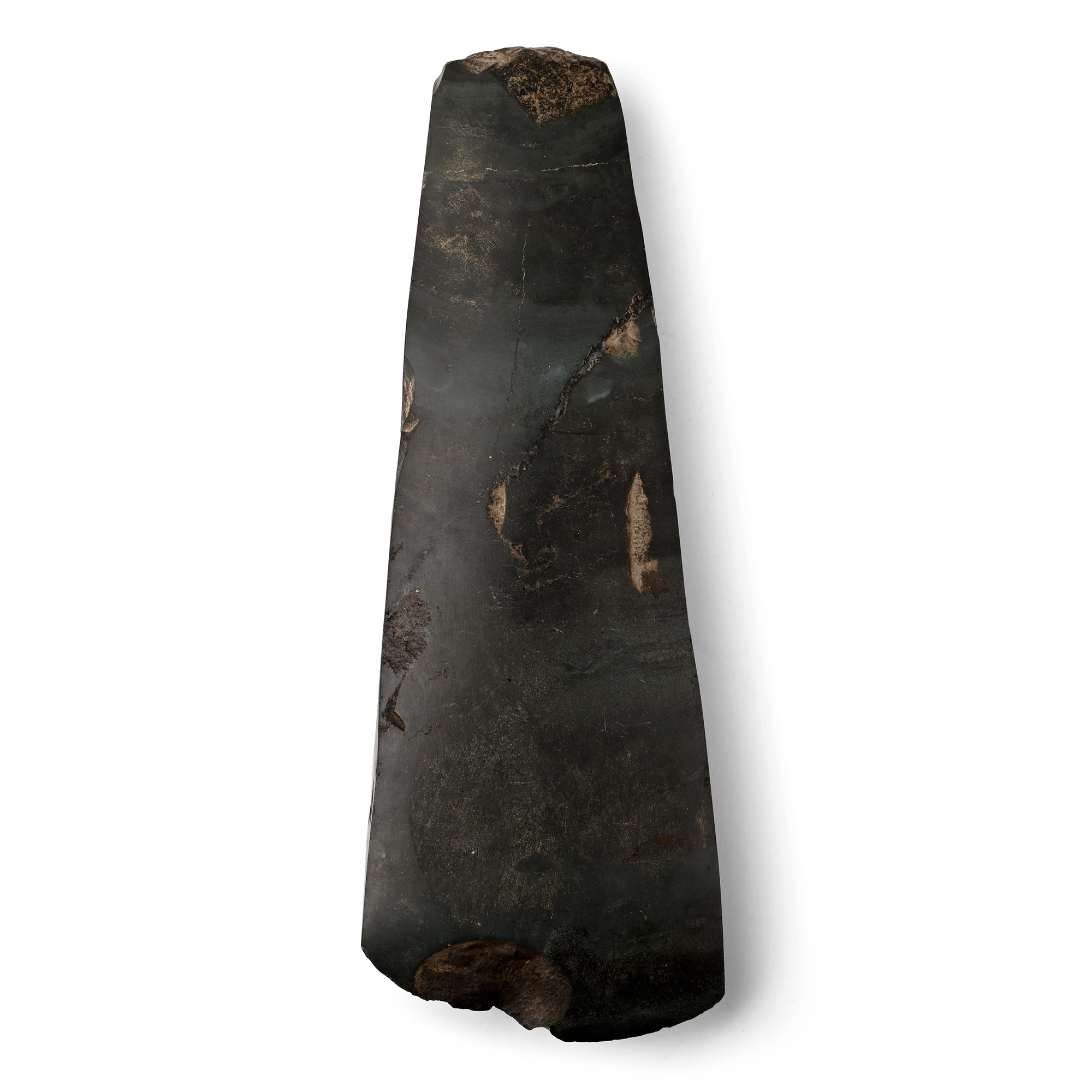
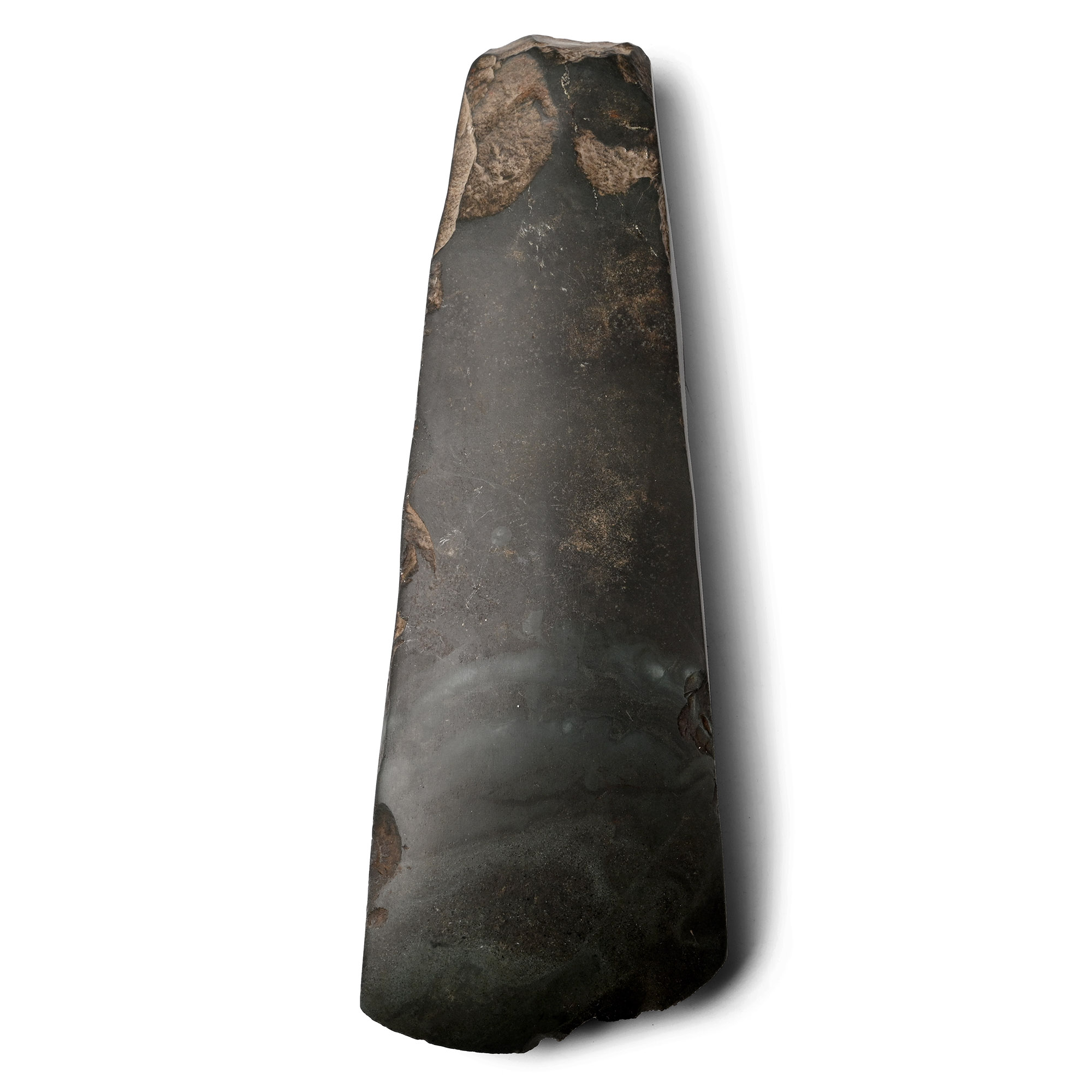
Large Scandinavian Stone Age Polished Green Stone Thick-Butted Axehead
NEOLITHIC PERIOD, CIRCA 6TH MILLENNIUM B.P.
8 1/8 in. (749 grams, 20.8 cm).
Highly polished with slightly concave sides, square butt, chipped at butt and one end of blade. [No Reserve]
ProvenanceFrom an Anglesey auction house, UK.
From the private collection of a West Midlands lady collector.
Cf. Glob, P.V., Danske Oldsager: Yngre Stenalder, Copenhagen, 1952, items 232, 234.
CONDITIONTimeLine Auctions follows a vetting process to ensure the authenticity and legality of all items, reinforcing our commitment to integrity and responsible trading. Each antiquity, antique, and coin lot undergoes thorough examination by a vetting committee of at least ten external specialists, professional trade association members, scientists, and archaeologists: Our Vetting Process
AUCTIONS:
TimeLine is a leading auction house specialising in antiquities, ancient art, collectables, natural history, coins, medals, and books. Our auctions offer museums, collectors, historians, and enthusiasts the opportunity to acquire unique and historically significant pieces.
LOT 1639
Large Scandinavian Stone Age Polished Green Stone Thick-Butted Axehead
Sold for (Inc. bp): £156
-
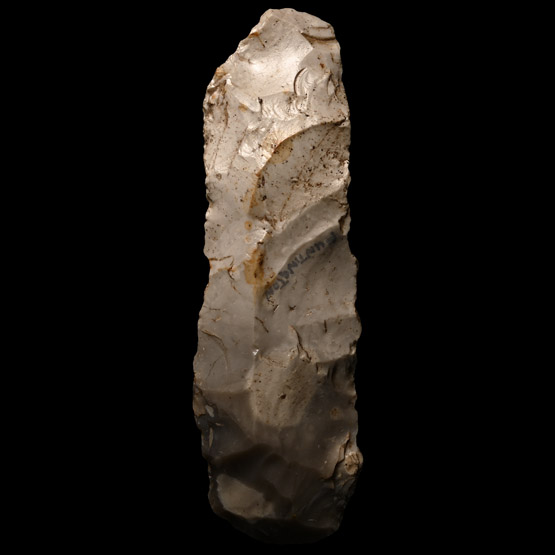
British Stone Age Flint Axehead
Mesolithic Period, circa 12th-8th millennium B.P.Sold for (Inc. bp): £91
Biconvex in section with rounded butt and long cutting edges. 155 grams, 12.8 cm
Found Funtington, West Sussex, UK. From a Derbyshire auction house, UK. From the private collection of a West Midlands lady collector. -
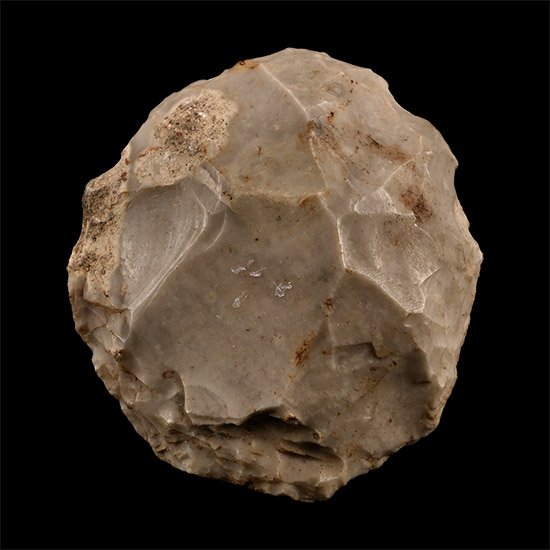
British Stone Age Turtle Back Flint Scraper from Fullbrook Farm
Neolithic Period, circa 6,000 B.P.Sold for (Inc. bp): £572
Plano-convex in section with intricate retouch around the majority of the piece; marked to the underside 'FP 1921 Fullbrook Farm'. 47.8 grams, 55 mm
Found Fullbrook Farm, Surrey, UK, in 1901. From the collection of Captain Streatfield who helped to fund the archaeology excavations at Farnham, Kent.
Named 'Turtle Back' due to the whole top being worked into a dome. After Captain Streatfield passed away in the 1940s, his collection was sold at auction to a gentleman in Kent. The collection was then sold again in the 2020’s via a UK auction house. -
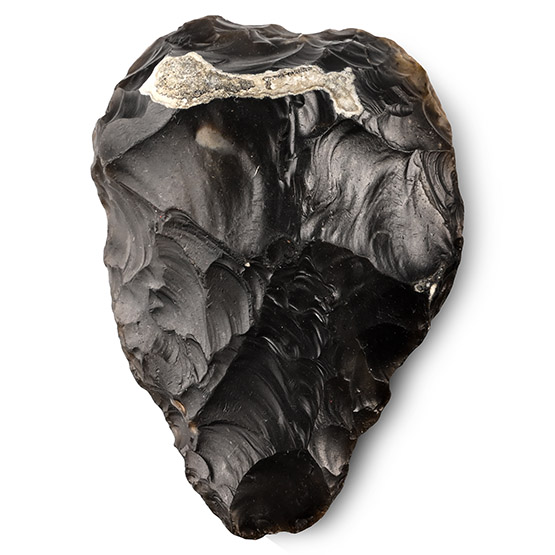
'British Museum Recorded' Stone Age Homo Heidelbergensis Flint Handaxe from Happisburgh
Lower Palaeolithic Period, circa 600,000-250,000 B.P.Sold for (Inc. bp): £2,340
Small sub-cordate handaxe of Wymer's type G, of glassy black flint with a few paler inclusions towards the butt; strip of light grey cortex remaining to the dorsal face at this end; flake scars appearing to be soft hammer struck with quite thin and invasive removals. 100 grams, 79 mm
Found Happisburgh, Norfolk, UK, Tuesday 1st October 2019 - Saturday 30th November 2019. Acquired from the finder Mr P Macro. Accompanied by a copy of the British Museum's Portable Antiquities Scheme (PAS) report no.NMS-3AE638.
Discovery by P Macro after the 'Beast from the East Storm', which stripped the beach of the sand and helped to erode the Palaeolithic artefacts from the ancient Thames river bed. During the time the artefacts were dropped, the Thames ran through North Norfolk and what is now Happisburgh before it was pushed down to its current position in London via the Ice Age glacial melts. The site of Happisburgh in Norfolk has helped to push the history of inhabitation of the British Isles back by 200,000 making it a site of special importance. The blank for this piece was probably a large struck primary flake; the ventral face (non-cortical side) has an unmodified section of this visible still, and ripples and fissures are observable. The point has a tranchet blow to the ventral face (edge type vi) to sharpen it, the dorsal face has been effectively thinned, making the lateral cutting edges very acute and sharp. This thinning has produced a slight curve to the point when viewed from the side.
