
Loading, please wait...
LOT 0242
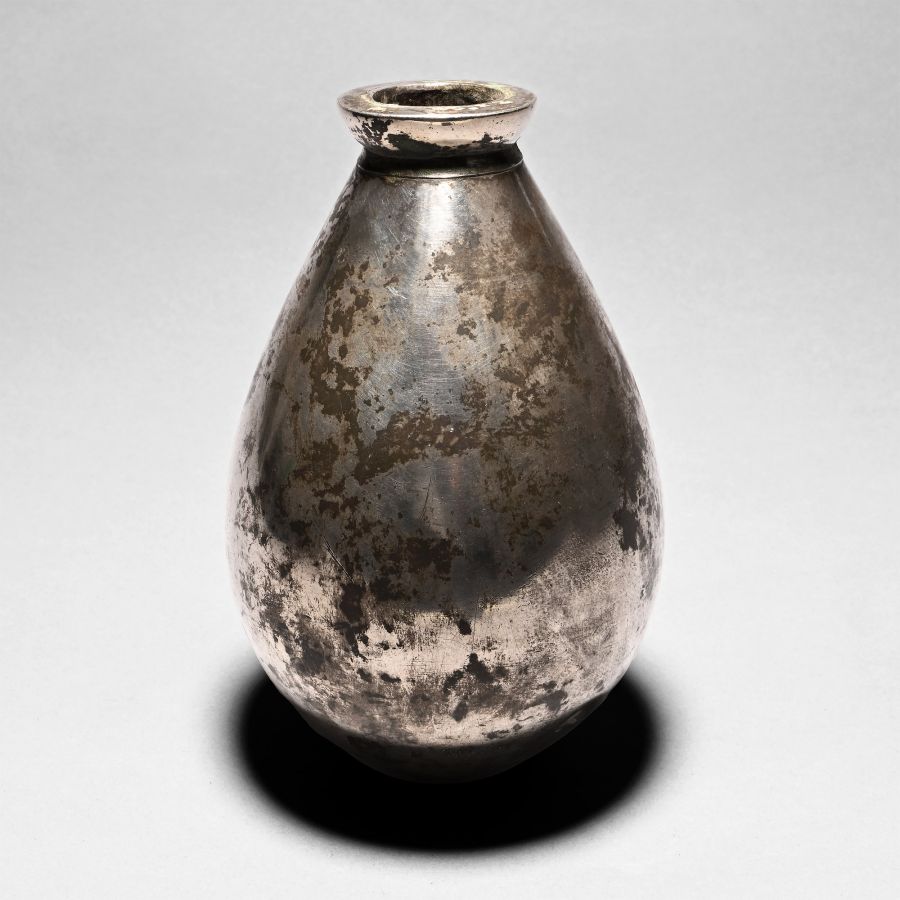
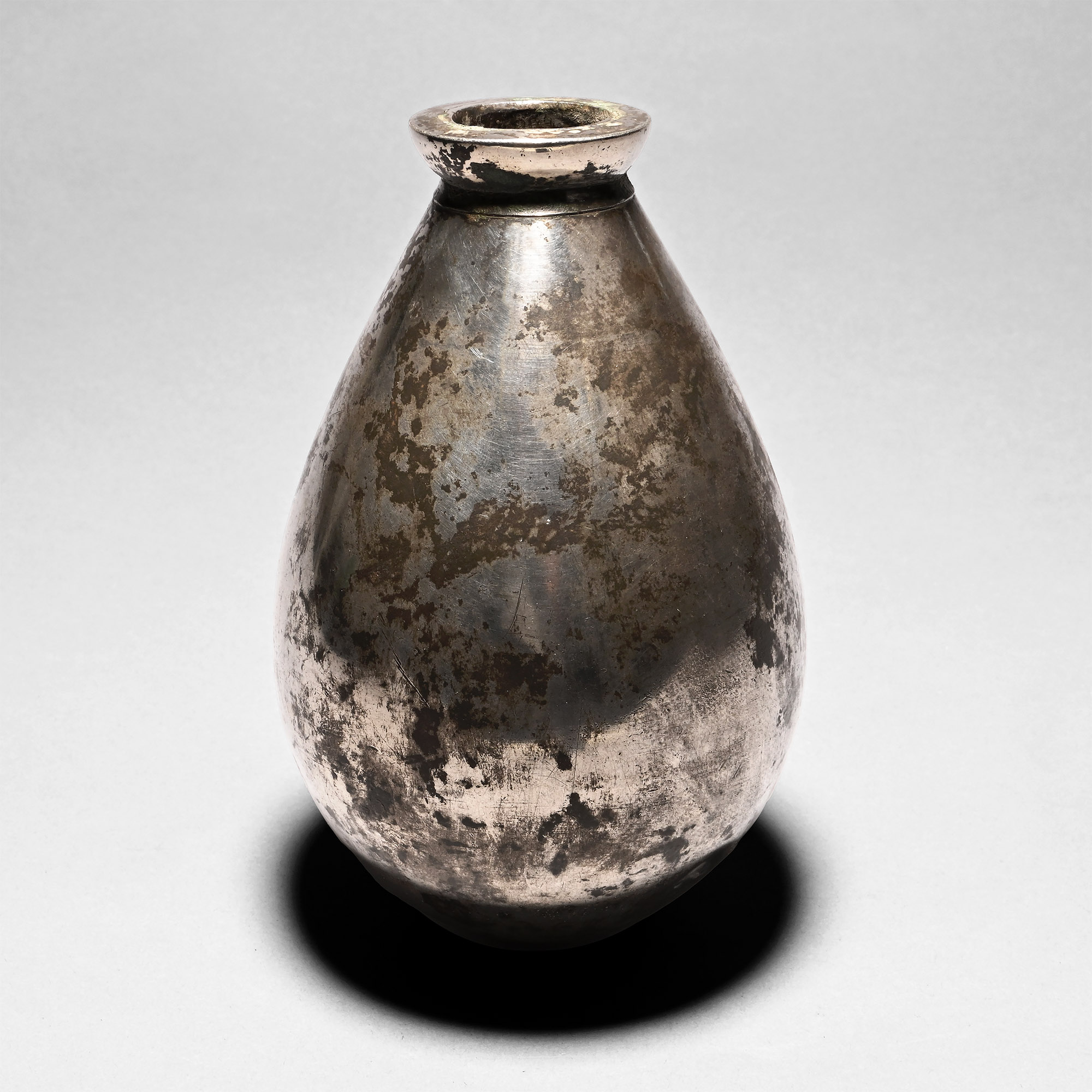
Large Sasanian Silver Bulb-Shaped Vessel
5TH-6TH CENTURY A.D.
6 3/4 in. (485 grams, 17 cm).
Ovoid in profile with a short neck and a flat rim, pierced at the bottom; minor dents to the surface.
ProvenanceLondon, UK gallery, 1971-early 2000s.
Private collection, London, UK.
This lot has been checked against the Interpol Database of stolen works of art and is accompanied by search certificate number no.13139-248448.
See 'Anahita vessel' at the Cleveland Museum of Art, for the shape.
CONDITIONTimeLine Auctions follows a vetting process to ensure the authenticity and legality of all items, reinforcing our commitment to integrity and responsible trading. Each antiquity, antique, and coin lot undergoes thorough examination by a vetting committee of at least ten external specialists, professional trade association members, scientists, and archaeologists: Our Vetting Process
AUCTIONS:
TimeLine is a leading auction house specialising in antiquities, ancient art, collectables, natural history, coins, medals, and books. Our auctions offer museums, collectors, historians, and enthusiasts the opportunity to acquire unique and historically significant pieces.
-
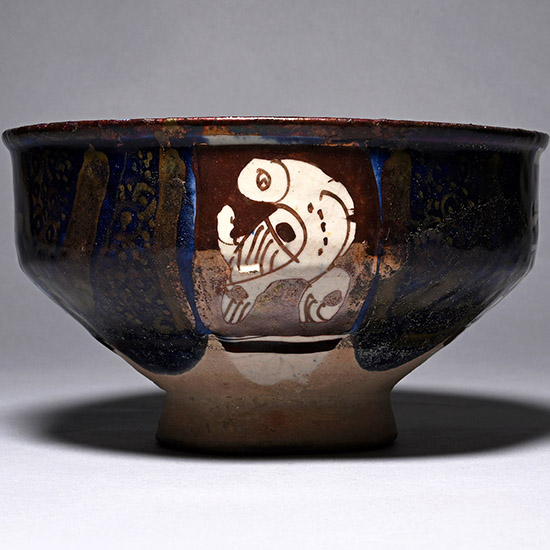
Western Asiatic Cobalt-Blue Footed Ceramic Bowl
9th century A.D.Estimate: £3,000 - 4,000 (+bp*)
Current Winning Bid: £2,000
With a carinated sidewall, rolled and everted rim, shallow foot, partial lustre-glaze to the surface with four trapezoidal panels: two with a reserved regardant bird and two with a tracery motif; restored. 498 grams, 18.5 cm
Private collection, Japan, acquired prior to 1982. Private collection, UK. This lot has been checked against the Interpol Database of stolen works of art and is accompanied by a search certificate number no.12724-235155. -
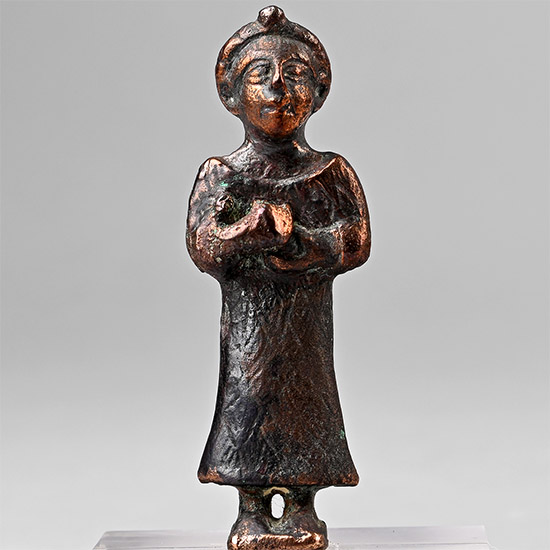
Middle Elamite Copper Figure of a Worshipper
Circa 1500–1100 B.C.Estimate: £4,000 - 6,000 (+bp*)
Opening Bid: £2,000
Figure of a worshipper with the hands raised at the waist and standing barefoot on a rectangular plinth, wearing a dress without any visible seams, the embroidery and pattern of the fabric represented by a concentric chevron design; stylised facial features and large almond-shaped eyes, thick twisted roll of fabric holding the hair with a small knot at the top; set on a custom-made stand. 106 grams total, 87 mm including stand
with Mr Modjallal Iradj, France. Acquired by a London, UK gallery, 18 March 1977. Private collection, UK. This lot has been checked against the Interpol Database of stolen works of art and is accompanied by search certificate number no.13370-257696.
The Elamite culture was an important civilisation in the ancient Near East that lasted for many centuries, from the 3rd millennium to the 6th century BC. They developed their own style of art, metalwork, and seal designs, as well as their own form of cuneiform writing. Although the Elamites were eventually absorbed into later empires, many aspects of their culture continued to influence the ancient world around them. Objects of this type are understood to be ritual or votive gifts. -
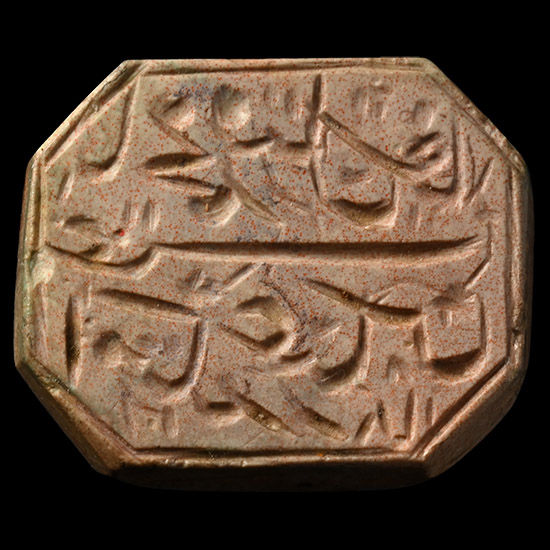
Western Asiatic Agate Bifacial Named Calligraphic Gemstone
Circa 15th century A.D.Sold for (Inc. bp): £598
Octagonal tabular bifacial panel with incised borders; dense nastaliq script to each face; with old collector's note with transliteration and translation 'Constant hearing with the blessing of the name Muhammed / Sakander Abbas'. 1.63 grams, 17 mm
From the private collection of a European gentleman (1942-2024), formed since the 1970s.
The Nastaʿlīq was one of the most important and widespread calligraphic styles used to write Persian. It was developed in Iran in the 8th and 9th centuries. It was also occasionally used to write the original Arabic language, known as taʿliq, for the titles and headings of books or printed publications, but its use was predominant in Persian, Ottoman Turkish, Urdu, and other languages of Perso-Indian influence. Nastaʿlīq is still widespread in Iran, Pakistan, and Afghanistan for written poetry and as a form of artistic expression (arabesque).
