
Loading, please wait...
LOT 0325
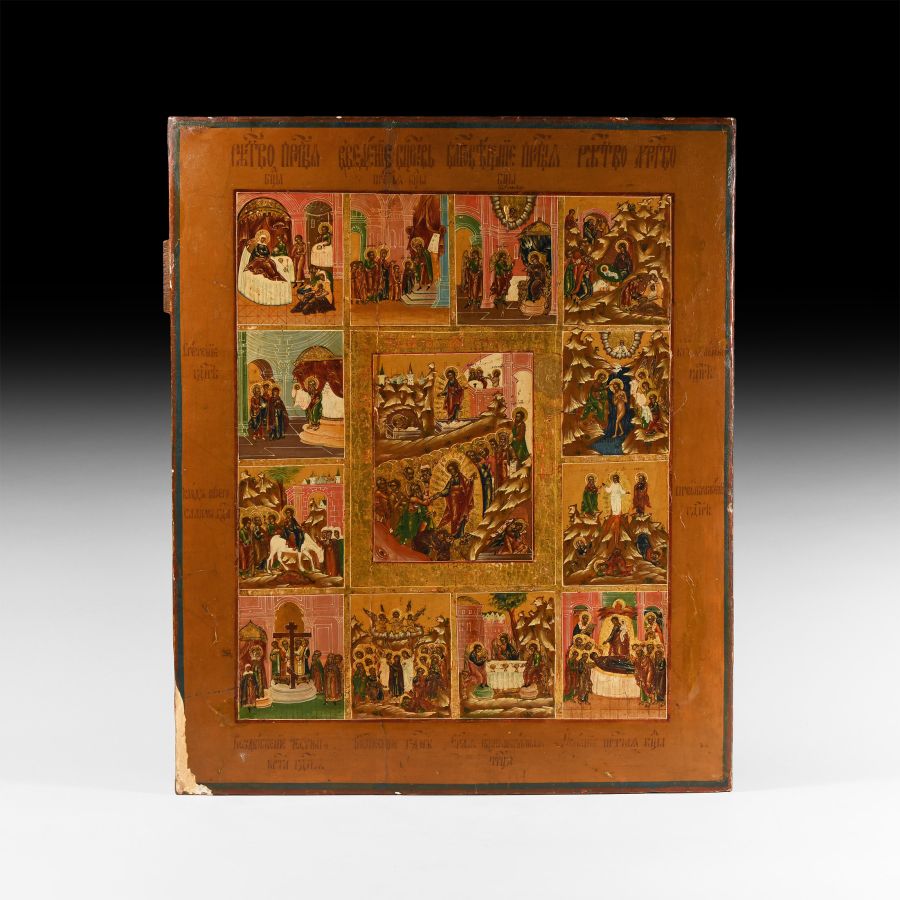
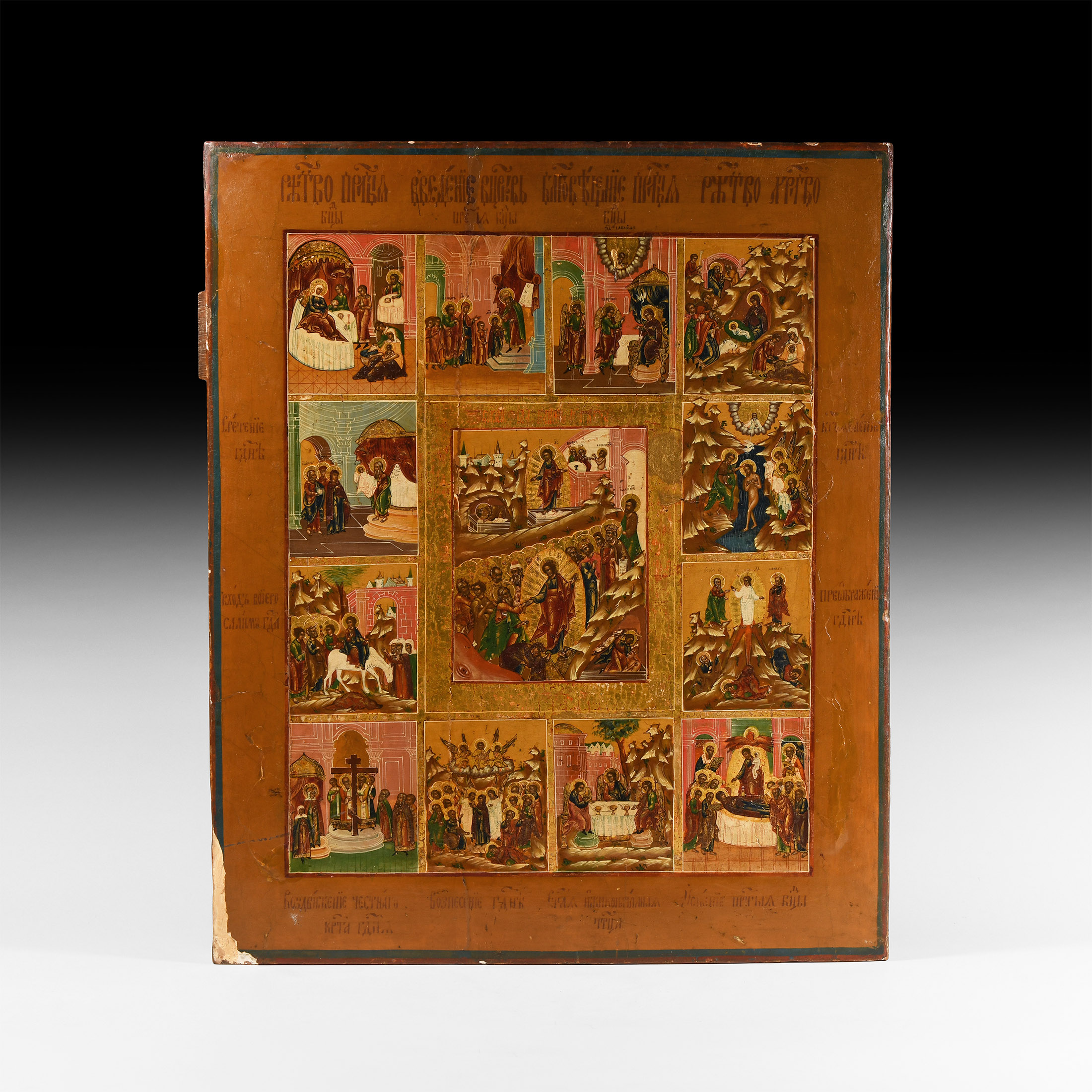
Large Russian Anastasis Icon with Twelve Feasts
18TH CENTURY A.D.
17 1/2 x 14 5/8 in. (3.1 kg, 44.5 x 37 cm).
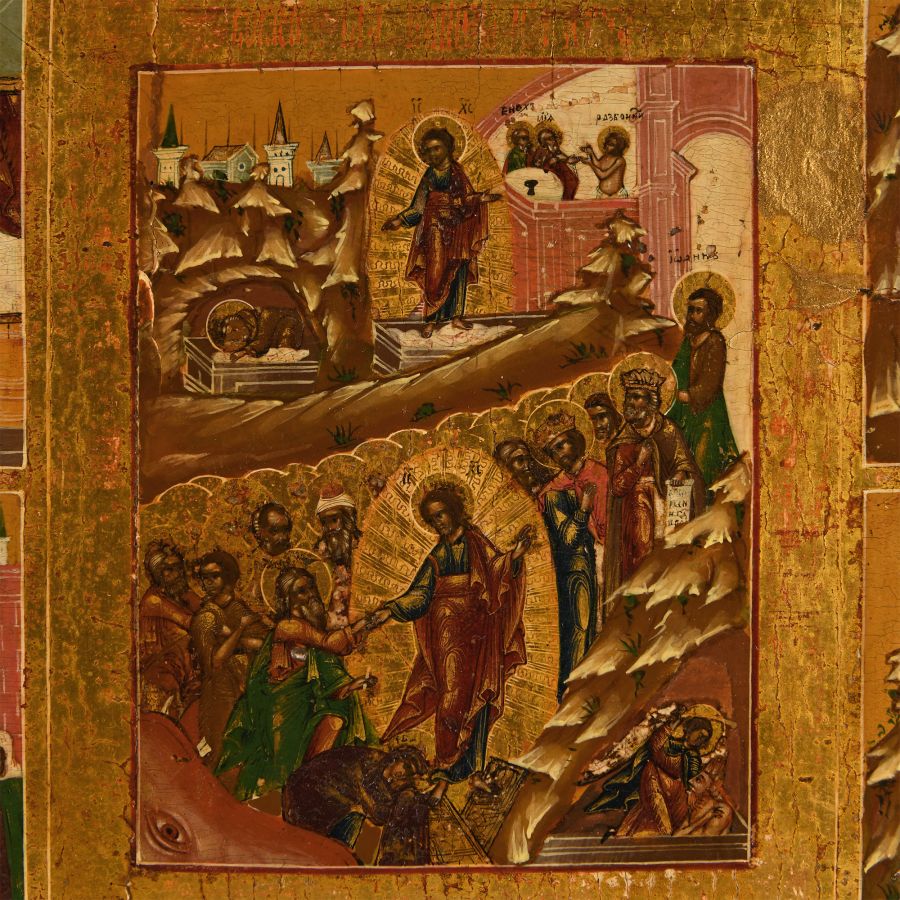
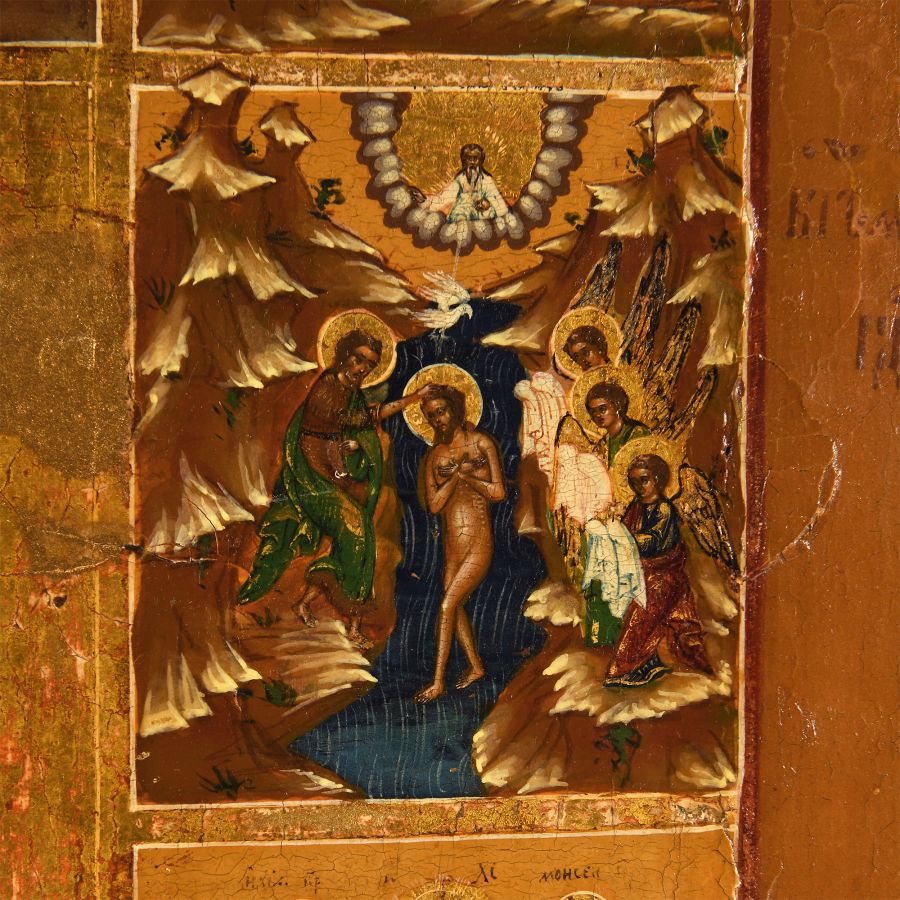
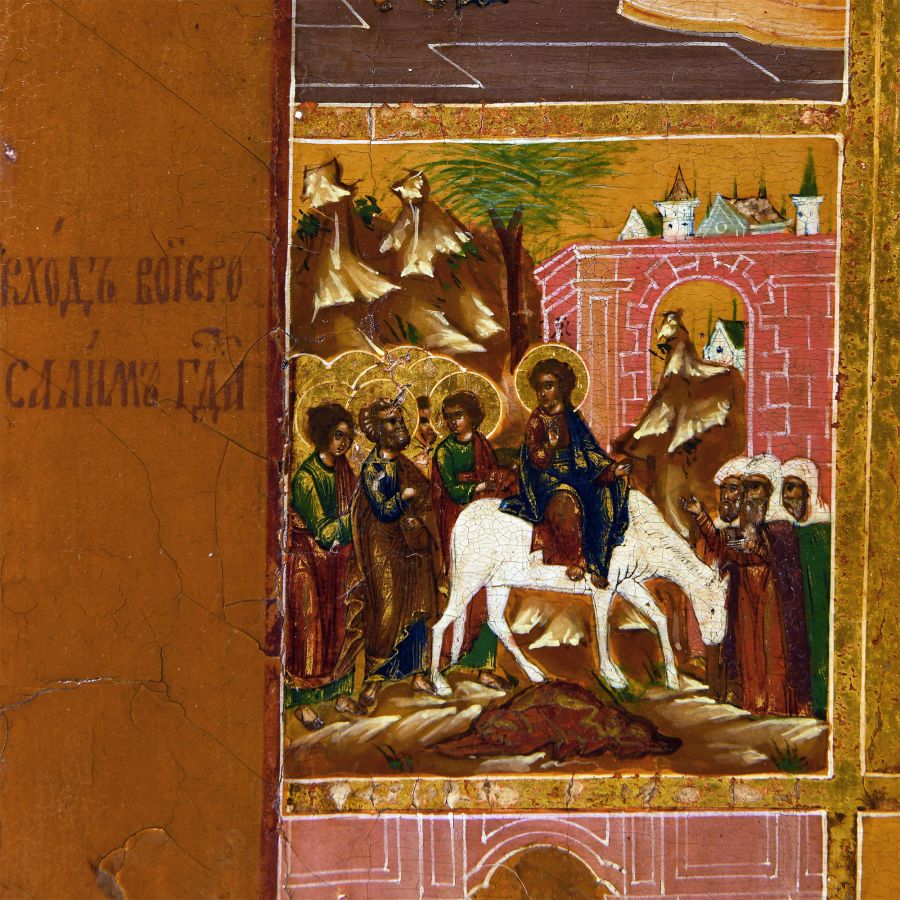
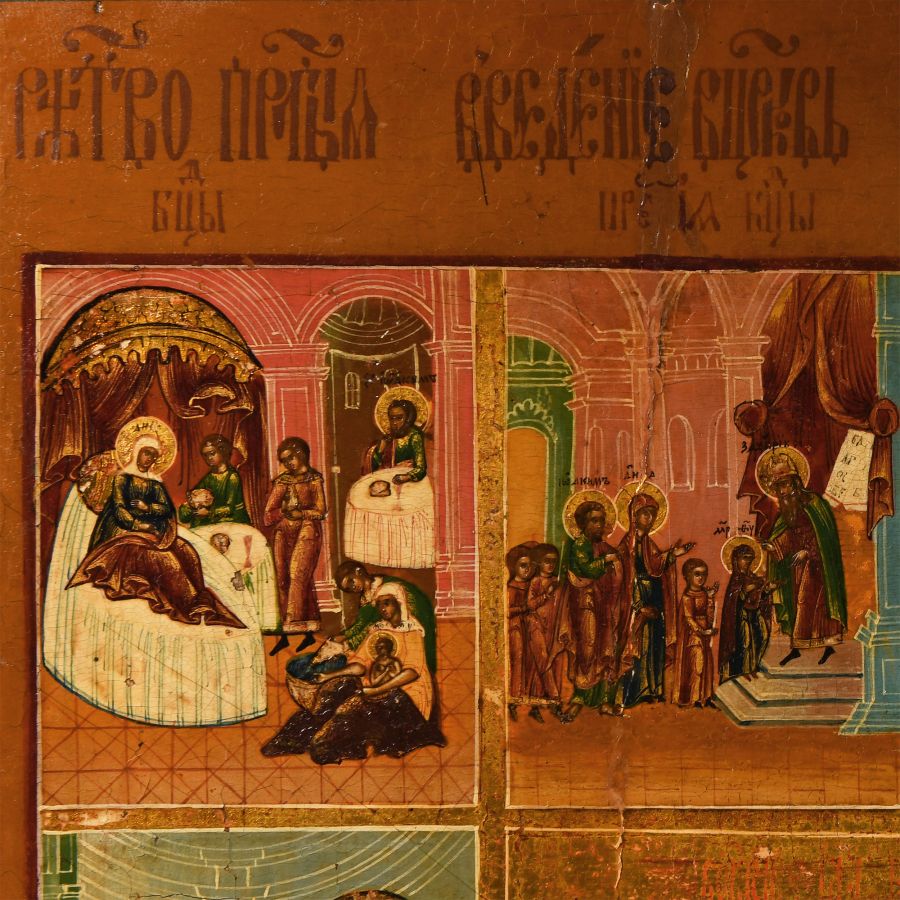
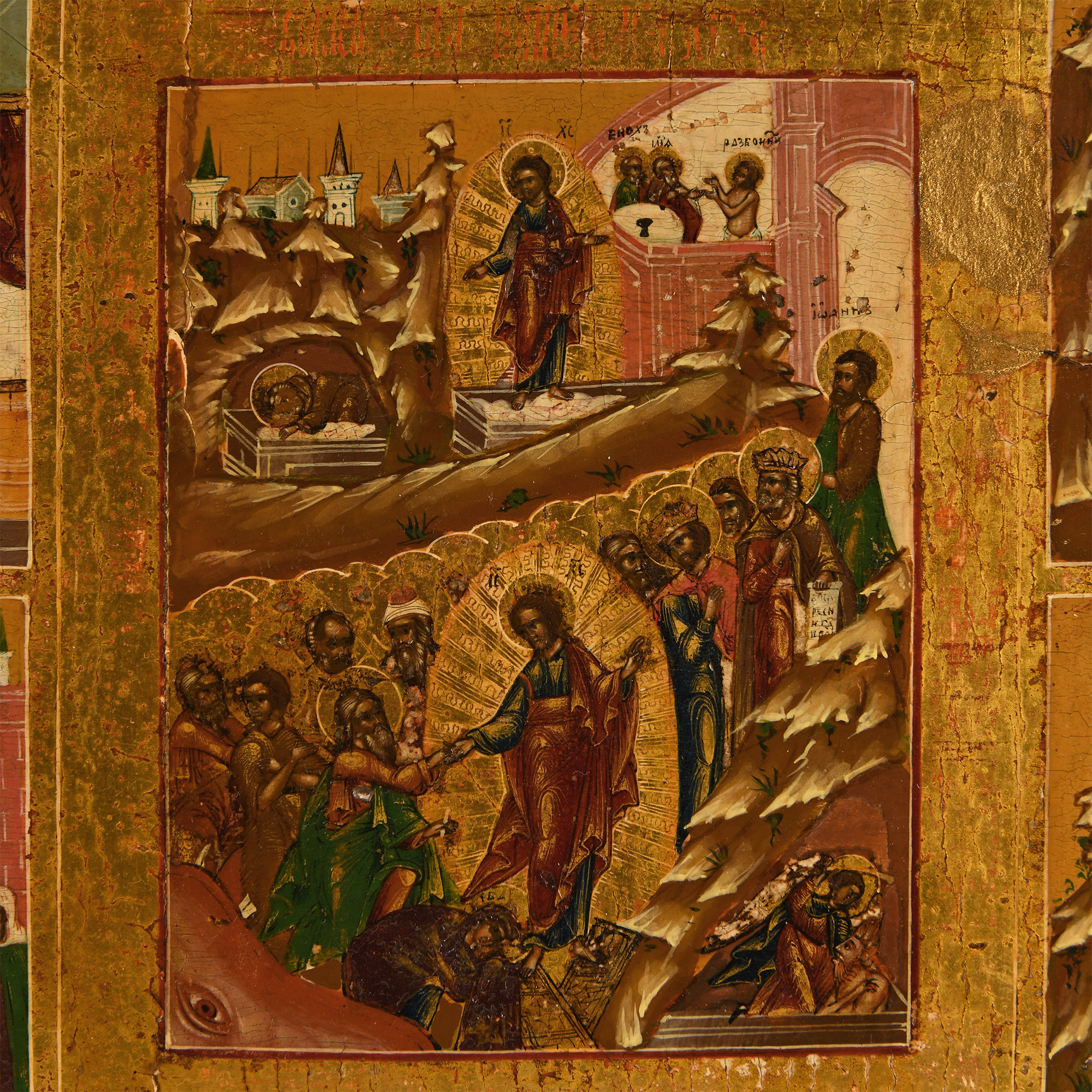
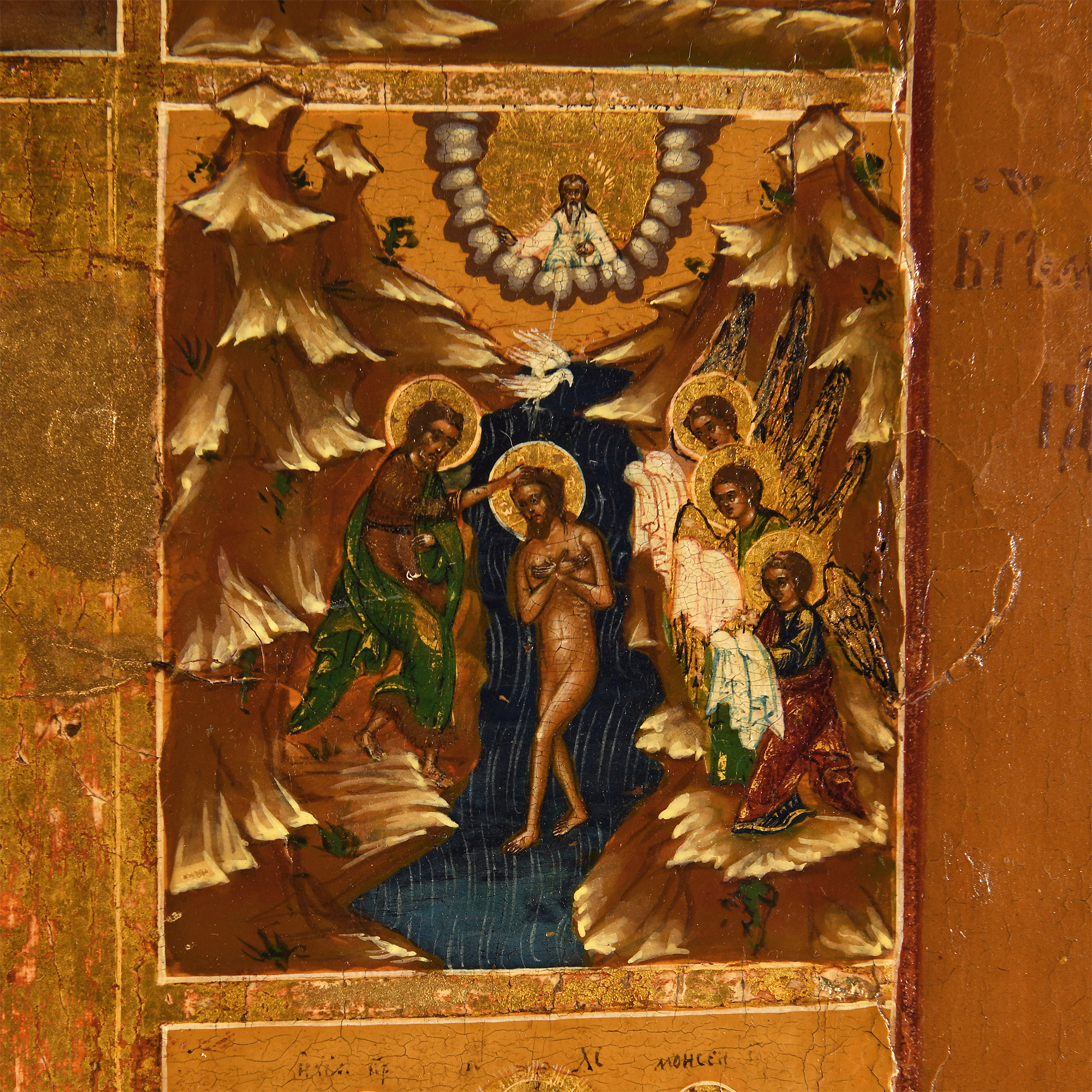
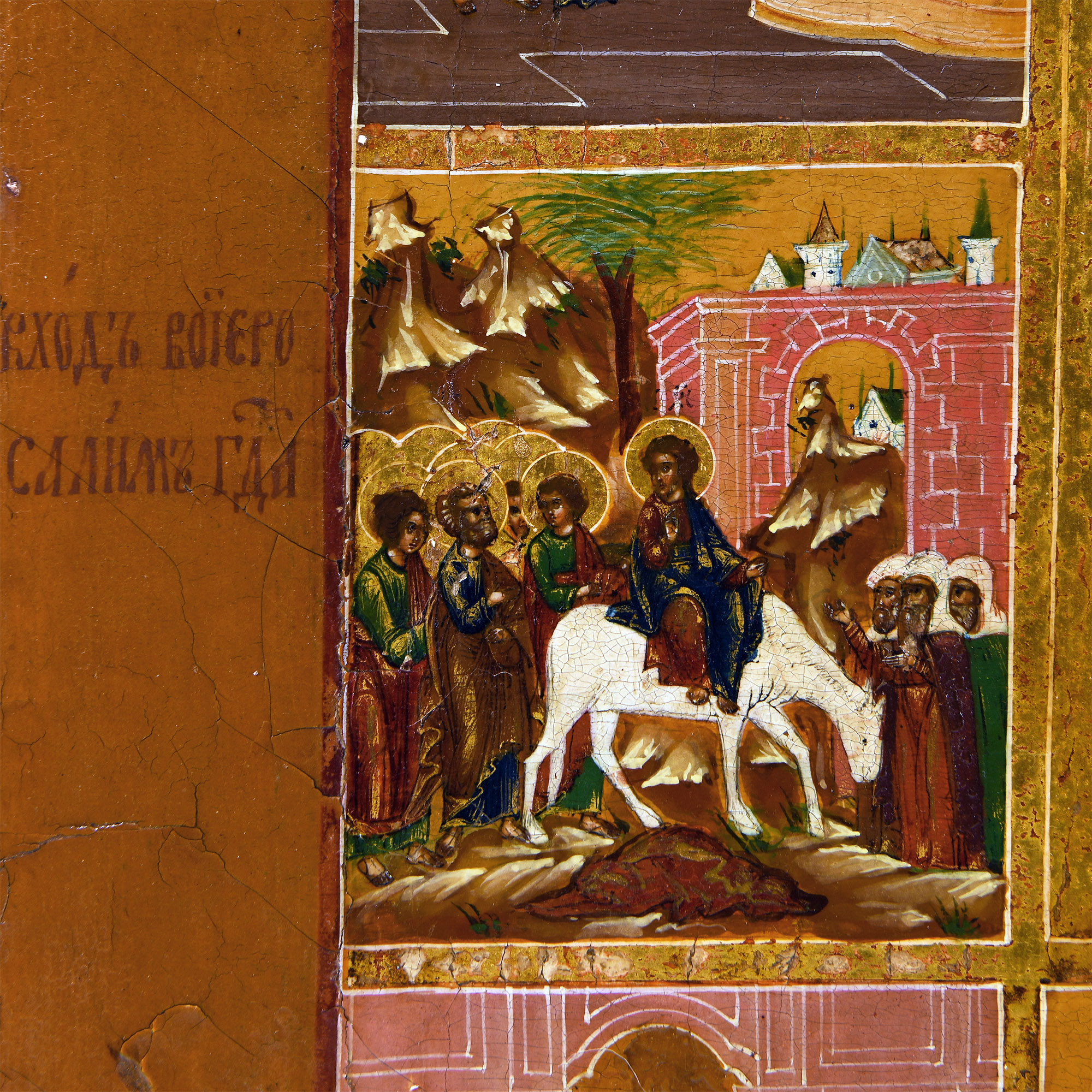
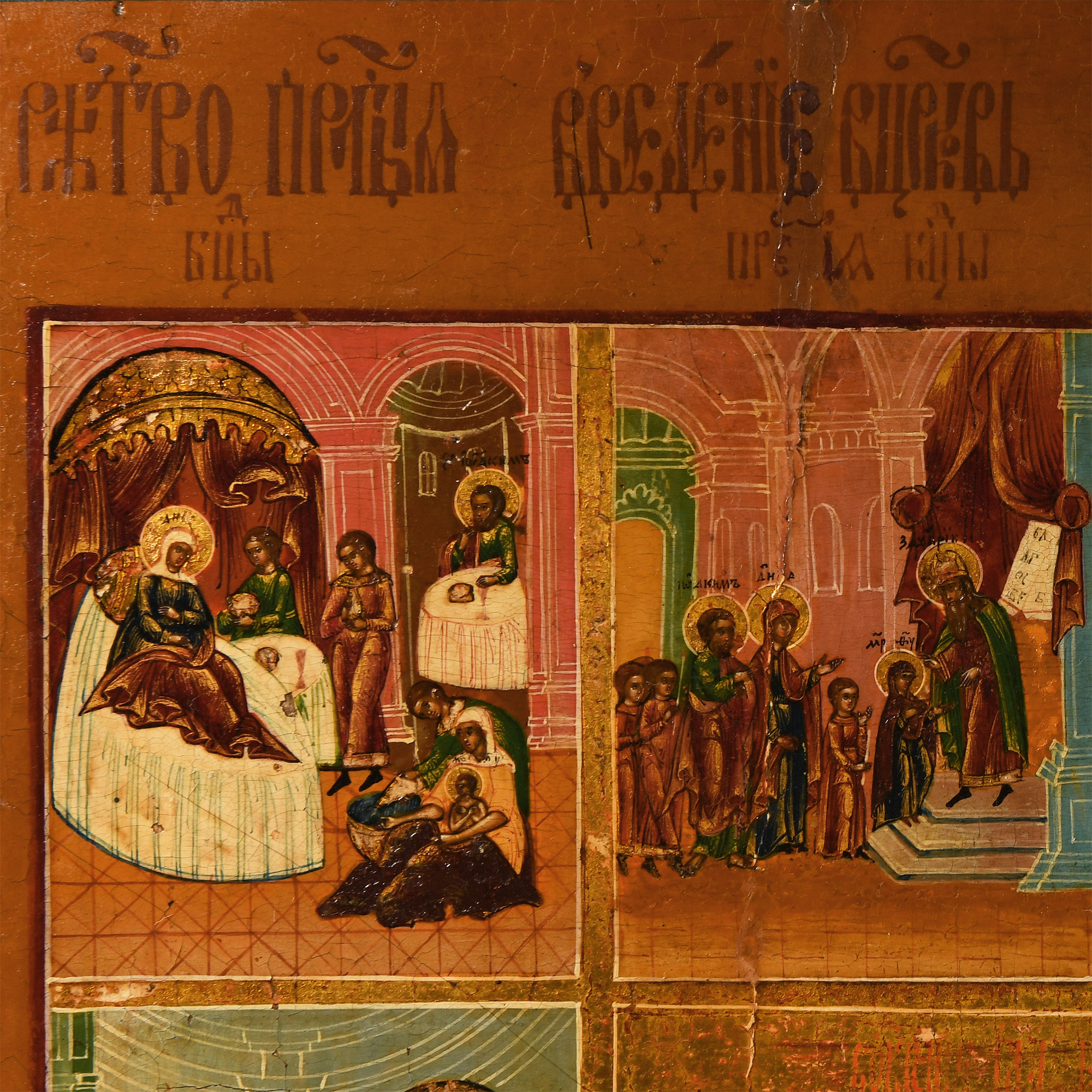
A tempera on wood Anastasis icon with a large central panel surrounded by twelve smaller scenes representing the twelve feasts of the Orthodox church; the central image depicting Christ‘s descent into Hell and Resurrection, the smaller scenes depicting, clockwise from top left: the birth of the Virgin Mary; the presentation of the Virgin Mary to the temple; the Annunciation; the Nativity; the presentation of Christ to the temple; the Epifania (Baptism); the entrance to Jerusalem; the Metamorphosis (Transfiguration); the Exaltation of the Holy Cross; the Ascension; the Holy Trinity (the Pentecost); and the Dormition of the Virgin; inscriptions to the outer border; some restoration.
ProvenanceProperty of a London lady, part of her family's collection.
LiteratureCf. Milani, C.G., Padricelli, M.S., Barakat, F., Russian Icons, London, 2021, pp.18-19, for similar.
FootnotesThe Greek term Dodekaorton (Δωδεκαόρθον) designates the twelve most important holidays of the Orthodox Christian liturgical year. They are divided into fixed date holidays and variable date holidays (calculated in relation to Easter). A second division is between the feasts dedicated to Mary and those dedicated to Christ. Each holiday is represented by an image (icon) encoded according to the interpretation of the Holy Scriptures. On the day of the celebration, the corresponding icon is placed on a lectern in the center of the church.
CONDITIONTimeLine Auctions follows a vetting process to ensure the authenticity and legality of all items, reinforcing our commitment to integrity and responsible trading. Each antiquity, antique, and coin lot undergoes thorough examination by a vetting committee of at least ten external specialists, professional trade association members, scientists, and archaeologists: Our Vetting Process
AUCTIONS:
TimeLine is a leading auction house specialising in antiquities, ancient art, collectables, natural history, coins, medals, and books. Our auctions offer museums, collectors, historians, and enthusiasts the opportunity to acquire unique and historically significant pieces.
LOT 0325
Large Russian Anastasis Icon with Twelve Feasts
Estimate £500 - 700€580 - 810 (for guidance only)$680 - 950 (for guidance only)
-
Stuart Period Gold Renaissance Memento Mori Signet Ring with C.L. and Skull
17th century A.D.Sold for (Inc. bp): £19,500
A substantial gold signet ring composed of a lentoid-section hoop, expanding capital style shaped shoulders and irregular octagonal bezel engraved with a skull, two flowers below separating the reversed initials in capitals: 'CL', framed by a beaded border. 15.65 grams, 27.14 mm overall, 22.68 mm internal diameter (approximate size British X, USA 11 1/2, Europe 26.29, Japan 25)
Acquired in the 1980s. Property of a London gentleman. This lot has been checked against the Interpol Database of stolen works of art and is accompanied by search certificate no.11664-197587.
Signet rings were jewellery items serving practical functions, and were pressed into hot wax to seal letters and packets. Personal seals or secreta acted as a legal safeguard, since they were used to witness wills, loans, commercial, personal and other documents. Such rings were often engraved with a coat of arms, initials, merchant's mark or some other personal symbol. Painted portraits of this period portray the wearer with the signet ring on the thumb or forefinger, allowing for practical use. Skulls on rings were potent symbols of mortality. 'Memento mori' or 'remember that you must die' imagery served as a reminder to the Christian of the need to keep their soul in good order for the final judgment. -
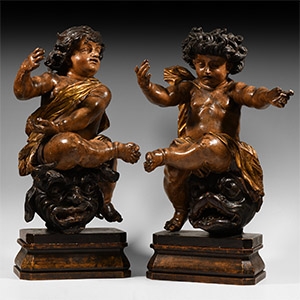
Post Medieval Gilt and Painted Wooden Cherub Pair
Germany, 17th century A.D.Estimate: £8,000 - 10,000 (+bp*)
Opening Bid: £4,000
A pair of naturalistically modelled cherubs shown naked and chubby with infant bodies and mature heads, perched with one crossed leg atop grotesque heads- that of the Devil and a pug, each dynamically posed as though playing an instrument or holding a bowl; with polychrome paint and gilding; Baroque; on octagonal plinth bases. 74-76 cm high
with Hotel Des Ventes De Monte, Monaco, 14 December 2021, lot 60. English private collection. This lot has been checked against the Interpol Database of stolen works of art and is accompanied by search certificate number no.11676-199839. -
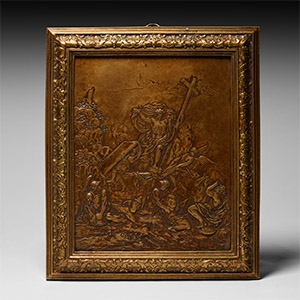
Post Medieval Copper Plaque with Resurrection Scene
18th-19th century A.D.Estimate: £800 - 1,000 (+bp*)
Opening Bid: £400
A bronze repoussé plaque depicting Christ triumphant bearing a cross while Roman soldiers open the sarcophagus; mounted in a bronze frame. 666 grams, 14.5 x 17 cm
English private collection.
