
Loading, please wait...
LOT 0041
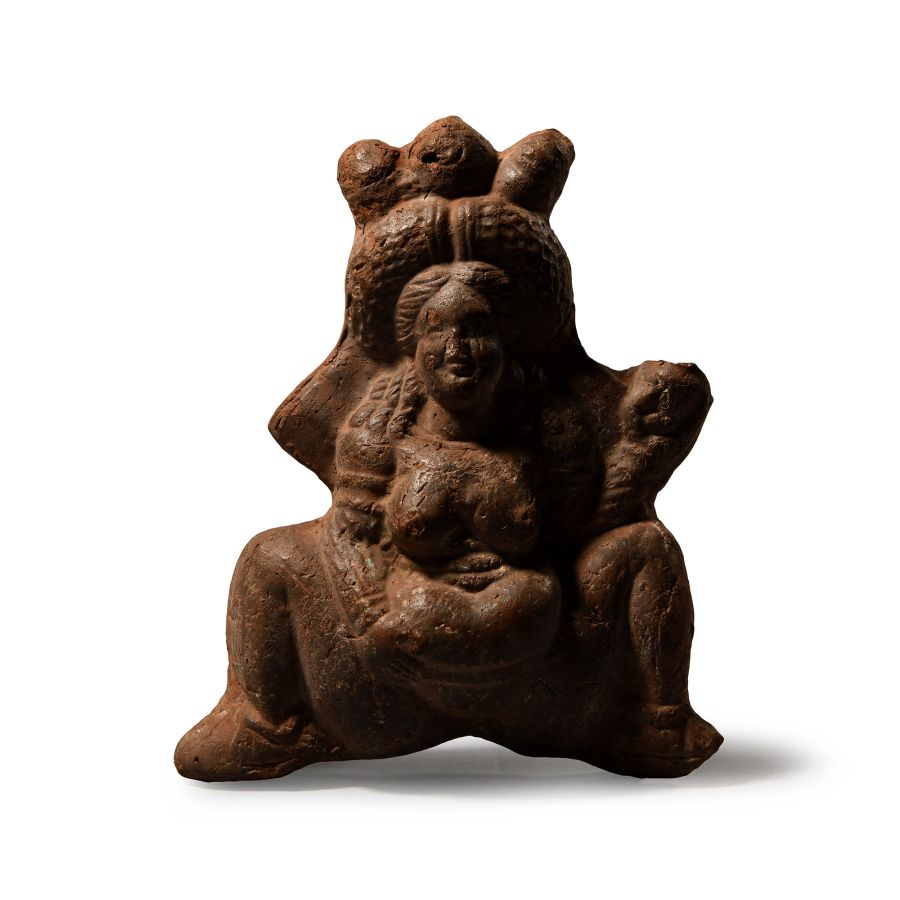
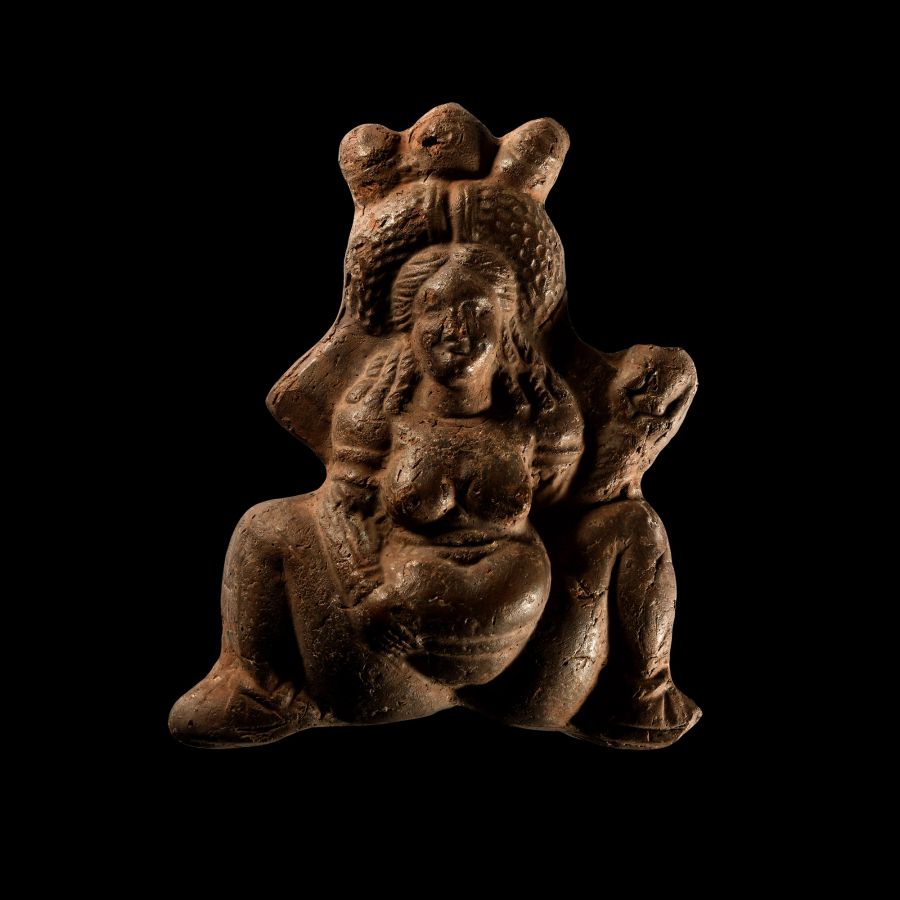
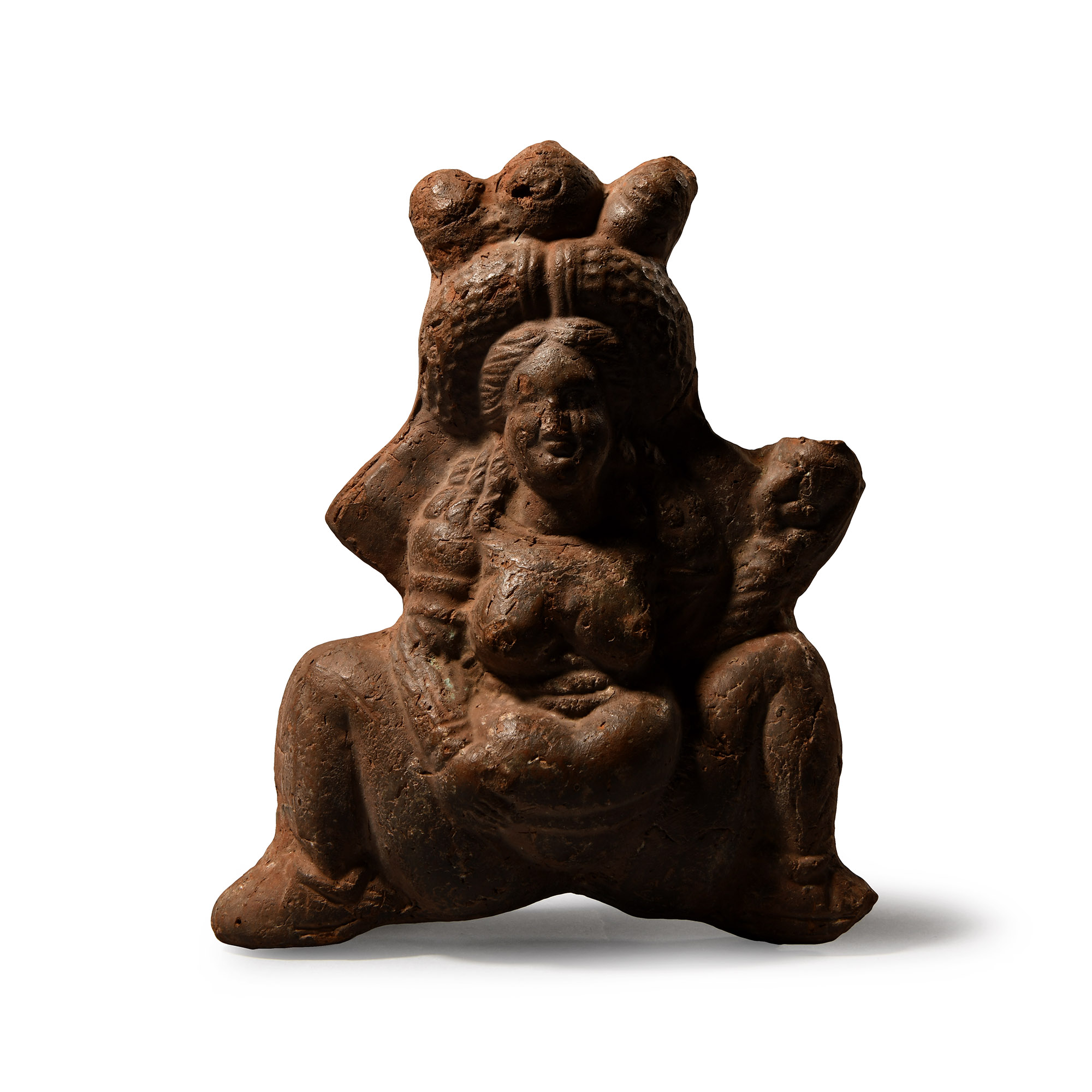
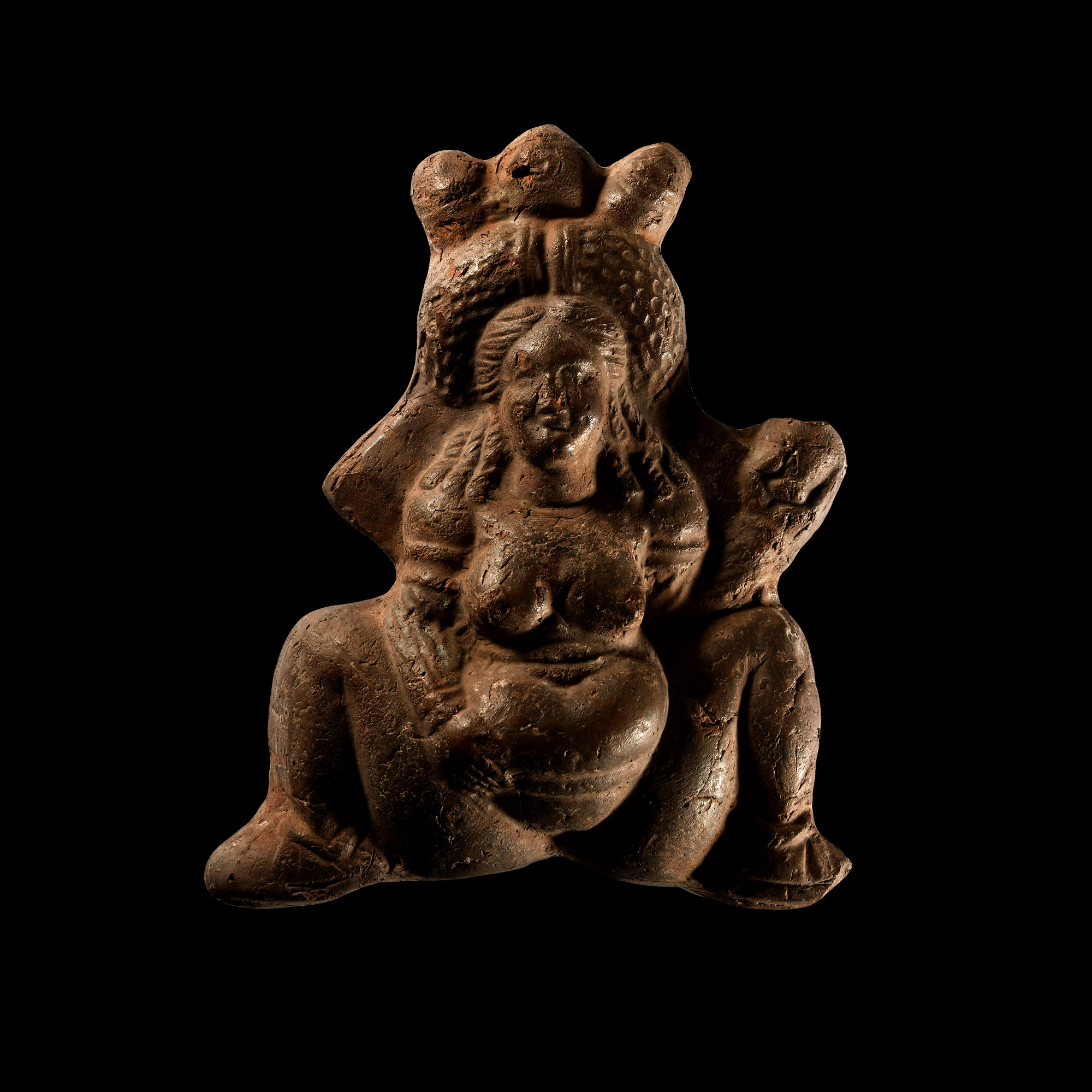
Large Romano-Egyptian Terracotta Figure of Baubo
PTOLEMAIC PERIOD, 332-30 B.C.
6 1/8 in. (373 grams, 15.5 cm).
Modelled as a seated plump female figure; the right hand touching the pubic area beneath the rounded abdomen, wearing a tall headdress of thick braids, falling on her shoulders, smooth back with a vent hole; chipped at left foot and arm.
Provenancewith Superior Galleries, Los Angeles, USA.
Ex Dr W. Benson Harer, Los Angeles, USA, March 1985.
Exhibited: Robert & Frances Fullerton Museum or Art (RAFFMA), California State University, 1998-2023, with reference no.EL01.098.1998.
LiteratureCf. Nagwa Abdelnaby, A.I., ‘Two unpublished Figurines of Women Purifying themselves in the Greco-Roman Museum of Alexandria’ in Bulletin of the Center Payrological, 38 (1), November 2021, pp.645-664, figs.3, lett. A and D.
FootnotesBaubo was a minor divinity of the Greek mythology, linked to the cult of Demeter and Persephone. The statuette belongs to the second type of Baubo figurines, widespread in the last Ptolemaic and Roman period in Egypt. The Egyptian Baubo figures are split into two groups, and this one belongs to the first group depicting a woman seating frontally whilst holding a musical instrument. In some of these figurines her right hand is touching her genitalia. Many of them were used as amulets or as ex-voto.
CONDITIONTimeLine Auctions follows a vetting process to ensure the authenticity and legality of all items, reinforcing our commitment to integrity and responsible trading. Each antiquity, antique, and coin lot undergoes thorough examination by a vetting committee of at least ten external specialists, professional trade association members, scientists, and archaeologists: Our Vetting Process
AUCTIONS:
TimeLine is a leading auction house specialising in antiquities, ancient art, collectables, natural history, coins, medals, and books. Our auctions offer museums, collectors, historians, and enthusiasts the opportunity to acquire unique and historically significant pieces.
LOT 0041
Large Romano-Egyptian Terracotta Figure of Baubo
Estimate £800 - 1,000€930 - 1,160 (for guidance only)$1,080 - 1,350 (for guidance only)
-
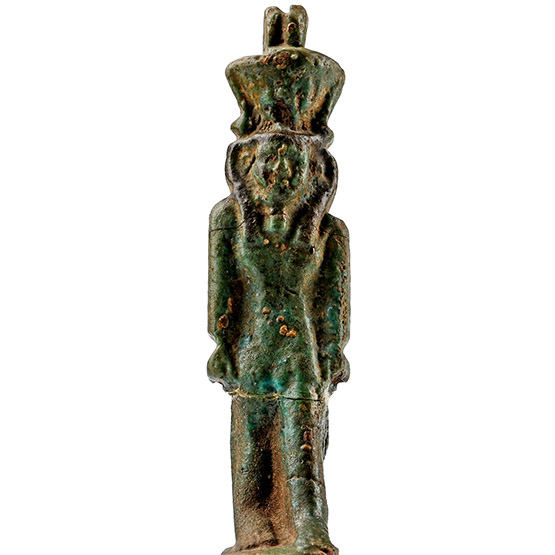
Egyptian Faience Figure of Nefertum
Ptolemaic Period, 332-30 B.C.Estimate: £500 - 700 (‡+bp*)
Opening Bid: £278
In a striding pose with arms at the sides, sporting a black coloured tripartite wig surmounted by the god's distinctive headdress consisting of a lotus flower with two plumes on top; a suspension loop at the back; repaired. 71 grams total, 13 cm including stand
Property from an American deceased estate, acquired between 1970 and 1989. with Bonham's, London, 28 October 2009, no.81 [Part].
Nefertum was closely associated with the creator god Ptah and the goddesses Sekhmet and Bastet. He represented the first sunlight and the sweet scent of the Egyptian blue lotus flower (nymphaea caerulea). According to beliefs, the sun rose from the bloom of a blue lotus, embodying notions of rebirth and rejuvenation. Additionally, as the lotus was seen as a symbol of fertility, it is possible that this amulet was also worn for that purpose. -
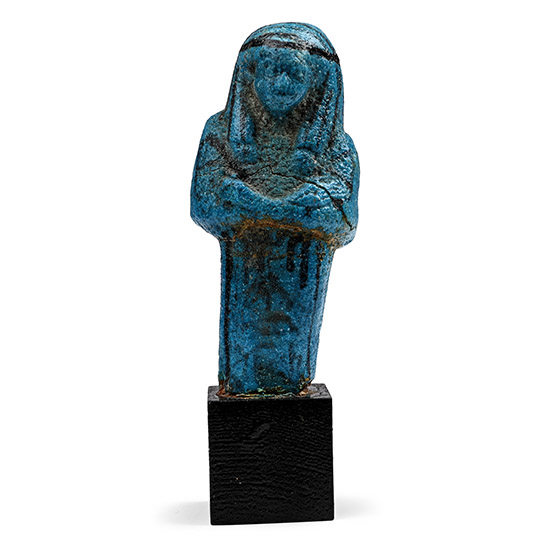
Egyptian Deep Blue Faience Shabti with Hieroglyphic Inscription
Third Intermediate Period, 1069-735 B.C.Sold for (Inc. bp): £468
Comprising the upper part of the mummiform figure with the arms crossed at the chest and holding agricultural implements in each hand, wearing a tripartite wig with a headband with ties hanging down at the back; a seed bag suspended below the wig; the outline of the hoes, striations on the wig and the seed bag painted black; a central column of hieroglyphs on the front; mounted on a display stand. 125 grams total, 13 cm including stand
Ex Shropshire, UK, collection. From a Cambridgeshire, UK, collection. -
.jpg)
Historic Collection of 565 Slides of Egyptian Archaeological Sites and Artefacts
1960s-1980s A.D.Sold for (Inc. bp): £845
Housed in five linen-covered boxes, covering ancient Egypt, Tutankhamun jewellery, Nefetari, Amun Hr Khopshef, Khaemwast, Tuthmosis IV, Tye, Archaic stele, maceheads, inscriptions, pottery, sculpture, Saqqara tombs, Esna etc. 3.85 kg total, 26.5 x 16.5 x 6.5 cm each box
Property of archaeologist Stephanie Gee, N.W. London, UK, 1960s-1980s.
Stephanie Gee was a prominent archaeologist who took part in several expeditions in Egypt. She was a trusted assistant to the British-Australian archaeologist Veronica Seton-Williams, who excavated in Egypt, Britain, and the Near East. Stephanie also took part in the Tell El-Farâ'în expeditions of 1965-1968, and assisted Seton-Williams with preparing the 1966 expedition report. Their collaboration continued and Stephanie helped with the manuscript of Seton-Williams’ book ‘The Road to El-Aguzein’, a narrative account of her life that was first published in 1988.
