
Loading, please wait...


LOT 0756
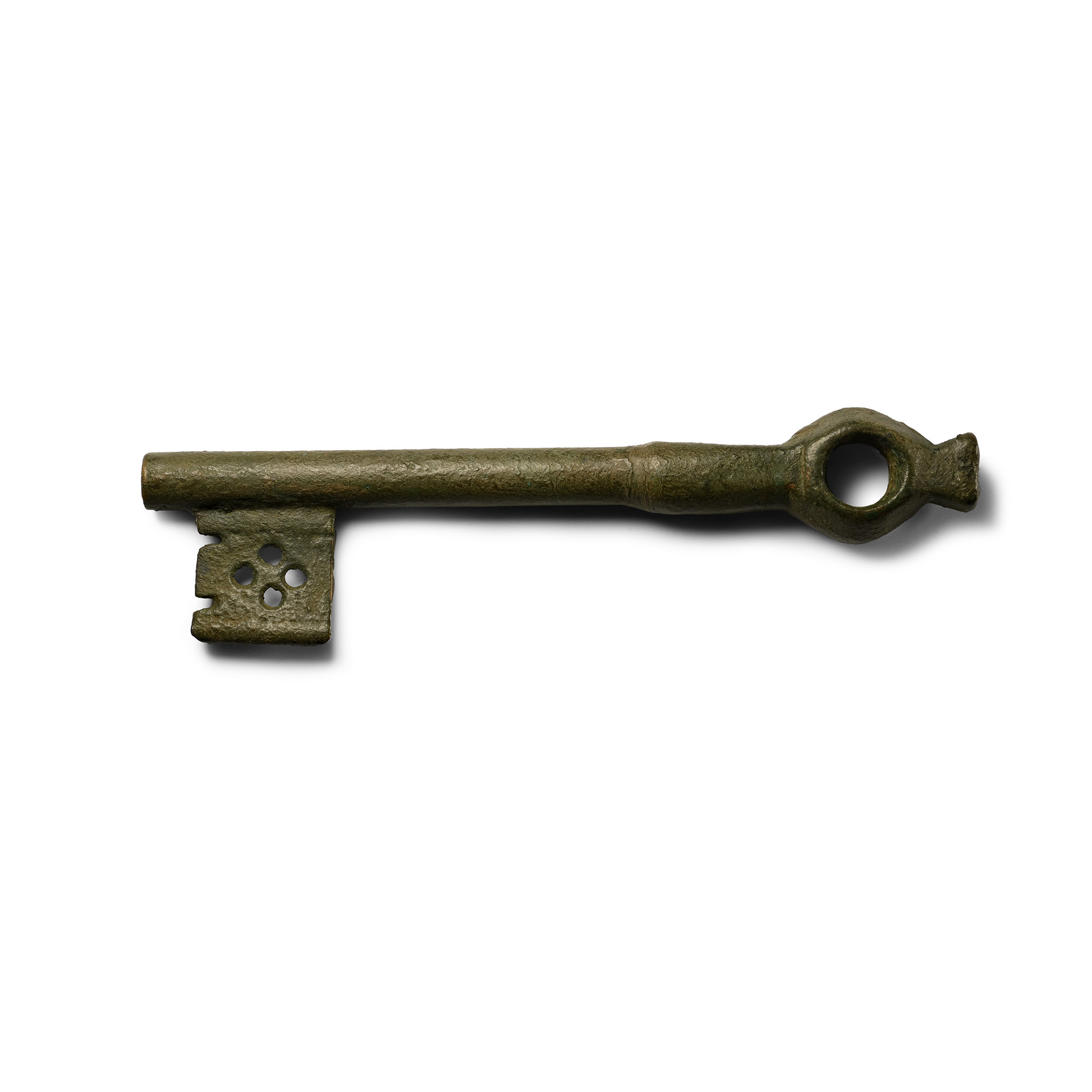
Large Romano-British Bronze Door Key
1ST-3RD CENTURY A.D.
5 5/8 in. (106 grams, 14.2 cm).
With slender barrel, pierced bulb handle, square ward with four piercings and two bits to the forward edge. [No Reserve]
ProvenanceFound North Yorkshire, UK, circa 2005.
Acquired in the UK circa 2008.
Ian Wilkinson collection, Nottinghamshire, UK, formed since 1985.
This lot is accompanied by an illustrated lot declaration signed by the Head of the Antiquities Department, Dr Raffaele D’Amato.
Cf. Pall, M., Schlüssel und Schlösser, Graz, 2012, item 4576, for type.
CONDITIONTimeLine Auctions follows a vetting process to ensure the authenticity and legality of all items, reinforcing our commitment to integrity and responsible trading. Each antiquity, antique, and coin lot undergoes thorough examination by a vetting committee of at least ten external specialists, professional trade association members, scientists, and archaeologists: Our Vetting Process
AUCTIONS:
TimeLine is a leading auction house specialising in antiquities, ancient art, collectables, natural history, coins, medals, and books. Our auctions offer museums, collectors, historians, and enthusiasts the opportunity to acquire unique and historically significant pieces.
-
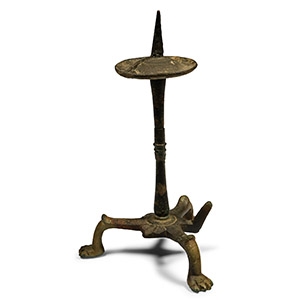
Late Roman Bronze Tripod Lamp Base
4th-6th century A.D.Sold for (Inc. bp): £572
Tripod base formed with lion-paw feet and rosette of interstitial panels, balustered stem and dished pan, central mounting spike; vertical spike handle to base. 330 grams, 19 cm
Acquired from Notaras Coins & Antiquities, Suffolk, UK, before 2000. Property of a Bedfordshire, UK, private collector. Accompanied by an illustrated collector's identification tag. This lot is accompanied by an illustrated lot declaration signed by the Head of the Antiquities Department, Dr Raffaele D’Amato. -

Roman and Other Ancient Bead Group
1st millennium B.C. and laterSold for (Inc. bp): £124
A large quantity of mixed beads in stone, glass, lapis lazuli, and ceramic, including a large barrel-shaped bead. 181 grams total, 3-27 mm
Ex London, UK, collection, 1990s. This lot is accompanied by an illustrated lot declaration signed by the Head of the Antiquities Department, Dr Raffaele D’Amato. -
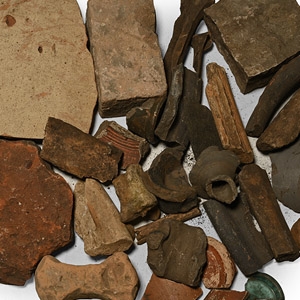
Romano-British Terracotta Vessel Fragment Collection from Crococolana
1st-4th century A.D.Sold for (Inc. bp): £20
Including fragments of tableware, storage vessels, and other items. 2.81 kg total, 3.5-16 cm
Found from the Roman settlement of Crococolana, Brough, Lincolnshire, UK, 2003-2005. Ian Wilkinson collection, Nottinghamshire, UK, formed since 1985. This lot is accompanied by an illustrated lot declaration signed by the Head of the Antiquities Department, Dr Raffaele D’Amato.
