
Loading, please wait...


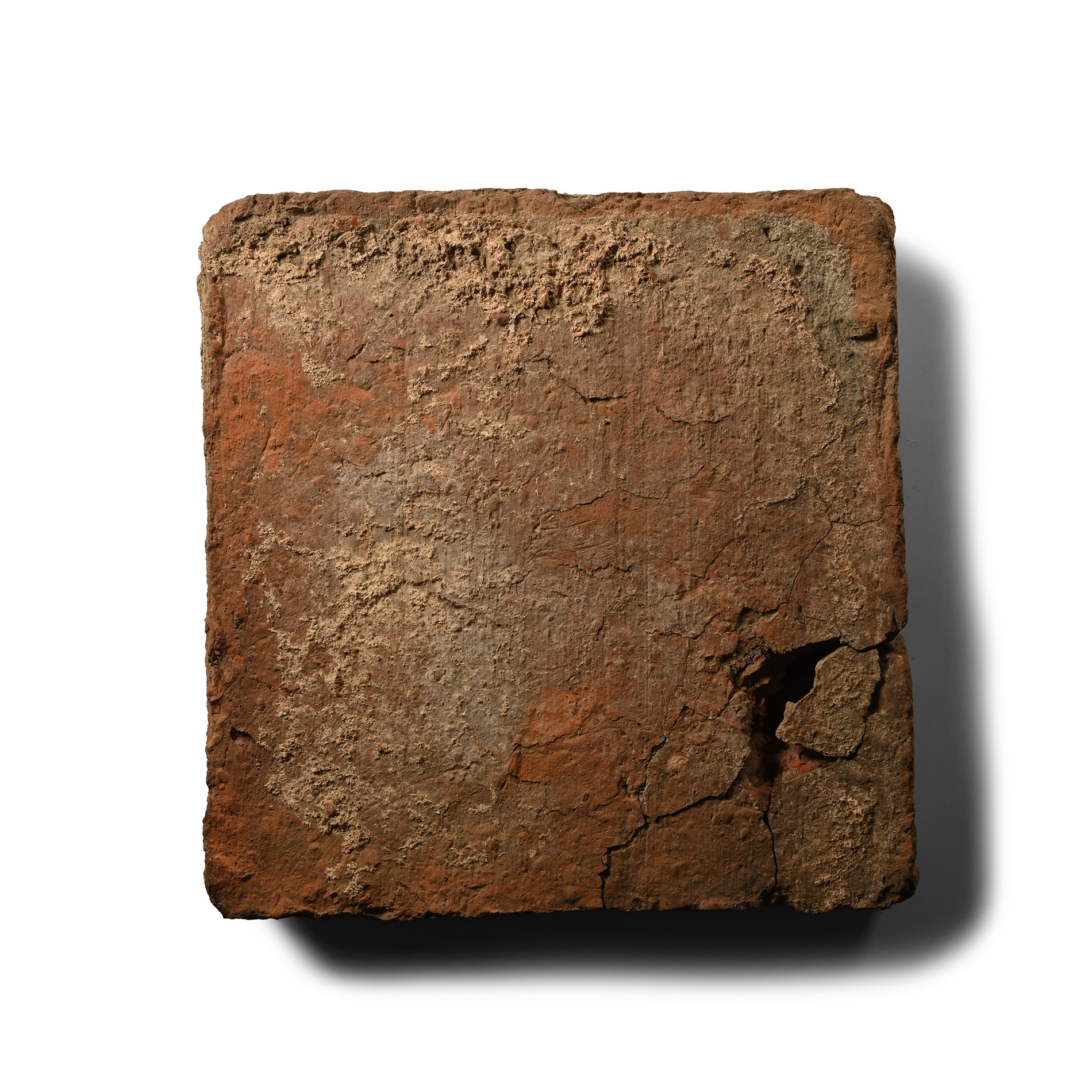
LOT 0739
Large Roman 'Wingham Villa' Terracotta Hypocaust Brick
1ST-4TH CENTURY A.D.
7 3/4 x 8 in. (2.79 kg, 19.5 x 20.2 cm).
A massive parallelepiped block, square in section, grey-brown in colour. [No Reserve]
ProvenanceFound near Wingham, Kent, UK.
From the collection of a late East Anglian teacher and antiquarian who retired to the Isle of Wight in Hampshire, UK.
He amassed a large collection of objects between the 1960s-1980s.
This lot is accompanied by an illustrated lot declaration signed by the Head of the Antiquities Department, Dr Raffaele D’Amato.
Cf. Jenkins, F., ‘Roman Villa, Wingham’ in Arch Cant 1984, pp.87-100, for the report of excavations; for similar bricks found in the excavations of a Roman Villa in Cobham Park see Archeologia Cantiana, 1960, p.178, Pl.I.
FootnotesIn Kent, nearby Dover, there is the site of a Roman villa located in a field named The Vineyards. The site was excavated in 1881-82 during which time a hypocaust, tessellated pavement, bath house and a quern were found. The hypocaust was dated to two periods and a quern was found on a tessellated pavement.
CONDITIONTimeLine Auctions follows a vetting process to ensure the authenticity and legality of all items, reinforcing our commitment to integrity and responsible trading. Each antiquity, antique, and coin lot undergoes thorough examination by a vetting committee of at least ten external specialists, professional trade association members, scientists, and archaeologists: Our Vetting Process
AUCTIONS:
TimeLine is a leading auction house specialising in antiquities, ancient art, collectables, natural history, coins, medals, and books. Our auctions offer museums, collectors, historians, and enthusiasts the opportunity to acquire unique and historically significant pieces.
-
.jpg)
Roman Bronze Hound Statuette
1st-2nd century A.D.Sold for (Inc. bp): £111
Modelled in the round in advancing pose with head lowered and mouth open, low-relief collar to the neck; mounted on a custom-made stand. 80 grams total, 52 mm including stand
From a collection acquired on the UK art market from various auction houses and collections mostly before 2000. From an important Cambridgeshire estate; thence by descent. This lot is accompanied by an illustrated lot declaration signed by the Head of the Antiquities Department, Dr Raffaele D’Amato. -
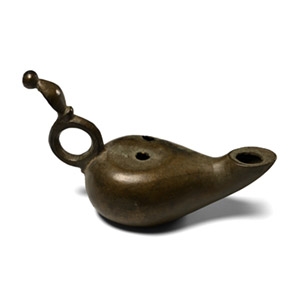
Roman Bronze Oil Lamp
2nd-3rd century A.D.Sold for (Inc. bp): £182
Slipper-shaped with scooped nozzle, loop handle and thumb-pad; lateral vent to nozzle. 102 grams, 10 cm
Ex German art market, 2000s. Acquired from an EU collector living in London. From the collection of Surrey, UK, gentleman. This lot is accompanied by an illustrated lot declaration signed by the Head of the Antiquities Department, Dr Raffaele D’Amato. -
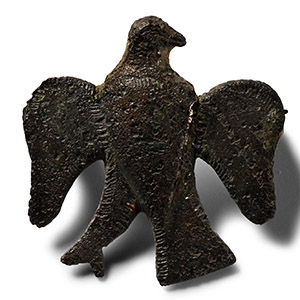
Roman Tinned Bronze Spread-Eagle Brooch
1st-2nd century A.D.Sold for (Inc. bp): £390
The eagle facing back with its wings extended, fan-shaped tail and open claws to the visible foot; hinged pin and catchplate to the reverse. 8.38 grams, 29.3 mm
Ex German art market, 2000s. Acquired from an EU collector living in London. From the collection of Surrey, UK, gentleman. This lot is accompanied by an illustrated lot declaration signed by the Head of the Antiquities Department, Dr Raffaele D’Amato.
