
Loading, please wait...

LOT 0731
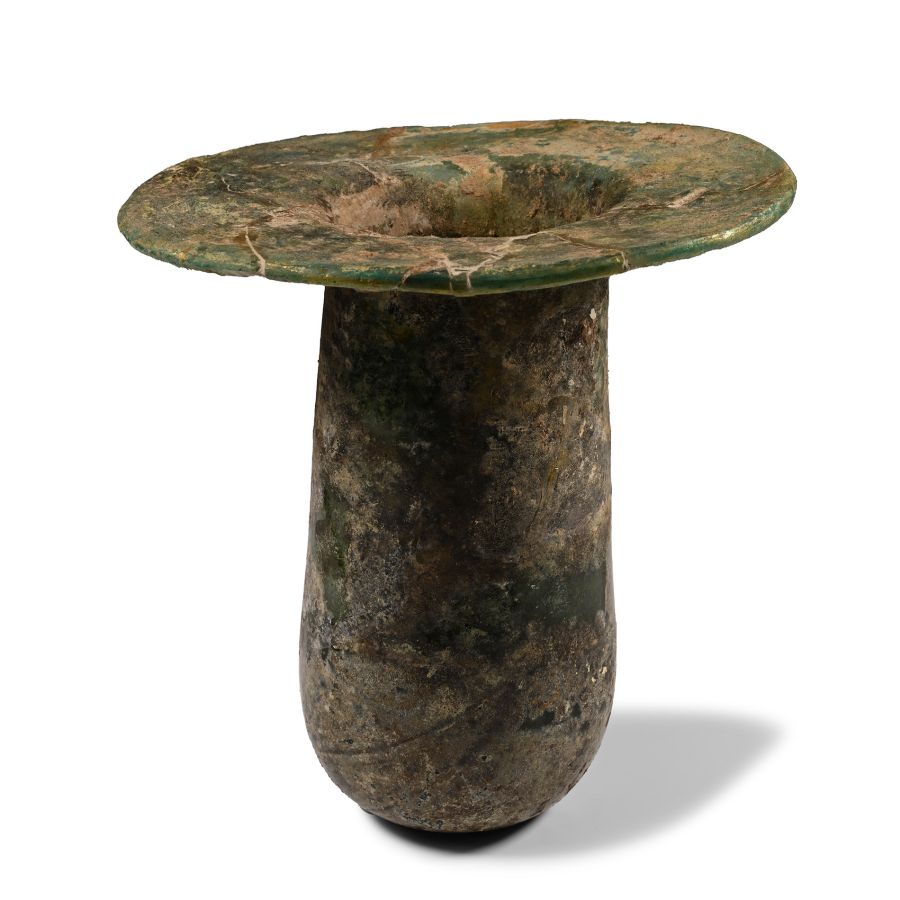
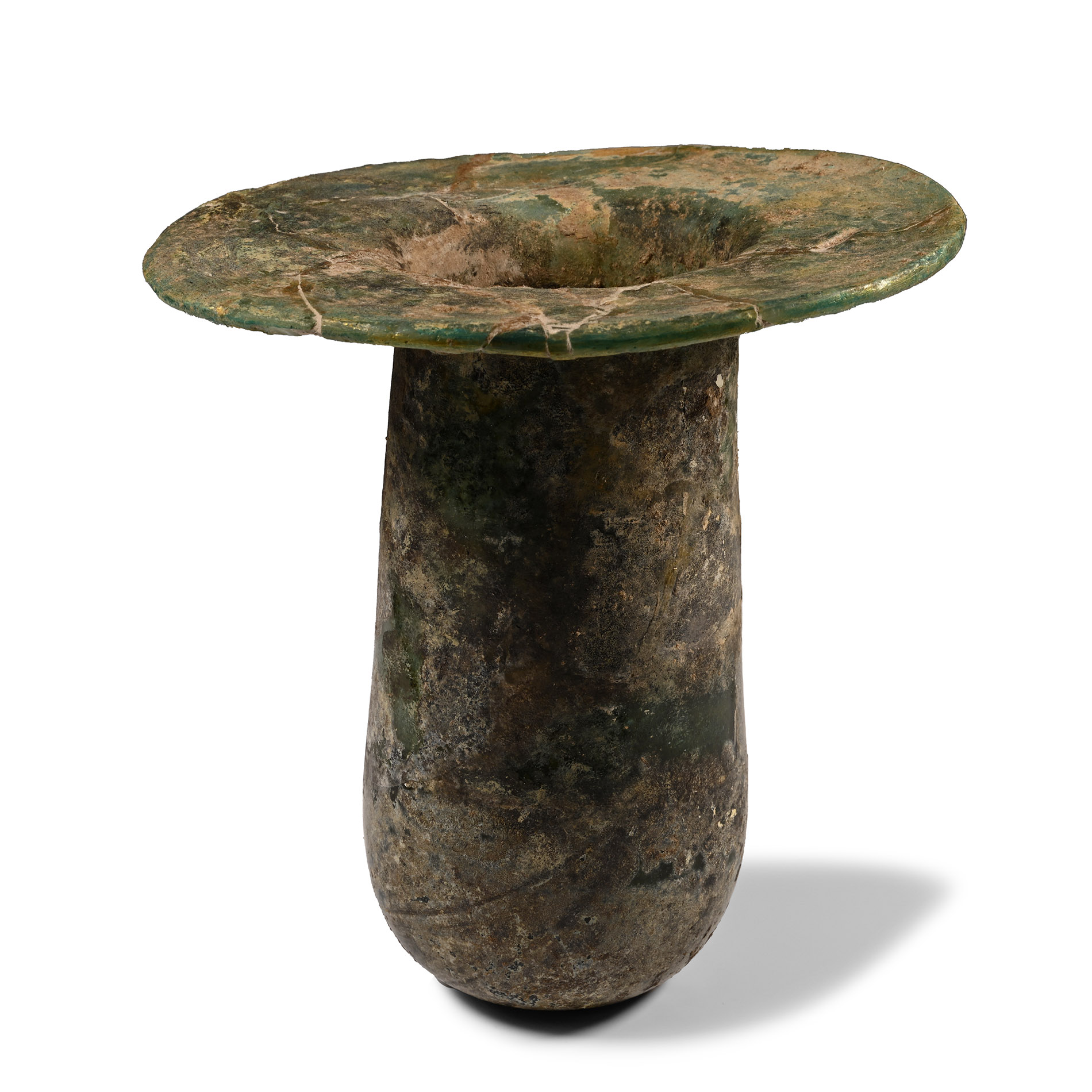
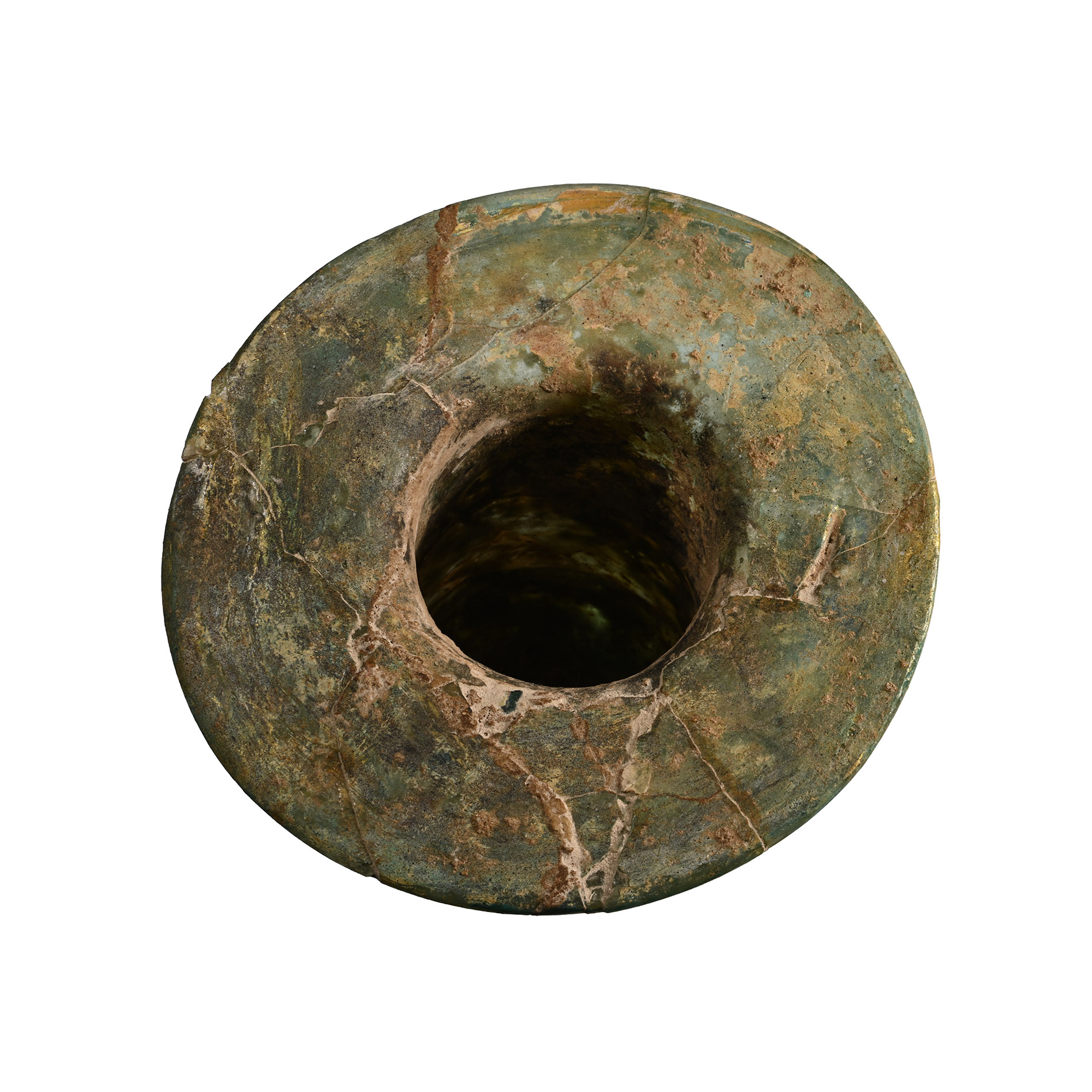
Large Roman Wide-Rimmed Glass Vessel
3RD-4TH CENTURY A.D.
8 in. (723 grams, 20.5 cm).
Ointment pot with globular body and flat flaring rim.
ProvenanceMr F.D. collection, acquired on the European art market, 1975 to present.
This lot is accompanied by an illustrated lot declaration signed by the Head of the Antiquities Department, Dr Raffaele D’Amato.
Cf. Fleming, S.J., Roman Glass, Reflexions of Everyday Life, Philadelphia, 1997, p.31, for similar specimen.
FootnotesThese kind of pots were used to hold a perfumed lotion or paste that could be scooped out on the tip of the finger and applied as a cosmetic. This vessel shape had a remarkable longevity of usage, examples being known from the 1st to the 4th century A.D.
CONDITIONTimeLine Auctions follows a vetting process to ensure the authenticity and legality of all items, reinforcing our commitment to integrity and responsible trading. Each antiquity, antique, and coin lot undergoes thorough examination by a vetting committee of at least ten external specialists, professional trade association members, scientists, and archaeologists: Our Vetting Process
AUCTIONS:
TimeLine is a leading auction house specialising in antiquities, ancient art, collectables, natural history, coins, medals, and books. Our auctions offer museums, collectors, historians, and enthusiasts the opportunity to acquire unique and historically significant pieces.
-
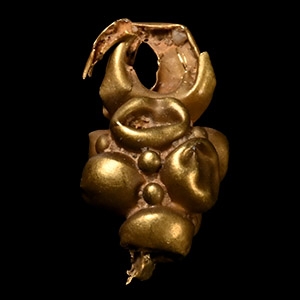
Roman Gold Ornamental Pendant
1st-4th century A.D.Sold for (Inc. bp): £46
Formed of large spheres with small pellets in between, integral suspension loop above. 0.39 grams, 9 mm
Ex property of a late Japanese collector, 1970-2000s. This lot is accompanied by an illustrated lot declaration signed by the Head of the Antiquities Department, Dr Raffaele D’Amato. -
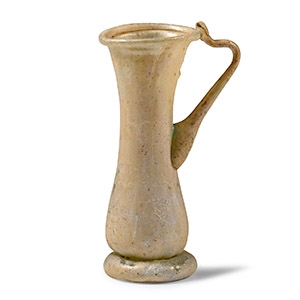
Roman Glass Handled Phial
1st-3rd century A.D.Sold for (Inc. bp): £208
Piriform in profile with applied trail base, rolled rim and applied handle. 22.9 grams, 84 mm
Formerly in North American collection, 1990s. From the collection of a London, UK, gentleman. This lot is accompanied by an illustrated lot declaration signed by the Head of the Antiquities Department, Dr Raffaele D’Amato. -
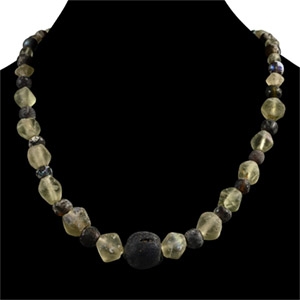
Roman Glass Bead Necklace
1st-2nd century A.D.Sold for (Inc. bp): £78
A designer necklace composed of graduated glass beads including green polyhedral and blue spherical; with modern clasp, restrung. 92 grams, 47 cm
Previously acquired in the 1980s. From a North West London, UK, collection. Property of a Californian, USA, collector. This lot is accompanied by an illustrated lot declaration signed by the Head of the Antiquities Department, Dr Raffaele D’Amato.
