
Loading, please wait...
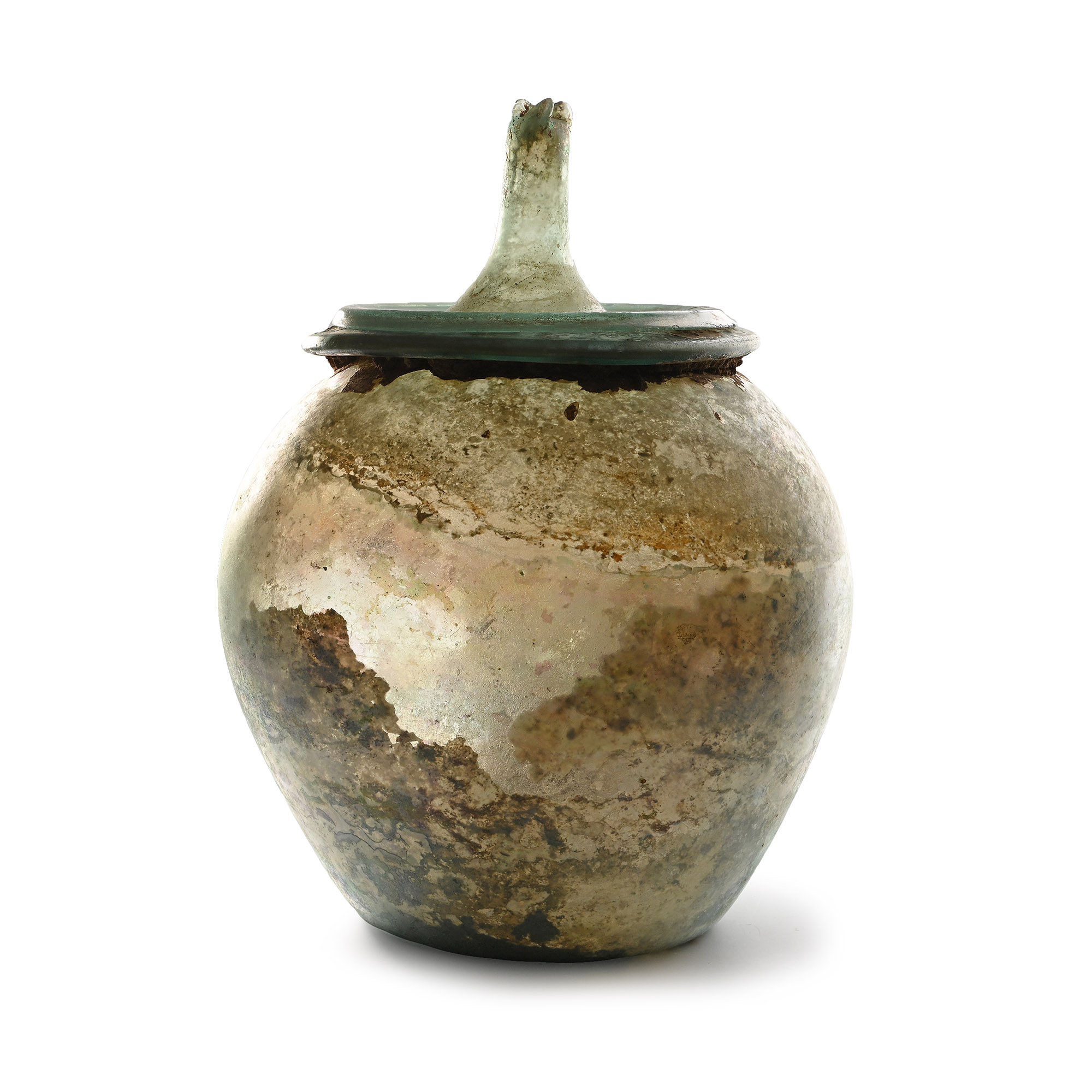
LOT 0193
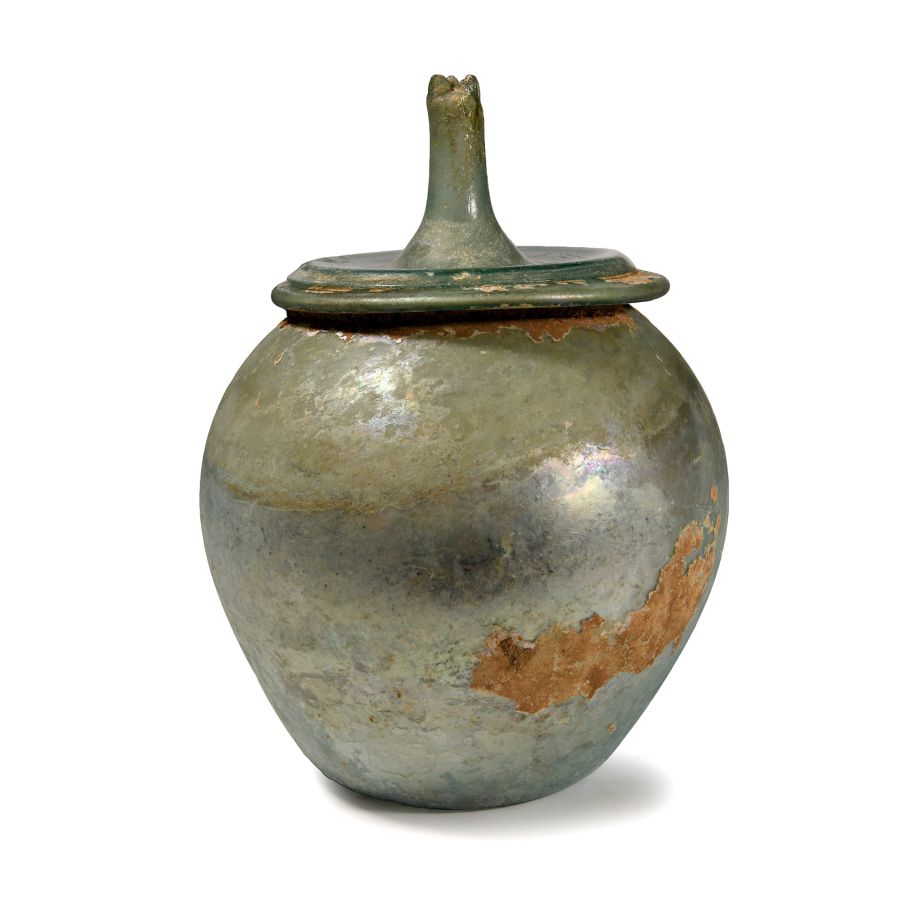
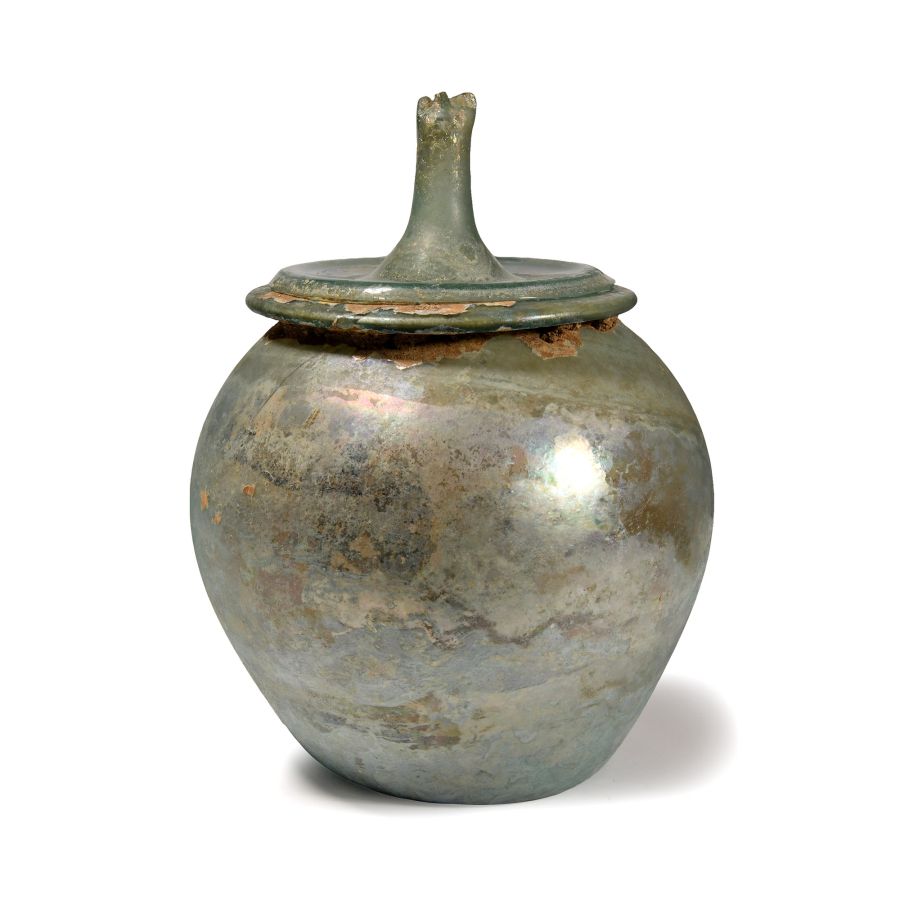
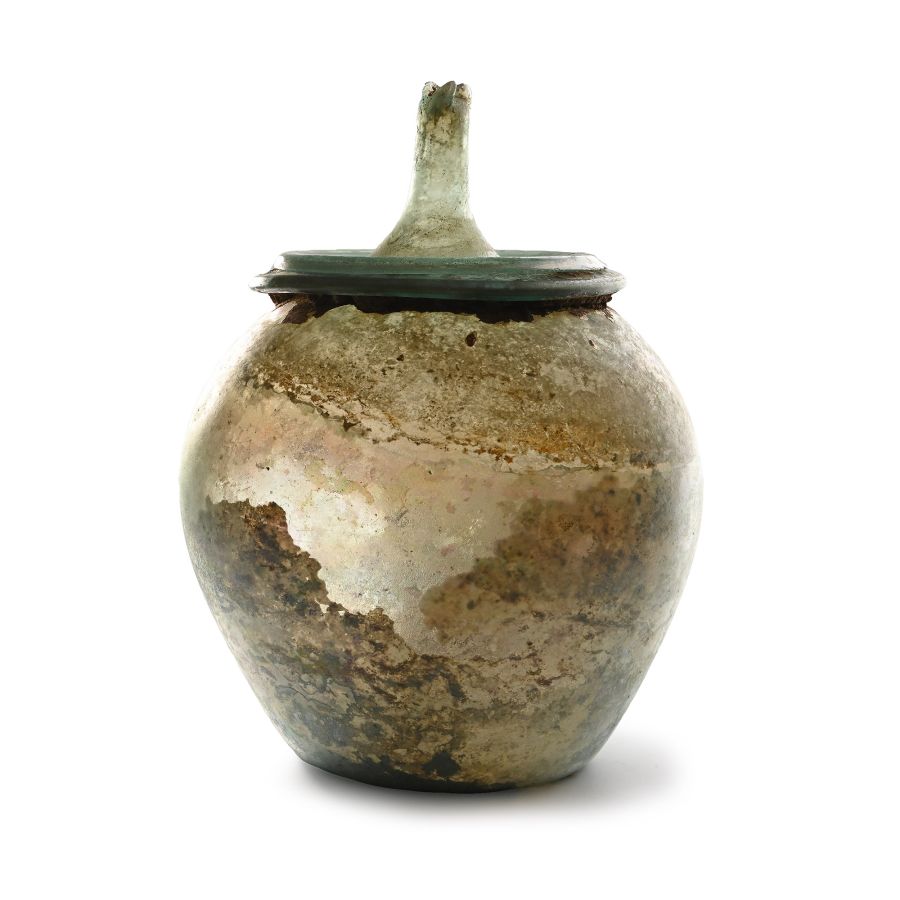
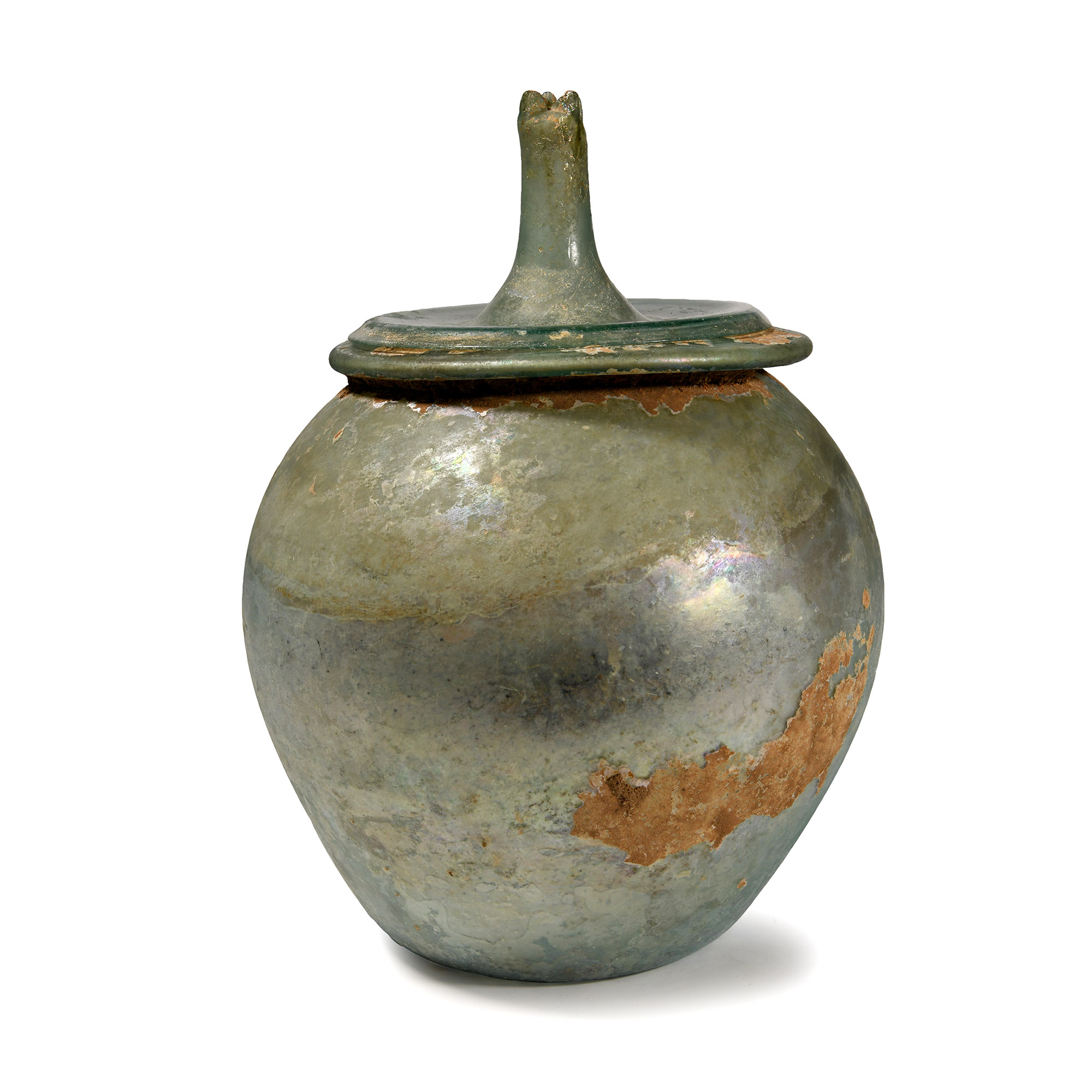
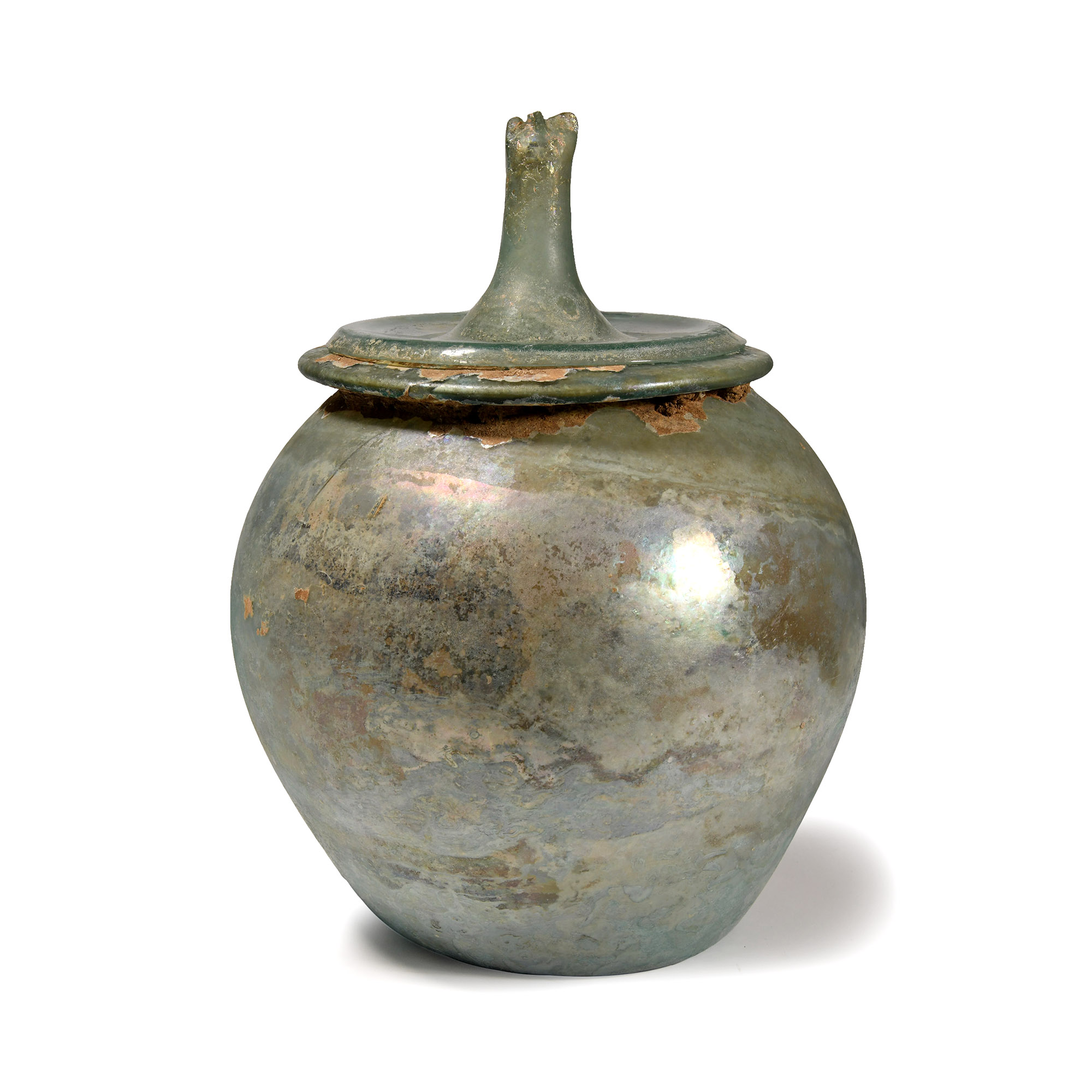
Large Roman 'The Sangiorgi' Pale Green Glass Cinerary Urn
3RD-1ST CENTURY B.C.
11 5/8 in. (823 grams total, 29.5 cm high).
Of piriform shape with everted rim, gently chamfered upper lip and concave underside; lid with bevelled rim, gently dished upper face rising to a central dome and cylindrical handle with piecrust pleats; iridescent surfaces.
ProvenanceEx Sangiorgi collection, acquired in the 19th century.
with Christie's, 3 June 1999, no.121.
The remains of a 19th-early 20th-century label can be seen on the glass on one side.
with Christie's, New York, 9 December 1999, no.476.
American private collection, Westchester, New York, acquired in 1999.
with Bonhams, London, 30 September 2015, no.91.
Private collection, UK.
This lot has been checked against the Interpol Database of stolen works of art and is accompanied by search certificate number no.13132-248966.
Cf. The Metropolitan Museum, New York, accession number 81.10.8, for similar example; cf. a very similar example with lid, discovered in the Conjunto Arqueologico de Carmona, Carmona (Sevilla), Spain, in Boletín del Museo Arqueologico Nacional, Madrid, IX,1991, figs.1-14; cf. The British Museum, museum number 1993,0102.11, for similar; cf. The Corning Museum of Glass, accession number 70.1.44, for similar. cf. also Metropolitan Museum of Art, Twelfth Annual Report of the Trustees of the Association for eight months ending December 31, New York, 1881, pp.215-216.
FootnotesA similar jar in the British Museum was found in Warwick Square, London, inside a lead canister, and was originally filled with bone ashes. The Romans often reused glass jars, originally made for storing liquids and foodstuffs, as cremation vessels, but this kind of jar seems too fragile and was therefore probably purpose-made. The lead canister, which was found with the jar from London, protected the glass and bones. Georgio Sangiorgi is one of the most famous names associated with the field of ancient glass collecting. Working from the Galleria Sangiorgi in the Palazzo Borghese, Sangiorgi acquired the most magnificent collection of ancient glass, seeking only the finest examples.
CONDITIONTimeLine Auctions follows a vetting process to ensure the authenticity and legality of all items, reinforcing our commitment to integrity and responsible trading. Each antiquity, antique, and coin lot undergoes thorough examination by a vetting committee of at least ten external specialists, professional trade association members, scientists, and archaeologists: Our Vetting Process
AUCTIONS:
TimeLine is a leading auction house specialising in antiquities, ancient art, collectables, natural history, coins, medals, and books. Our auctions offer museums, collectors, historians, and enthusiasts the opportunity to acquire unique and historically significant pieces.
LOT 0193
Large Roman 'The Sangiorgi' Pale Green Glass Cinerary Urn
Estimate £6,000 - 8,000€6,960 - 9,280 (for guidance only)$8,100 - 10,800 (for guidance only)
-
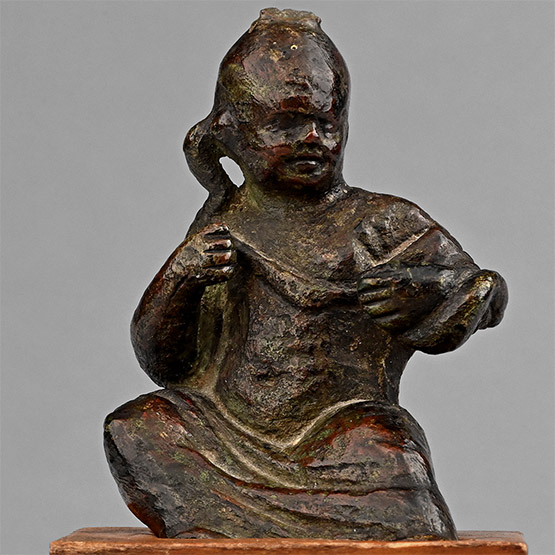
Roman Bronze Statuette of the God Harpocrates
1st-3rd century A.D.Estimate: £2,000 - 3,000 (‡+bp*)
Opening Bid: £1,000
Presented as a very young child sitting on the ground, wearing a long tunic which covers his lower body down to his feet; right arm bent and hand raised to the shoulder, left hand curved around an object (absent); sporting the conventional sidelock behind the right ear; mounted in a custom-made tiered wooden stand. 213 grams, 73 mm (276 grams total, 10.2 cm including stand)
Ex Hanna Saba collection, Ambassador to Egypt-USA-France (1909-1992). Private European collection. This lot has been checked against the Interpol Database of stolen works of art and is accompanied by a search certificate number no.12098-218159.
The god's name was Hellenized in the Ptolemaic era and later adopted by the Romans, but it originated in the figure of 'Horus the child', son of Isis and Osiris, who was worshipped especially in Alexandria. -
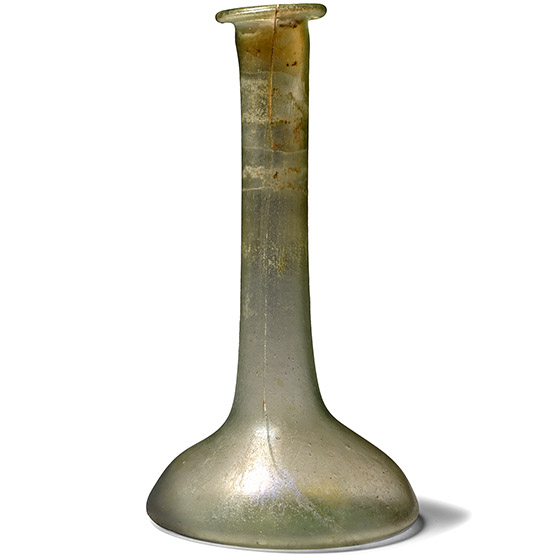
Roman Glass Candlestick Unguentarium
2nd-3rd century A.D.Estimate: £250 - 350 (‡+bp*)
Opening Bid: £135
With low conical body and slightly convex wall, dimple base; tall cylindrical neck flaring to mouth with inward-folded rim; slightly iridescent surface. 37.2 grams, 13.6 cm
Ex P. Martens, The Netherlands, formed between 1974-1984. Accompanied by a copy of an Art Loss Register certificate no.S00075481. -
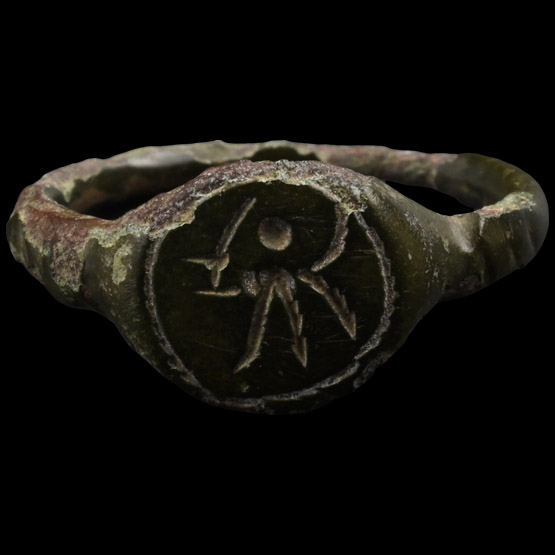
Roman Bronze Ring with Warrior
280-400 A.D.Sold for (Inc. bp): £33
Comprising a slender hoop and a discoid bezel with a stylised figure holding a sword. 3.35 grams, 21.58 mm overall, 17.38 mm internal diameter (approximate size British N, USA 6 1/2, Europe 13.72, Japan 13)
Acquired on the UK and EU art market before 2000. From the private collection of a Surrey, UK, gentleman.
The small copper-alloy Roman finger ring seems to be of Guiraud Type 4f (similar to Henig Type II) and dates from the 3rd to early 5th century A.D. The size of the ring suggests it may have been worn on the end of the finger, but most probably used by a child.
