
Loading, please wait...
LOT 0124
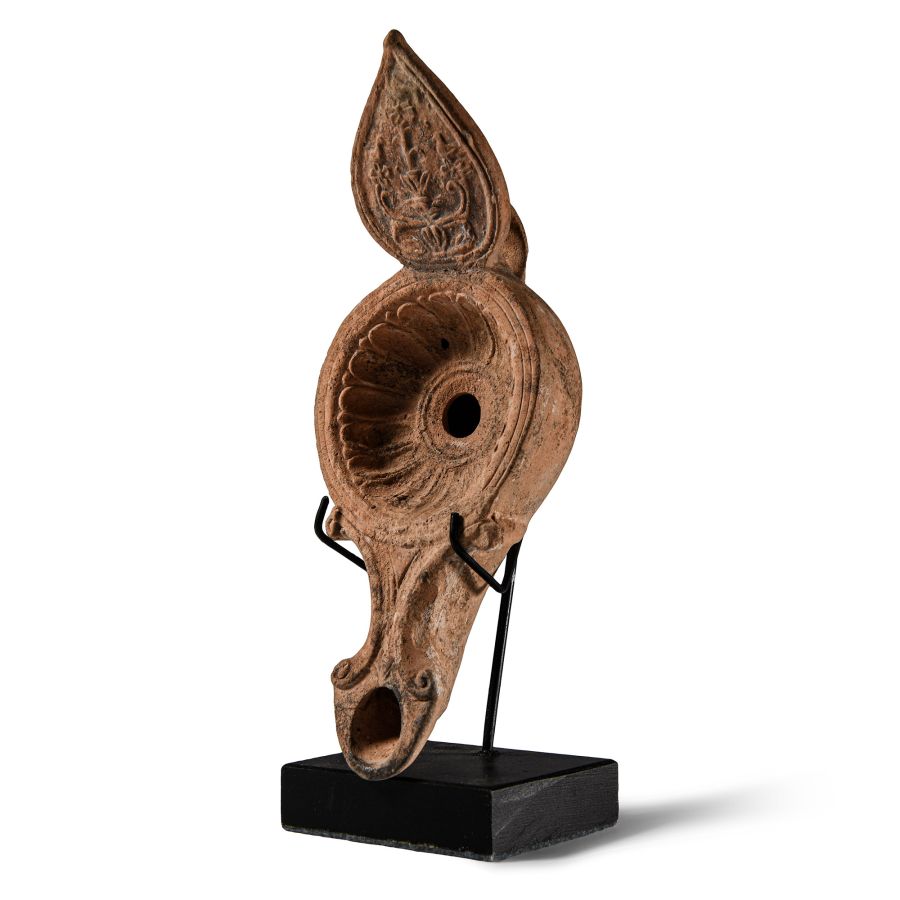
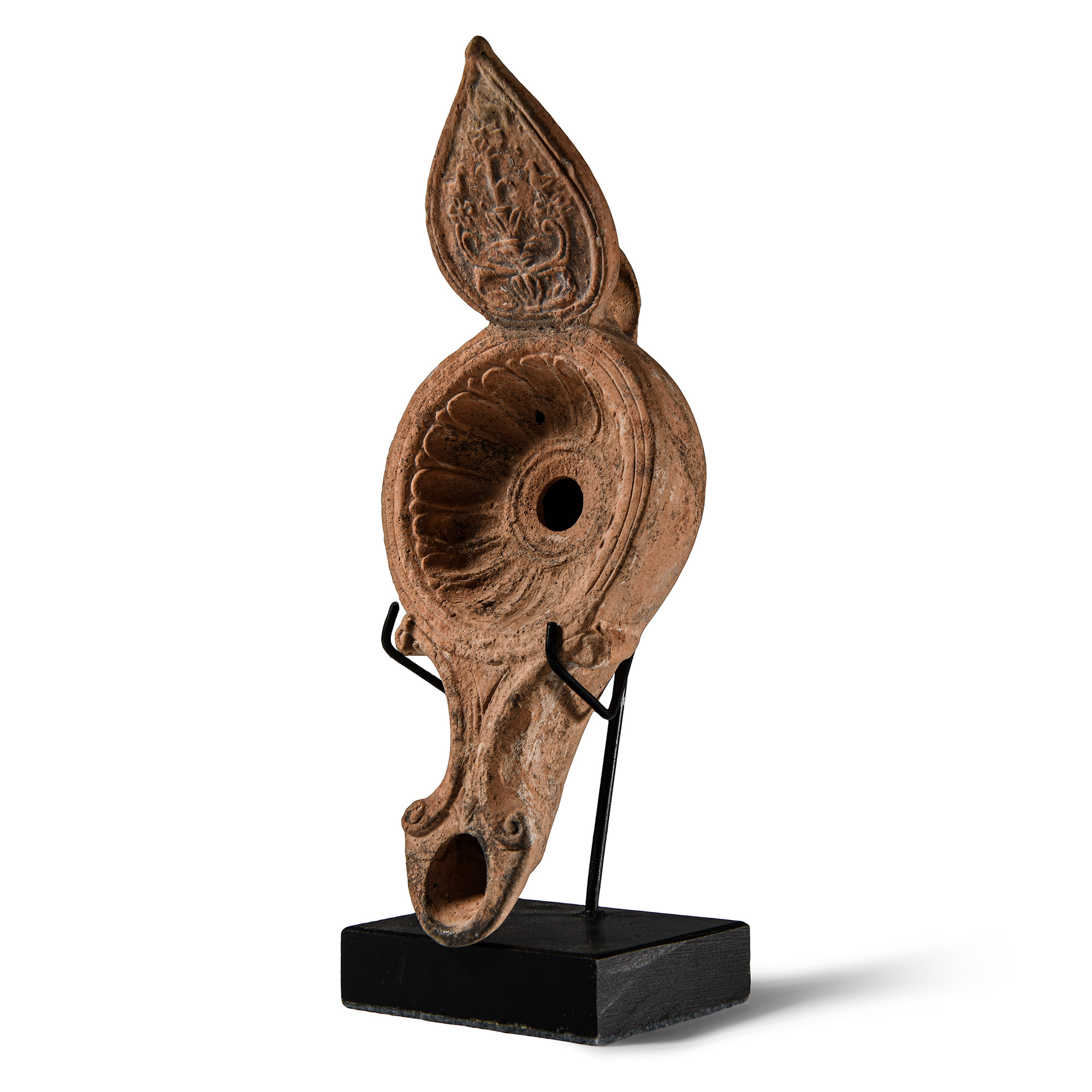
Large Roman Terracotta Oil Lamp with Reflector
1ST CENTURY A.D.
7 1/8 in. (257 grams total, 18 cm wide including stand).
Cup-shaped body with socketted lotiform discus and central filling hole, tapering nozzle with volute scrolls to the rim, D-shaped finial; loop handle and piriform reflector with low-relief ornament of an urn with vine scrolls and perching birds; mounted on a custom-made stand.
ProvenanceFrom the private collection of the late Mr S.M., London, UK, 1969-1999; thence by descent.
LiteratureCf. Hayes, J.W., Ancient Lamps in the Royal Ontario Museum. I: Greek and Roman Clay Lamps, Toronto, 1980, item 214, for type.
CONDITIONTimeLine Auctions follows a vetting process to ensure the authenticity and legality of all items, reinforcing our commitment to integrity and responsible trading. Each antiquity, antique, and coin lot undergoes thorough examination by a vetting committee of at least ten external specialists, professional trade association members, scientists, and archaeologists: Our Vetting Process
AUCTIONS:
TimeLine is a leading auction house specialising in antiquities, ancient art, collectables, natural history, coins, medals, and books. Our auctions offer museums, collectors, historians, and enthusiasts the opportunity to acquire unique and historically significant pieces.
-
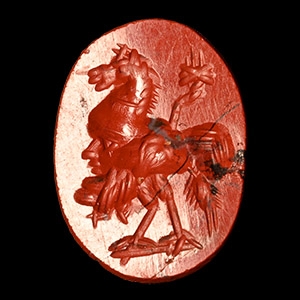
Roman Red Jasper Gemstone with Gryllos
2nd century A.D.Sold for (Inc. bp): £598
Oval in shape; the main subject of the gryllos a youth wearing a horse-head topped helmet, the body a ram's head holding an ear of corn in its mouth, the legs and tail that of a cockerel. 0.34 grams, 11 mm
Acquired 1980-2015. Ex Abelita family collection.
According to Plutarch, grylloi had apotropaic properties to ward off the evil eye. -
.jpg)
Roman Redware Fragment with Diana
4th-5th century A.D.Sold for (Inc. bp): £143
Curved ceramic fragment with high-relief image to the inner face, female in short-sleeved undergarment and outer stola draped over her head as a hood, holding a rod in her left hand and extending her right arm across her body. 19.6 grams, 63 mm
Acquired 1960s-1990s. From the late Alison Barker collection, a retired London barrister. -
.jpg)
Roman Hare Gemstone
Circa 2nd-3rd century A.D.Sold for (Inc. bp): £195
Carnelian with intaglio leaping hare with hindlegs extended; supplied with a museum-quality impression. 0.78 grams, 11 mm
From the collection of a Swiss gentleman formed in Europe from 1970-1980s; thence by descent from the family in London.
