
Loading, please wait...
LOT 1011
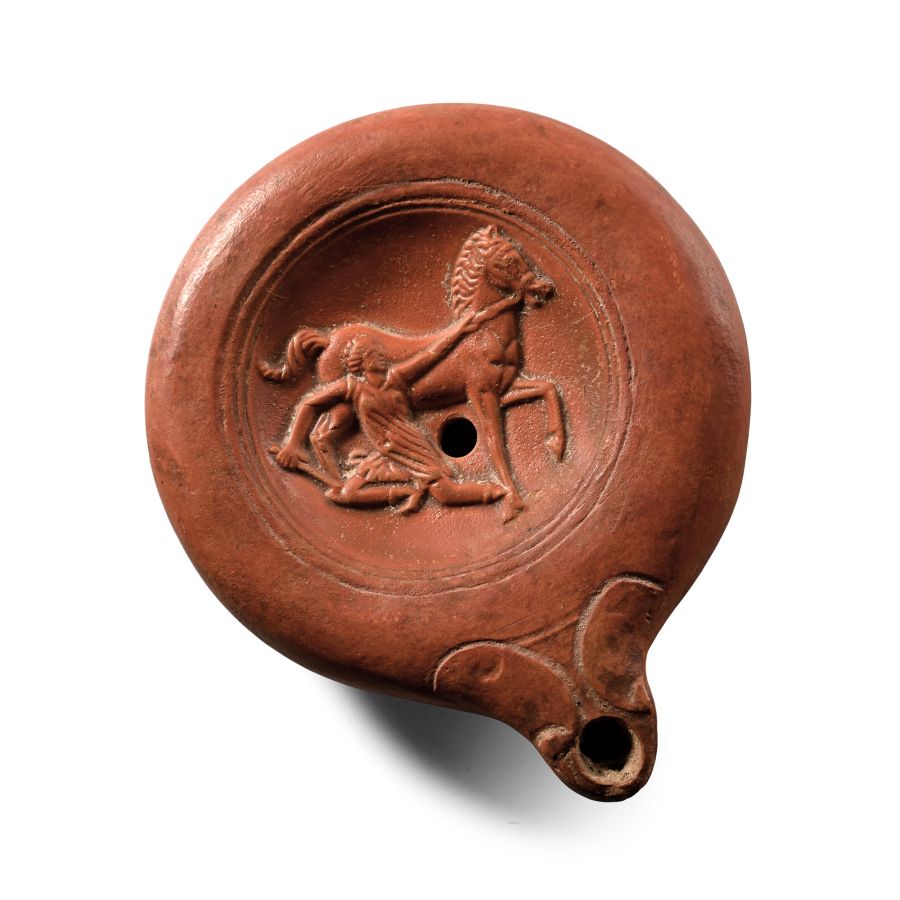
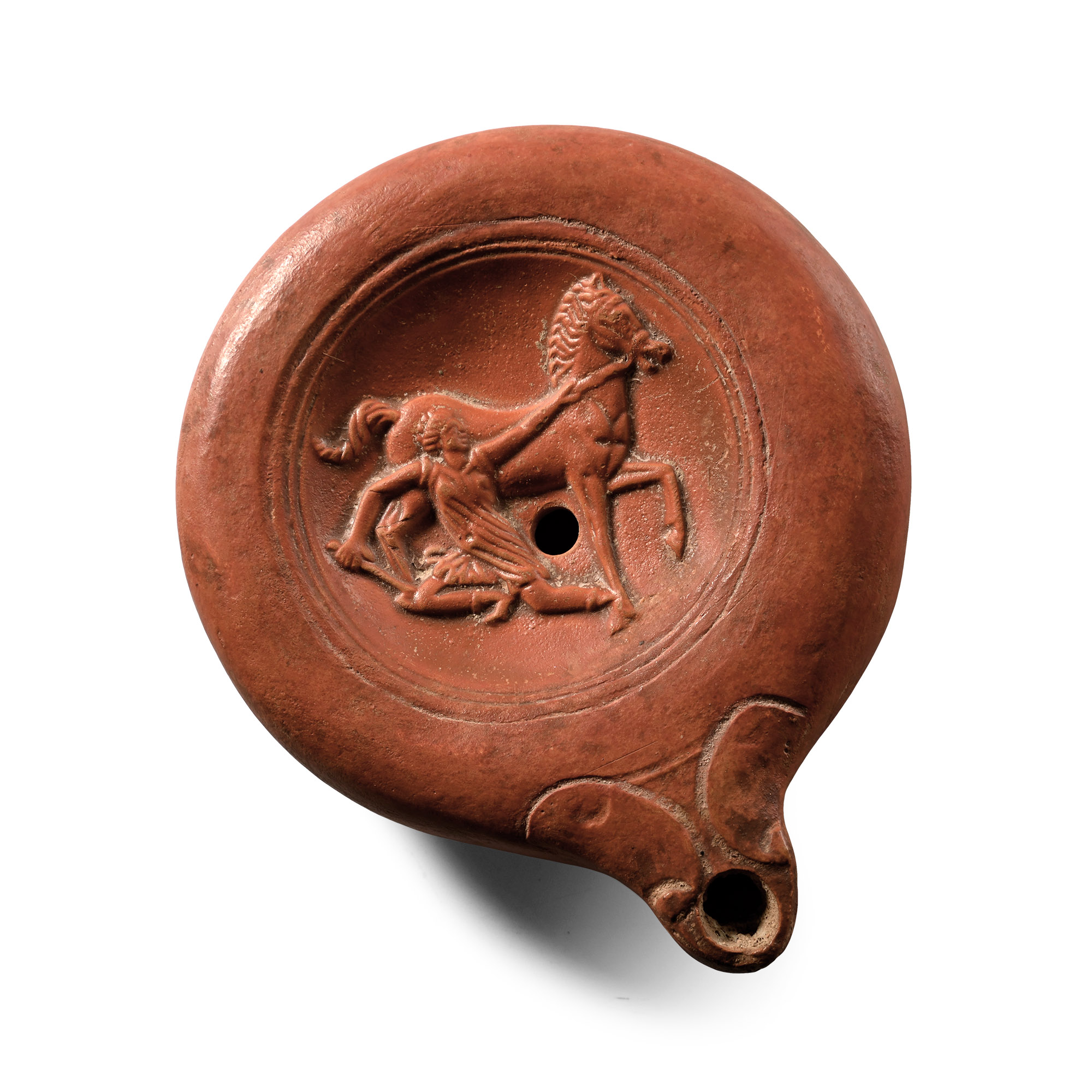
Large Roman Terracotta Oil Lamp with 'Fallen Amazon' and Horse
CIRCA 1ST-2ND CENTURY A.D.
4 7/8 in. (115 grams, 12.3 cm).
Shallow oil lamp with narrow nozzle, the discus with a dynamic scene of an advancing horse moving to the right with a fallen Amazon hanging on to its bridle; inked collector's number '220' on the base.
ProvenanceEx important German collection, 1960-1990.
LiteratureCf. Rosenthal, R., Sivan, R., Ancient Lamps in the Schloessinger Collection, Jerusalem, 1978, no.118, p.33, for the type.
CONDITIONTimeLine Auctions follows a vetting process to ensure the authenticity and legality of all items, reinforcing our commitment to integrity and responsible trading. Each antiquity, antique, and coin lot undergoes thorough examination by a vetting committee of at least ten external specialists, professional trade association members, scientists, and archaeologists: Our Vetting Process
AUCTIONS:
TimeLine is a leading auction house specialising in antiquities, ancient art, collectables, natural history, coins, medals, and books. Our auctions offer museums, collectors, historians, and enthusiasts the opportunity to acquire unique and historically significant pieces.
LOT 1011
Large Roman Terracotta Oil Lamp with 'Fallen Amazon' and Horse
Estimate £150 - 200€170 - 230 (for guidance only)$200 - 270 (for guidance only)
Opening Bid
£50 (EUR 58; USD 68) +BP*
-
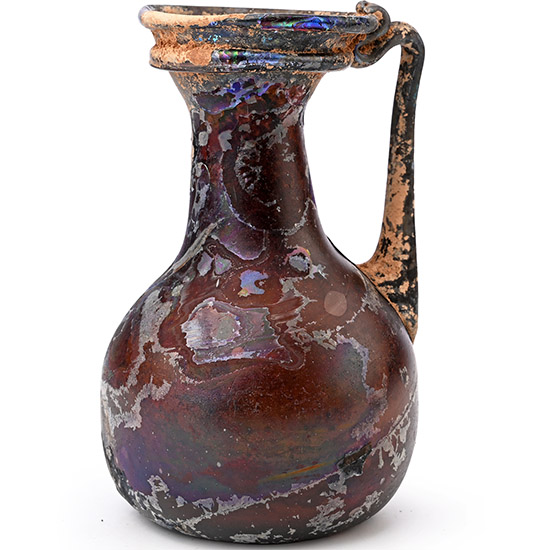
Roman Aubergine Glass Pitcher
3rd-4th century A.D.Estimate: £400 - 600 (+bp*)
Opening Bid: £200
Comprising a bulbous body with a dimple base and a funicular neck with an applied band below the rim and a handle to the rear. 93.2 grams, 10.8 cm
From an important London, UK, collection 1980-2020.
The pitcher shows the style of production of the Roman Rhine workshops. Several hundred vessels with applied decoration are known from the Roman Rhineland. The numerous finds from graves and the evidence of glass furnaces in Cologne suggest that a large proportion of these vessels were produced in local workshops, then spread throughout the empire. -
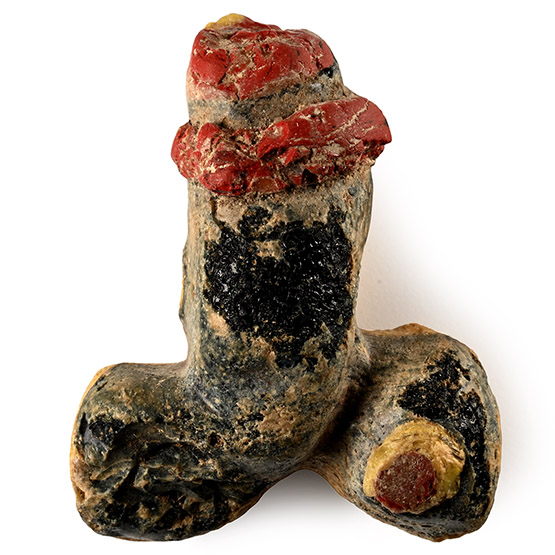
Roman Glass Phallic Amulet
1st century B.C.-1st century A.D.Estimate: £400 - 600 (‡+bp*)
Opening Bid: £200
Modelled in the round with applied red-glass collar, pierced through the shaft for suspension. 11.4 grams, 32 mm
Acquired in the mid 1980s-1990s. Private collection, Switzerland, thence by descent. Private collection, since the late 1990s.
In the Roman world, the phallus was a symbol of luck or fertility, and it was believed to have apotropaic functions. Pendants, amulets and small objects were worn by all sorts of people as symbols of protection, especially by young children, according to Varro and Pliny the Elder. The phallus is also commonly found on reliefs, frescoes and lamps from the Graeco-Roman world. -
.jpg)
Large Roman Glass Amphora with Trail
3rd century A.D.Estimate: £1,200 - 1,700 (+bp*)
Opening Bid: £600
With broad rounded shoulder, piriform body tapering to a stub foot, cylindrical neck and flared rim with rolled edge, applied twisted green glass handles (one partly absent); slightly iridescent surface. 125 grams, 21.2 cm
Acquired on the UK art market, 1990s. Private collection, New York, USA.
