
Loading, please wait...
LOT 0732
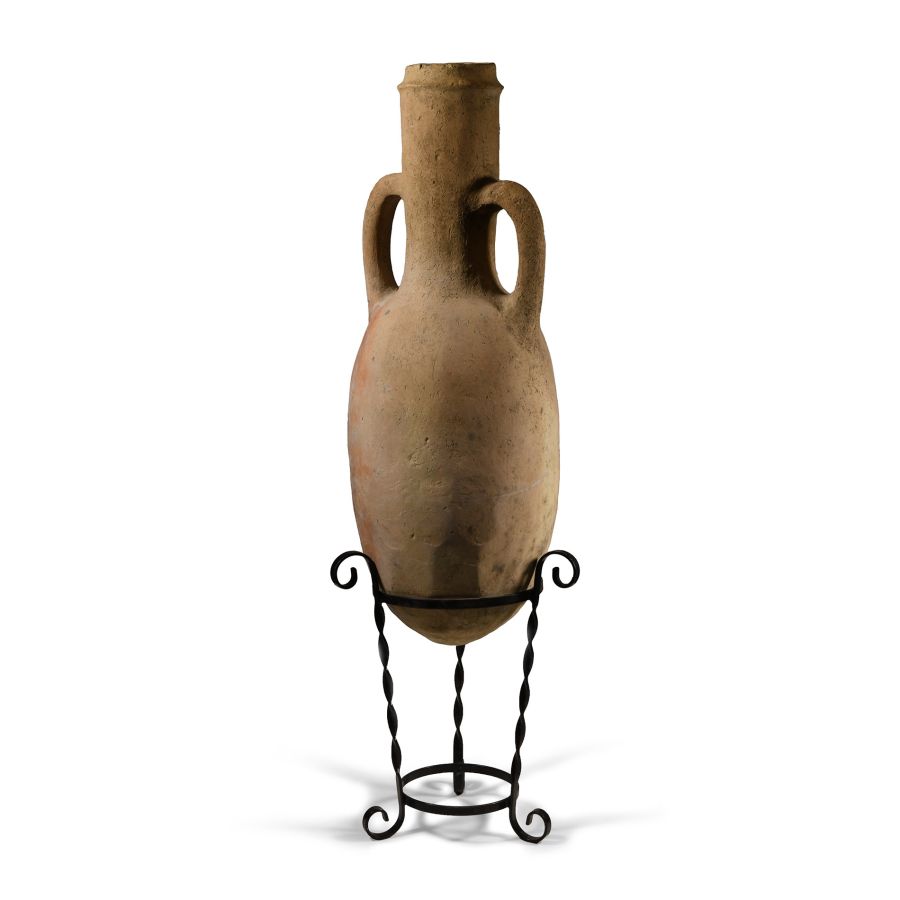
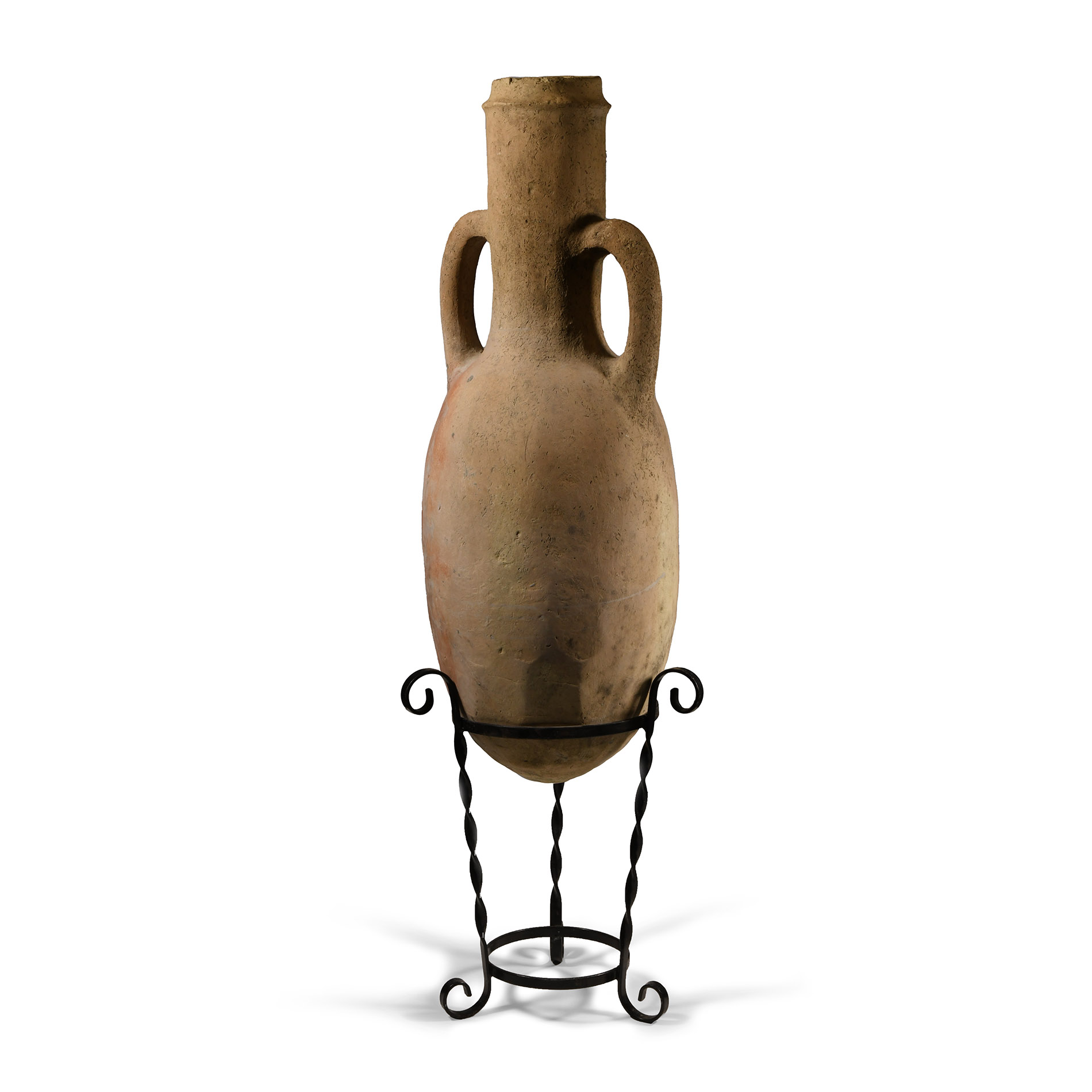
Large Roman Terracotta Amphora
1ST-3RD CENTURY A.D.
38 1/2 in. (9.75 kg total, 98 cm high including stand).
The body capsule-shaped with a cylindrical neck, inverted rim and rounded base, two D-section handles; accompanied by a display stand.
ProvenanceAcquired 1970s onwards.
Private collection of Michael O'Hara, Cambridgeshire, UK.
Ex private collection of Benjamin Hyde-Smith, Hertfordshire, UK.
TimeLine Auctions follows a vetting process to ensure the authenticity and legality of all items, reinforcing our commitment to integrity and responsible trading. Each antiquity, antique, and coin lot undergoes thorough examination by a vetting committee of at least ten external specialists, professional trade association members, scientists, and archaeologists: Our Vetting Process
AUCTIONS:
TimeLine is a leading auction house specialising in antiquities, ancient art, collectables, natural history, coins, medals, and books. Our auctions offer museums, collectors, historians, and enthusiasts the opportunity to acquire unique and historically significant pieces.
-
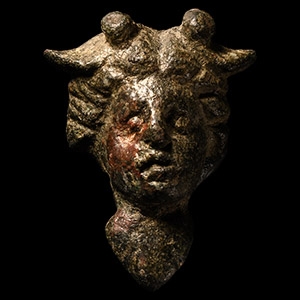
Roman Bronze Bust Mount of Mercury
1st-3rd century A.D.Sold for (Inc. bp): £111
Modelled in the half round with winged head; hollow reverse. 17.6 grams, 31 mm
Acquired on the UK market, 1990s. Property of a retired academic. -
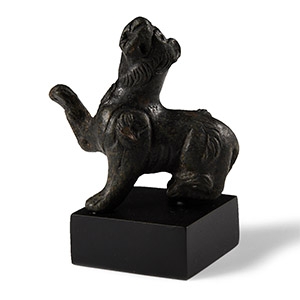
Roman Bronze Lioness Figure
1st-2nd century A.D.Estimate: £600 - 800 (+bp*)
Opening Bid: £333
Modelled in the round crouching with one forepaw held aloft, stylised detailing to the animal's coat, head, face and paws. 130 grams, 54 mm
‘The Ancient Menagerie Collection’ formerly the property of a Cambridgeshire lady, collected since the 1990s and acquired from auctions and dealers throughout Europe and the USA, now ex London collection. -
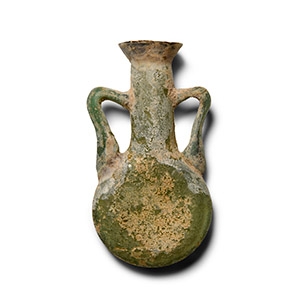
Roman Green Glass Pilgrim's Flask
1st century A.D.Sold for (Inc. bp): £98
Amphoriskos with flat disc-shaped body, tubular neck with flared rim, two lateral knee-shaped handles to the shoulder. 12.4 grams, 58 mm
Acquired 1970s-1996. Property of a North American collector. London collection, 2016.
