
Loading, please wait...


LOT 0879
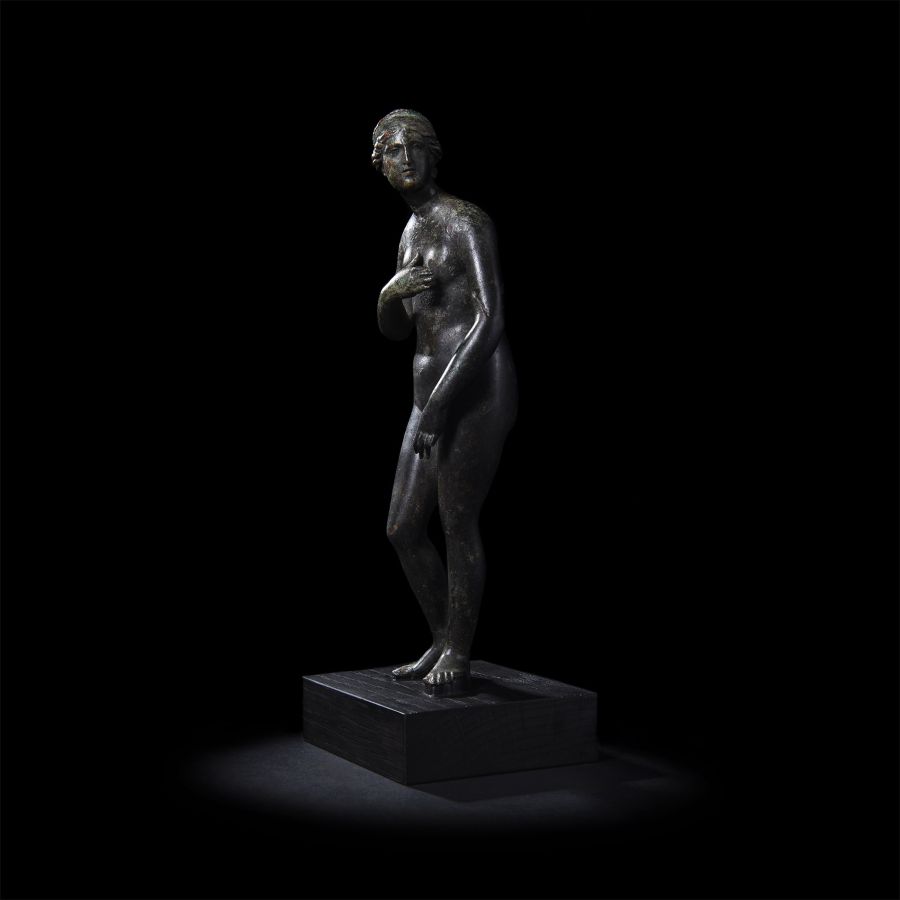
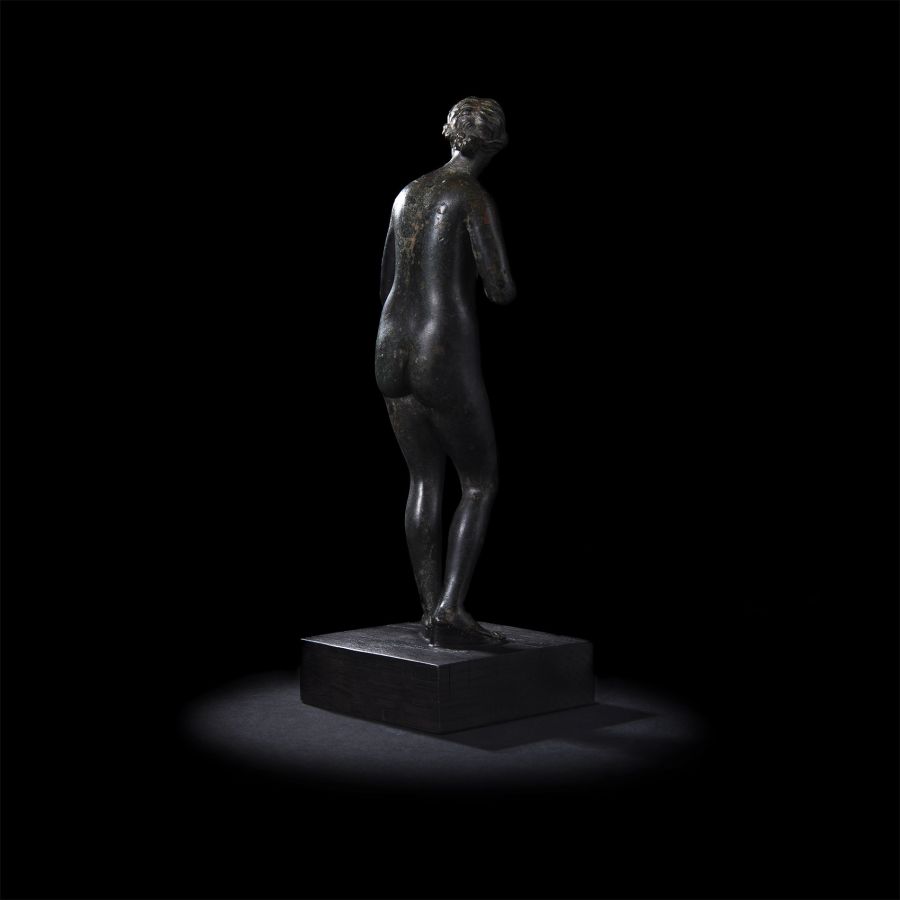
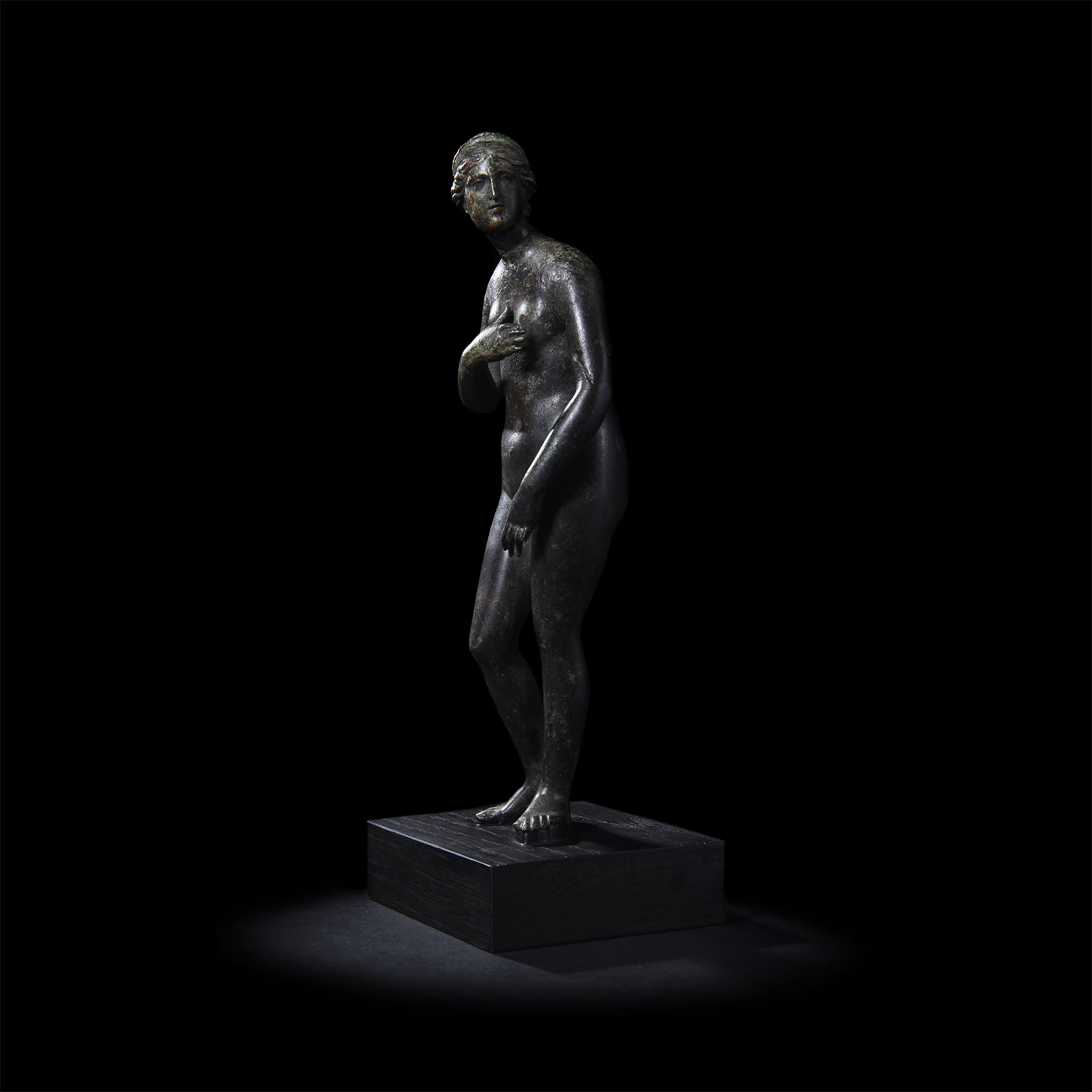
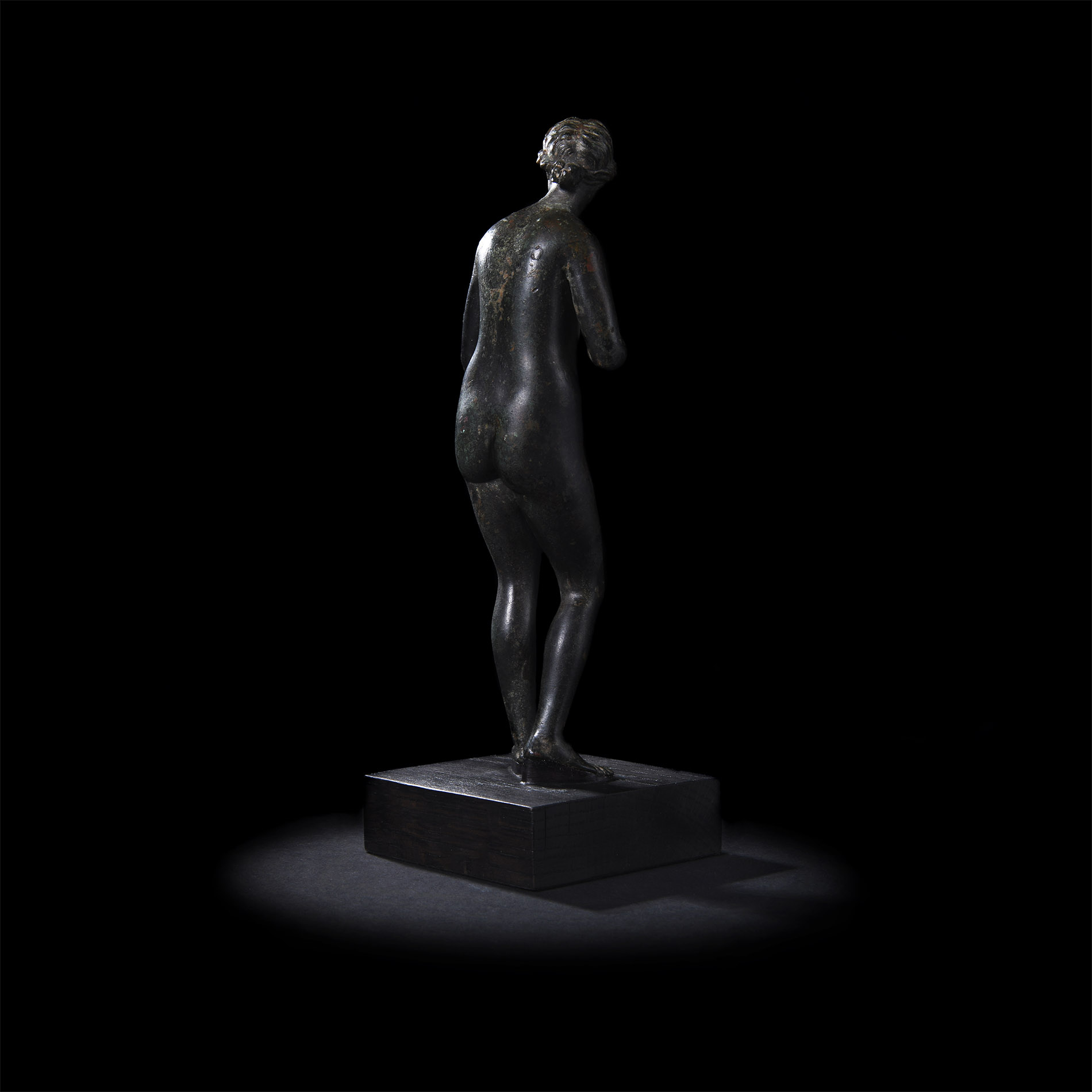
Large Roman Statuette of Goddess Venus
2ND-4TH CENTURY A.D.
9 in. (770 grams total, 23 cm including stand).
A substantial bronze statuette of Venus Pudica of the Medici type, standing nude with her head slightly lowered and surmounted by a diadem, the hair centrally parted and gathered in a chignon at the nape of the neck; finely-worked face and eyes; right arm raised covering her breasts, left hand open in an attempt to cover her pubic area; the weight of the body on her left leg with the right leg slightly bent and the heel raised; mounted on a custom-made display stand.
ProvenanceWeber collection, 1980s.
Collection of a Kensington gentleman.
Accompanied by an academic report by Dr. Raffaele D’Amato.
This lot has been checked against the Interpol Database of stolen works of art and is accompanied by AIAD certificate no.10738-177415.
See for a similar Roman statuette Reinach, S., Repertoire de la statuarie grecque et romaine, Paris, 1930, p.804; for the the Venus Pudica see Bianchi Bandinelli, R., Paribeni, E., L'arte dell'antichità classica. Grecia, Torino, 1986; for the Venus de Medici see Mansuelli, G., Galleria degli Uffizi: Le Sculture, (Rome) 2 vols, 1958–61, vol.I, pp.71–73.
FootnotesThe Aphrodite or Venus Pudica was a famous representation of the love goddess, naked or half-naked, covering her pubic area and / or breasts with her arms. The nude prototype of this female figure, created by the Athenian Praxiteles and adopted by the Romans, was the famous Aphrodite of Knidos who, interrupted before immersing herself in the bath, grabbed a cloth and covered her private parts with her left hand, caught in a natural gesture humanising the goddess. The theme developed during the Hellenistic period. From a bronze original Greek sculpture following the type of Knidos, a sculptor now known as Cleomenes of Apollodorus (a possible pseudonym) sculpted the famous Venus de’Medici in the 1st century B.C., the older prototype of the famous copies like the Venus Capitoline, the Venus of the Metropolitan and numerous other copies from the Roman world. Many small bronzes like our statuette were produced for domestic and/or votive cult practices. Beloved in Roman times, the theme of Venus Pudica was then taken up by artists from the Renaissance period onwards: the oldest tribute in sculpture is that of Giovanni Pisano in the figure of Temperance in the Pulpit of the Cathedral of Pisa (1310), while in paintings it is that of the Eva di Masaccio in the Brancacci Chapel.
CONDITIONTimeLine Auctions follows a vetting process to ensure the authenticity and legality of all items, reinforcing our commitment to integrity and responsible trading. Each antiquity, antique, and coin lot undergoes thorough examination by a vetting committee of at least ten external specialists, professional trade association members, scientists, and archaeologists: Our Vetting Process
AUCTIONS:
TimeLine is a leading auction house specialising in antiquities, ancient art, collectables, natural history, coins, medals, and books. Our auctions offer museums, collectors, historians, and enthusiasts the opportunity to acquire unique and historically significant pieces.

3rd-4th century A.D.
Lot No. 0722
Sold for (Inc. premium): £59

1st-4th century A.D.
Lot No. 0780
Sold for (Inc. premium): £156

1st-3rd century A.D.
Lot No. 0752
Sold for (Inc. premium): £78
