
Loading, please wait...
.JPG_900x900.jpg "Large Roman Statuette of Goddess Venus")
.JPG_200x200.jpg "Large Roman Statuette of Goddess Venus")
.JPG "Large Roman Statuette of Goddess Venus")
LOT 0064
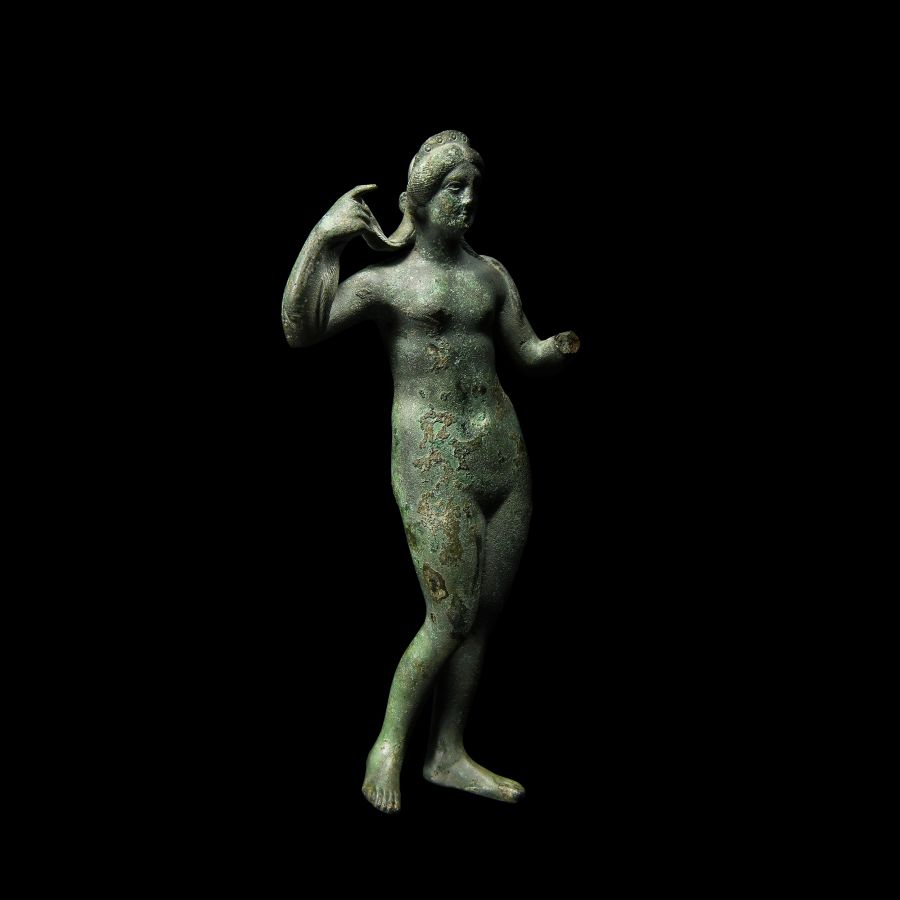
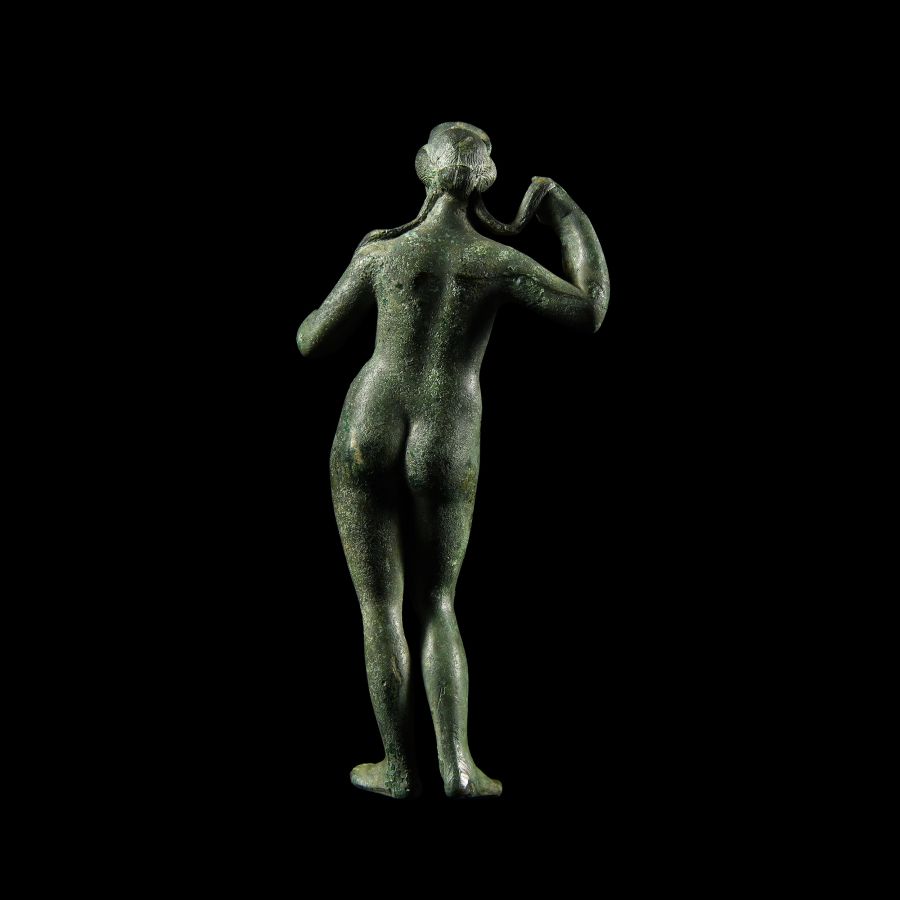
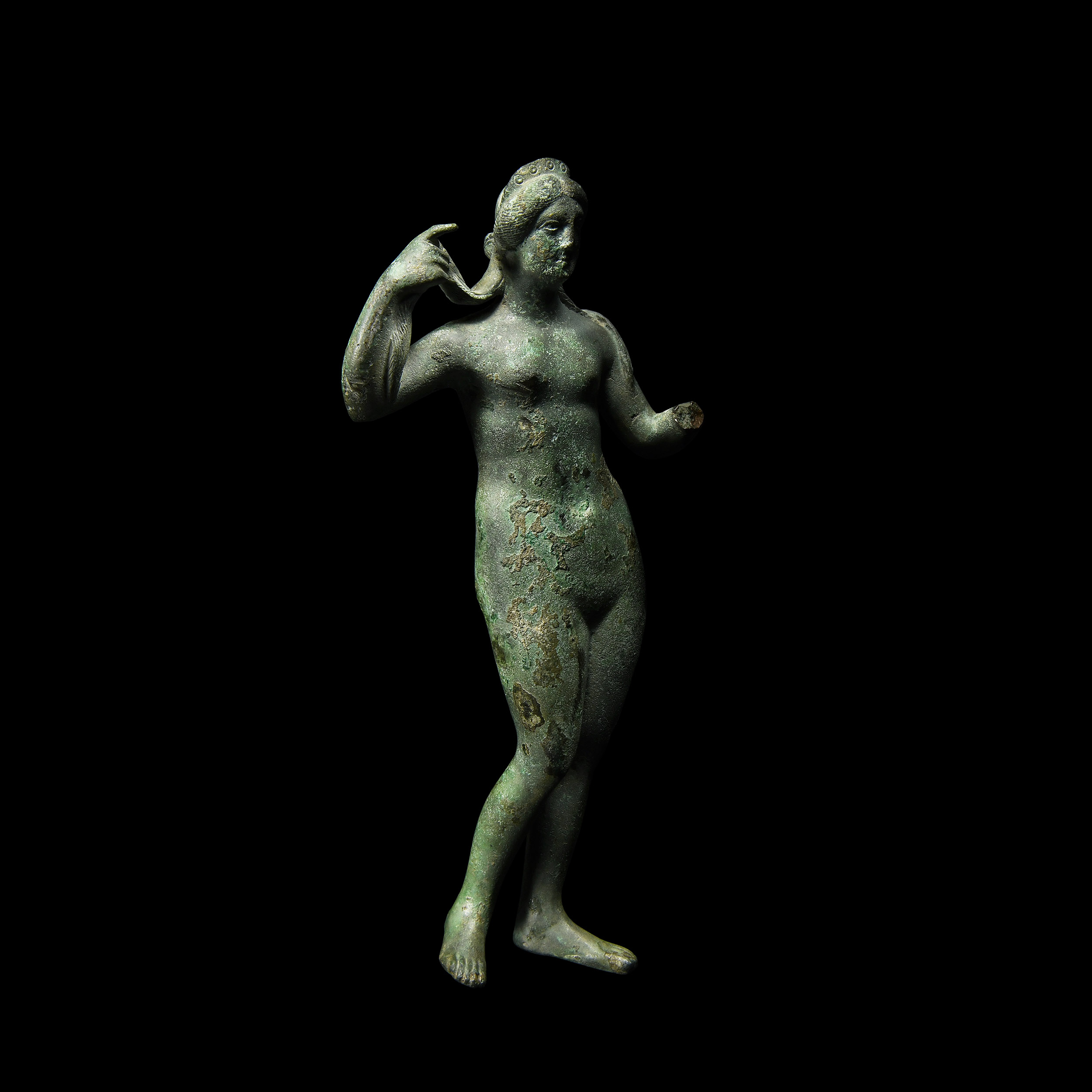
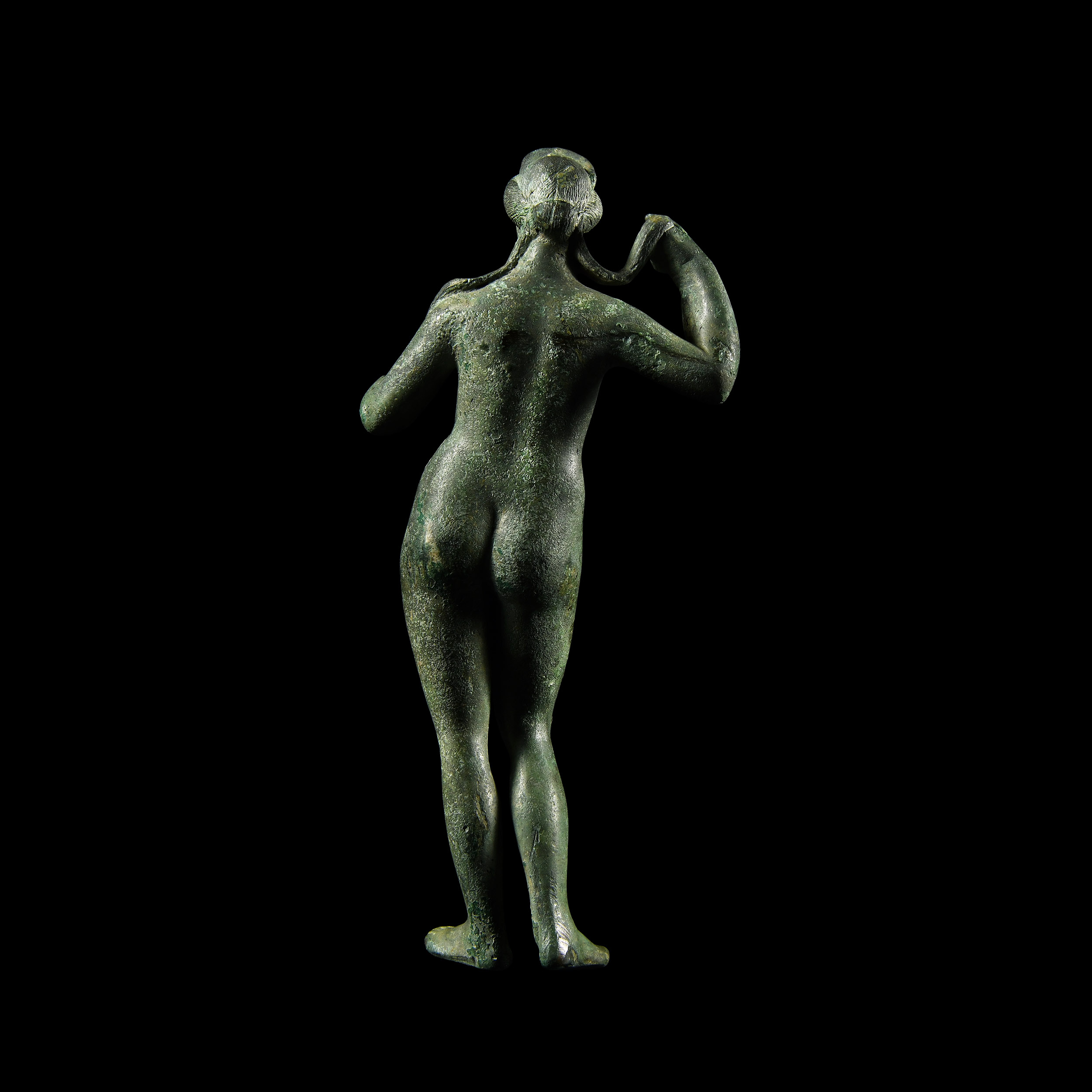
Large Roman Statuette of Goddess Venus
2ND-3RD CENTURY AD
7" (730 grams, 18cm).
A substantial bronze figure of Venus Anadyomene (Venus rising from the sea), standing nude, holding one of her braids with her right hand, the raised arm possibly originally held a mirror, curly hair gathered in a chignon at the nape of her neck.
ProvenanceFrom the collection of a Kensington gentleman; previously in the Weber collection, 1980s; accompanied by an archaeological expertise by Dr. Raffaele D’Amato and a positive metal test from an Oxford specialist; this lot has been checked against the Interpol Database of stolen works of art and is accompanied by AIAD certificate number no.10750-177411.
LiteratureSee for the type Reinach, S., Repertoire de la statuarie grecque et romaine, Paris, 1930, pp.175-177; Espérandieu, H. et Rolland, H., Bronzes Antiques de la Seine Maritime, XIIIe Supplement a Gallia, Paris, 1959; cf. similar bronze statuettes in Rolland, H., Bronzes Antiques De Haute Provence, Paris, 1965, items 78-79; Akerraz, A., Touri, A., Habibi, M., Boube-Piccot, C., Il Marocco e Roma, i grandi bronzi del museo di Rabat, Roma, 1992, figs.23-24, in the archaeological museum of Rabat, inv.89.12.3 and inv.vol.145; a similar statuette, dated to 2nd-3rd century AD, was in the Razgrad Museum, in Bulgaria until 1996; another similar example with same date was preserved at Timisoara museum, Romania; a more recent excavated example of 3rd century AD was found in Karanis, Egypt, by the University of Michigan, see Hutchinson, V., in Gazda, E., Guardians of the Nile: sculptures from Karanis in the Fayoum, exhibition catalogue, Kelsey, 1978, no.48, p.40.
FootnotesThe iconography of Venus Anadyomene was one of the most commonly used images of the goddess in classical sculpture, and was still popular during the late Roman Empire. The best example of this is the Louvre Venus Anadyomene (Ma 3537) of the 4th century AD, found in the 19th century at Saint George de la Montagne near Bordeaux, inside a rich aristocratic house and coming from Aphrodisias, ancient place of statuary production for export. Another important ancient example is the Venus Anadyomene of the Rouen Museum (Espérandieu et Rolland, 1959, no.38). The goddess of love and beauty was represented drying herself after being born, fully-grown, from the sea. In Greece, the birth of the goddess was thought to have taken place off the coast of Cyprus. This kind of composition could also be interpreted as Aphrodite emerging from her bath. Such sculptures were popular in gardens as part of water features, but small statuettes were also used as domestic lares.
CONDITIONTimeLine Auctions follows a vetting process to ensure the authenticity and legality of all items, reinforcing our commitment to integrity and responsible trading. Each antiquity, antique, and coin lot undergoes thorough examination by a vetting committee of at least ten external specialists, professional trade association members, scientists, and archaeologists: Our Vetting Process
AUCTIONS:
TimeLine is a leading auction house specialising in antiquities, ancient art, collectables, natural history, coins, medals, and books. Our auctions offer museums, collectors, historians, and enthusiasts the opportunity to acquire unique and historically significant pieces.
1st century BC-1st century AD
Lot No. 0753 Opening bid: £90
1st-2nd century AD
Lot No. 0766
Sold for (Inc. premium): £127
3rd century BC-1st century AD
Lot No. 0792
Sold for (Inc. premium): £165
