
Loading, please wait...
_900x900.jpg "Large Roman Rectangular Glass Bottle")
_200x200.jpg "Large Roman Rectangular Glass Bottle")
.jpg "Large Roman Rectangular Glass Bottle")
LOT 0151
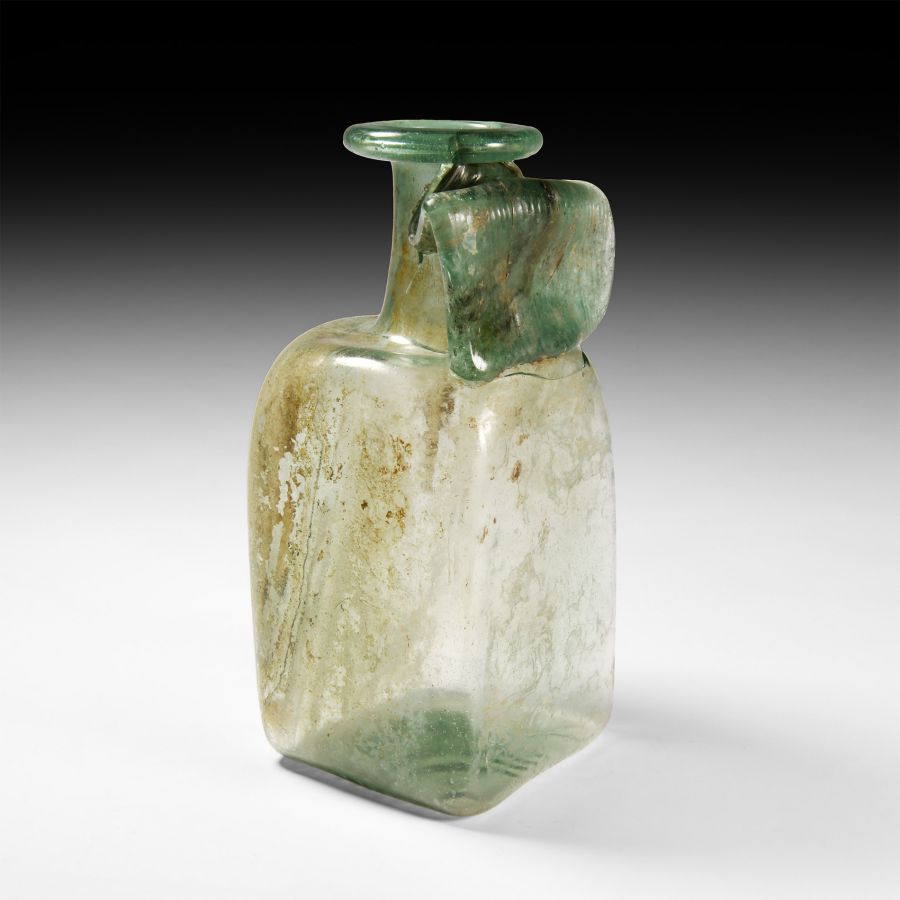
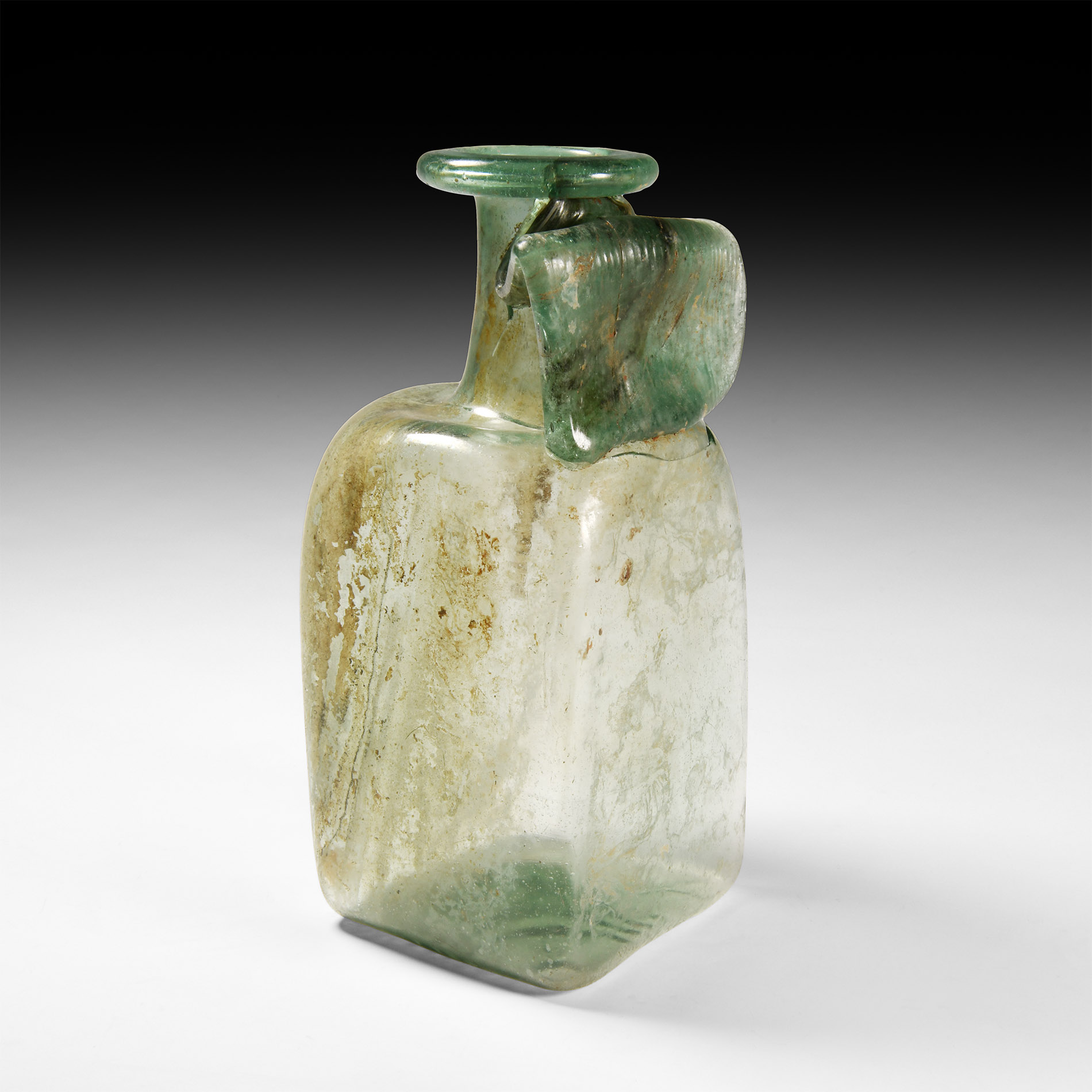
Large Roman Rectangular Glass Bottle
3RD-4TH CENTURY A.D.
8 in. (479 grams, 20.2 cm high).
A mottled aqua-green glass bottle, the body square in plan with tall tubular trumpet-shaped mouth and neck, folded ribbed-strap handle; moulded detail to the underside of four anchor-shaped motifs radiating from the centre; cracked.
ProvenanceAcquired early 1990s.
Ex private American collection; thence by descent.
Private Swiss collection since 1998.
This lot has been checked against the Interpol Database of stolen works of art and is accompanied by search certificate no.11634-199024.
Cf. The Metropolitan Museum, New York, accession number 2000.64, for similar dated slightly earlier.
CONDITIONTimeLine Auctions follows a vetting process to ensure the authenticity and legality of all items, reinforcing our commitment to integrity and responsible trading. Each antiquity, antique, and coin lot undergoes thorough examination by a vetting committee of at least ten external specialists, professional trade association members, scientists, and archaeologists: Our Vetting Process
AUCTIONS:
TimeLine is a leading auction house specialising in antiquities, ancient art, collectables, natural history, coins, medals, and books. Our auctions offer museums, collectors, historians, and enthusiasts the opportunity to acquire unique and historically significant pieces.
LOT 0151
Large Roman Rectangular Glass Bottle
Estimate £2,000 - 3,000€2,320 - 3,480 (for guidance only)$2,700 - 4,050 (for guidance only)
-
Roman Miniature Emerald Green Glass Unguentarium
2nd century A.D.Sold for (Inc. bp): £156
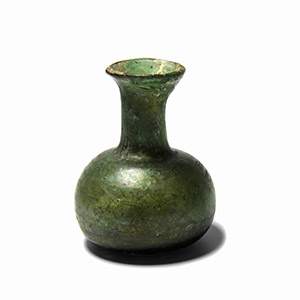
An emerald green miniature glass bottle of squat, bulbous form, slender neck with flared rim; iridescent surfaces. 15.8 grams, 49 mm
Acquired 1980-2015. Ex Abelita family collection. -
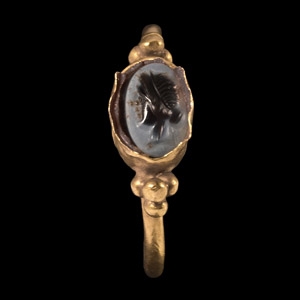
Roman Gold Ring with Portrait Gemstone
1st century B.C-2nd century A.D.Sold for (Inc. bp): £585
A nicolo gemstone with profile portrait bust, set in a 2nd century A.D. hollow-formed gold ring with granule clusters to the shoulders. 2.55 grams, 23.99 mm overall, 16.55 mm internal diameter (approximate size British M, USA 6, Europe 12.46, Japan 12)
UK private collection, since 1956. Formed in the 1950s by by Mr and Mrs S. Broukal, thence by decent. with Bonham's, London, New Bond Street, 30 November 2016, lot 155 [Part]. English private collection. -
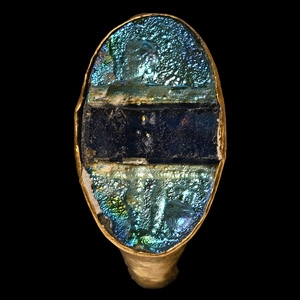
Roman Gold Ring with Banded Glass
1st-2nd century A.D.Estimate: £1,000 - 1,400 (‡+bp*)
Opening Bid: £500
A hollow-formed gold finger ring with ellipsoid bezel, inset panel of banded iridescent glass. 1.18 grams, 18.29 mm overall, 15.66 mm internal diameter (approximate size British G, USA 3 1/4, Europe 4.92, Japan 4)
Acquired early 1990s. Ex private American collection; thence by descent. Private Swiss collection since 1998.
