
Loading, please wait...
LOT 1080
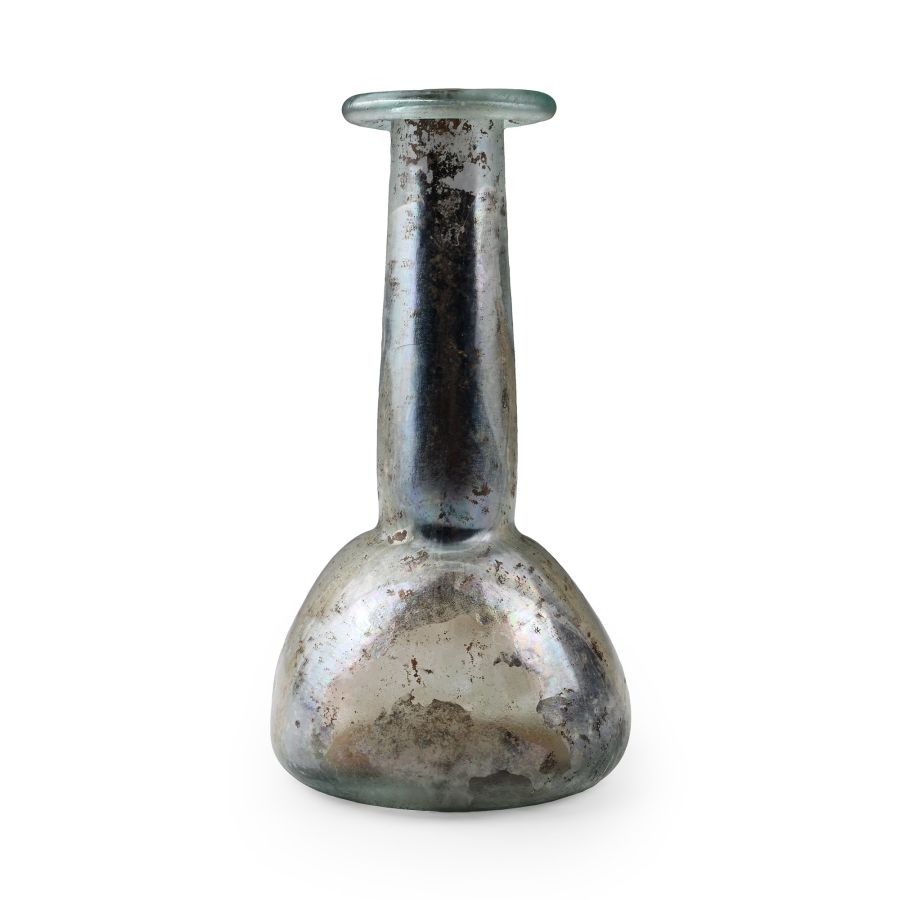
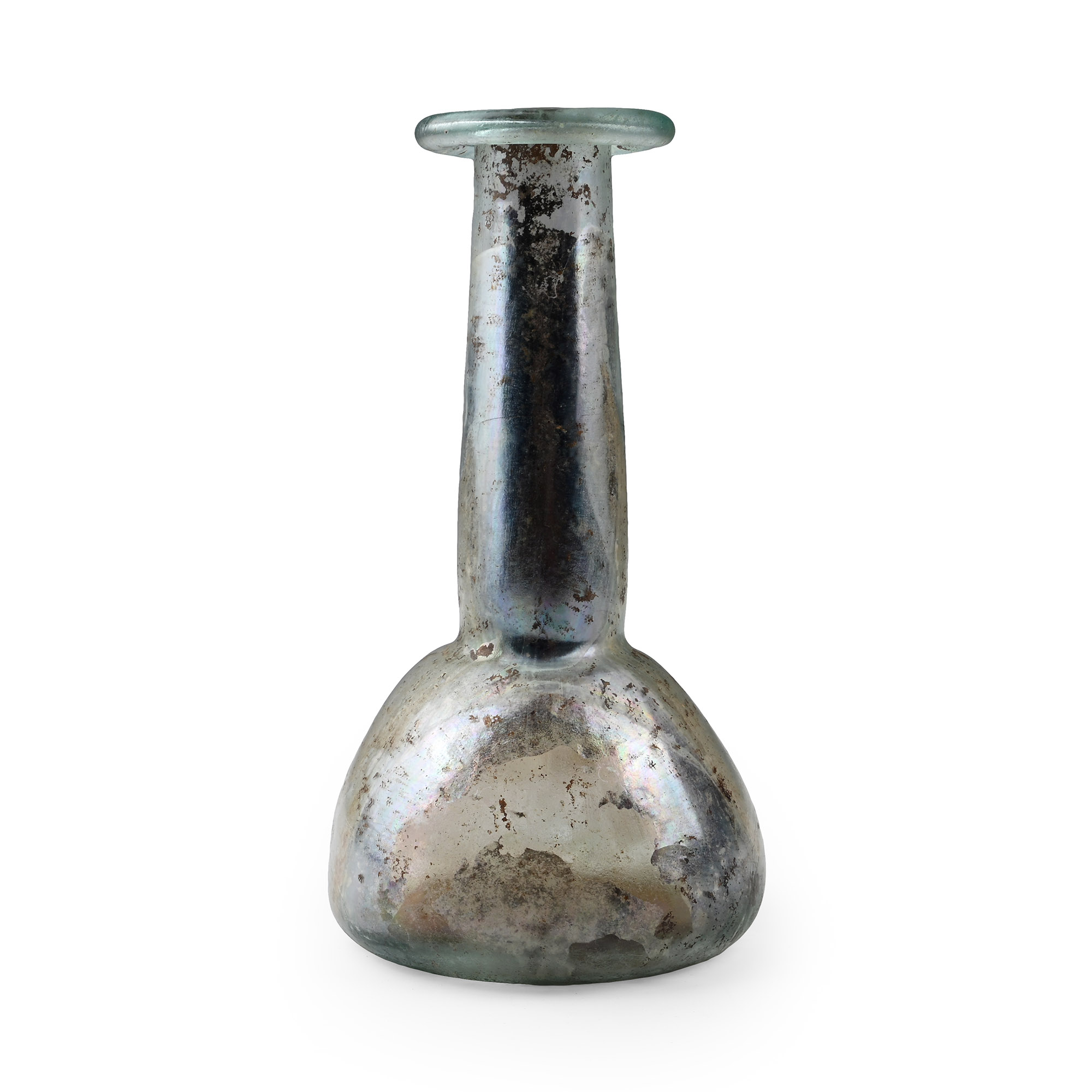
Large Roman Iridescent Glass Vessel
CIRCA 2ND-3RD CENTURY A.D.
6 1/4 in. (79 grams, 16 cm).
Hemispherical body with a slightly concave base, a tall tubular neck with a rolled rim.
ProvenanceRoman glass from an important London collection, acquired from the early 1980s.
LiteratureCf. Filarska, B., Szkla Starozytne (Ancient Glass), vol. II, Warsaw, 1972, II, cat.220, pl.XLIV,3, for similar vessel.
CONDITIONTimeLine Auctions follows a vetting process to ensure the authenticity and legality of all items, reinforcing our commitment to integrity and responsible trading. Each antiquity, antique, and coin lot undergoes thorough examination by a vetting committee of at least ten external specialists, professional trade association members, scientists, and archaeologists: Our Vetting Process
AUCTIONS:
TimeLine is a leading auction house specialising in antiquities, ancient art, collectables, natural history, coins, medals, and books. Our auctions offer museums, collectors, historians, and enthusiasts the opportunity to acquire unique and historically significant pieces.
LOT 1080
Large Roman Iridescent Glass Vessel
Estimate £150 - 200€170 - 230 (for guidance only)$200 - 270 (for guidance only)
Opening Bid
£75 (EUR 87; USD 101) +BP*
-
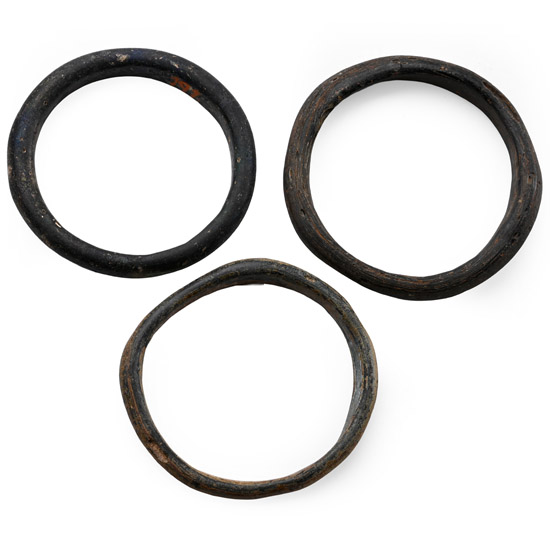
Late Roman Glass Bracelet Collection
Circa 4th-6th century A.D.Estimate: £40 - 60 (+bp*)
Opening Bid: £5
Each round in section with slight iridescence. 23 grams total, 48 - 52 mm
Acquired on the UK art market since the 1990s. From the property of a late Lincolnshire, UK, gentleman; thence by descent. -
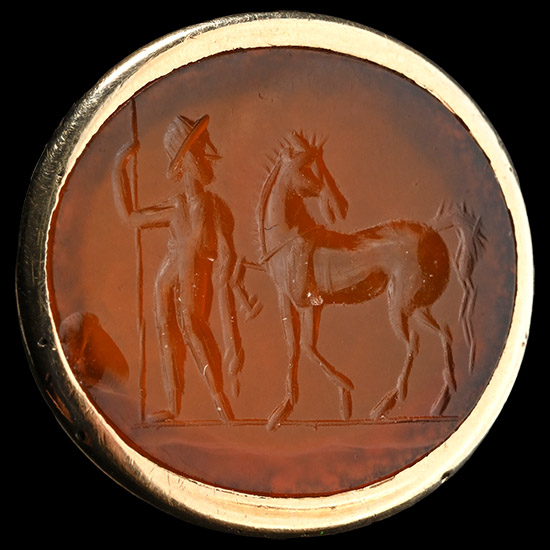
Roman Carnelian Intaglio of a Warrior and Horse in a Later Gold Ring
Circa 1st-2nd century A.D. and laterEstimate: £1,500 - 2,000 (+bp*)
Opening Bid: £700
Engraved with a standing male figure wearing a pointed cap and holding a long upright spear beside a horse, the horse with its head turned back and one foreleg raised; both figures standing upon a ground line; set in a later gold ring with a plain oval bezel, divided shoulders and a slender hoop. 2.43 grams, 20.04 mm overall, 17.19 x 16.57 mm internal diameter (approximate size British N 1/2, USA 6 3/4, Europe 14.35, Japan 13)
Acquired on the European art market. UK, private collection.
The combination of the cap, spear, drapery and horse supports identification as one of the Dioscuri, Castor or Pollux. The same combination of attributes appears in Roman representations of a Dioscurus, including an example in the London Museum. -
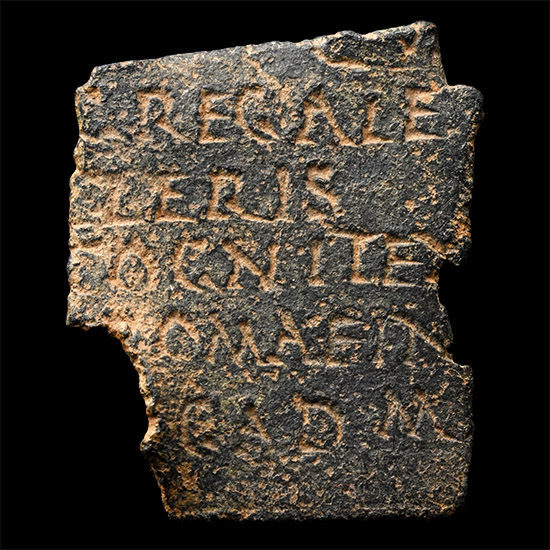
Roman Bronze Military Diploma Fragment
Circa 3rd-4th century A.D.Estimate: £150 - 200 (+bp*)
Opening Bid: £75
An irregular diploma fragment bearing Latin text: '[EX G]REGALE, []LERIS, [C]OGNITE, [R]OMAE IN, [AV]G AD M[INER VAM]'; weathered cursive inscription on the other side. 4.54 grams, 28 mm
London gentleman's collection, 1970-1990s, by descent.
