
Loading, please wait...
LOT 0582
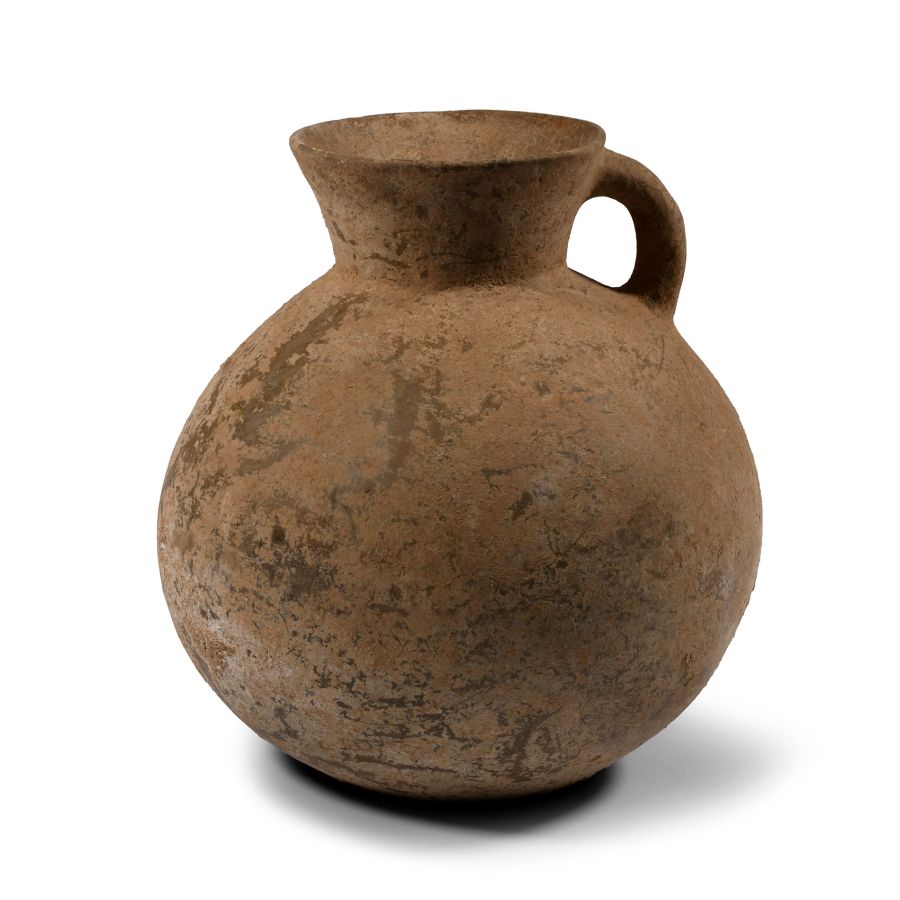
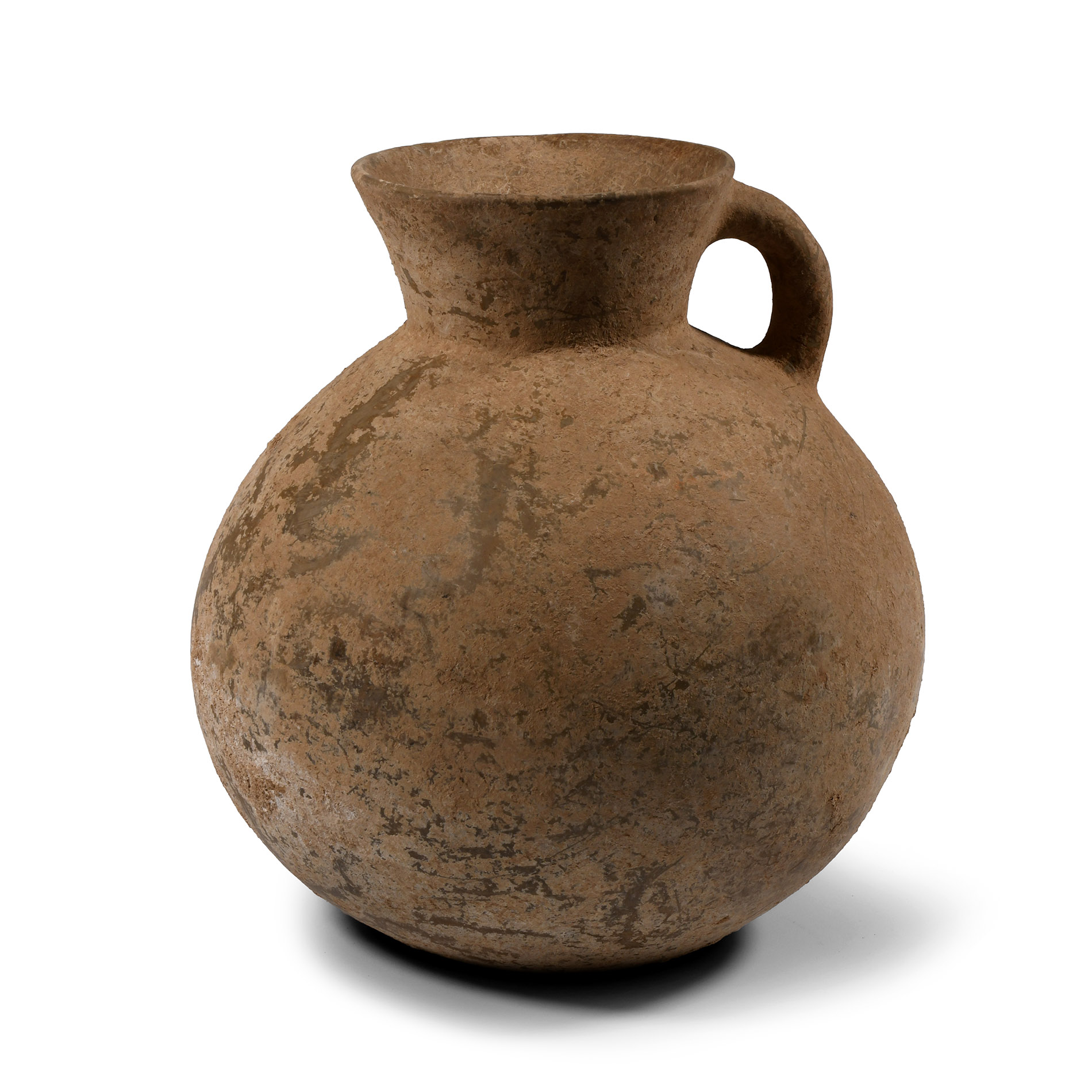
Large Roman Handled Terracotta Jar
1ST-4TH CENTURY A.D.
8 7/8 in. (1.19 kg, 22.5 cm high).
With globular profile, tall conical neck, single strap handle to the shoulder.
ProvenanceAcquired 1980-2015.
Ex Abelita family collection.
TimeLine Auctions follows a vetting process to ensure the authenticity and legality of all items, reinforcing our commitment to integrity and responsible trading. Each antiquity, antique, and coin lot undergoes thorough examination by a vetting committee of at least ten external specialists, professional trade association members, scientists, and archaeologists: Our Vetting Process
AUCTIONS:
TimeLine is a leading auction house specialising in antiquities, ancient art, collectables, natural history, coins, medals, and books. Our auctions offer museums, collectors, historians, and enthusiasts the opportunity to acquire unique and historically significant pieces.
-
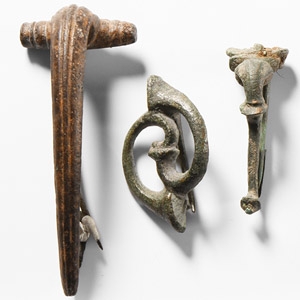
Roman Bronze Brooch Collection
Circa 1st-2nd century A.D.Sold for (Inc. bp): £124
Group of three brooches comprising: trumpet brooch with spring and pin; dolphin-type bow brooch with hinged pin; kräftig profilierte bow brooch. 53 grams total, 40-72 mm
Found East Anglia, UK. Acquired early 2000s. Property of a Stowmarket, UK, gentleman. Accompanied by three old handwritten cataloguing slips. -
.jpg)
Roman Green Glass Vessel
1st-4th century A.D.Sold for (Inc. bp): £117
With squat columnar body, irregular flattened base, everted rim. 52.9 grams, 58 mm high
Acquired 1980-2015. Ex Abelita family collection. -
.jpg)
Roman Lead Coffin Lid with Ivy and Floral Motifs
2nd-3rd century A.D.Sold for (Inc. bp): £2,210
Decorated with stamped patterns comprising dolphins, vegetal and floral patterns, motifs with ivy leaves and floral border strips with laurel leaves. 38.5 kg, 175.5 cm
Acquired 1970s-early 1990s. Property of a North American collector. London collection, 2016. This lot has been checked against the Interpol Database of stolen works of art and is accompanied by search certificate no.11992-209844.
Although the majority of people were buried without coffins, there is evidence for wooden coffins, lead-framed wooden coffins, tile burials, lead coffins and stone coffins from the Roman Empire. Our typology belongs a type diffused in the Eastern Mediterranean. The leaves refer to actual garlands and flowers used to decorate tombs and altars. The dolphin was considered to ferry the souls of the dead to the afterlife and was a common motif in this period, also used for the slide-fitting of Roman sword scabbards. Romans believed these animals carried souls to the Fortunate Isles, perhaps because they could pass through the air-breathing terrestrial world and into the watery depths that claimed so many Roman sailors’ lives. This symbol would have had a personal significance for the deceased, who may have been a seafarer during life. Romans often ordered their lead coffins long before they died as the process of making them took a long time.
