
Loading, please wait...
LOT 1015
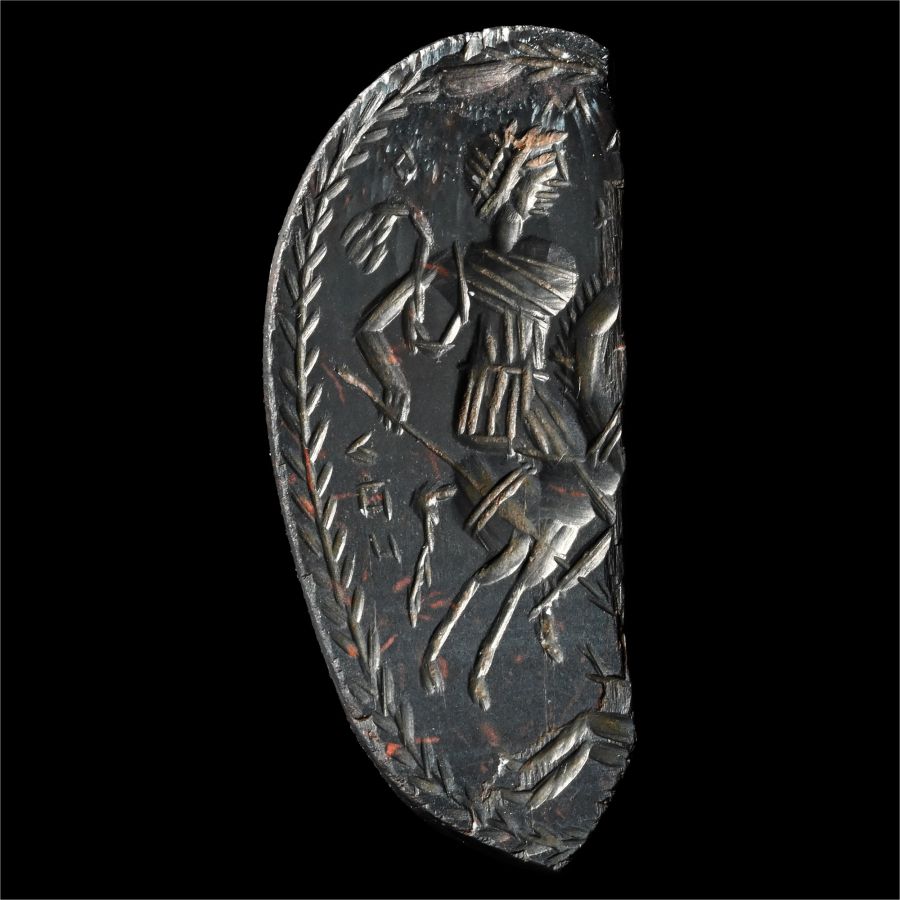
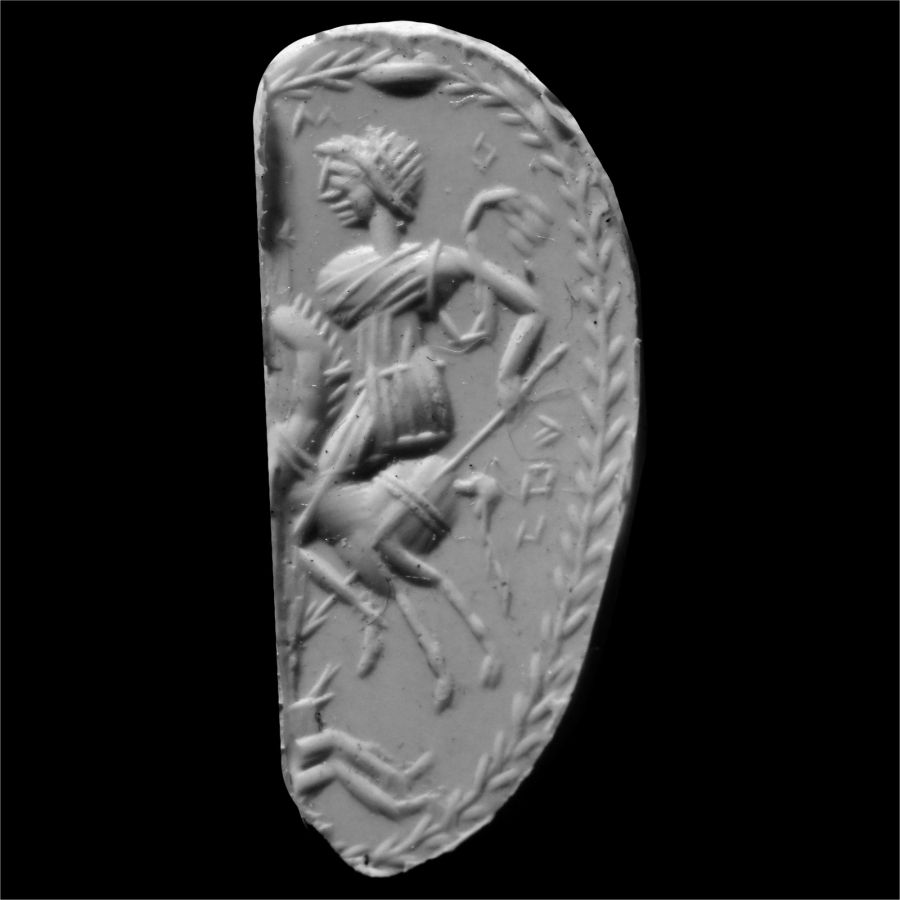
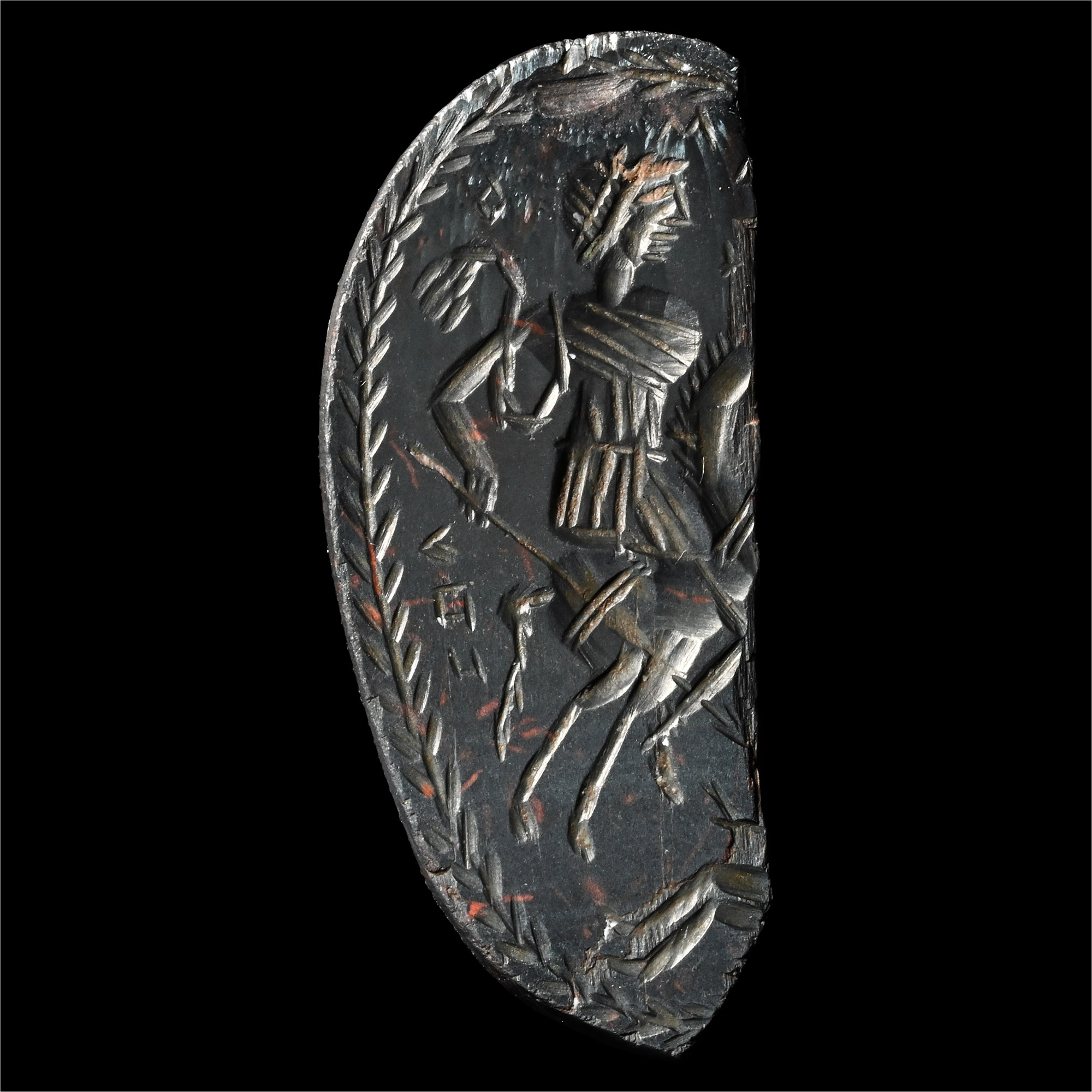
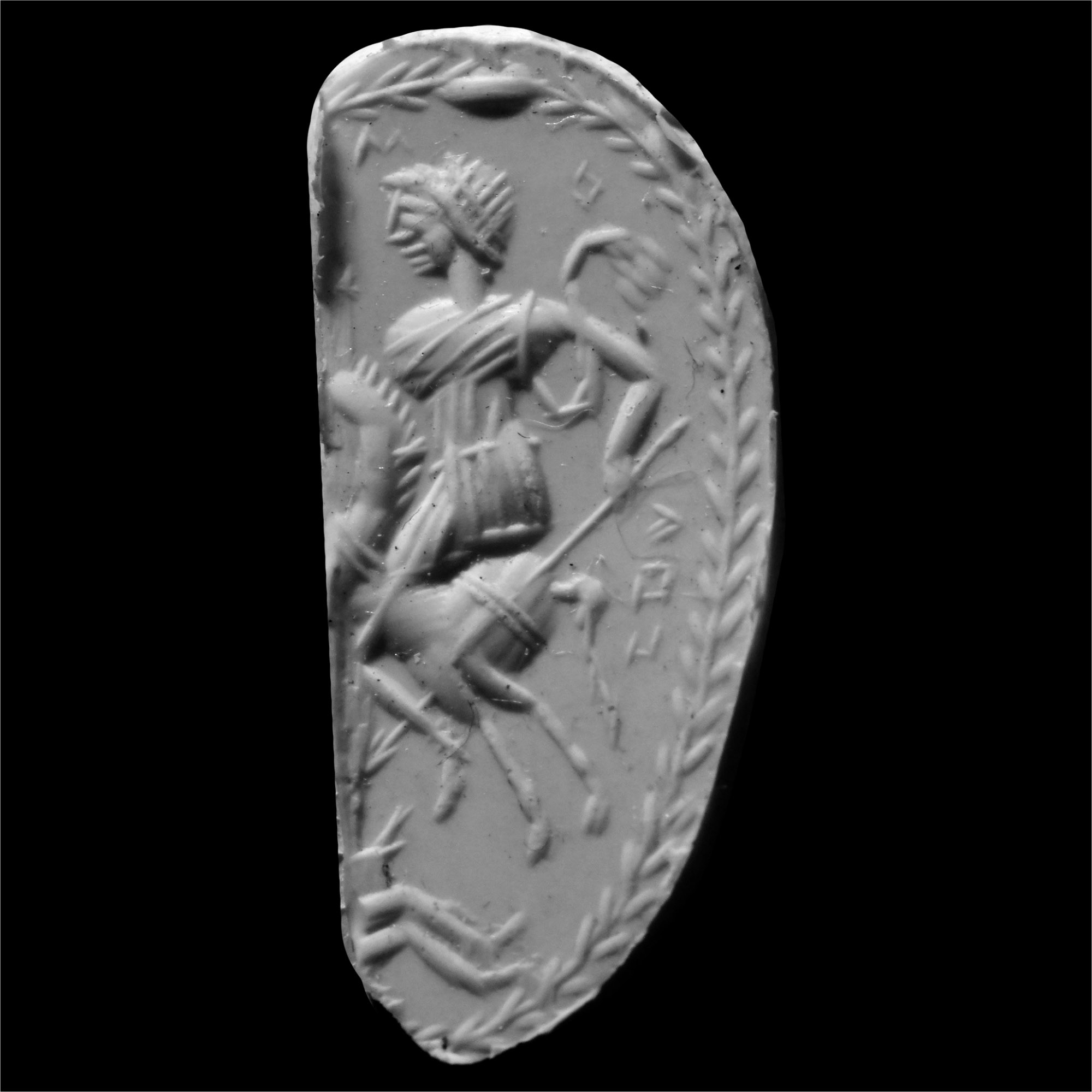
Large Roman Haematite Bifacial Gnostic Gemstone with Inscription
CIRCA 4TH CENTURY A.D.
1 1/4 in. (4.22 grams, 31 mm).
Ellipsoid plaque fragment with figural scene and legend; obverse - wreath border enclosing a horseman with spear trampling a fallen enemy supine with legs flexed, 'IDA / Δ / M'; reverse -three lines of pseudo-Greek text '-ΦΡΑ / -ΙΠΘ / -ΟV' and 'X'; supplied with a museum-quality impression. [No Reserve]
ProvenanceFrom the private collection of a European gentleman (1942-2024), formed since the 1970s.
CONDITIONTimeLine Auctions follows a vetting process to ensure the authenticity and legality of all items, reinforcing our commitment to integrity and responsible trading. Each antiquity, antique, and coin lot undergoes thorough examination by a vetting committee of at least ten external specialists, professional trade association members, scientists, and archaeologists: Our Vetting Process
AUCTIONS:
TimeLine is a leading auction house specialising in antiquities, ancient art, collectables, natural history, coins, medals, and books. Our auctions offer museums, collectors, historians, and enthusiasts the opportunity to acquire unique and historically significant pieces.
LOT 1015
Large Roman Haematite Bifacial Gnostic Gemstone with Inscription
Estimate £100 - 140€120 - 160 (for guidance only)$140 - 190 (for guidance only)
Opening Bid
£5 (EUR 6; USD 7) +BP*
-
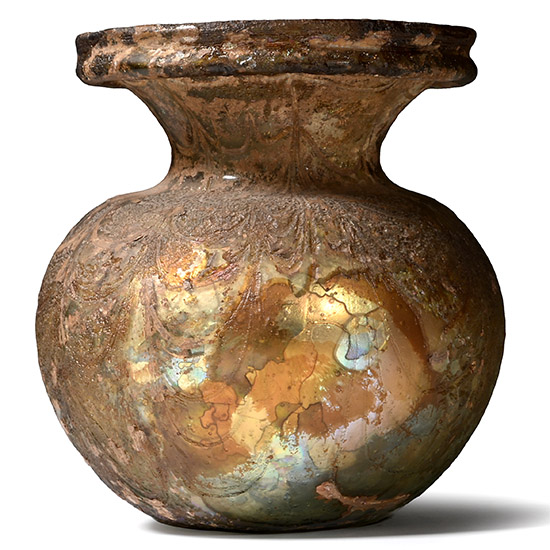
Roman Mould-Blown Dark Green Jar with Wheel-Cut Design
Circa 4th century A.D.Estimate: £3,000 - 4,000 (+bp*)
Opening Bid: £750
Featuring a broad, low, round-bellied body with a wide, hollowed base, a short neck with a funnel-shaped mouth; incised festoon-like decoration on the body. 132 grams, 92 mm high
From the collection of Sir Daniel Donehue; his collection was sold in the 2000s. Roman glass from an important London collection, acquired from the early 1980s. Accompanied by a typed previous catalogue information page with provenance. This lot has been checked against the Interpol Database of stolen works of art and is accompanied by search certificate no.13440-263208.
This jar belongs to a generic vessel form known from many eastern Mediterranean and European sites and dated to the 3rd and 4th centuries A.D. Characteristic are the annular pontil marks, patterned on the squat globular body. -
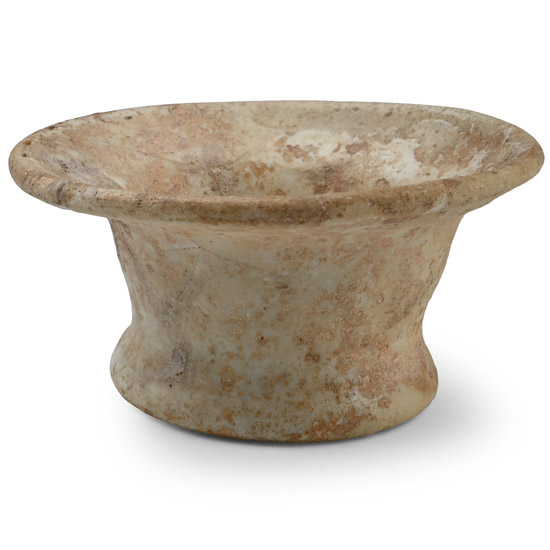
Roman Opaque White Glass Patera Bowl
1st-2nd century A.D.Estimate: £500 - 700 (+bp*)
Opening Bid: £250
Cylindrical body perched on a wide, slightly concave foot; the shoulders splayed outwards, leading to a thick trumpet-style rim gently curving upwards. 32 grams, 66 mm wide
Ex S.M. collection, London, UK, 1970-1999. Roman glass from an important London collection, acquired from the early 1980s. Accompanied by a typed previous catalogue information page with provenance.
The shape of this small cup derives from metal vessels of the Early Empire period or from ‘terra sigillata’ earthenware. Similar vessels were found throughout the Empire during the 1st and 2nd centuries A.D. Vessels similar to this one have been discovered in the necropolis at Kourion, Cyprus (dating to the first half of the 1st century A.D.), in 1st-century finds from Gaul, and in Egypt, though the specific find spot and date in the latter case remain undetermined. -
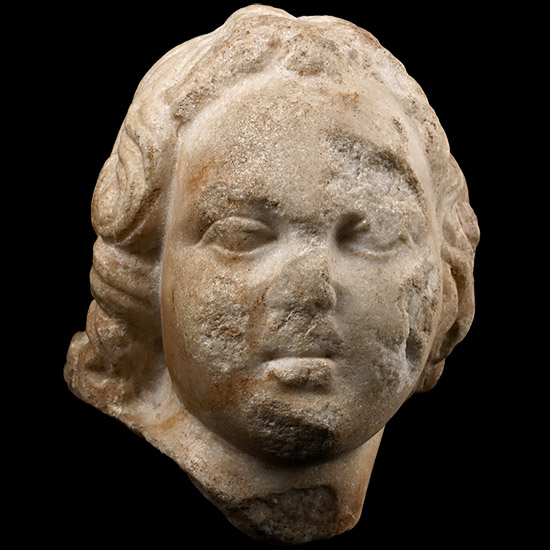
Roman Marble Head of Eros
Early 2nd century A.D.Estimate: £3,000 - 4,000 (‡+bp*)
Opening Bid: £1,650
With long, curly hair braided over the forehead and top of the head, turned to the left and slightly inclined; round fleshy face with narrow, almond-shaped eyes; possibly from a copy of 'Eros Stringing his Bow' by Lysippos (3rd quarter of the 4th cent. B.C.); mounted on a custom-made stand. 1.71 kg total, 23 cm high including stand
Private American collection, circa 1960. with Sotheby's, New York, 6 December 2006, no.128B. This lot has been checked against the Interpol Database of stolen works of art and is accompanied by search certificate no.13538-263101.
The original Greek work that may have inspired the Roman sculptors could be a sculpture by the 4th-century B.C. artist Lysippos, who created the cult statues of Eros at Thespiae. Various copies are preserved of this artwork, like the one in the National Museum of Liverpool (2nd century A.D., inv. no.59.148.93) and the one in the Hermitage Museum (inv. no. Гр. 3102 [А 199]).
