
Loading, please wait...
LOT 1340
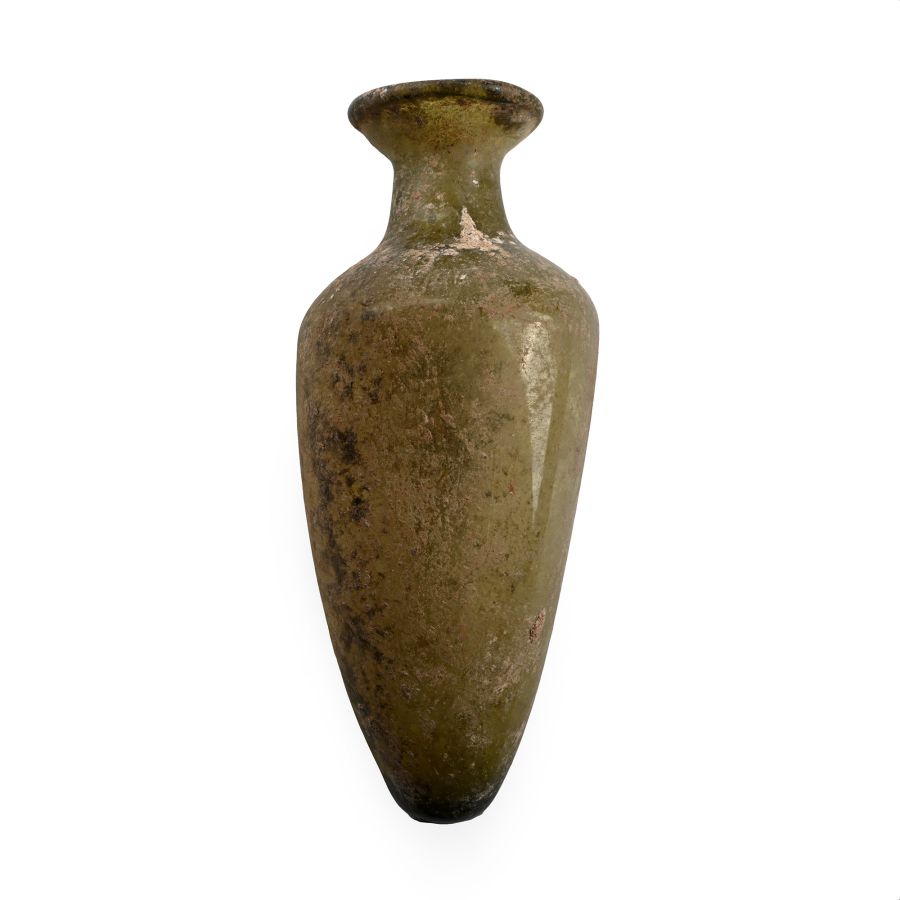
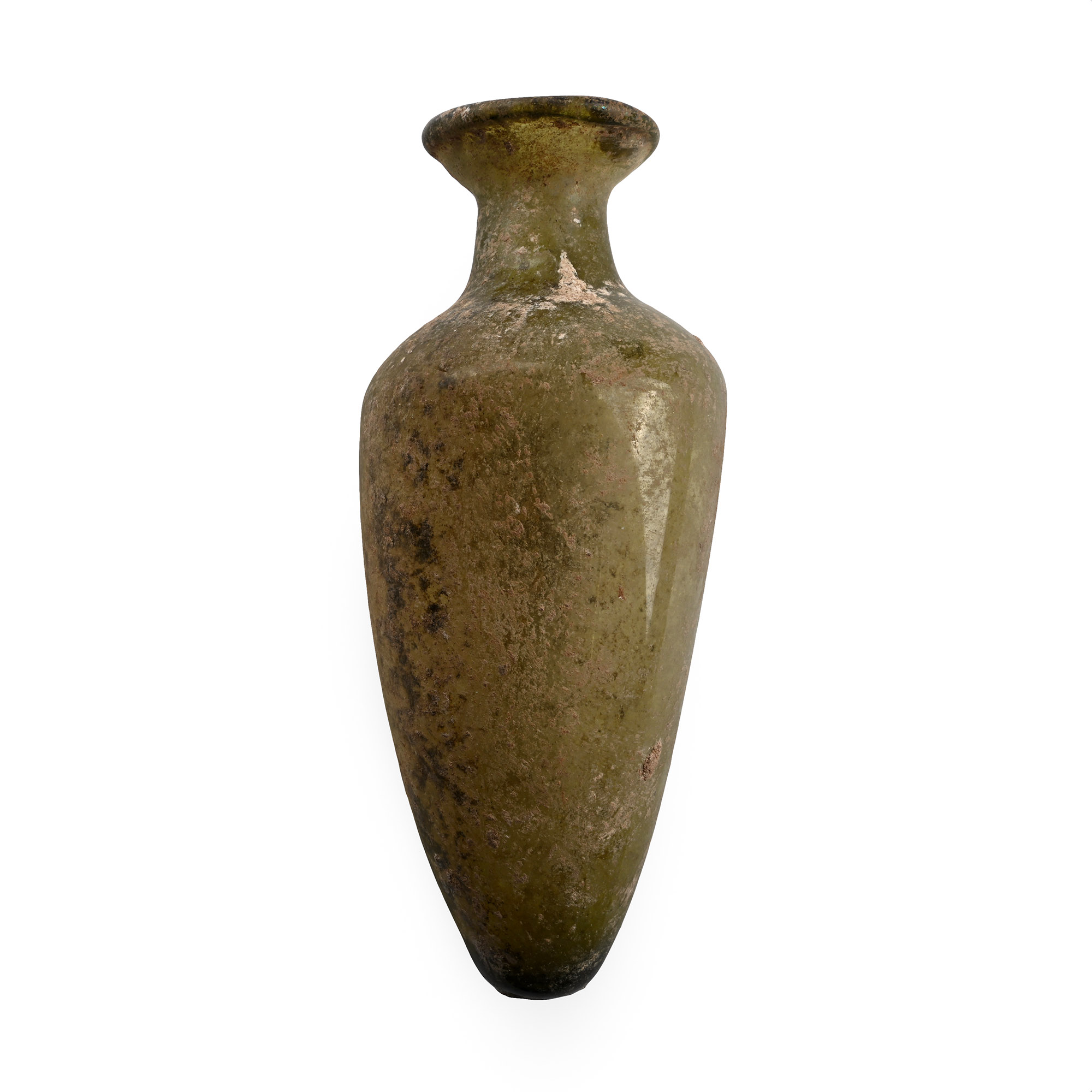
Large Roman Green Glass Amphora
CIRCA 3RD CENTURY A.D.
6 1/2 in. (60 grams, 16.5 cm).
Piriform body with a narrow, rounded base, funicular neck with an inward-rolled rim.
ProvenanceRoman glass from an important London collection, acquired from the early 1980s.
LiteratureCf. for a similar example Filarska, B., Szkla Starozytne (Ancient Glass), vol.II, Warszawa, 1972, II, cat.165, pl.XXXVI,1.
CONDITIONTimeLine Auctions follows a vetting process to ensure the authenticity and legality of all items, reinforcing our commitment to integrity and responsible trading. Each antiquity, antique, and coin lot undergoes thorough examination by a vetting committee of at least ten external specialists, professional trade association members, scientists, and archaeologists: Our Vetting Process
AUCTIONS:
TimeLine is a leading auction house specialising in antiquities, ancient art, collectables, natural history, coins, medals, and books. Our auctions offer museums, collectors, historians, and enthusiasts the opportunity to acquire unique and historically significant pieces.
LOT 1340
Large Roman Green Glass Amphora
Estimate £150 - 200€170 - 230 (for guidance only)$200 - 270 (for guidance only)
Opening Bid
£75 (EUR 87; USD 101) +BP*
-
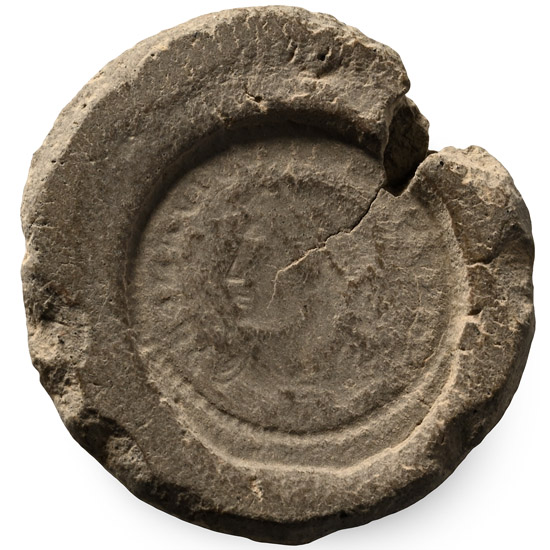
Roman Terracotta Coin Forger's Mould
Circa 3rd-4th century A.D.Estimate: £50 - 70 (+bp*)
Opening Bid: £5
Discoid clay mould with an impressed design of a coin on each face. 3.76 grams, 27 mm
London gentleman's collection, 1970-1990s, by descent. -
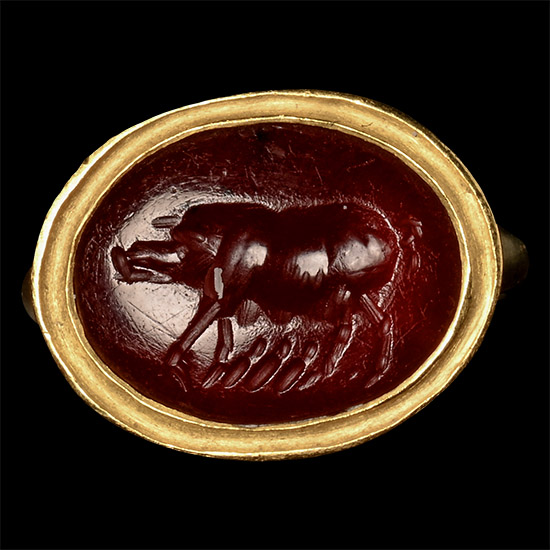
Roman Carnelian Gemstone with a Sow in Gold Ring
2nd century A.D. and laterEstimate: £2,000 - 3,000 (+bp*)
Opening Bid: £1,000
Red carnelian intaglio featuring a sow laying on its side with three stylised piglets resting between its legs; set in a modern gold ring. 6.83 grams, 22.85 mm overall, 17.78 x 16.88 mm internal diameter (approximate size British N, USA 6 1/2, Europe 13.72, Japan 13)
Private collection, London. This lot has been checked against the Interpol Database of stolen works of art and is accompanied by search certificate no.13553-263671.
The depiction of boars and sows on ancient intaglios, sometimes accompanied by piglets, was a recurring motif in Greek and Roman iconography. The pig was associated with the Greek goddess Demeter (Roman Ceres), deity of harvest, agriculture, and fertility. The sow depicted on this intaglio could be interpreted as a symbol of fertility and prosperity, expressing a wish for abundance bestowed upon the wearer. -
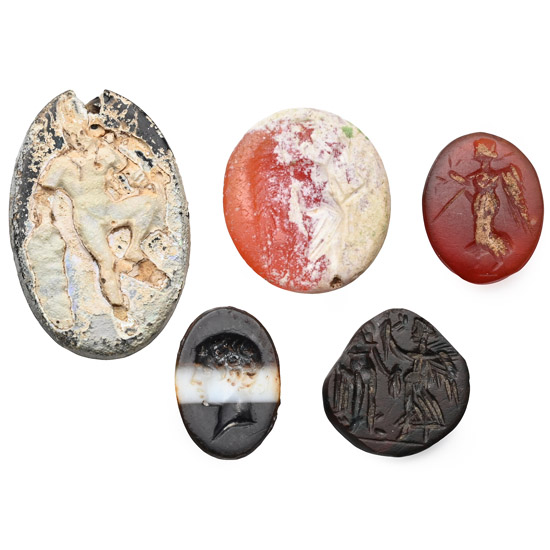
Roman Carved Gemstone Collection
1st-3rd century A.D.Estimate: £300 - 400 (+bp*)
Bids: 11 | Current Bid: £10
Comprising: a banded agate intaglio with profile male bust; a red carnelian intaglio with winged Victory; an orange carnelian intaglio with winged Victory; a glass intaglio with a nude figure resting his hand on a boulder; a round intaglio with Victory and another figure. 1.91 grams total, 8-17 mm
UK private collection assembled 1970s-90s, and thence to the liquidated state of above.
