
Loading, please wait...

LOT 0801
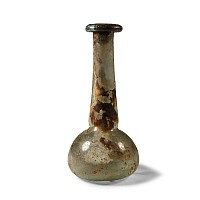
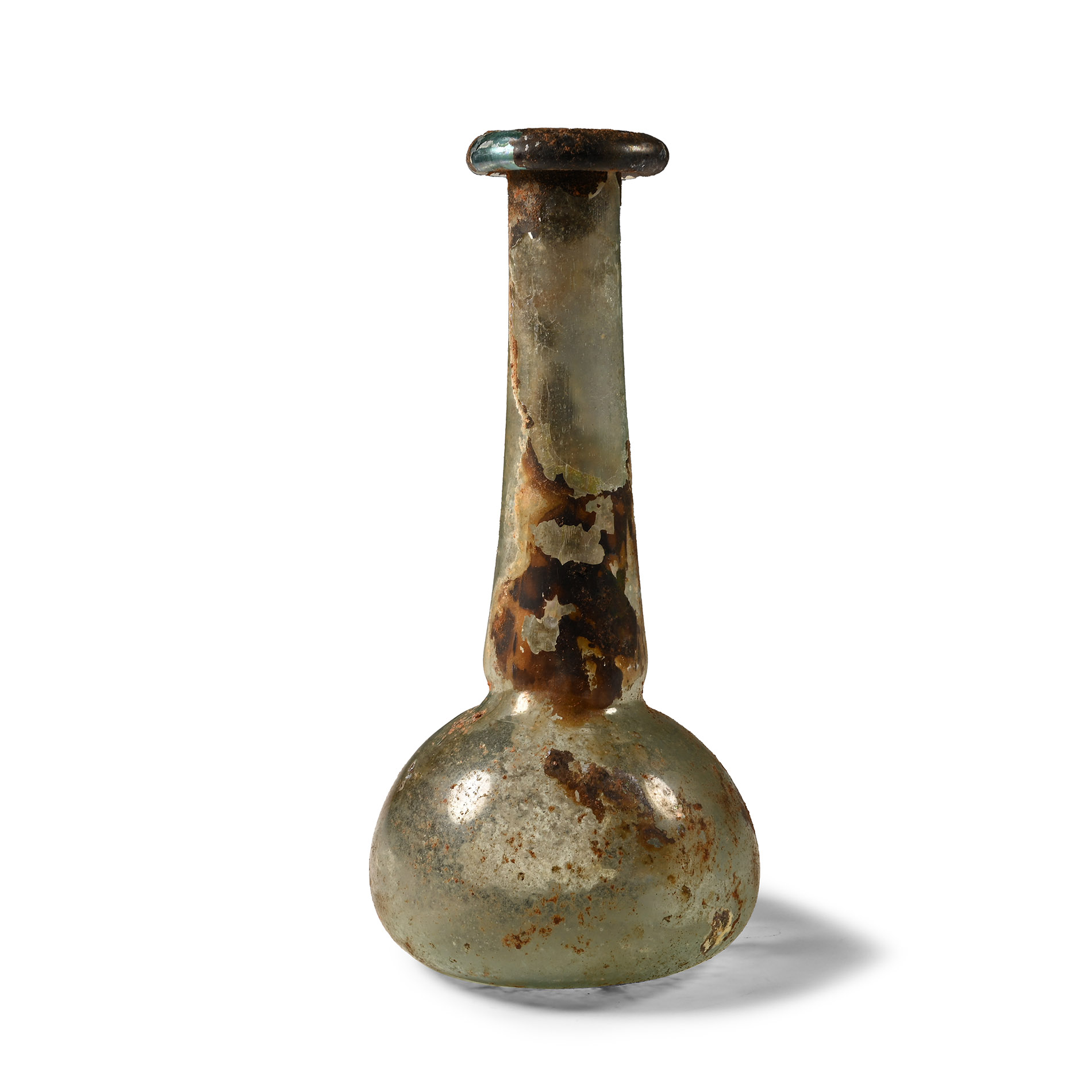
Large Roman Glass Unguentarium
1ST-2ND CENTURY A.D.
5 1/2 in. (42 grams, 14 cm).
With plano-convex body and flat base, tapering neck and everted rim.
ProvenanceFrom a London, UK, collection, 1990s.
LiteratureCf. Whitehouse, D., Roman Glass in the Corning Museum of Glass, vol.2, New York, 2001, item 772.
CONDITIONTimeLine Auctions follows a vetting process to ensure the authenticity and legality of all items, reinforcing our commitment to integrity and responsible trading. Each antiquity, antique, and coin lot undergoes thorough examination by a vetting committee of at least ten external specialists, professional trade association members, scientists, and archaeologists: Our Vetting Process
AUCTIONS:
TimeLine is a leading auction house specialising in antiquities, ancient art, collectables, natural history, coins, medals, and books. Our auctions offer museums, collectors, historians, and enthusiasts the opportunity to acquire unique and historically significant pieces.
LOT 0801
Large Roman Glass Unguentarium
Estimate £150 - 200€170 - 230 (for guidance only)$200 - 270 (for guidance only)
-
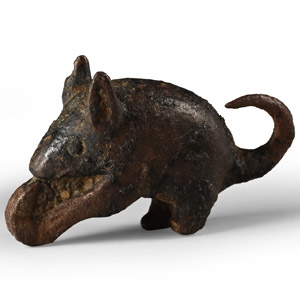
Roman Bronze Mouse with Nut
2nd-3rd century A.D.Sold for (Inc. bp): £221
In a crouching posture, eating a nut held in its front paws, the tail curving upwards. 15.4 grams, 33 mm
Ex German art market, 2000s. Acquired from an EU collector living in London. From the collection of Surrey, UK, gentleman. -
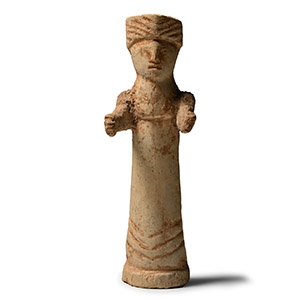
Roman Bone Female Pin Head
Eastern Roman, 3rd century B.C.-2nd century A.D.Estimate: £300 - 400 (+bp*)
Opening Bid: £120
Carved and polished female figure with chignon hairstyle, floor-length robe with stepped rim, separate arms fixed in place; old collector's label 'IV / 00 33'. 32.1 grams, 11.4 cm
with a London, UK gallery, 1971-early 2000s. -
.jpg)
A Fine Life-Sized Eastern Roman Bust of a Wealthy Lady
2nd-3rd century A.D.Sold for (Inc. bp): £28,600
Finely carved in hard white limestone; the facial features framed by swept-back locks of wavy hair enclosed by a loosely draped palla headdress held onto a low turban by a segmented diadem with high-relief ornament, with drop earrings at the sides; a necklace of graduated beads at the throat, soft fabric stola covering the chest and shoulders; the arched brows above large almond-shaped eyes with carefully worked pupils, small pert mouth with full lips, smooth cheeks and brow; unworked to the reverse; mounted on a custom-made stand. 29.95 kg, 50 cm including stand
From a private UK collection, since at least 1971. Acquired from Rupert Wace Ancient Art Limited, Old Bond Street, London W1, UK, in 2001. From the private collection of Mr M.R. Davis, Bristol, UK. Accompanied by a copy of a stamped and signed Art Loss Register declaration dated 1st March 2001. Accompanied by a copy of a conservation report by restorer David Singleton dated 26th June 2001. Accompanied by a copy of the 23th February 2001 invoice (£34,000); a copy of the illustrated listing with reference number C230; plus communications regarding acquisition. Accompanied by an academic report by Dr Raffaele D’Amato. This lot has been checked against the Interpol Database of stolen works of art and is accompanied by search certificate no.12339-224541.
The sculpture is a good example of 2nd-3rd century A.D. Palmyrene female funerary portrait types. The amount of jewellery displayed in these portraits could be a direct reflection of the wealth of the family, and certainly reflected the jewellery possessed by the owner of the grave.
