
Loading, please wait...
LOT 0925
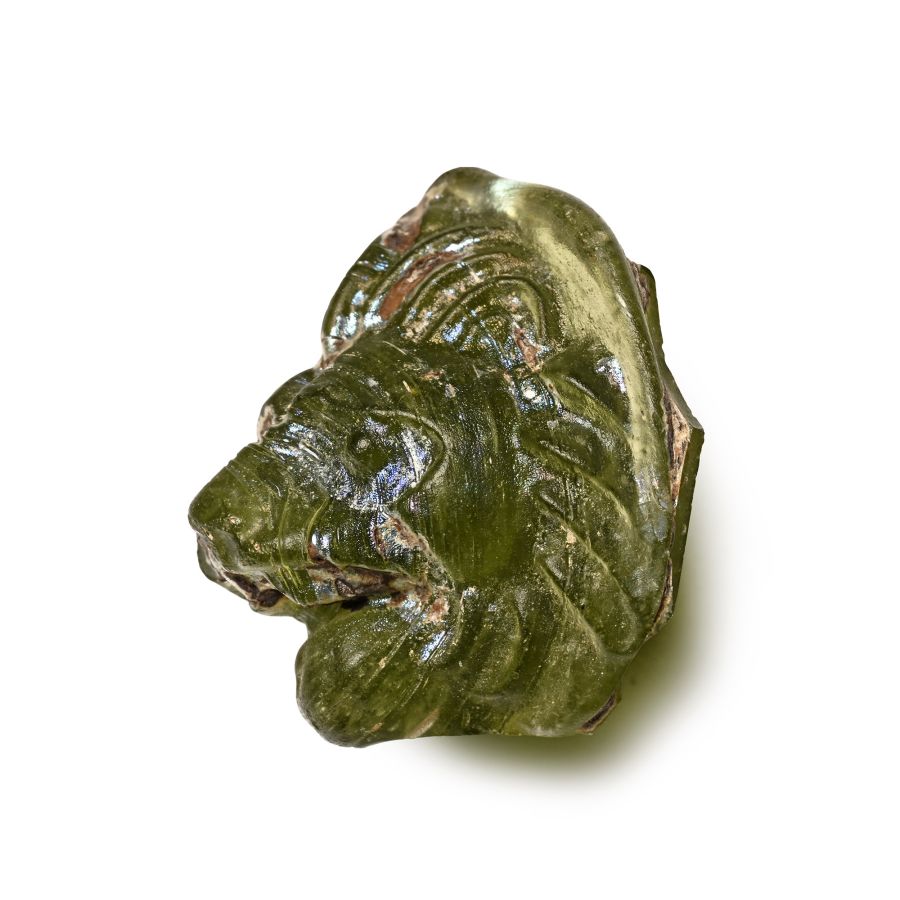
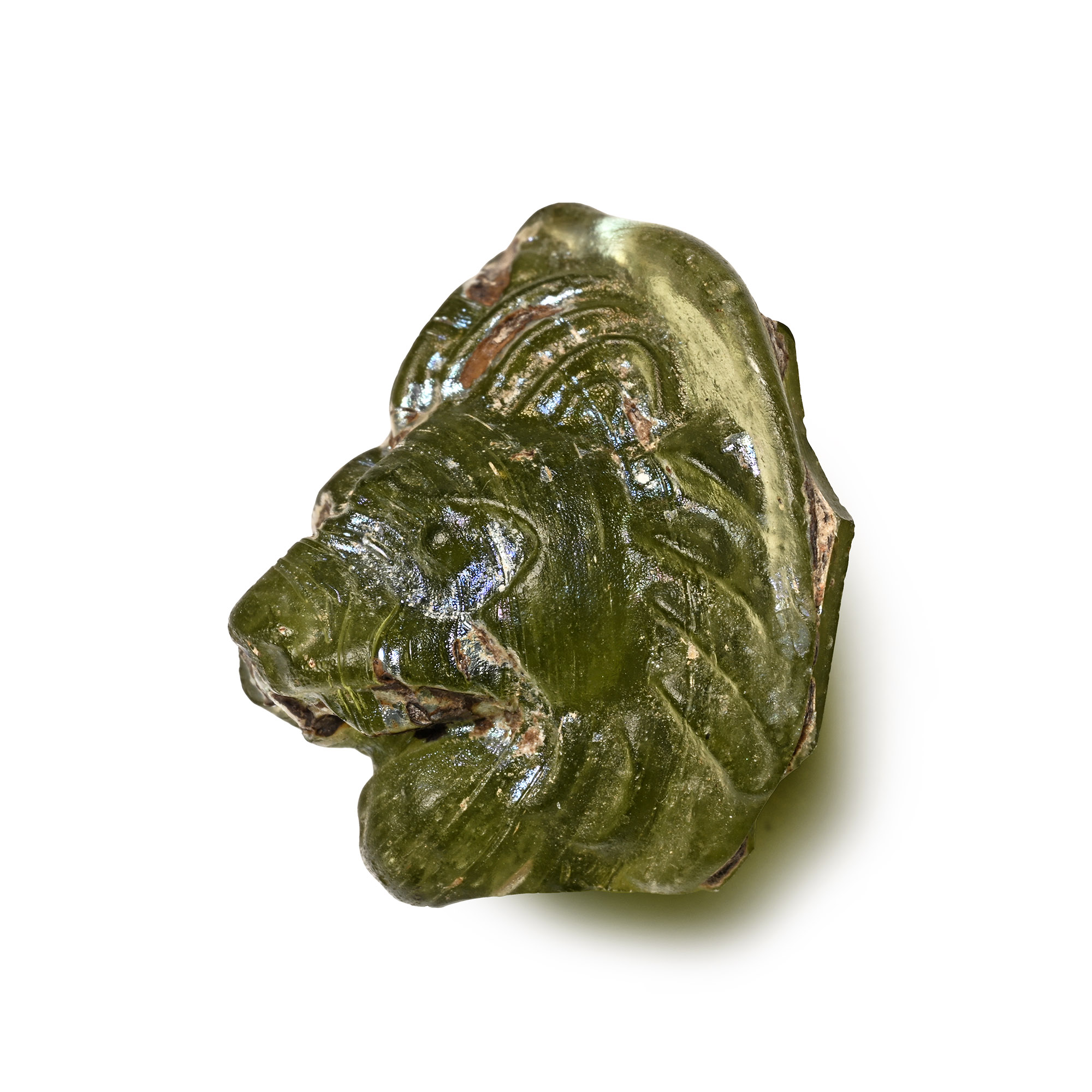
Large Roman Glass Roundel with Lion
3RD-4TH CENTURY A.D.
1 1/8 in. (10.5 grams, 28 mm).
Pale green roundel showing a lion's head in three-quarter view, the beast with open jaws and voluminous mane. [No Reserve]
ProvenanceFrom the private collection of a European gentleman (1942-2024), formed since the 1970s.
LiteratureCf. similar heads in Kucharczyk, R., ‘Glass medallion in the shape of a lion’s head mask’ in Classica Orientalia, Essays presented to Wiktor Andrzey Daszewski on his 75th Birthday, Warsaw, 2011, pp. 277-285, fig.1.
CONDITIONTimeLine Auctions follows a vetting process to ensure the authenticity and legality of all items, reinforcing our commitment to integrity and responsible trading. Each antiquity, antique, and coin lot undergoes thorough examination by a vetting committee of at least ten external specialists, professional trade association members, scientists, and archaeologists: Our Vetting Process
AUCTIONS:
TimeLine is a leading auction house specialising in antiquities, ancient art, collectables, natural history, coins, medals, and books. Our auctions offer museums, collectors, historians, and enthusiasts the opportunity to acquire unique and historically significant pieces.
-
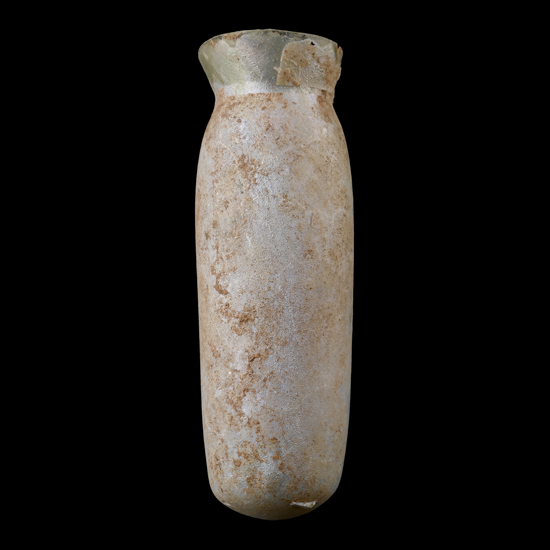
Roman Iridescent Glass Bottle
1st-2nd century A.D.Estimate: £80 - 100 (+bp*)
Opening Bid: £44
Tubular in form with shallow rounded base, sloped shoulder and flared rim to the mouth. 13.5 grams, 84 mm
Ex London, UK, art market 1990s. -
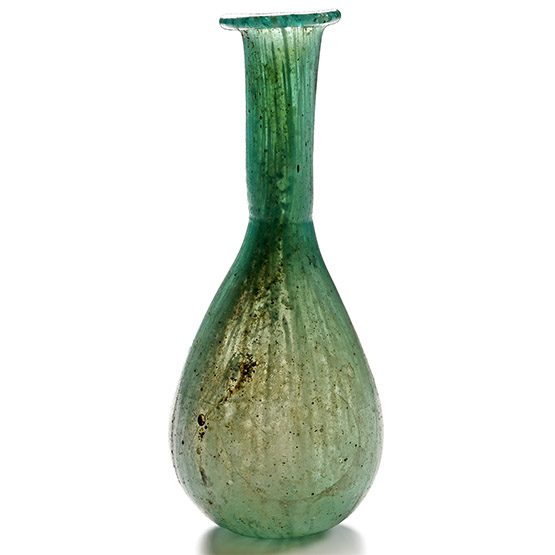
Roman Marbled Turquoise Glass Bottle
1st-3rd century A.D.Sold for (Inc. bp): £780
Comprising an iridescent piriform body, tapering tubular neck with pinched and everted rolled rim. 9.44 grams, 84 mm
Acquired on the European art market in 2001.
Indented toilet bottles with long necks are rather common. In Western provinces of the Roman Empire, they occur most frequently in and around the Rhineland. In the Eastern part of the Empire, find places include Crete, Cyprus, Anatolia, Syria and Egypt. -
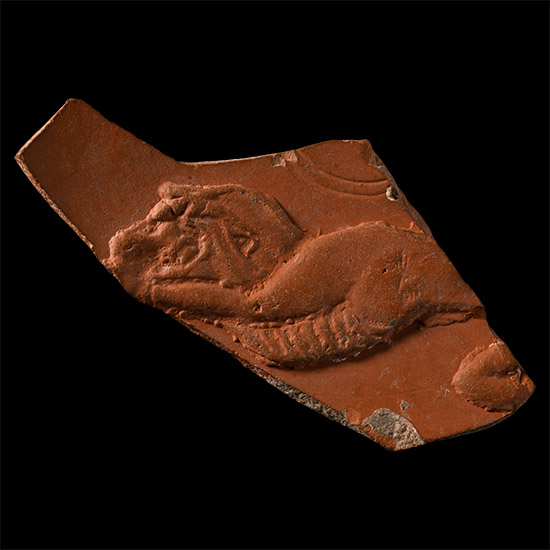
Roman Redware Pot Sherd with Torso of Venus
Circa 4th century A.D.Sold for (Inc. bp): £26
Irregular ceramic fragment with low-relief image of a female toso and legs with draped fabric panel to left leg, part of elbow at upper edge, incised arc to left edge. 26.5 grams, 95 mm
From the private collection of Mr Brian Edwards, New Malden, Surrey, UK, formed from the late 1970s-early 1980s; thence by descent. Accompanied by the original collector's data sheet(s) with reference no.A35.
Probably Venus Anadyomene arriving at the seashore having emerged fully-formed from the waves.
