
Loading, please wait...
LOT 0148
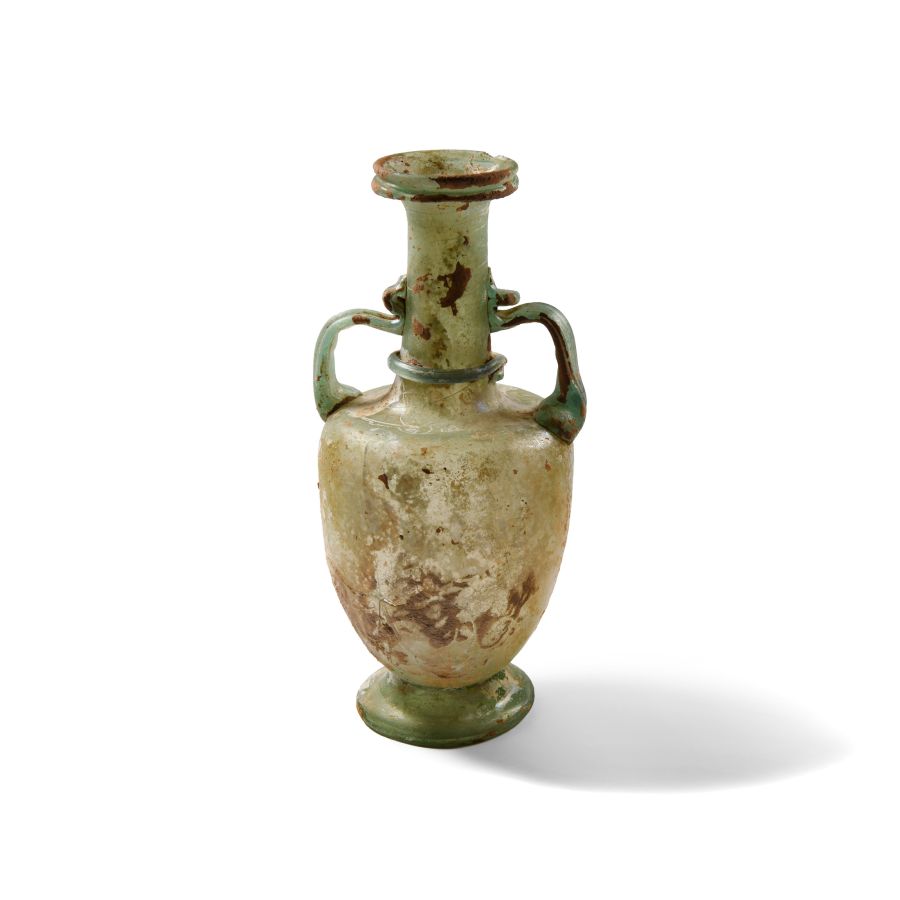
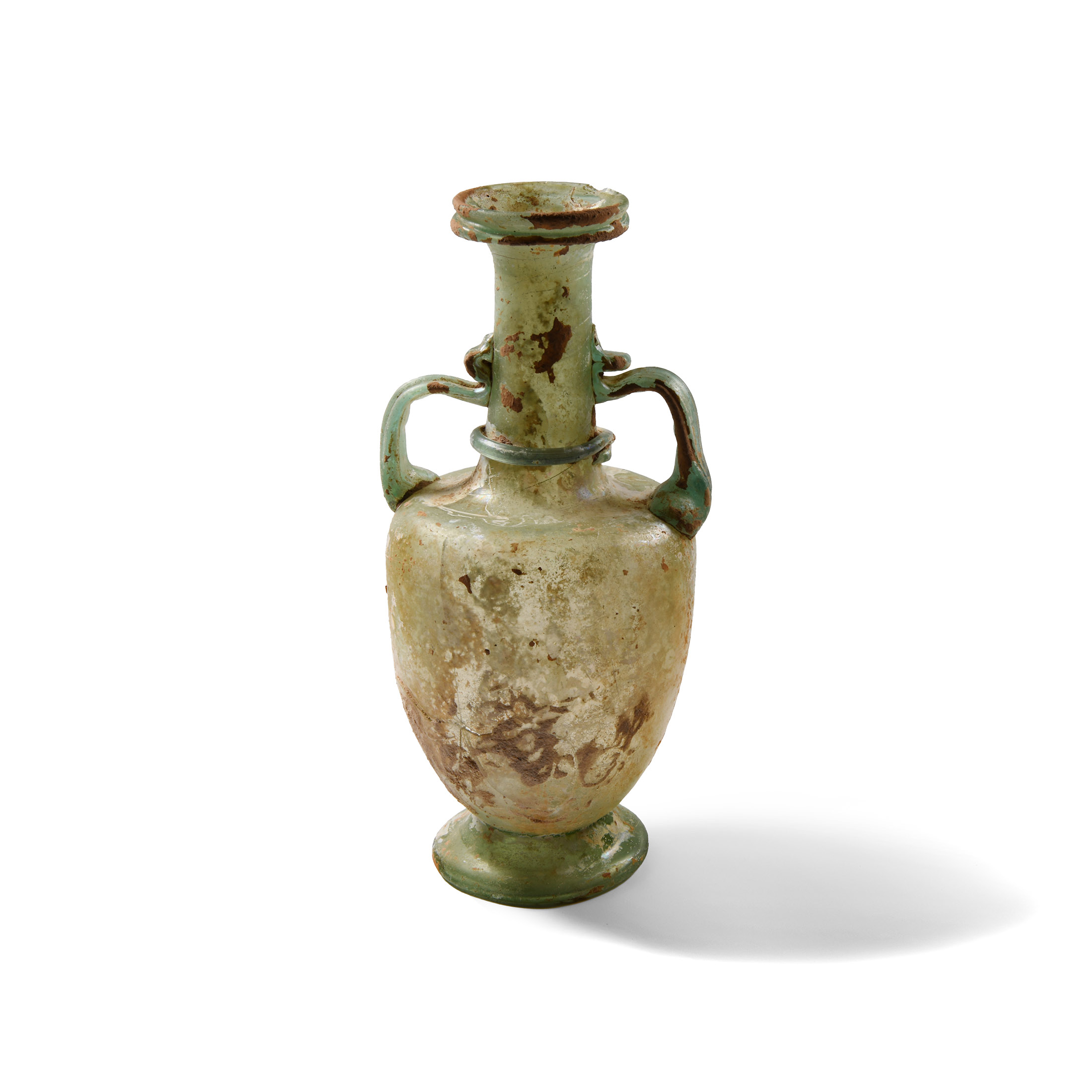
Large Roman Glass Amphora
1ST-3RD CENTURY A.D.
7 7/8 in. (228 grams, 20 cm high).
An aqua-coloured glass amphora with broad rounded shoulder, cylindrical neck, gusseted rim, applied scrolling handles and applied trail to lower neck, ogival foot; iridescent surfaces.
ProvenanceFrench collection, 1960s-early 2000s.
From an important Paris gallery, France.
Cf. Lightfoot, C.S. Ancient Glass in the National Museums of Scotland, Edinburgh, 2007, item 307; Metropolitan Museum, New York, accession numbers 81.10.171 and 199318, for other Roman glass amphoras.
CONDITIONTimeLine Auctions follows a vetting process to ensure the authenticity and legality of all items, reinforcing our commitment to integrity and responsible trading. Each antiquity, antique, and coin lot undergoes thorough examination by a vetting committee of at least ten external specialists, professional trade association members, scientists, and archaeologists: Our Vetting Process
AUCTIONS:
TimeLine is a leading auction house specialising in antiquities, ancient art, collectables, natural history, coins, medals, and books. Our auctions offer museums, collectors, historians, and enthusiasts the opportunity to acquire unique and historically significant pieces.
LOT 0148
Large Roman Glass Amphora
Estimate £1,500 - 2,000€1,740 - 2,320 (for guidance only)$2,030 - 2,700 (for guidance only)
-
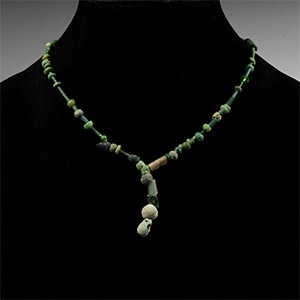
Roman and Other Bead Necklace
6th-4th century B.C. and laterSold for (Inc. bp): £39
A restrung group of mainly glass and faience beads of various types, sizes and dates, including tubular, facetted, spherical, coin, biconical and other types, in various shades of green. 10.5 grams, 70.5 cm long
Acquired 1980-2015. Ex Abelita family collection. -
.jpg)
Roman Opaque White Glass Vessel
1st-2nd century A.D.Estimate: £450 - 650 (+bp*)
Opening Bid: £250
An opaque white glass cup or other vessel with trumpet-style neck and rim, slightly convex body and everted foot. 32.5 grams, 65 mm wide
Fine condition, repaired.
Acquired 1969-1999. London collection of the late Mr S.M., thence by descent. -
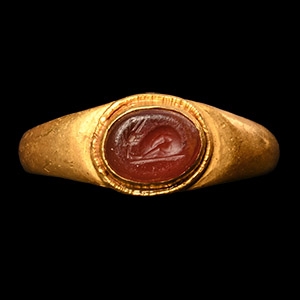
Roman Gold Ring with Dolphin Gemstone
1st-3rd century A.D.Sold for (Inc. bp): £845
A gold ring composed of a hoop with expanded shoulders and raised oval bezel with filigree collar, set with a carnelian intaglio engraved with a dolphin. 3.66 grams, 21.43 mm overall, 18.93 mm internal diameter (approximate size British N 1/2, USA 6 3/4, Europe 14.35, Japan 13)
Acquired before 2000. From the collection of a European gentleman living in the UK.
