
Loading, please wait...
LOT 0969
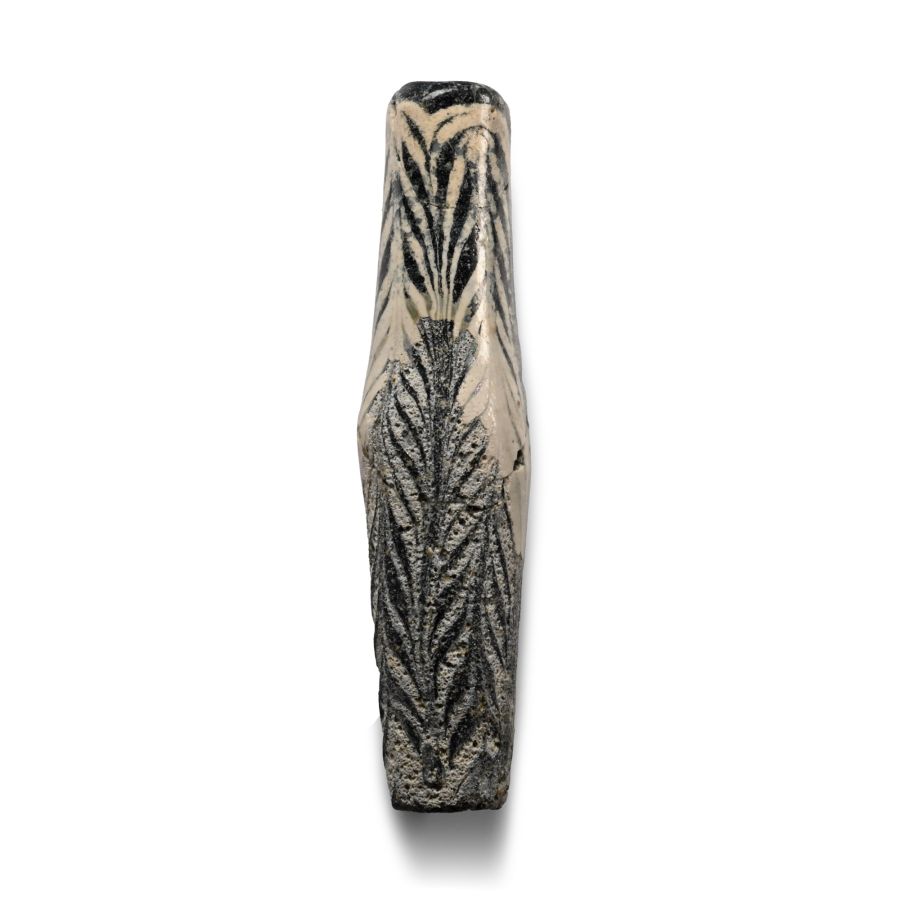
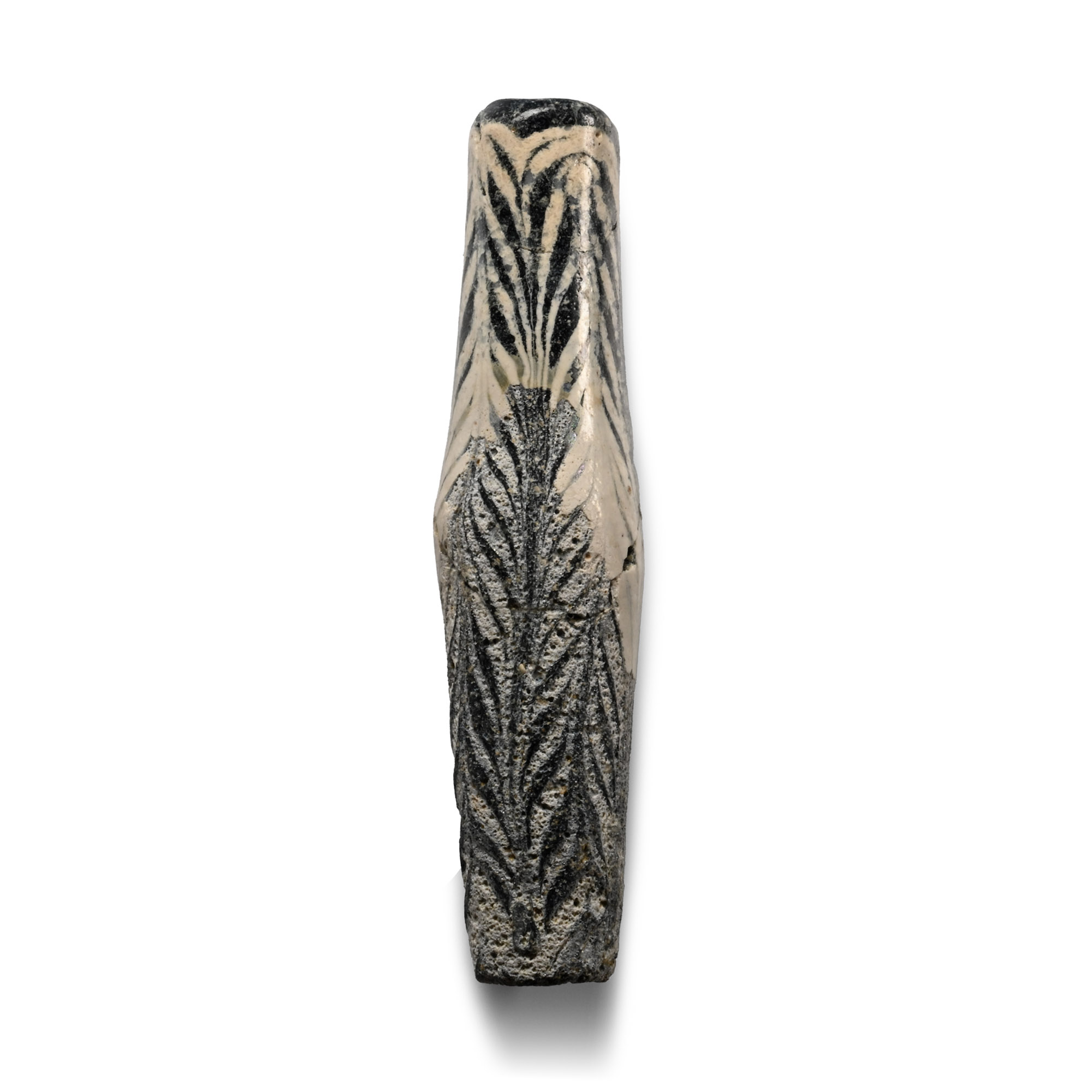
Large Roman Feathered Glass Bead
1ST-3RD CENTURY A.D.
2 7/8 in. (20.8 grams, 74 mm).
Tubular with tapering ends in black glass with applied white dragged and marvered trails. [No Reserve]
ProvenanceUK private collection, acquired 1979-1983.
This lot is accompanied by an illustrated lot declaration signed by the Head of the Antiquities Department, Dr Raffaele D’Amato.
TimeLine Auctions follows a vetting process to ensure the authenticity and legality of all items, reinforcing our commitment to integrity and responsible trading. Each antiquity, antique, and coin lot undergoes thorough examination by a vetting committee of at least ten external specialists, professional trade association members, scientists, and archaeologists: Our Vetting Process
AUCTIONS:
TimeLine is a leading auction house specialising in antiquities, ancient art, collectables, natural history, coins, medals, and books. Our auctions offer museums, collectors, historians, and enthusiasts the opportunity to acquire unique and historically significant pieces.
-
.jpg)
Roman Marble Head of a Young Man
2nd-3rd century A.D.Estimate: £2,000 - 3,000 (‡+bp*)
Opening Bid: £1,111
Worked in high-relief with hairstyle typical of the transitional period from the Consulate to the Empire; oval face with a prominent forehead, oval eyelids and clearly defined lines around the eyes; hair arranged in vertical lines combed back from the forehead; pronounced lips, typical rendering of the wide auricles; the lower part of the tunic visible with a well defined round edge around the neck; mounted on a custom-made display stand. 5.94 kg total, 22.5 cm high including stand
Acquired from Gallery Gryphos, Munich, 1992. European private collection. Accompanied by an academic report by Dr Raffaele D’Amato. This lot has been checked against the Interpol Database of stolen works of art and is accompanied by search certificate number no.11996-211878. This lot has been cleared against the Art Loss Register database, and is accompanied by an illustrated lot declaration signed by the Head of the Antiquities Department, Dr Raffaele D’Amato.
The head was probably pertinent to a series of funerary family portraits. It has realistic modelling of male features, which speaks of a portrait in reduced dimensions or a reference to a well-known person in the environment where it was exhibited. The portrait is worked only on the front, leaving the back, as well as the lower part of the sculpture, roughly treated. -
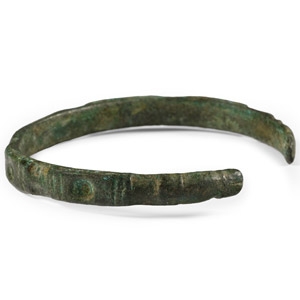
Roman Bronze Decorated Bracelet
1st-4th century A.D.Sold for (Inc. bp): £156
With a D-section segmented body with ring-and-dot motifs, stylised horse-head finials. 18.2 grams, 62 mm
Ex German art market, 2000s. Acquired from an EU collector living in London. From the collection of Surrey, UK, gentleman. This lot is accompanied by an illustrated lot declaration signed by the Head of the Antiquities Department, Dr Raffaele D’Amato. -
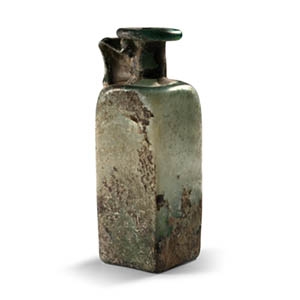
Roman Square Glass Jug
1st-3rd century A.D.Sold for (Inc. bp): £1,170
Square in section with dimple base, flat shoulder and short neck, folded rim; broad strap handle to the rear; mould-blown. 188 grams, 16.2 cm
From a London, UK, collection, 1990s. This lot is accompanied by an illustrated lot declaration signed by the Head of the Antiquities Department, Dr Raffaele D’Amato.
