
Loading, please wait...
LOT 0788
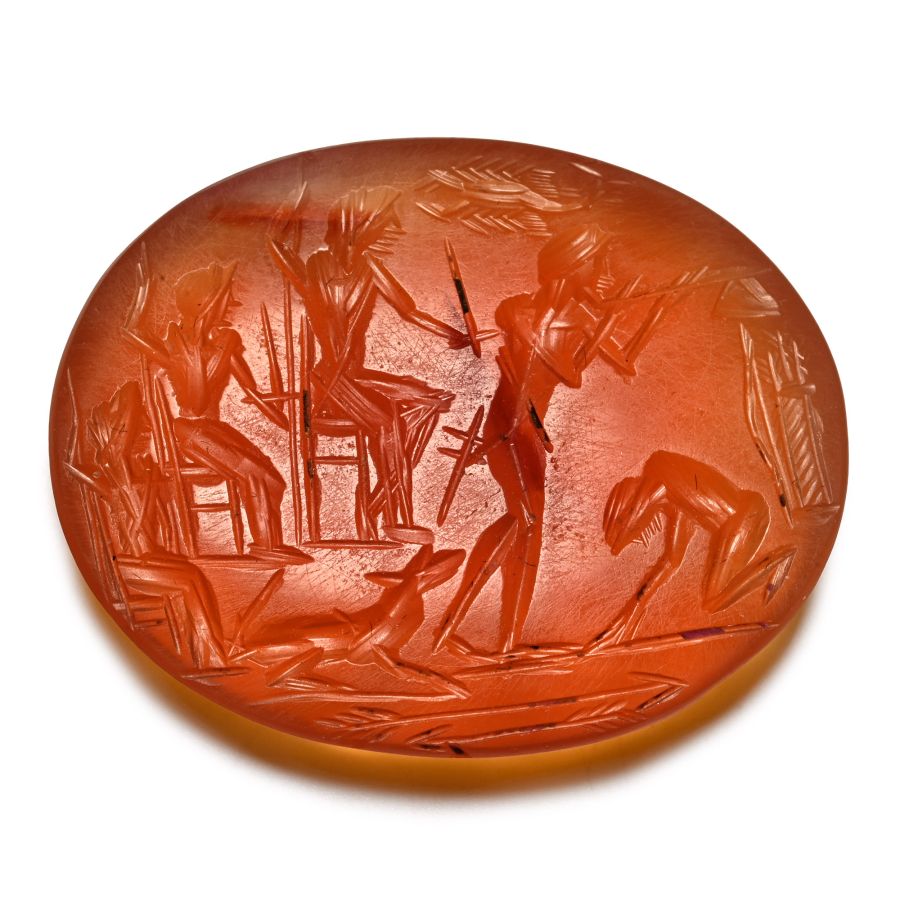
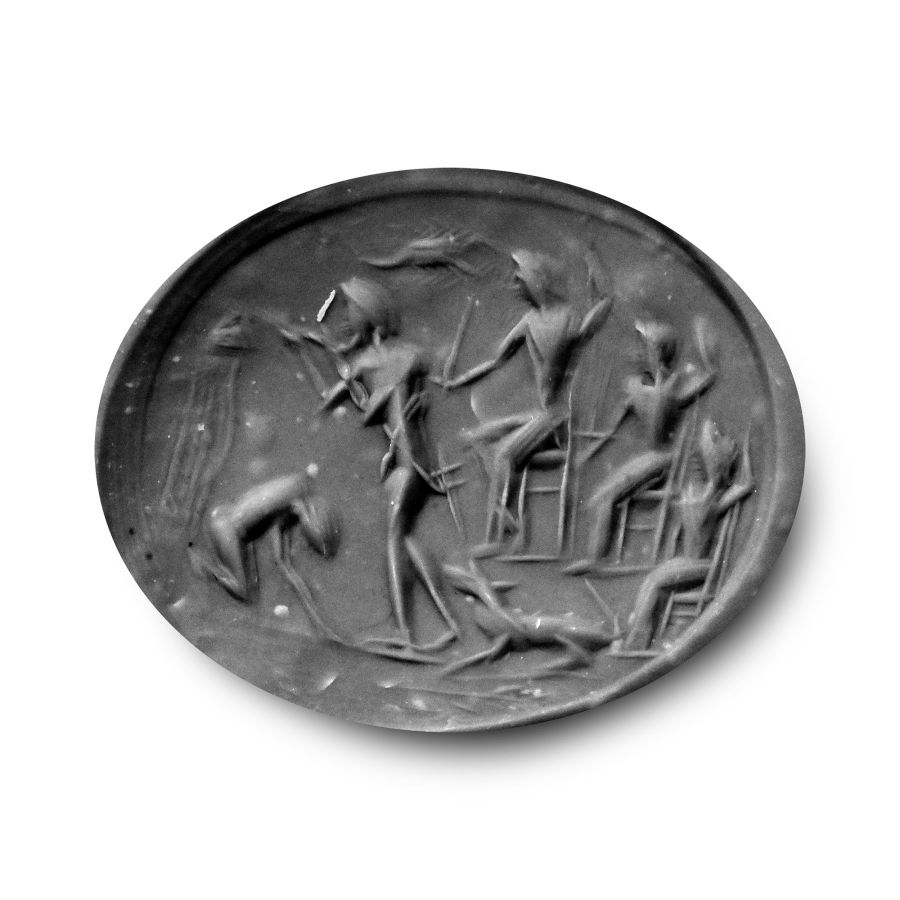
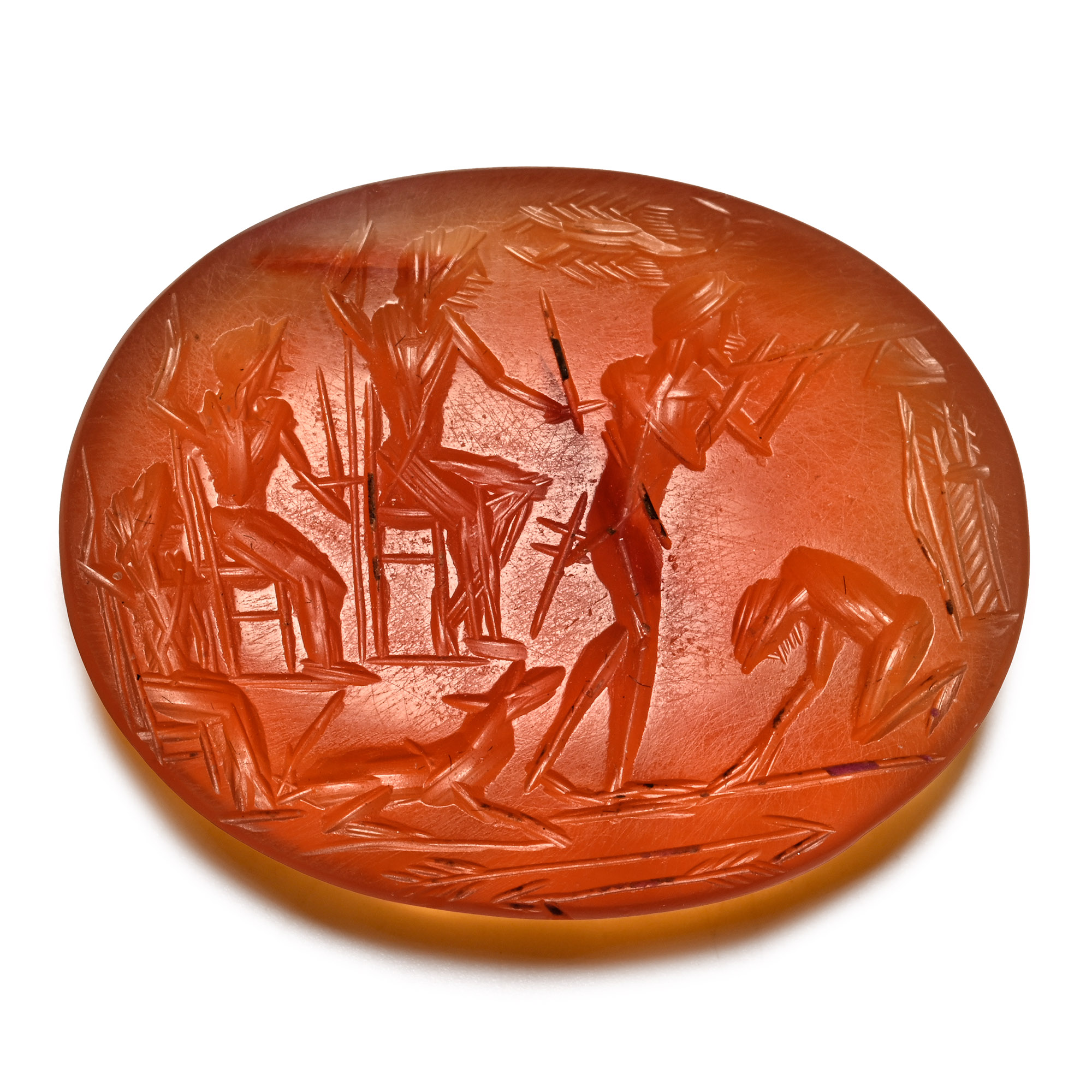
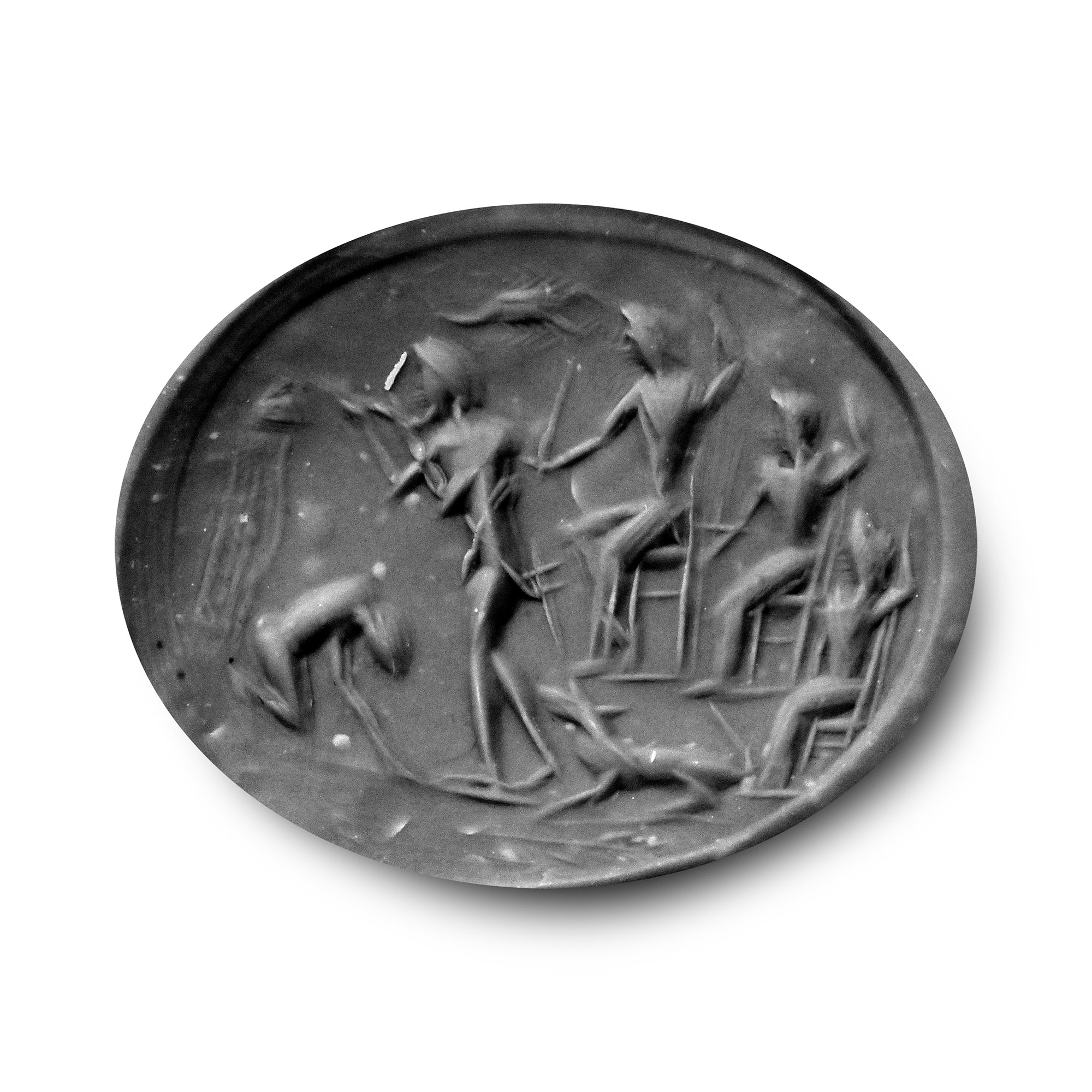
Large Roman Carnelian Gemstone with Ritual Scene
3RD CENTURY A.D.
1 1/8 in. (6.65 grams, 29 mm).
Dense figural scene comprising: left, three seated figures in profile, each with spear or staff in one hand and a raised sword in the other; resting hound below the seats, scorpion above; baseline with two arrows in exergue; standing figure advancing, holding an axe above a smaller figure crouching in submission; quiver and bow to the right; supplied with a museum-quality impression.
Provenancewith Hotel des Ventes de Monte-Carlo, 2019.
Private collection, England.
The presentation has many of the qualities of an initiation ritual with a group elders sitting in witness and an officiant testing the courage of the initiand.
CONDITIONTimeLine Auctions follows a vetting process to ensure the authenticity and legality of all items, reinforcing our commitment to integrity and responsible trading. Each antiquity, antique, and coin lot undergoes thorough examination by a vetting committee of at least ten external specialists, professional trade association members, scientists, and archaeologists: Our Vetting Process
AUCTIONS:
TimeLine is a leading auction house specialising in antiquities, ancient art, collectables, natural history, coins, medals, and books. Our auctions offer museums, collectors, historians, and enthusiasts the opportunity to acquire unique and historically significant pieces.
-
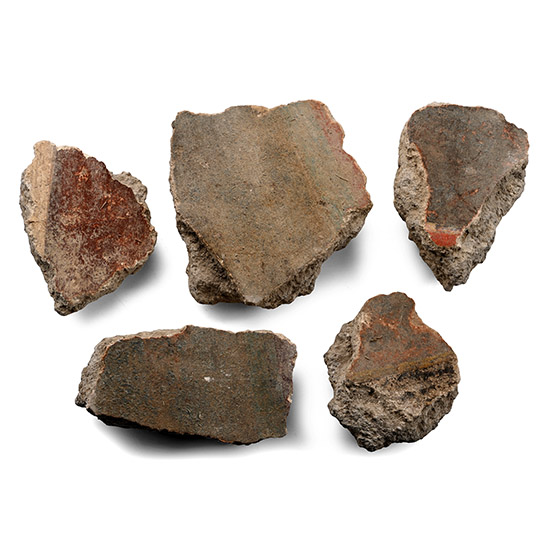
Roman Fresco Wall Plaster Collection
1st century A.D.Sold for (Inc. bp): £48
Fragments of wall plaster with rendered surface painted with mainly Pompeii red, pale blue and white detailing; some with impression of timber laths to the reverse. 690 grams total, 7.9-10.5 cm
Acquired in the 19th century. Ex Jeger collection, Switzerland. UK gallery, early 2000s.
These small fragments, for analogies with the fragments of Pompeii, seem to belong to the second style of Roman painting, red panels representing highlight and shadow, decorated with vegetal interlaces. Some panels were probably framed by a red grenade fillet. A fragment shows alternate blue and red colour over a cream background, maybe pertinent to a socle -
.jpg)
Roman Agate Cameo of the Emperor Augustus
1st century A.D.Estimate: £20,000 - 30,000 (‡+bp*)
Opening Bid: £11,111
Ellipsoid cameo with profile portrait bust in antique gold pendant frame with surrounding cabochons: emerald, sapphire, ruby - and clusters of pearls; marked to reverse '750', in a rectangle 'Bd G' (believed to be an upstate New York jeweller's stamp) and an indeterminate third mark; supplied with a custom-made display stand. 99 grams total, pendant: 50 mm
American collection, early 20th century, New York. with Robert Haber Gallery, New York, 1990. Ex Jean Clostre, Geneva, Switzerland. Accompanied by a scholarly report by Dr Ittai Gradel. This lot has been checked against the Interpol Database of stolen works of art and is accompanied by search certificate number no.12223-222312.
Dr Ittai Gradel says: 'The cameo, of exquisite technical quality, has a close parallel in the Cabinet des médailles, Paris .. The TimeLine auction cameo is not, however, an exact copy .. though details are so close to the larger Paris cameo that the same gem carver, or at least workshop, probably produced both.' -
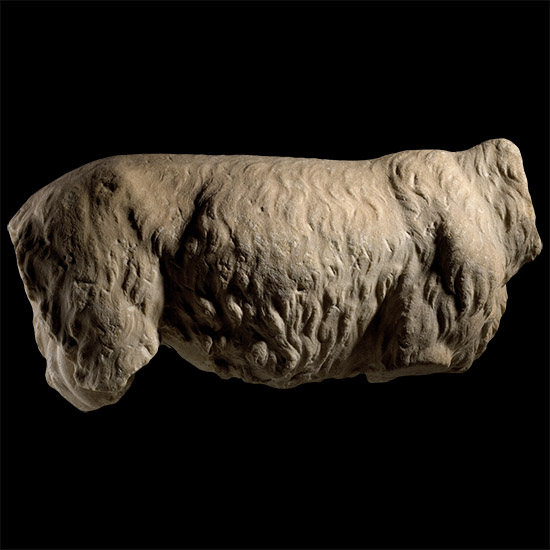
Life-Size Roman Marble Torso of a Ram
1st century B.C.-1st century A.D.Sold for (Inc. bp): £41,600
The naturalistic rendering of the animal is particularly evident in the modelling of the muscles and shaggy fur, which originally belonged to a multi-figure group intended for prominent display in an official space, such as a public bath, or in the private gardens of a luxurious villa; accompanied by a custom-made display stand. 155 kg, 89 cm (long), 41 cm (high) excluding stand
Acquired in Brussels, circa 1980. with Christie's, South Kensington, 6 October 2011, no.121. Jean-David Cahn AG, Basel, Switzerland. Private collection, England. Accompanied by a copy of an Art Loss Register certificate, no.S00074876. This lot has been checked against the Interpol Database of stolen works of art and is accompanied by search certificate no.13079-249669.
The sculpture may represent the goat Amalthea, nurse of Zeus, one of the most famous animals in Graeco-Roman mythology. At the same time, it could simply be a representation of a ram, an animal typically sculpted in sacrificial reliefs of the Roman world.
