
Loading, please wait...
LOT 0123
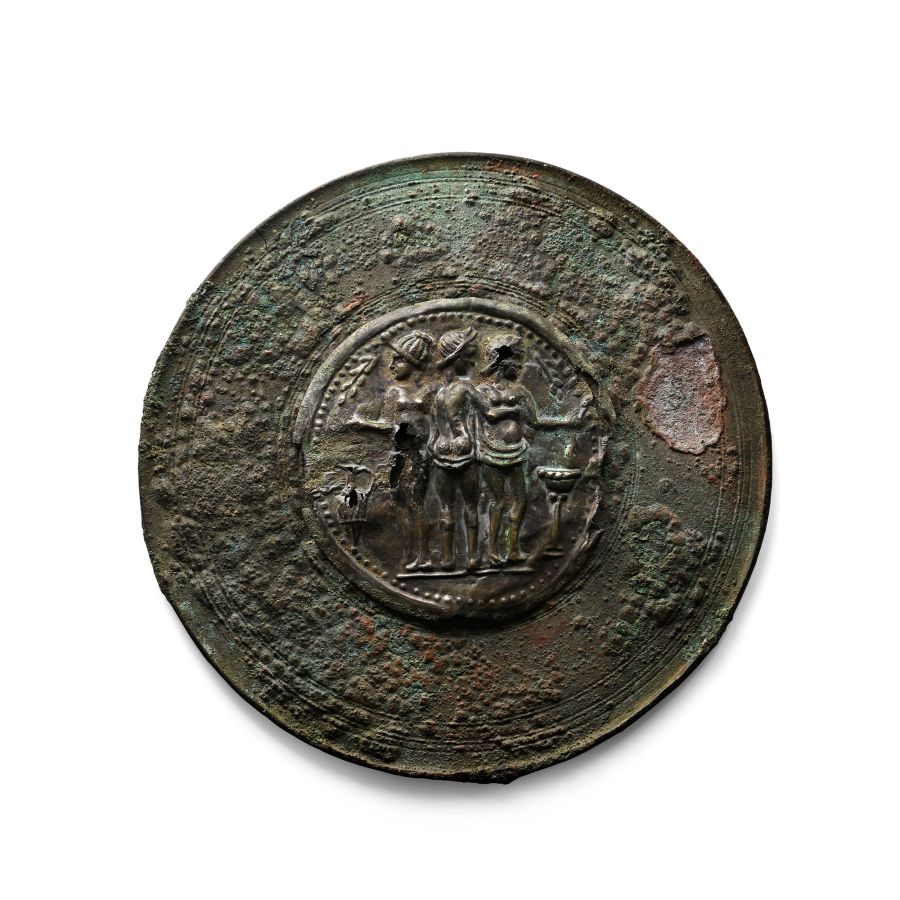
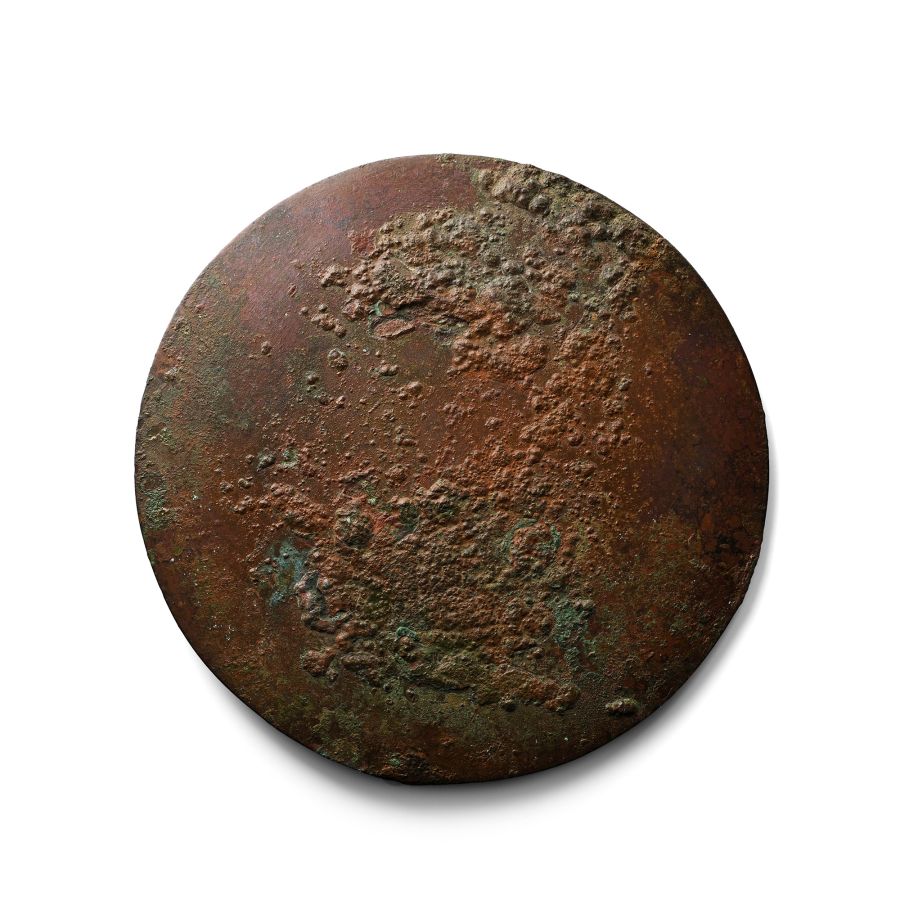
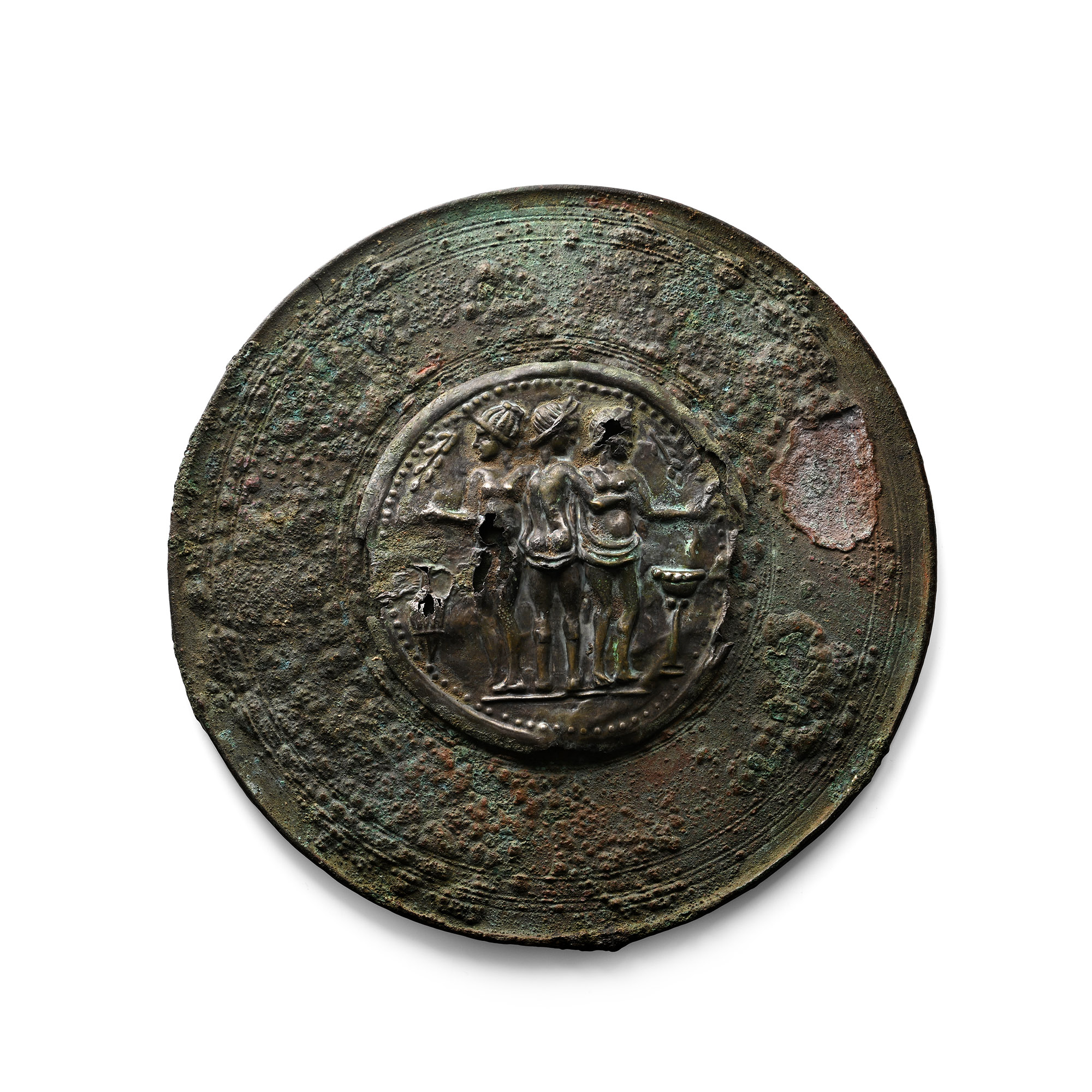
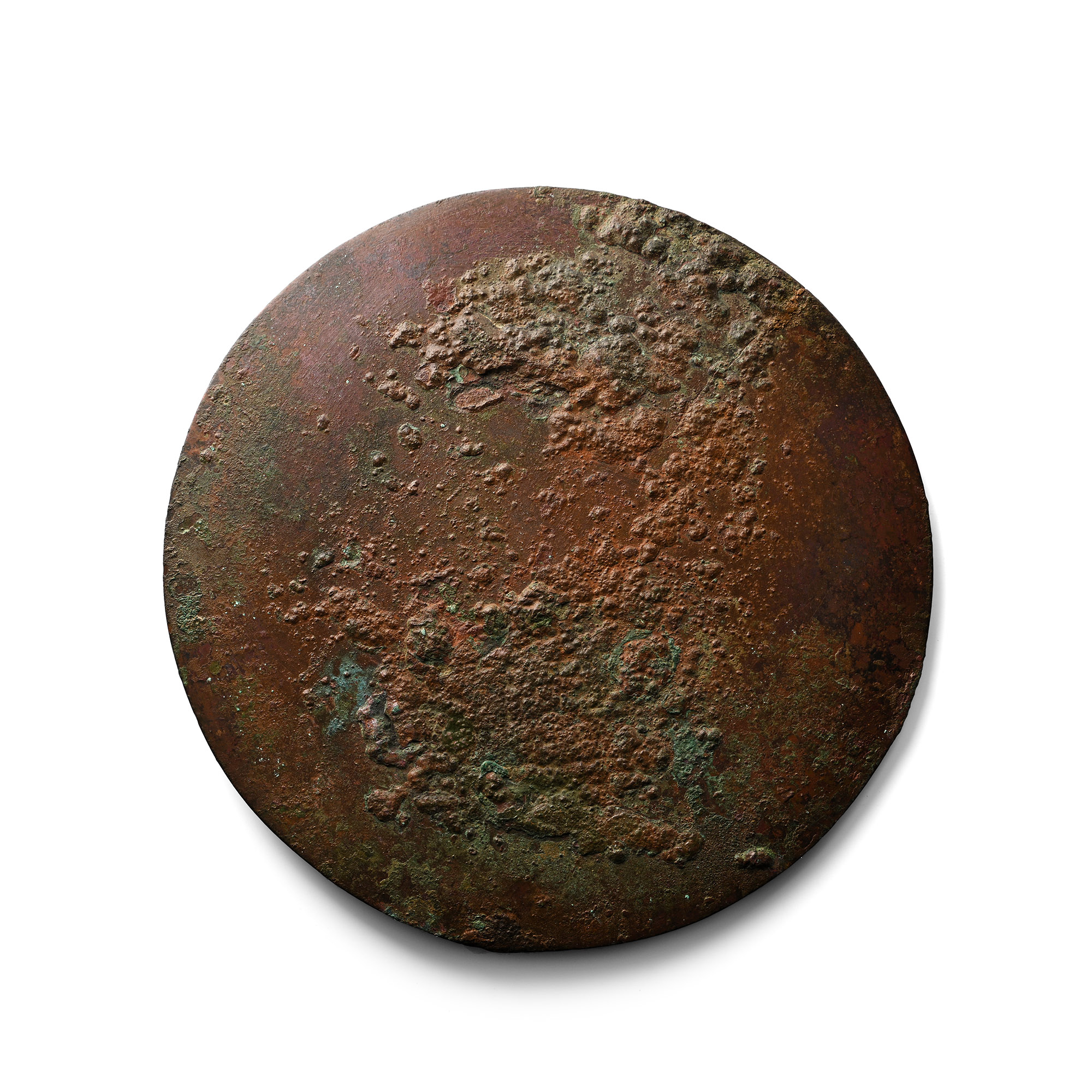
Large Roman Bronze Mirror with Three Graces Silver Plaque
1ST-4TH CENTURY A.D.
6 1/2 in. (497 grams, 16.6 cm).
Discoid in plan with raised rim and concentric rings; central applied sheet-silver plaque with three standing females between a jug and a bowl, each on a stand; pelletted rim.
ProvenanceEx German art market, 2000s.
Acquired from an EU collector living in London.
From the collection of a Surrey, UK, gentleman.
This lot is accompanied by an illustrated lot declaration signed by the Head of the Antiquities Department, Dr Raffaele D'Amato.
TimeLine Auctions follows a vetting process to ensure the authenticity and legality of all items, reinforcing our commitment to integrity and responsible trading. Each antiquity, antique, and coin lot undergoes thorough examination by a vetting committee of at least ten external specialists, professional trade association members, scientists, and archaeologists: Our Vetting Process
AUCTIONS:
TimeLine is a leading auction house specialising in antiquities, ancient art, collectables, natural history, coins, medals, and books. Our auctions offer museums, collectors, historians, and enthusiasts the opportunity to acquire unique and historically significant pieces.
LOT 0123
Large Roman Bronze Mirror with Three Graces Silver Plaque
Sold for (Inc. bp): £650
-
.jpg)
Roman Silver-Gilt Statuette of Fortuna
1st-2nd century A.D.Sold for (Inc. bp): £780
Modelled in the round and finely detailed, the goddess standing with a cornucopia in the crook of her left arm, wearing a floor-length palla. 18.48 grams, 39 mm
Acquired in the late 1980s-early 1990s. Private collection, London, UK. This lot is accompanied by an illustrated lot declaration signed by the Head of the Antiquities Department, Dr Raffaele D'Amato. -
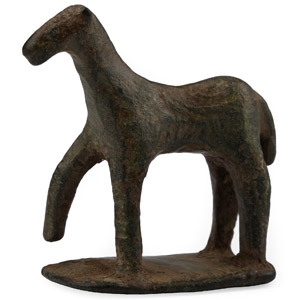
Roman Bronze Horse Statuette
1st-4th century A.D.Sold for (Inc. bp): £130
Standing on a rectangular base with its right front leg raised, small ears and slit mouth. 36.1 grams, 1 5/8 in.40 mm
Ex German art market, 2000s. Acquired from an EU collector living in London. From the collection of a Surrey, UK, gentleman. This lot is accompanied by an illustrated lot declaration signed by the Head of the Antiquities Department, Dr Raffaele D'Amato. -
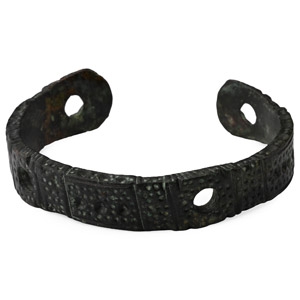
Roman Bronze Decorated Bracelet
1st-4th century A.D.Sold for (Inc. bp): £208
Sturdy rectangular-section body with circular openings on the body and finials, the body divided into segments with transverse lines, dense punched point decoration to the sides and upper face. 44 grams, 64 mm
Ex German art market, 2000s. Acquired from an EU collector living in London. From the collection of a Surrey, UK, gentleman. This lot is accompanied by an illustrated lot declaration signed by the Head of the Antiquities Department, Dr Raffaele D'Amato.
