
Loading, please wait...
LOT 0640
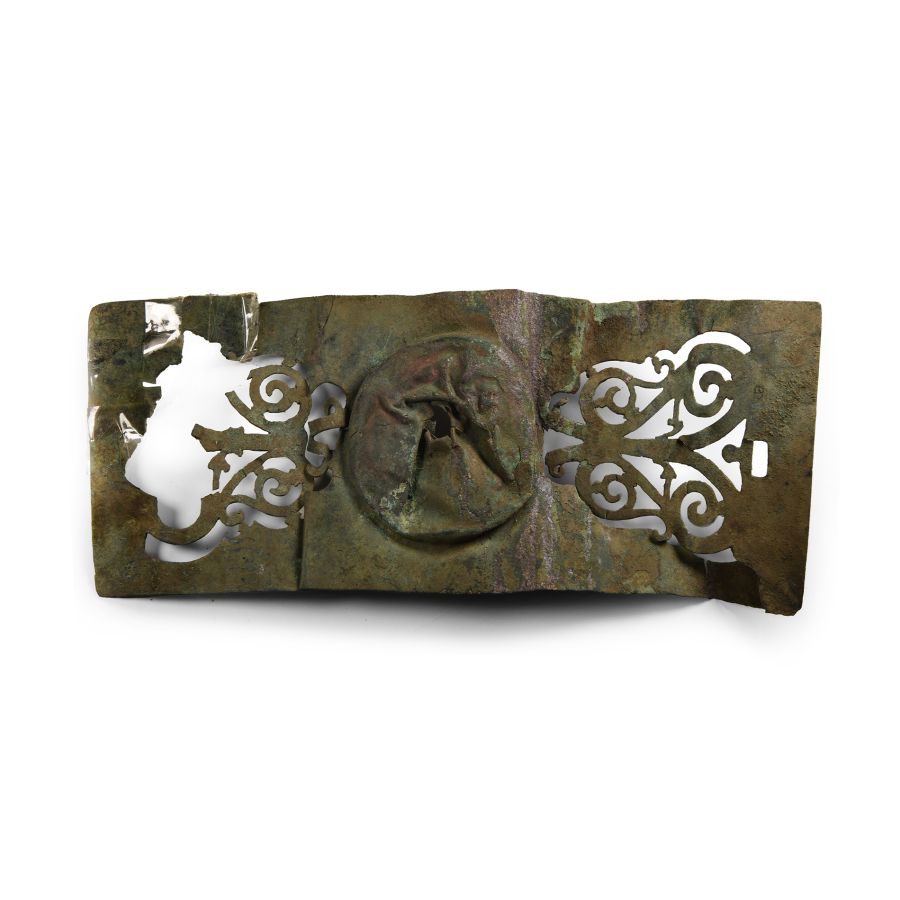
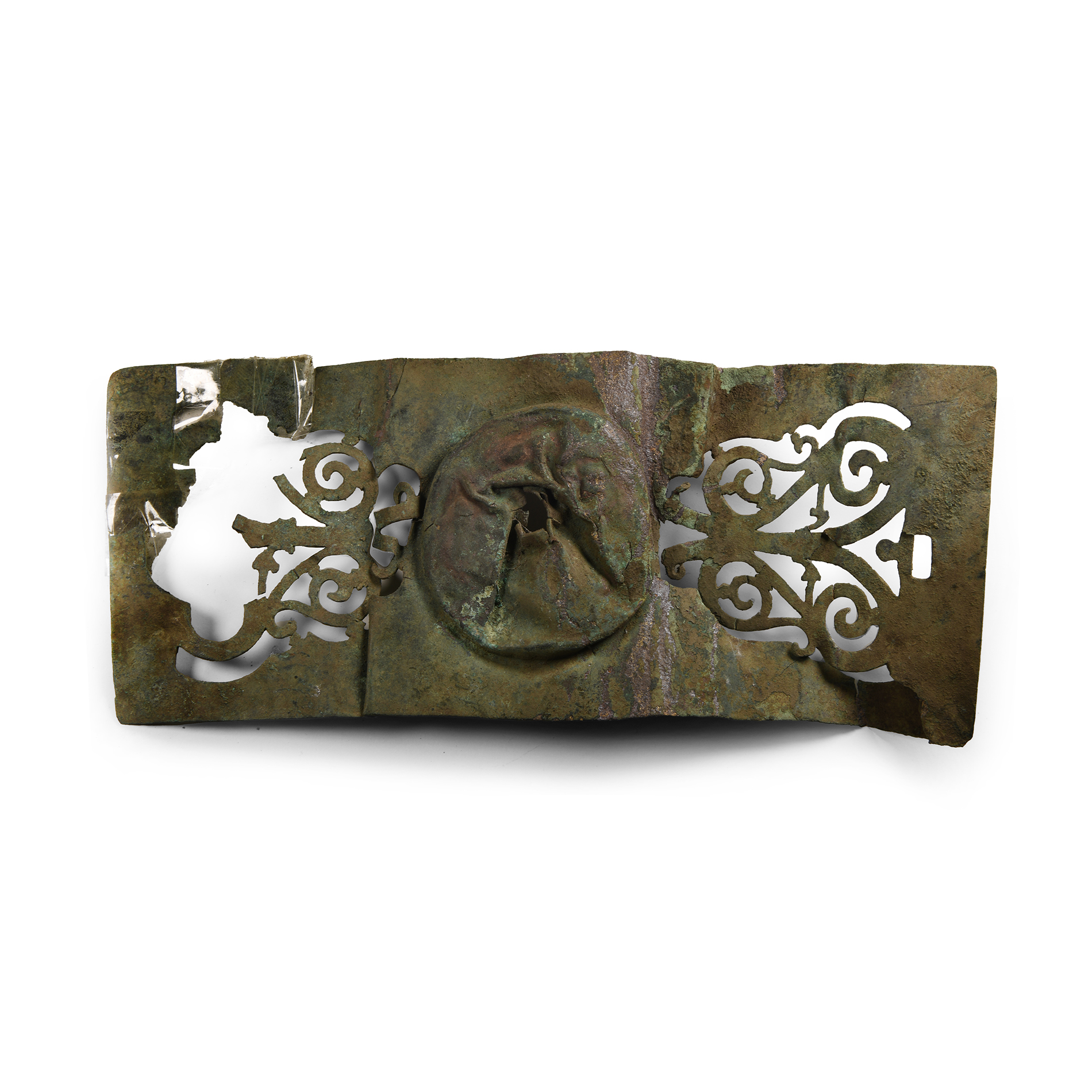
Large Roman Bronze Military Mount
2ND-3RD CENTURY A.D.
5 2/4 in. (69 grams, 14 cm wide).
Composed of a central domed boss and openwork volutes to the sides; for a sword belt or a chariot.
ProvenanceAcquired 1960s-1990s.
Late Alison Barker collection, a retired London barrister.
Cf. for baldric elements Miks, C., Studien zur Romischen Schwertbewaffnung in der Kaiserzeit, I-II Banden, Rahden, 2007, I, fig.62 (openwork plate with heart-shaped terminal); Boube-Piccot, C., Les bronzes antiques de Maroc, III, Les chars et l’attelage, Rabat, 1980, nos.202 (Rabat), 631 (Tanger), for chariot elements.
CONDITIONTimeLine Auctions follows a vetting process to ensure the authenticity and legality of all items, reinforcing our commitment to integrity and responsible trading. Each antiquity, antique, and coin lot undergoes thorough examination by a vetting committee of at least ten external specialists, professional trade association members, scientists, and archaeologists: Our Vetting Process
AUCTIONS:
TimeLine is a leading auction house specialising in antiquities, ancient art, collectables, natural history, coins, medals, and books. Our auctions offer museums, collectors, historians, and enthusiasts the opportunity to acquire unique and historically significant pieces.
LOT 0640
Large Roman Bronze Military Mount
Estimate £150 - 200€170 - 230 (for guidance only)$200 - 270 (for guidance only)
-
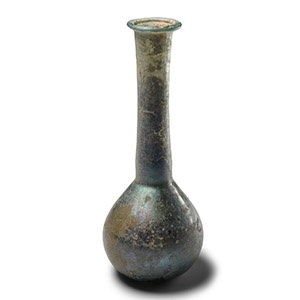
Roman Iridescent Green Glass Ampulla
1st-3rd century A.D.Sold for (Inc. bp): £117
Featuring a bottle of a wide form, free blown from translucent glass of a soft turquoise hue, defined by a slightly concave base, a piriform body with a tapered shoulder, a lightly corseted neckline beneath a cylindrical neck, and a splayed rim with an in-folded lip. 23 grams, 11.6 cm high
Acquired 1980-2015. Ex Abelita family collection.
The ampulla was a small round vessel, usually made of glass and used for sacred purposes. The word is used in archaeology, also for flasks that are often handle-less and much flatter. Materials include glass, ceramics and metal. The unguentarium was a term for a bottle believed to have been used to store perfume. -
.jpg)
Roman Marbled Amber Glass Vase
4th century A.D.Sold for (Inc. bp): £585
Of squat carinated form, slender tapering neck with everted rim, decorative white marbling over the body. 47 grams, 85 mm high
Acquired early 1990s. Ex private American collection; thence by descent. Private collection since 1998. -
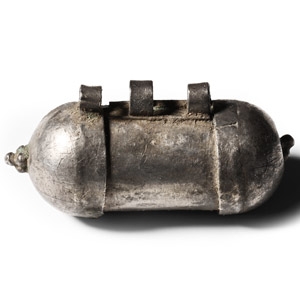
Roman Silver Container Pendant
Circa 2nd-4th century A.D.Estimate: £200 - 300 (+bp*)
Opening Bid: £100
Tubular body with domed cap to each end, applied granule clusters, three suspension loops. 6.3 grams, 35 mm
Acquired on the German art market before 2000. From an EU collection before 2020.
