
Loading, please wait...
LOT 0649
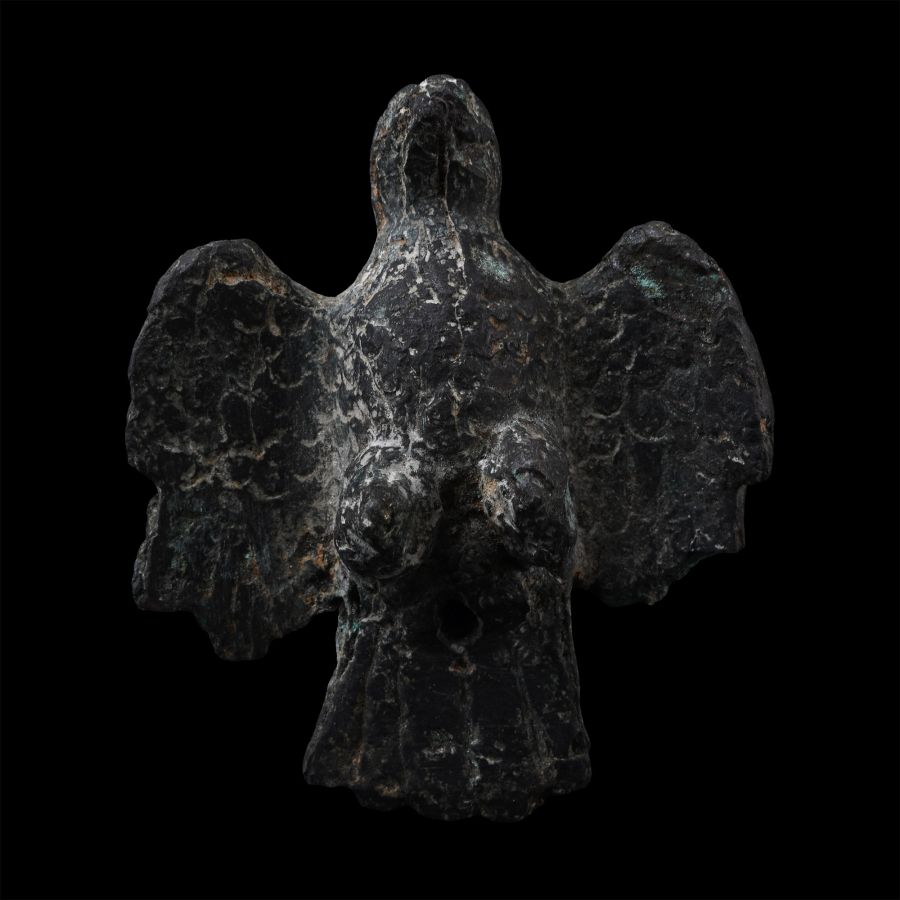
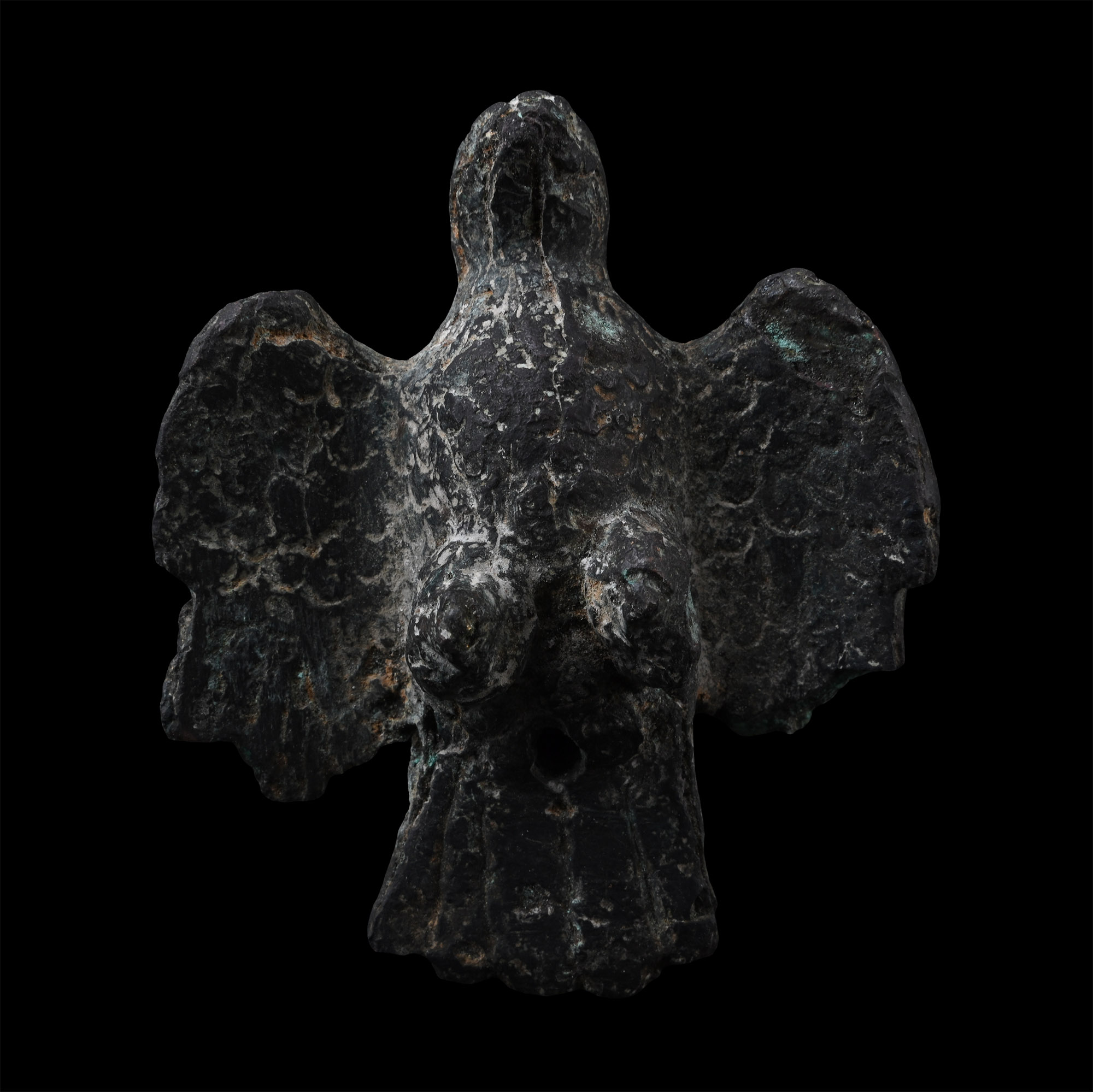
Large Roman Bronze Eagle Staff Finial
3RD-4TH CENTURY A.D.
2 5/8 in. (104 grams, 65.5 mm high).
Modelled with open wings and an erect head, tail feathers spread with a small piercing through the base, and feather detailing throughout. [No Reserve]
ProvenanceFrom the private collection of a European gentleman (1942-2024), formed since the 1970s.
CONDITIONTimeLine Auctions follows a vetting process to ensure the authenticity and legality of all items, reinforcing our commitment to integrity and responsible trading. Each antiquity, antique, and coin lot undergoes thorough examination by a vetting committee of at least ten external specialists, professional trade association members, scientists, and archaeologists: Our Vetting Process
AUCTIONS:
TimeLine is a leading auction house specialising in antiquities, ancient art, collectables, natural history, coins, medals, and books. Our auctions offer museums, collectors, historians, and enthusiasts the opportunity to acquire unique and historically significant pieces.
-
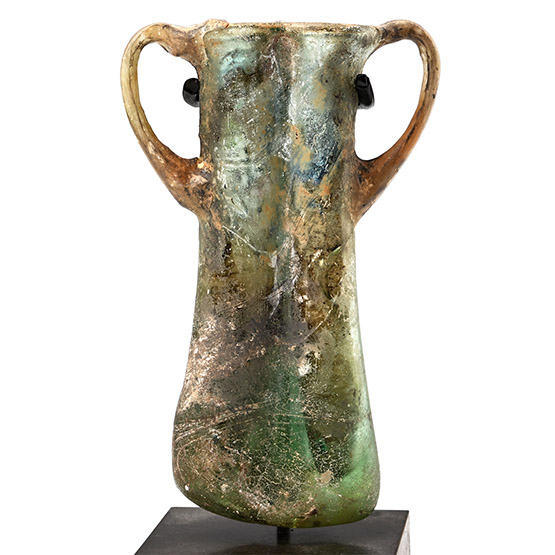
Roman Glass Double Balsamarium
Circa 4th century A.D.Sold for (Inc. bp): £312
Formed as a pair of conjoined tubes with slightly flared tops and thickened rims; applied handles at the shoulders joined to the rim; glass with areas of iridescence; mounted on a custom-made stand. 85 grams, 10.9 cm
From a London, UK, collection of glass, 1970-2000s. -
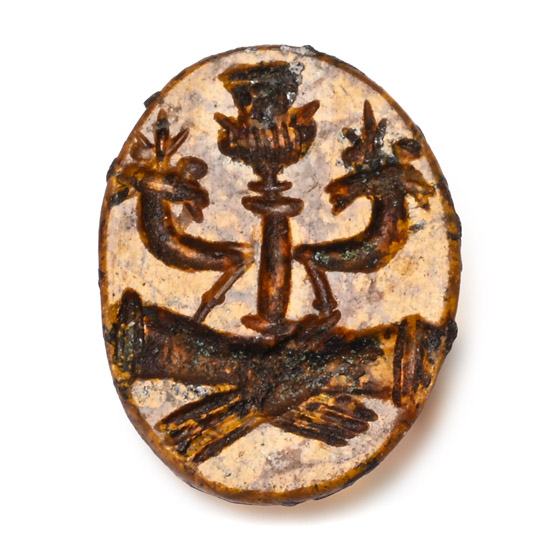
Roman Orange Jasper Gemstone with Clasped Hands
2nd-3rd century A.D.Sold for (Inc. bp): £208
With intaglio motif of two hands clasped beneath a vase on a pillar flanked by cornucopiae; supplied with a museum-quality impression. 0.65 grams, 13.22 mm
From the private collection of a European gentleman (1942-2024), formed since the 1970s. -
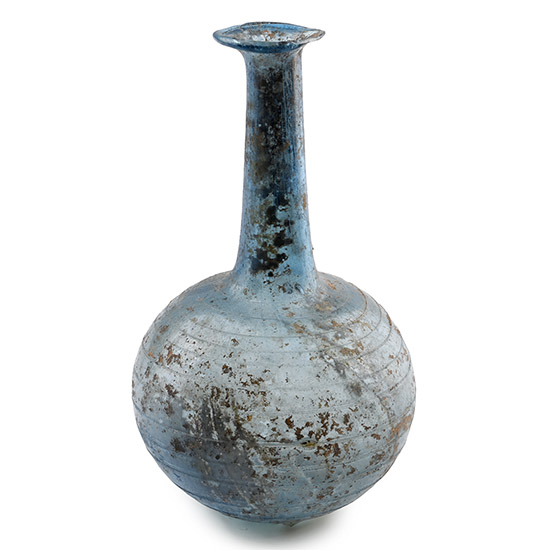
Roman Blue Glass Unguentarium with Trail
1st-4th century A.D.Sold for (Inc. bp): £624
With a spherical body, a tall tubular neck with everted rolled rim; fine applied trails across the body. 29.4 grams, 11.1 cm
From a specialist collection of glass, acquired from dealerships during the 1990s.
