
Loading, please wait...
LOT 0837
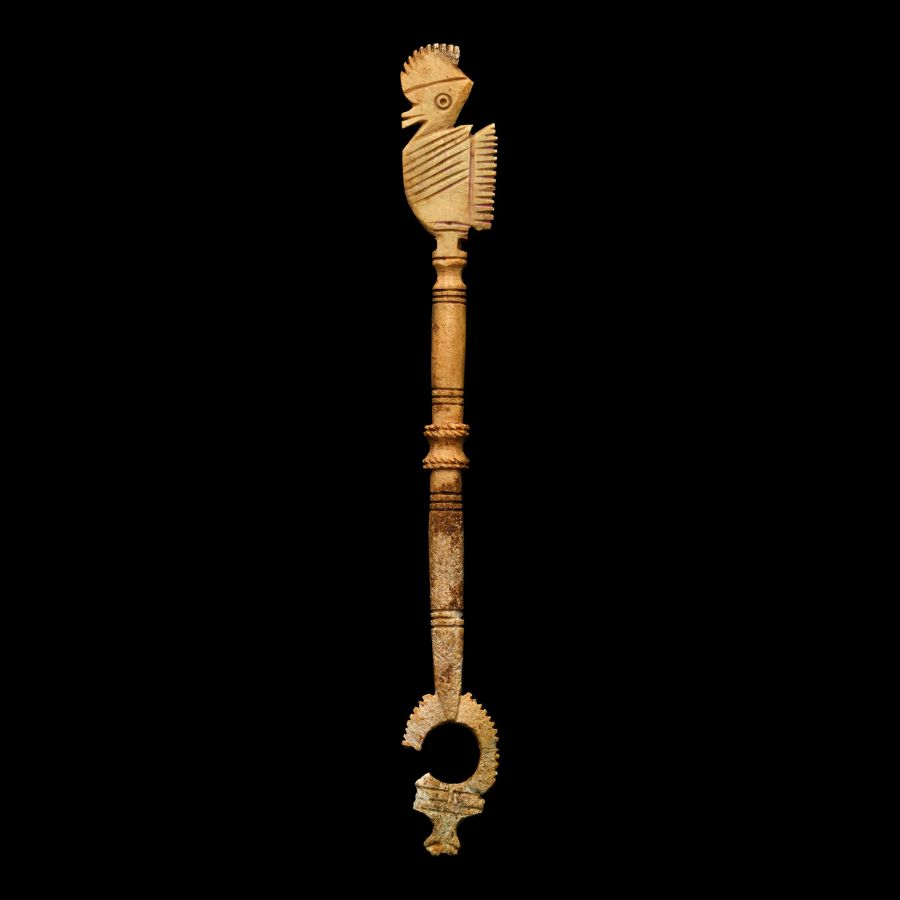
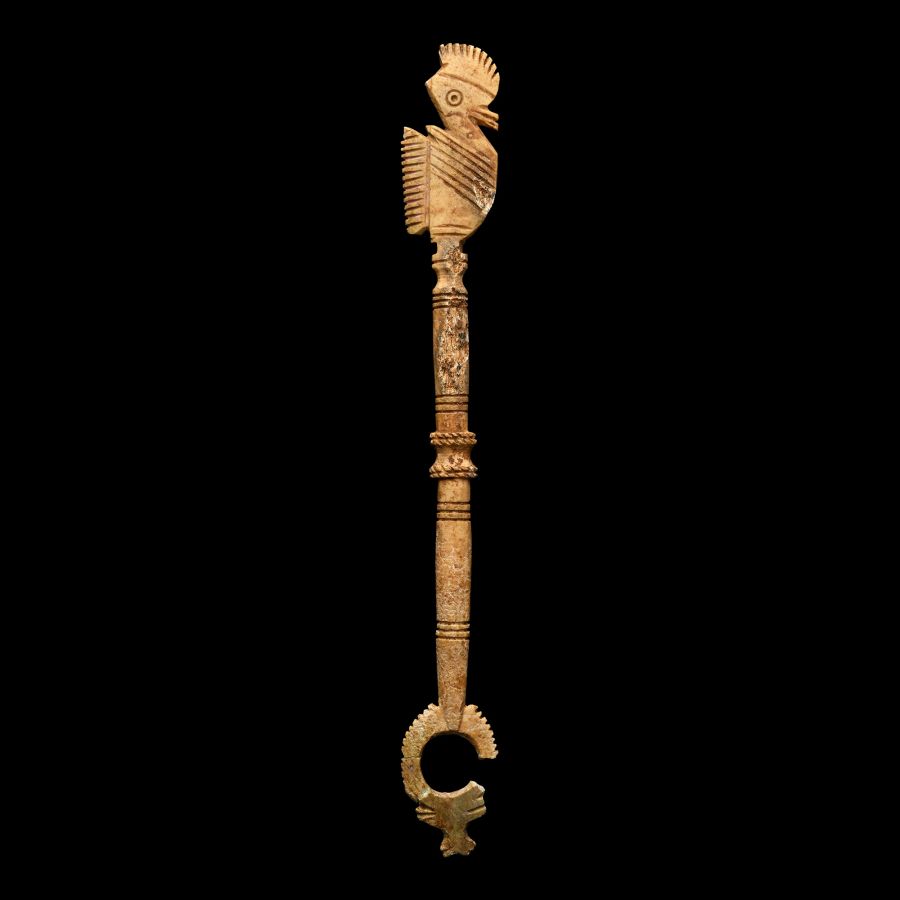
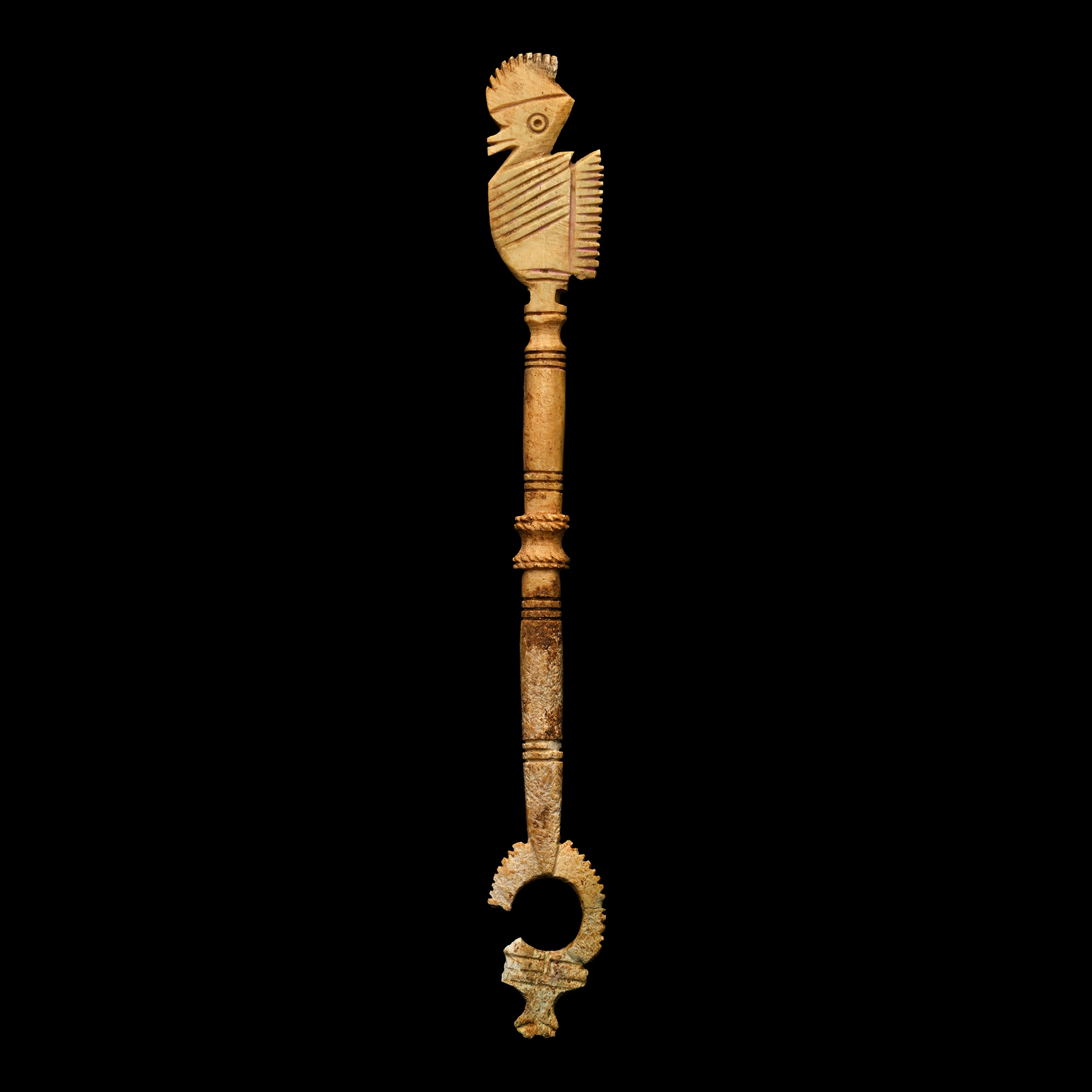
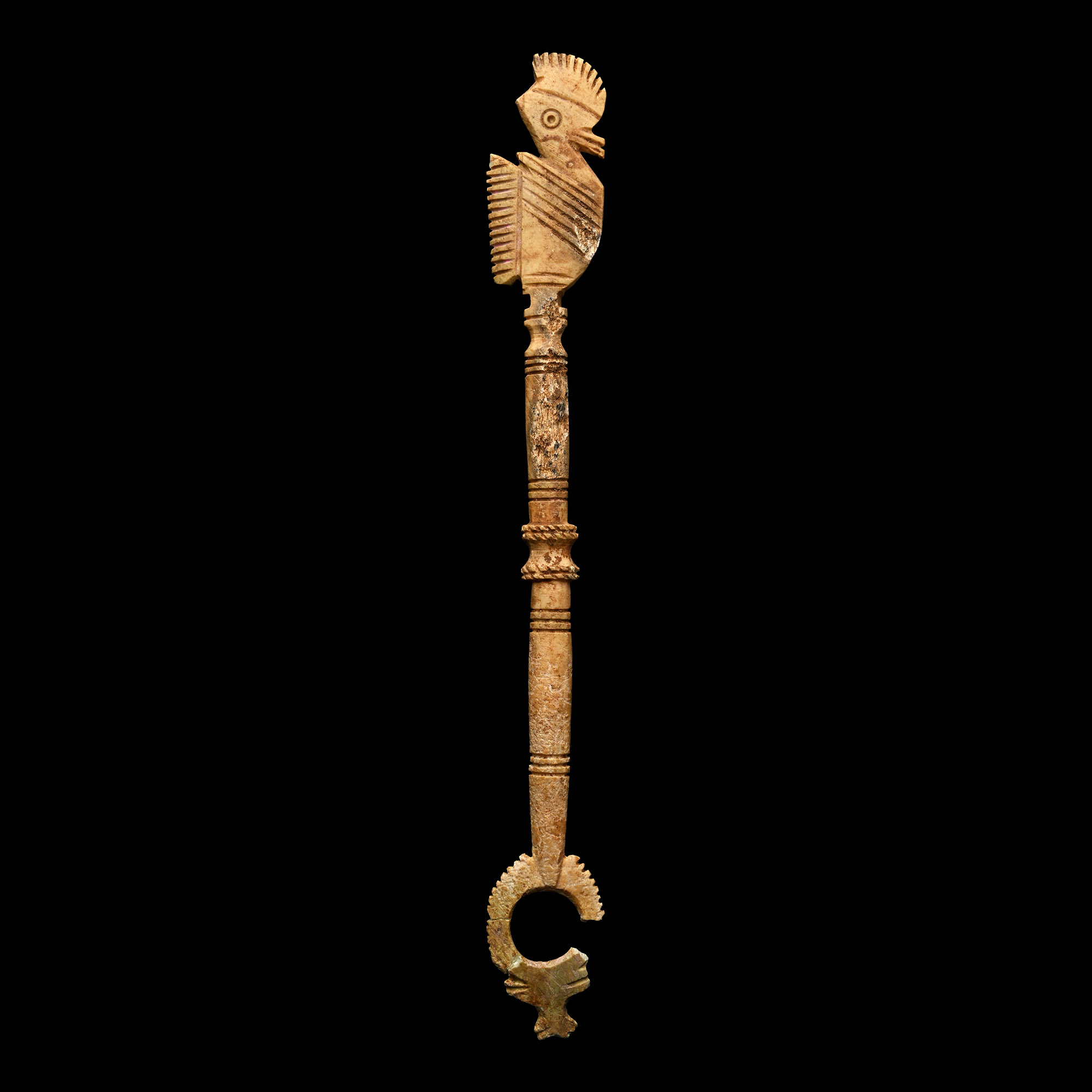
Large Roman Bone Weaving Implement
3RD-4TH CENTURY A.D.
9 in. (24.86 grams, 23 cm).
Carved from a single longbone section comprising a ring finial with dentiled outer edge, balustered shank with ropework collars, aviform finial with hatched detailing; possibly a pin-beater for textile working.
ProvenancePrivate collection of Mr K.A., acquired in the 1990s-early 2000s.
This lot is accompanied by an illustrated lot declaration signed by the Head of the Antiquities Department, Dr Raffaele D'Amato.
TimeLine Auctions follows a vetting process to ensure the authenticity and legality of all items, reinforcing our commitment to integrity and responsible trading. Each antiquity, antique, and coin lot undergoes thorough examination by a vetting committee of at least ten external specialists, professional trade association members, scientists, and archaeologists: Our Vetting Process
AUCTIONS:
TimeLine is a leading auction house specialising in antiquities, ancient art, collectables, natural history, coins, medals, and books. Our auctions offer museums, collectors, historians, and enthusiasts the opportunity to acquire unique and historically significant pieces.
LOT 0837
Large Roman Bone Weaving Implement
Estimate £400 - 600€460 - 700 (for guidance only)$540 - 810 (for guidance only)
-
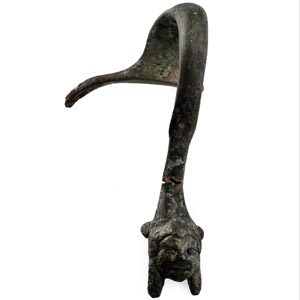
Roman Bronze Vessel Handle with Face
Circa 2nd century B.C.Sold for (Inc. bp): £78
Comprising a crescentic head with arched bow and leaf-shaped finial displaying the head of Medusa with snakes in her hair in high-relief, surrounded by leaf detailing; bow with stylised vegetal detailing and spur serving as a thumb-pad; repaired. 55.6 grams, 95 mm
Acquired on the UK art market circa 2005. From an old North Country, UK, collection. This lot is accompanied by an illustrated lot declaration signed by the Head of the Antiquities Department, Dr Raffaele D'Amato. -
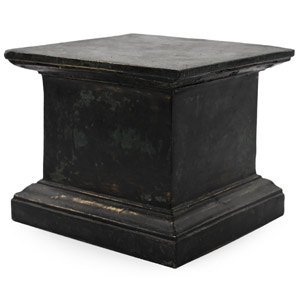
Roman Bronze Statue Base
1st-3rd century A.D.Sold for (Inc. bp): £572
Square in plan, tiered in profile, hollow to the underside. 650 grams, 84 mm
London art market, 1997. Private collection, UK. This lot is accompanied by an illustrated lot declaration signed by the Head of the Antiquities Department, Dr Raffaele D'Amato. -
.jpg)
Roman Iridescent Glass Double Unguentarium
2nd-3rd century A.D.Estimate: £600 - 800 (‡+bp*)
Opening Bid: £333
With rolled rim to each tapering tube, applied trail detailing to the body, lateral angled handles and large applied loop handle above; iridescent surface. 59 grams, 17 cm
Acquired in the mid 1980s-1990s. Private collection, Switzerland, thence by descent. Private collection, since the late 1990s. This lot has been checked against the Interpol Database of stolen works of art and is accompanied by search certificate number no.12237-222167. This lot is accompanied by an illustrated lot declaration signed by the Head of the Antiquities Department, Dr Raffaele D’Amato. This lot is accompanied by an illustrated lot declaration signed by the Head of the Antiquities Department, Dr Raffaele D'Amato.
