
Loading, please wait...
LOT 0722
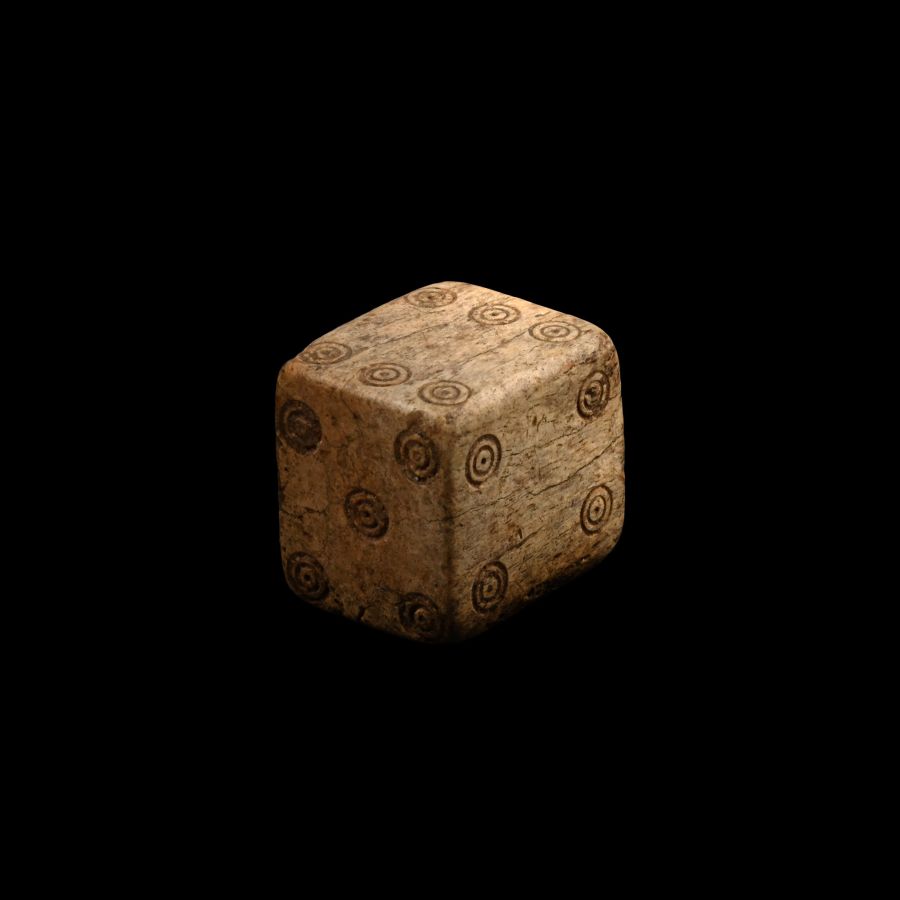
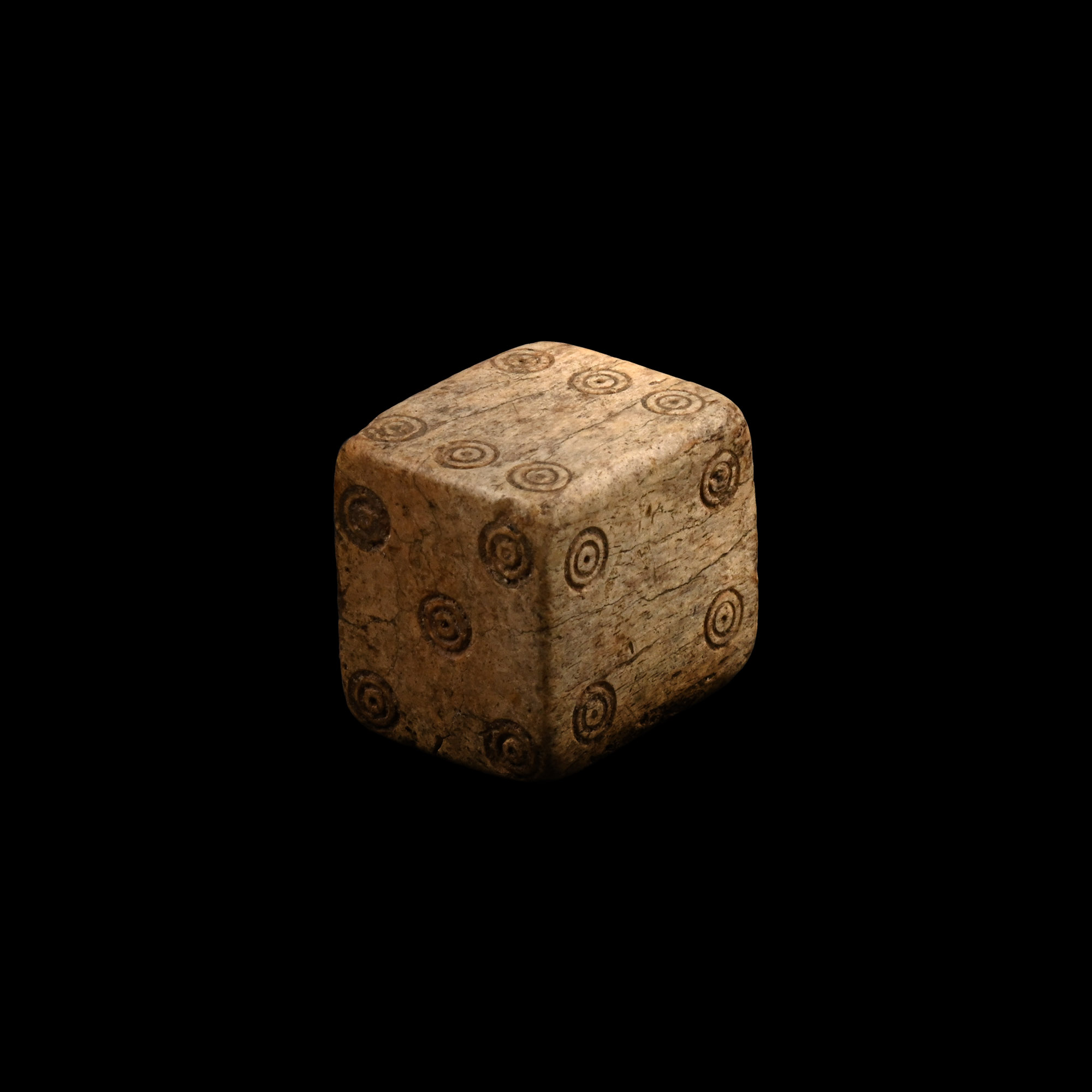
Large Roman Bone Gaming Dice
1ST-4TH CENTURY A.D.
3/4 in. (6.75 grams, 16 mm).
Cuboid with incised ring-and-dot spots disposed 1:6, 2:5, 3:4. [No Reserve]
ProvenanceAcquired on the London art market in the late 1980s-1990s.
From the family collection of an East London, UK, gentleman.
This lot is accompanied by an illustrated lot declaration signed by the Head of the Antiquities Department, Dr Raffaele D'Amato.
TimeLine Auctions follows a vetting process to ensure the authenticity and legality of all items, reinforcing our commitment to integrity and responsible trading. Each antiquity, antique, and coin lot undergoes thorough examination by a vetting committee of at least ten external specialists, professional trade association members, scientists, and archaeologists: Our Vetting Process
AUCTIONS:
TimeLine is a leading auction house specialising in antiquities, ancient art, collectables, natural history, coins, medals, and books. Our auctions offer museums, collectors, historians, and enthusiasts the opportunity to acquire unique and historically significant pieces.
-
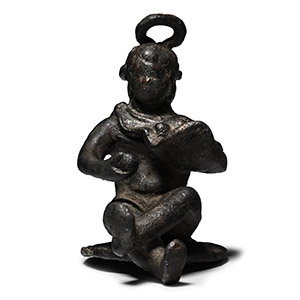
Roman Vessel Lid with Male Youth Wearing a Chlamys
1st-3rd century A.D.Sold for (Inc. bp): £520
Discoid base supporting a seated youth with legs crossed, wearing a chlamys, his left hand supporting fruit in the folds of the cloth and right hand holding one; base pierced; transverse wire to sides of the head, ring above. 366 grams, 80 mm
From the collection of a gentleman, acquired on the London art market in the 1990s. This lot is accompanied by an illustrated lot declaration signed by the Head of the Antiquities Department, Dr Raffaele D'Amato. -
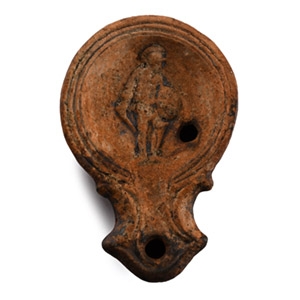
Roman Terracotta Oil Lamp
1st century A.D.Sold for (Inc. bp): £468
Short nozzle with lateral volute scrolls, broad discus with concentric circles, central motif of a standing figure in crested helmet and one greave holding a round shield and short sword; probably a scutarius gladiator; incise 'VIL' maker's mark to underside. 103 grams, 10.2 cm
From a private UK collection formed in the 1980s. This lot is accompanied by an illustrated lot declaration signed by the Head of the Antiquities Department, Dr Raffaele D'Amato. -
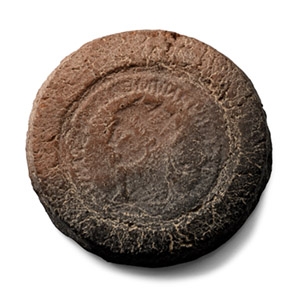
Roman Terracotta Forger's Casting Mould
4th century A.D.Sold for (Inc. bp): £111
Discoid clay mould with impressed design of a coin to each face. 4.71 grams, 28 mm
From the collection of a gentleman, acquired on the London art market in the 1990s. This lot is accompanied by an illustrated lot declaration signed by the Head of the Antiquities Department, Dr Raffaele D'Amato.
