
Loading, please wait...
LOT 0146
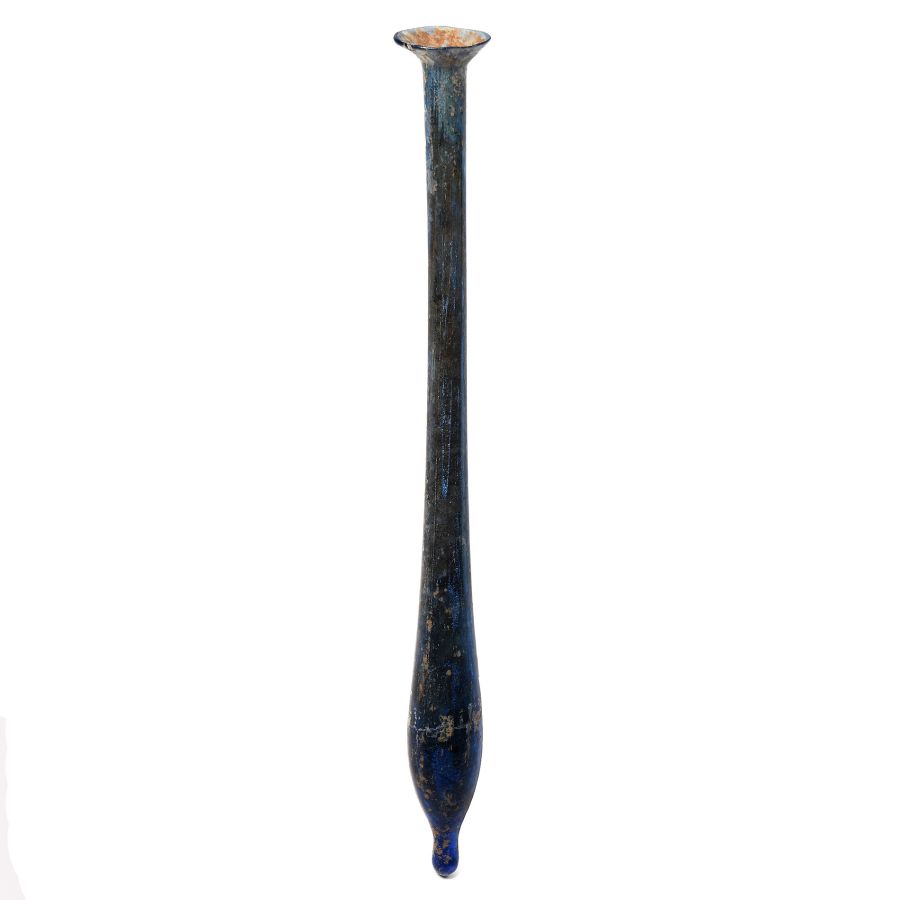
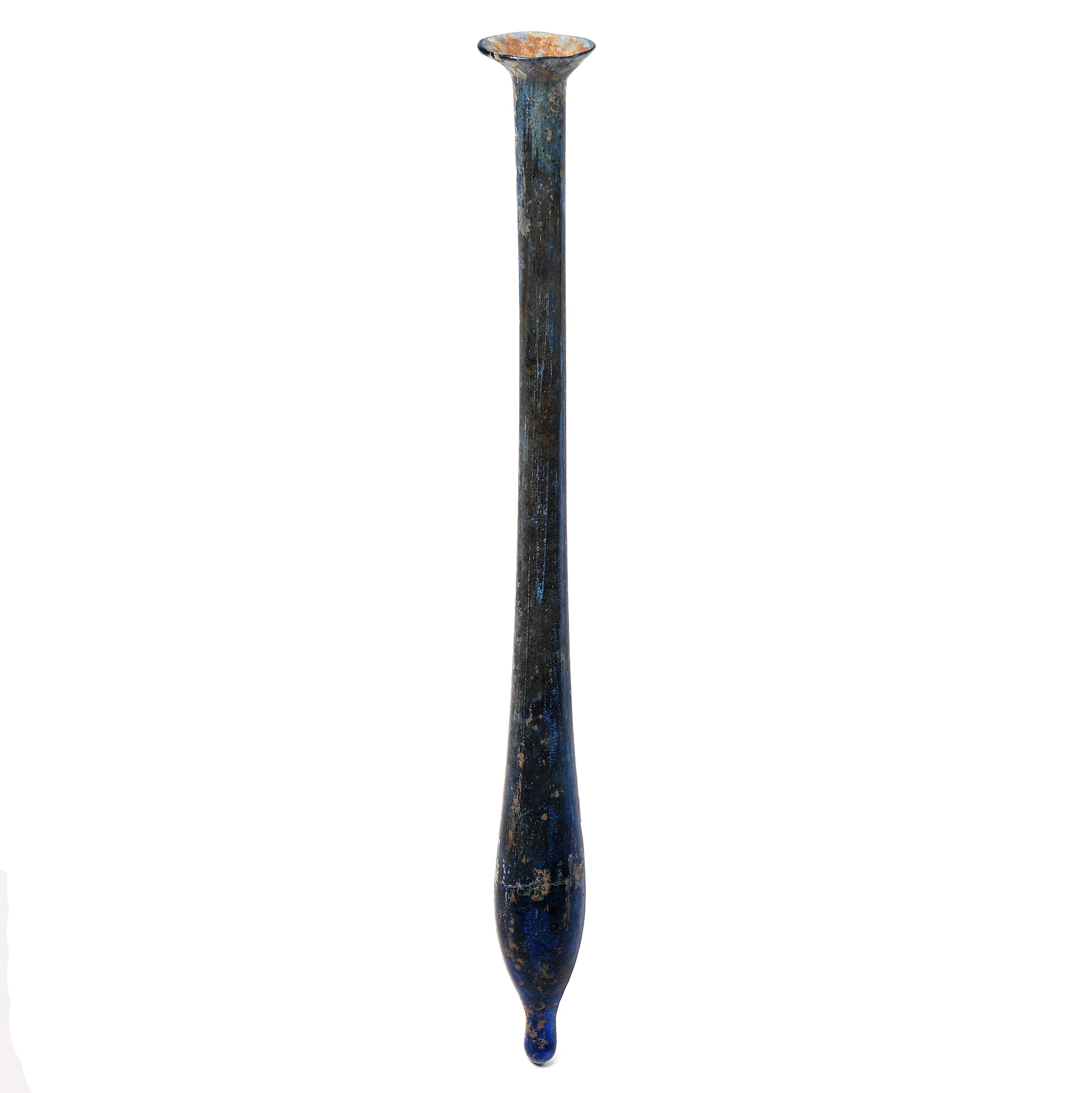
Large Roman Blue Long Neck Vessel
1ST-4TH CENTURY A.D.
8 1/8 in. (29 grams, 20.7 cm high).
A blue fusiform glass vessel composed of an everted rim, elongated tubular neck with short expanded body and integral foot; iridescent surfaces; repaired.
ProvenanceAcquired early 1990s.
Ex private American collection; thence by descent.
Private collection since 1998.
TimeLine Auctions follows a vetting process to ensure the authenticity and legality of all items, reinforcing our commitment to integrity and responsible trading. Each antiquity, antique, and coin lot undergoes thorough examination by a vetting committee of at least ten external specialists, professional trade association members, scientists, and archaeologists: Our Vetting Process
AUCTIONS:
TimeLine is a leading auction house specialising in antiquities, ancient art, collectables, natural history, coins, medals, and books. Our auctions offer museums, collectors, historians, and enthusiasts the opportunity to acquire unique and historically significant pieces.
-
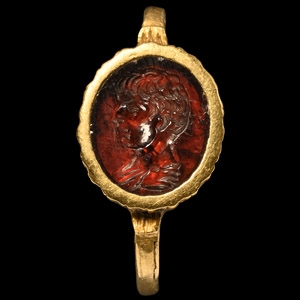
Roman Ring with Imperial Portrait
2nd century A.D. or laterSold for (Inc. bp): £2,470
A gold finger ring with narrow hoop, disc bezel with fluted rim, inset garnet intaglio male bust with Julian hairstyle. 4.68 grams, 25.34 mm overall, 23.40 mm internal diameter (approximate size British P 1/2, USA 7 3/4, Europe 16.86, Japan 16)
Acquired 1980-2015. Ex Abelita family collection. This lot has been checked against the Interpol Database of stolen works of art and is accompanied by search certificate no.11620-199234. -
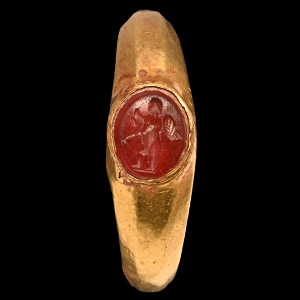
Roman Gold ring with Winged Eros Gemstone
1st-2nd century A.D.Estimate: £1,500 - 2,000 (‡+bp*)
Opening Bid: £750
A hollow-formed gold finger ring with facetted shoulders, inset cabochon intaglio of Eros (Cupid) in flight. 3.22 grams, 24.20 mm overall, 16.84 mm internal diameter (approximate size British J 1/2, USA 5, Europe 9.32, Japan 9)
Acquired early 1990s. Ex private American collection; thence by descent. Private Swiss collection since 1998. -
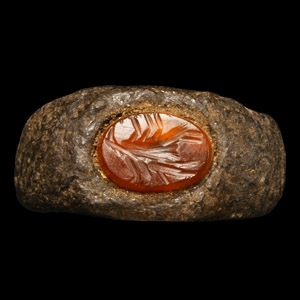
Roman Military Ring with Scorpion Gemstone
Circa 2nd century A.D.Sold for (Inc. bp): £111
A bronze finger ring with inset carnelian gemstone, intaglio scorpion. 4.31 grams, 21.20 mm overall, 17.45 mm internal diameter (approximate size British J, USA 4 3/4, Europe 8.69, Japan 8)
Acquired before 2000. From the collection of a European gentleman living in the UK.
The ring could have belonged to a praetorian guardsman. The scorpion was one of the main symbols of the praetorian guard since the age of Augustus.
