
Loading, please wait...
LOT 0646
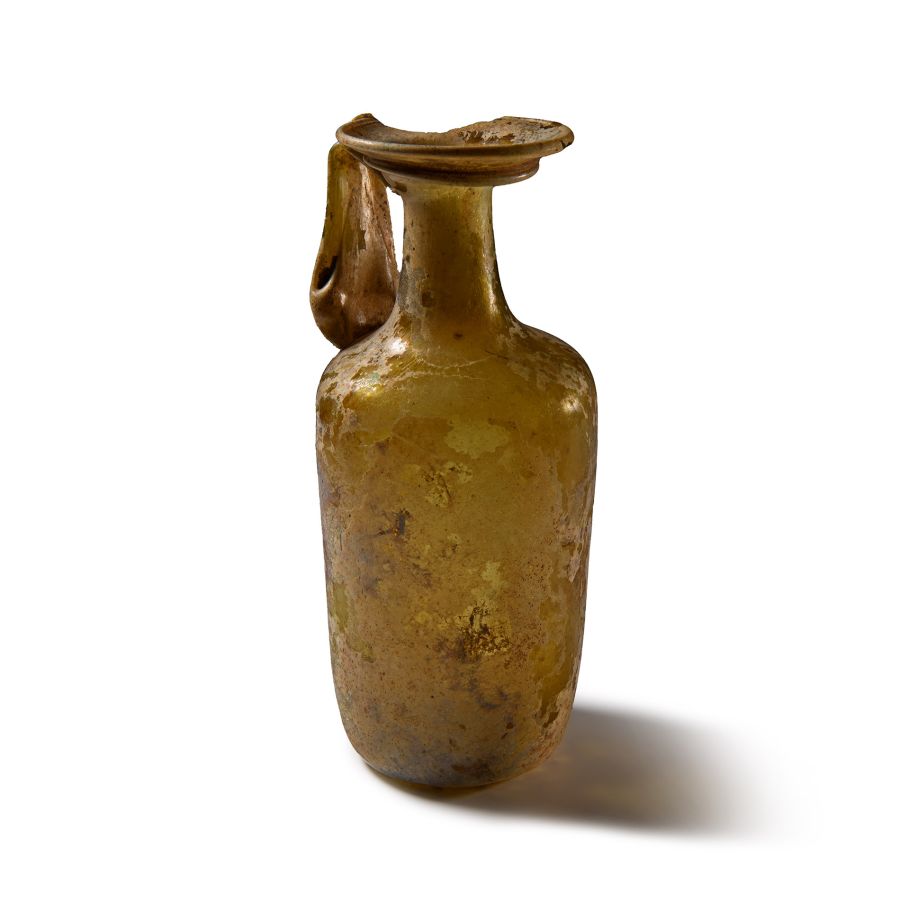
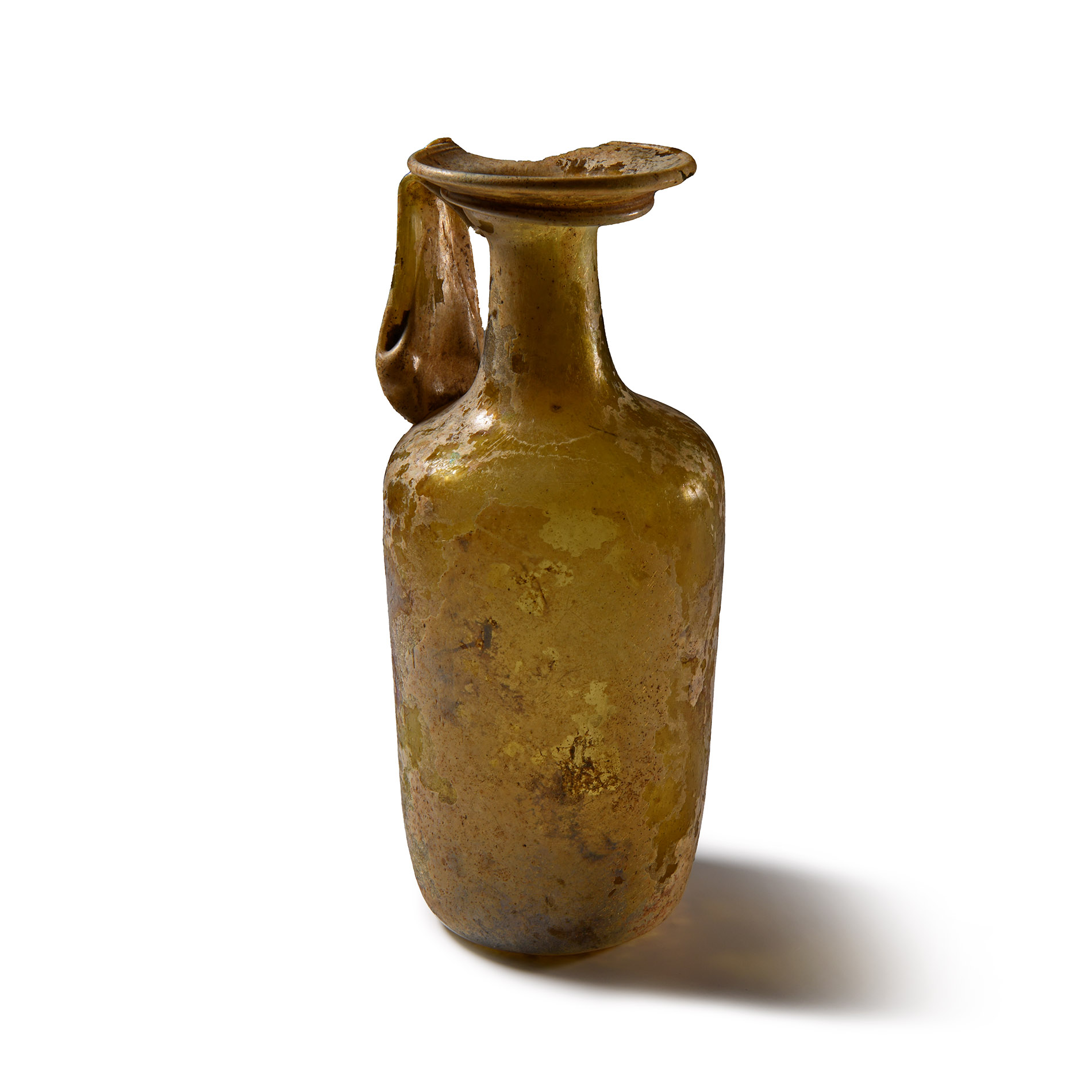
Large Roman Amber Glass Vessel
1ST-4TH CENTURY A.D.
7 1/2 in. (188 grams, 19 cm high).
Roughly barrel-shaped amber glass vessel with rounded shoulder and base, slender neck and broad upwards-flaring rim with applied trails to the underside, applied sub-rectangular handle; iridescent surfaces; rim chipped.
ProvenanceAcquired early 1990s.
Ex private American collection; thence by descent.
Private collection since 1998.
TimeLine Auctions follows a vetting process to ensure the authenticity and legality of all items, reinforcing our commitment to integrity and responsible trading. Each antiquity, antique, and coin lot undergoes thorough examination by a vetting committee of at least ten external specialists, professional trade association members, scientists, and archaeologists: Our Vetting Process
AUCTIONS:
TimeLine is a leading auction house specialising in antiquities, ancient art, collectables, natural history, coins, medals, and books. Our auctions offer museums, collectors, historians, and enthusiasts the opportunity to acquire unique and historically significant pieces.
-
.jpg)
Roman Millefiori Glass Eye-Shaped Dish
1st-2nd century A.D.Estimate: £2,500 - 3,500 (+bp*)
Opening Bid: £1,250
Ellipsoidal in green and yellow millefiori glass imitating foliage, with a central almond-shaped bowl. 46.6 grams, 13 cm wide
Fine condition.
Paris collection, 1990s. From an important Paris gallery, France. Ex private Parisian collection. This lot has been checked against the Interpol Database of stolen works of art and is accompanied by search certificate no.11981-209793. -
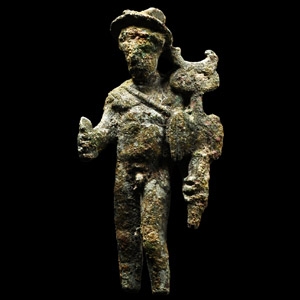
Roman Bronze Hermes Figure
2nd-3rd century A.D.Sold for (Inc. bp): £169
Modelled standing, holding a caduceus and a coin bag, wearing a winged petasos. 38.5 grams, 61 mm
Acquired early 1990s. Ex private American collection; thence by descent. Private collection since 1998. -
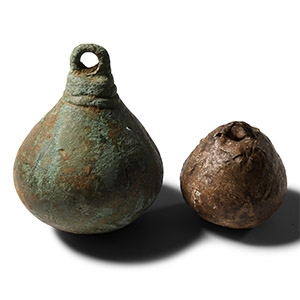
Roman Bronze Steelyard Weight Group
1st-4th century A.D.Sold for (Inc. bp): £52
Comprising: a pear-shaped bronze weight with collared loop, lead-filled; a bulbous lead weight with iron loop. 945 grams total, 40-69 mm
Found near Wetwang, East Yorkshire, UK. Property of a Nottinghamshire gentleman.
