
Loading, please wait...
LOT 0627
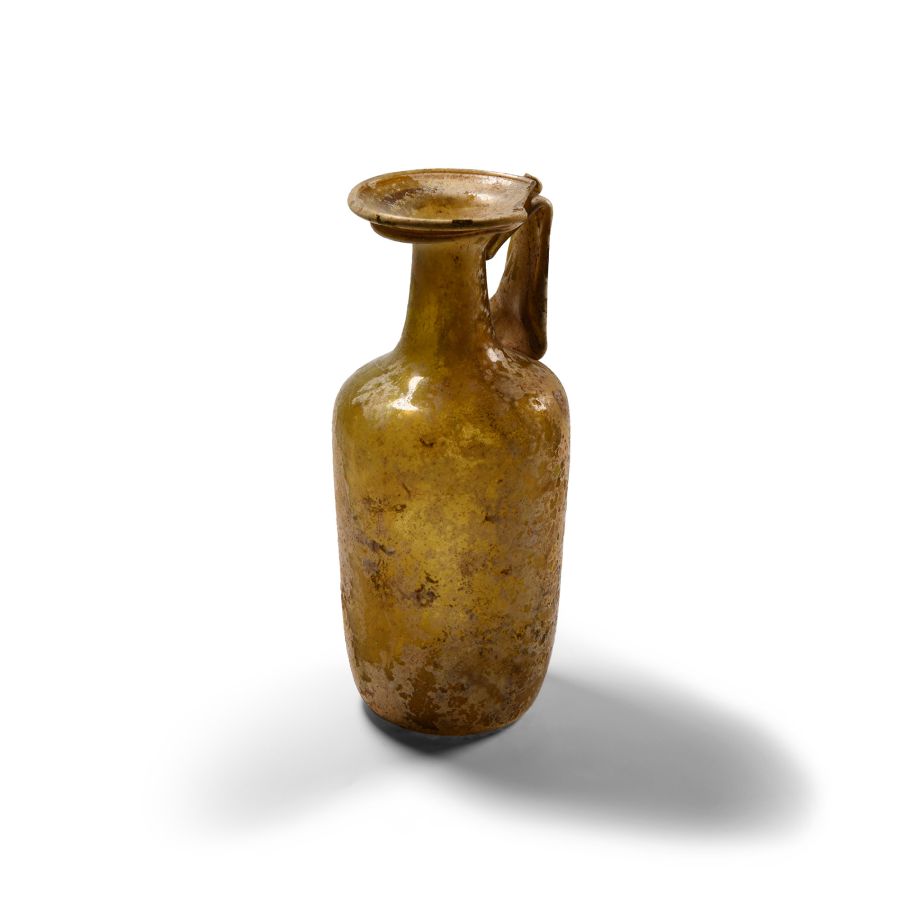
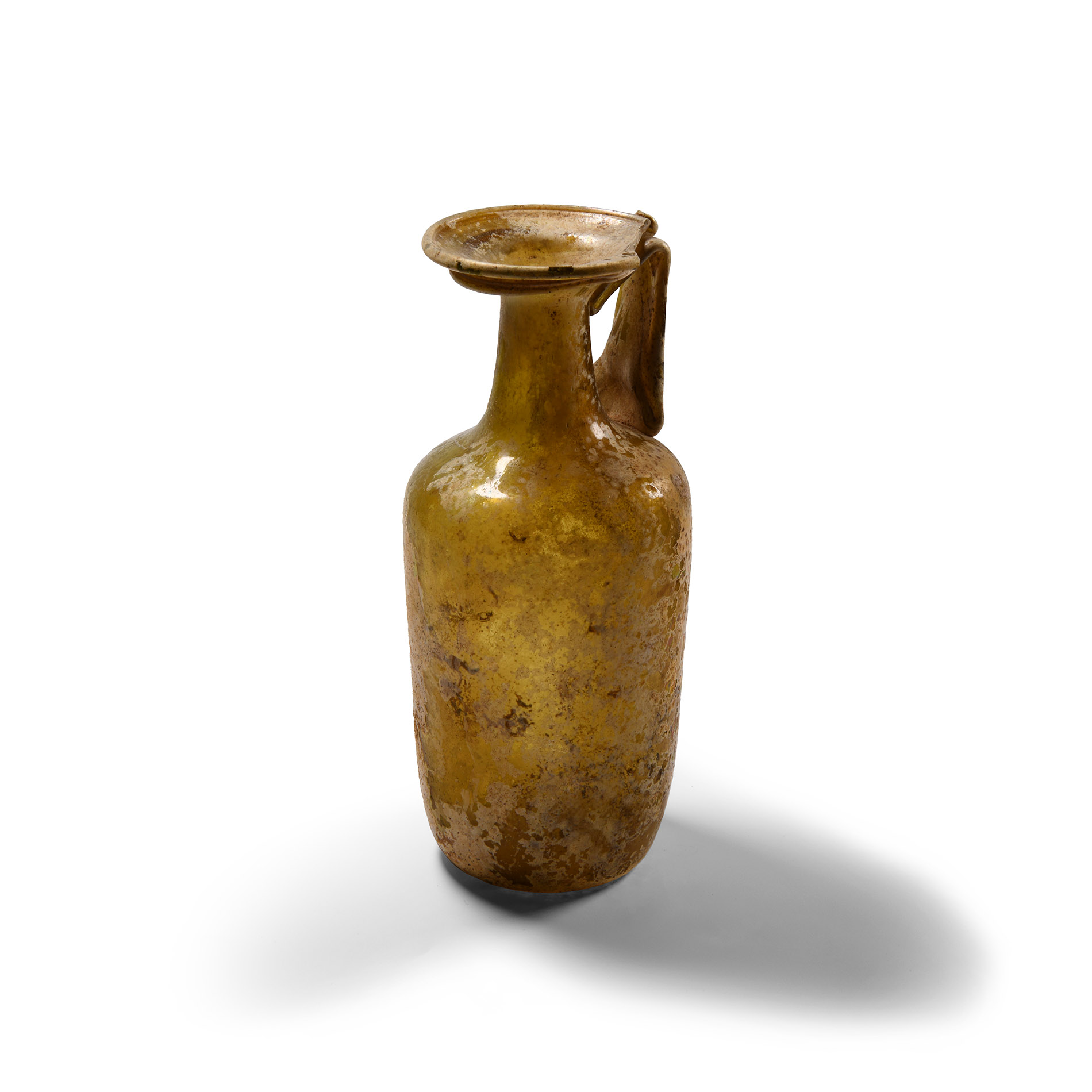
Large Roman Amber Glass Vessel
1ST-4TH CENTURY A.D.
7 1/2 in. (188 grams, 19 cm high).
A large, roughly barrel-shaped amber glass vessel with rounded shoulder and base, slender neck and broad upwards-flaring rim with applied trails to the underside, applied sub-rectangular handle; iridescent surfaces; rim chipped.
ProvenanceAcquired early 1990s.
Ex private American collection; thence by descent.
Private collection since 1998.
TimeLine Auctions follows a vetting process to ensure the authenticity and legality of all items, reinforcing our commitment to integrity and responsible trading. Each antiquity, antique, and coin lot undergoes thorough examination by a vetting committee of at least ten external specialists, professional trade association members, scientists, and archaeologists: Our Vetting Process
AUCTIONS:
TimeLine is a leading auction house specialising in antiquities, ancient art, collectables, natural history, coins, medals, and books. Our auctions offer museums, collectors, historians, and enthusiasts the opportunity to acquire unique and historically significant pieces.
LOT 0627
Large Roman Amber Glass Vessel
Estimate £400 - 600€460 - 700 (for guidance only)$540 - 810 (for guidance only)
-
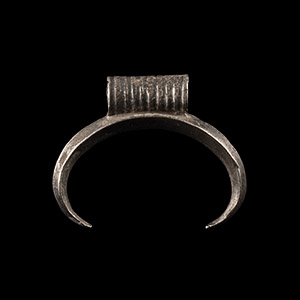
Roman Silver Lunar Pendant
2nd-3rd century A.D.Sold for (Inc. bp): £260
A silver crescentic pendant with a lozenge-shaped cross-section; ribbed tubular suspension loop. 9.44 grams, 39 mm
Acquired before 2000. From the collection of a European gentleman living in the UK. -
.jpg)
Roman Opaque White Glass Vessel
1st-2nd century A.D.Estimate: £450 - 650 (+bp*)
Opening Bid: £250
An opaque white glass cup or other vessel with trumpet-style neck and rim, slightly convex body and everted foot. 32.5 grams, 65 mm wide
Fine condition, repaired.
Acquired 1969-1999. London collection of the late Mr S.M., thence by descent. -
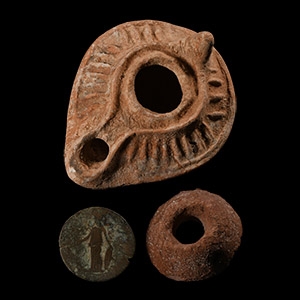
Roman Artefact Group
Circa 1st-5th century A.D.Sold for (Inc. bp): £46
A trio of artefacts comprising: a Roman copper-alloy coin, likely a sestertius, with worn designs to obverse and reverse, the reverse likely portraying the goddess Minerva leaning on a shield and wearing a helmet; a stone loom weight of conoid form, dated c.100 A.D. and discovered in Egypt; a Roman ceramic oil lamp dated c.500 A.D., piriform in plan with raised borders to the central opening and nozzle, decorative ribbing to the shoulder, conical handle and basal ring. 150 grams total, 33-92 mm
From an old UK collection. From the private collection of Alf Baxendale (1941-2016) part 2, keen Egyptologist, member of the Egyptology Society, trustee of the Amarna Trust; thence by descent. Accompanied by two identification display cards. Accompanied by a copy of his obituary published in Horizon, The Amarna Project and Amarna Trust newsletter, Issue 18, 2017, p.21, by Barry John Kemp, CBE, FBA, Professor Emeritus of Egyptology at the University of Cambridge and directing excavations at Amarna in Egypt.
