
Loading, please wait...
LOT 0133
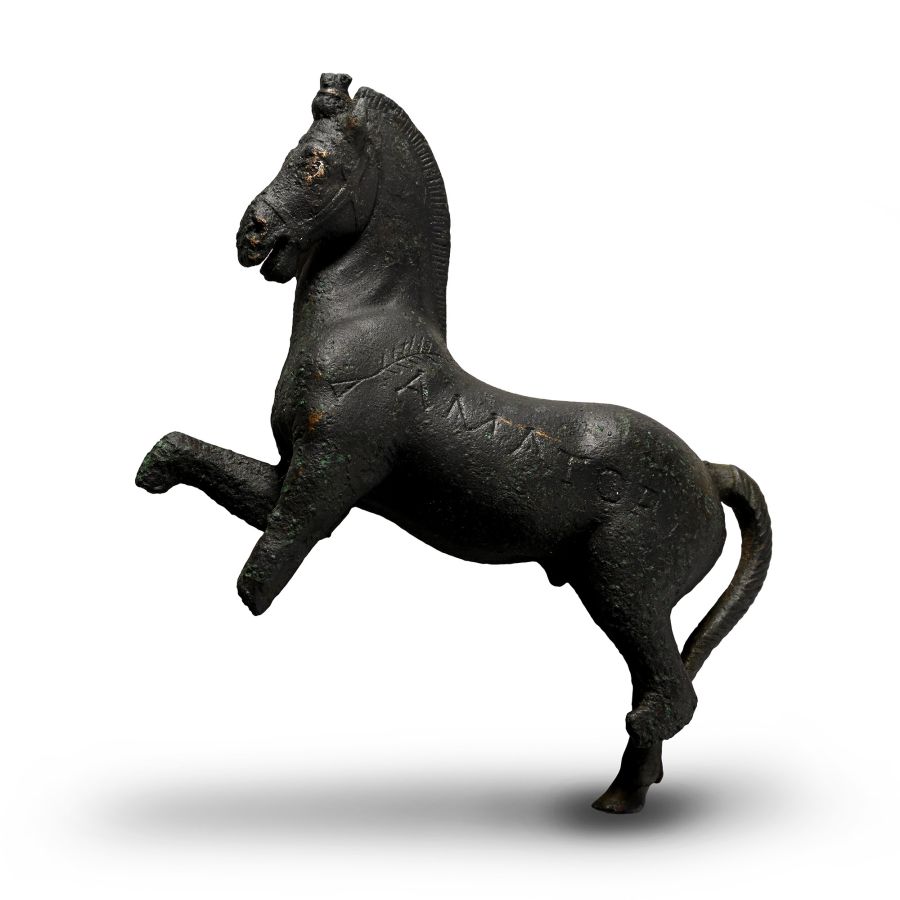
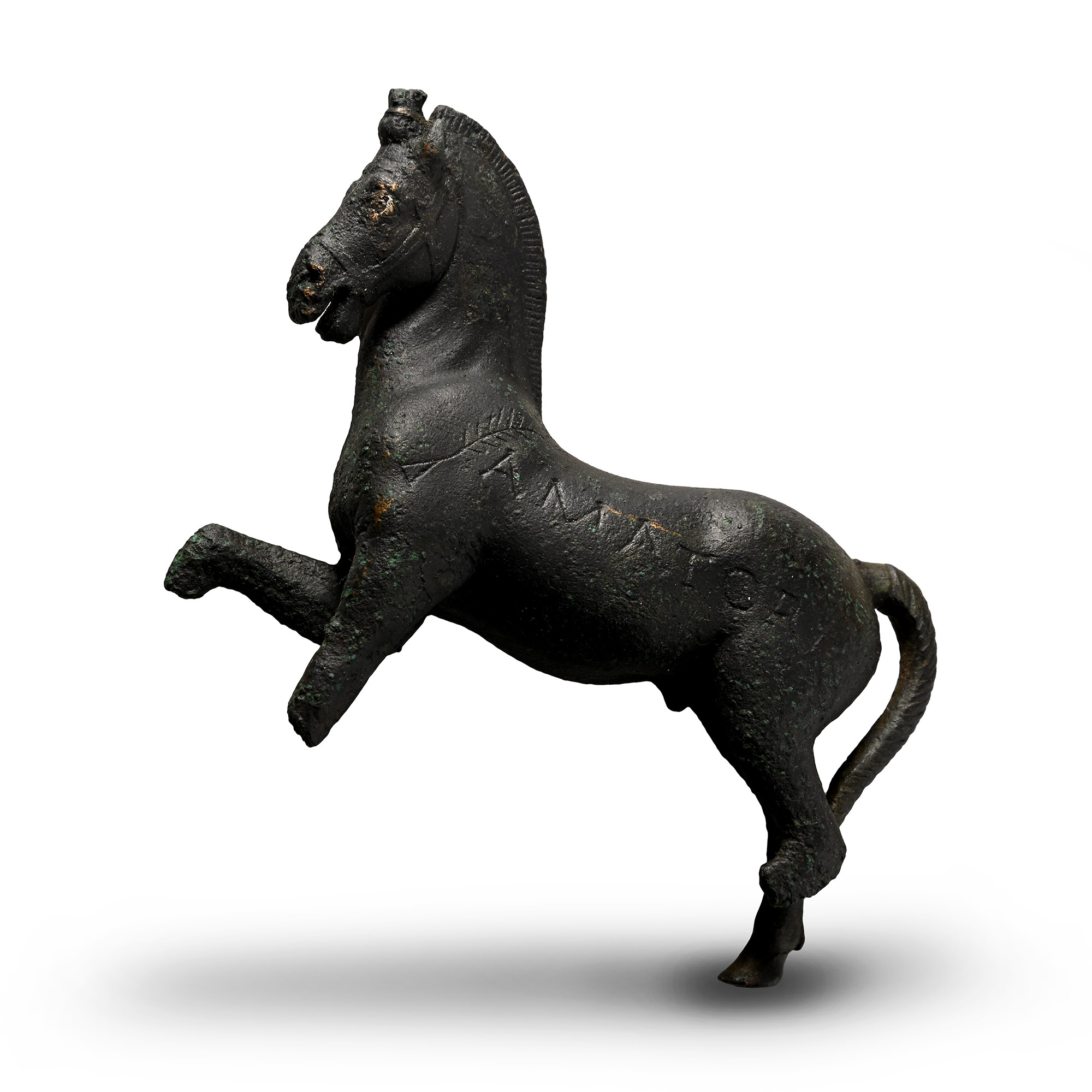
Large Roman 'AMATOR' Bronze Prancing Horse Statue
3RD CENTURY A.D.
4 3/8 in. (376 grams, 11.1 cm).
Modelled in the round with an elongated neck, right foreleg raised, head turned slightly to the right with open mouth wearing a bridle, short mane and tail with ribbed engraved decoration, inscription 'AMATOR' next to a branch; lower parts of three legs absent.
ProvenanceFound Norfolk, UK.
Acquired on the UK art market in the 1980s.
From an East Anglian private collection.
Accompanied by an academic report by Dr Raffaele D'Amato.
This lot has been checked against the Interpol Database of stolen works of art and is accompanied by search certificate no.13549-262542.
Cf. The Metropolitan Museum of Art, object number: 2000.523; Rolland, H., Bronzes Antiques de Haute Provence, Paris, 1965, item 245, for the type.
FootnotesRomans frequently used 'amator' combined with a noun to show a deep dedication to a particular craft or lifestyle. On a freestanding bronze horse statue, it could be a self-dedication by the person who commissioned it. Alternatively, 'amator' could be the name of the person who owned the statue or a demonstration of dedication to a specific horse or craft of horse-breeding.
CONDITIONTimeLine Auctions follows a vetting process to ensure the authenticity and legality of all items, reinforcing our commitment to integrity and responsible trading. Each antiquity, antique, and coin lot undergoes thorough examination by a vetting committee of at least ten external specialists, professional trade association members, scientists, and archaeologists: Our Vetting Process
AUCTIONS:
TimeLine is a leading auction house specialising in antiquities, ancient art, collectables, natural history, coins, medals, and books. Our auctions offer museums, collectors, historians, and enthusiasts the opportunity to acquire unique and historically significant pieces.
LOT 0133
Large Roman 'AMATOR' Bronze Prancing Horse Statue
Estimate £4,000 - 6,000€4,640 - 6,960 (for guidance only)$5,400 - 8,100 (for guidance only)
-
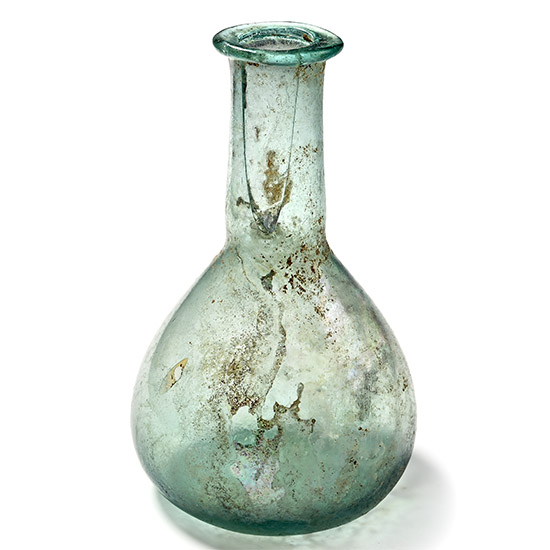
Roman Aqua Glass Bottle
Circa 1st-4th century A.D.Estimate: £100 - 140 (+bp*)
Opening Bid: £50
With a piriform body and dimple base, a long tubular neck with an everted rim. 99 grams, 13.6 cm
Ex German art market, 2000s. Acquired from an EU collector living in London. From the collection of a Surrey, UK, gentleman. -
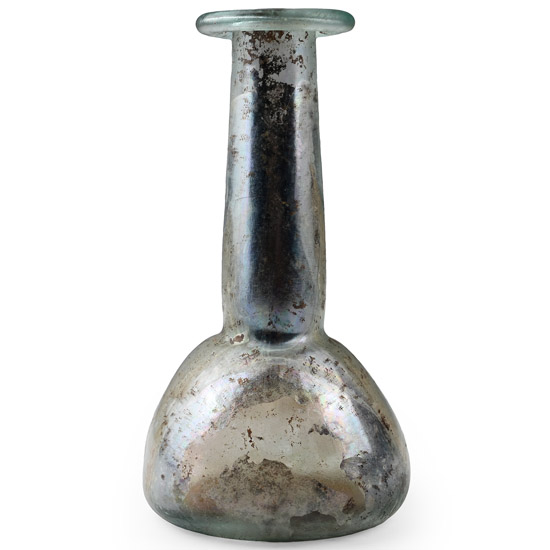
Large Roman Iridescent Glass Vessel
Circa 2nd-3rd century A.D.Estimate: £150 - 200 (+bp*)
Opening Bid: £75
Hemispherical body with a slightly concave base, a tall tubular neck with a rolled rim. 79 grams, 16 cm
Roman glass from an important London collection, acquired from the early 1980s. -
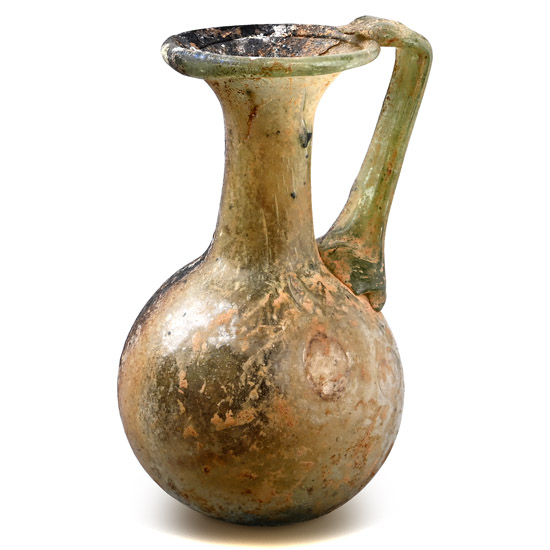
Roman Blown Glass Jug
2nd-4th century A.D.Estimate: £200 - 300 (‡+bp*)
Opening Bid: £110
Bulbous body and rounded underside, long neck, trumpet-shaped mouth with applied rim, applied strap handle with ribbing. 40 grams, 96 mm
Acquired in the 1992. Private collection, Switzerland, thence by descent. Private collection, since the late 1990s.
Roman glass from the 2nd to 4th century A.D. gives a fascinating insight into everyday life in the Roman Empire. By this time, glassmaking had become highly skilled, and glass vessels were being produced on a much larger scale than before. Thanks to the development of glassblowing, makers were able to create practical as well as attractive objects such as bottles, flasks, jars, and drinking vessels. Much of the glass from this period has a soft blue-green tint, caused by natural elements in the raw materials. Although some pieces were finely decorated, many were made for ordinary daily use, showing how glass had become far more common and accessible across Roman society.
