Loading, please wait...
LOT 2072
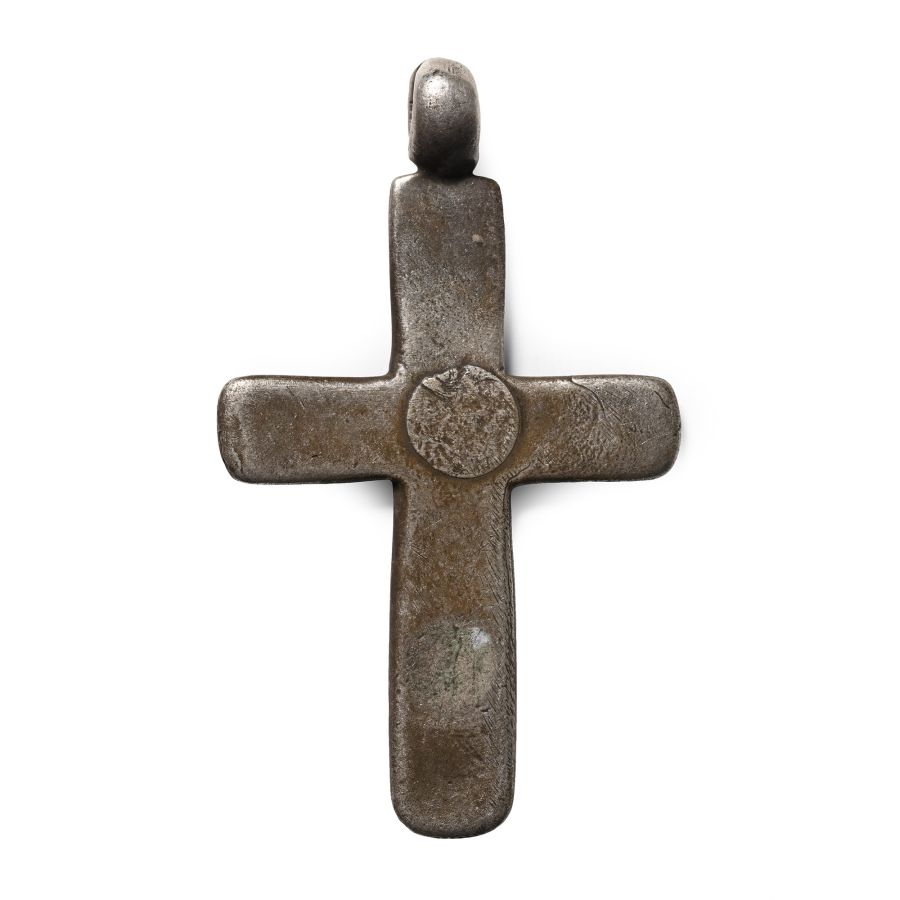
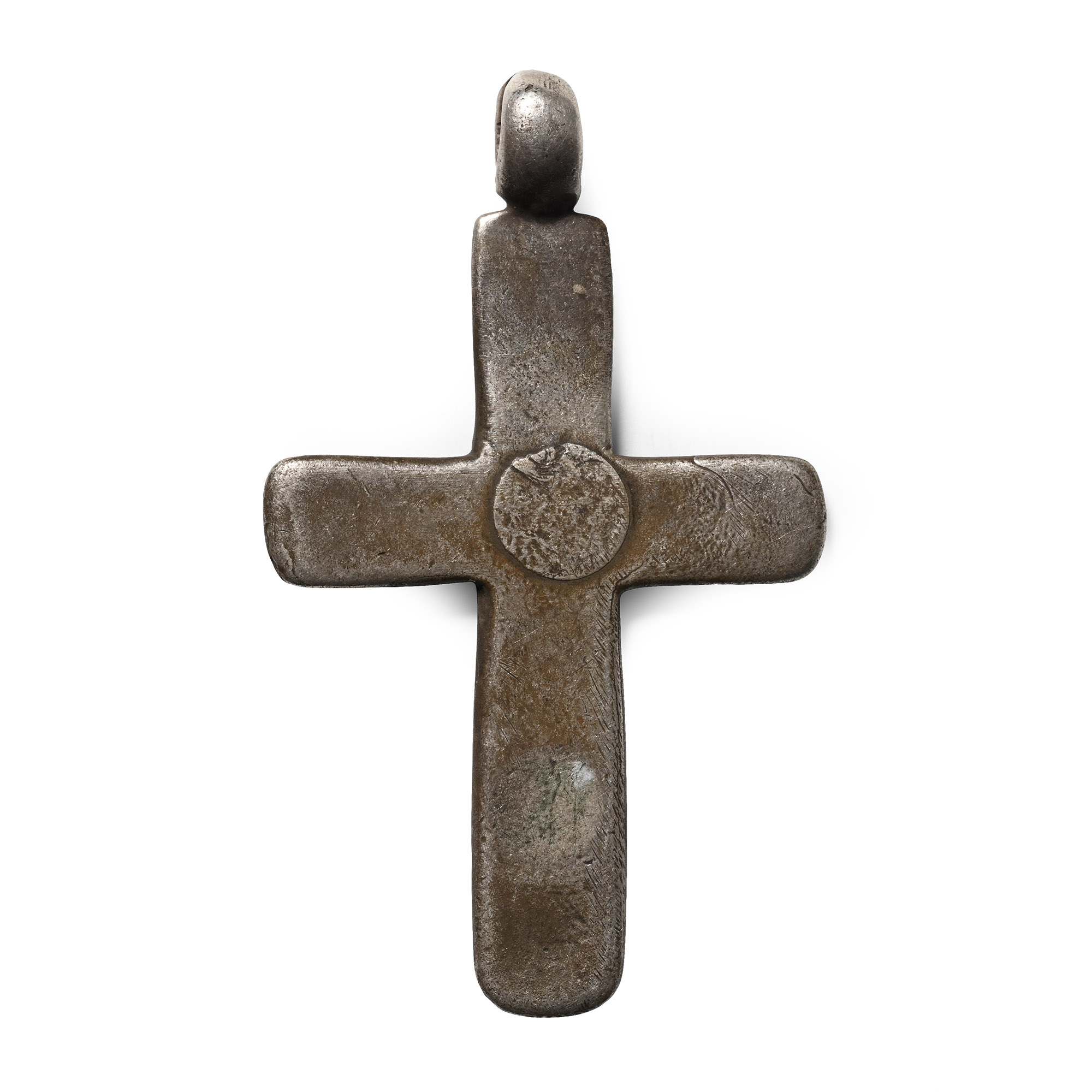
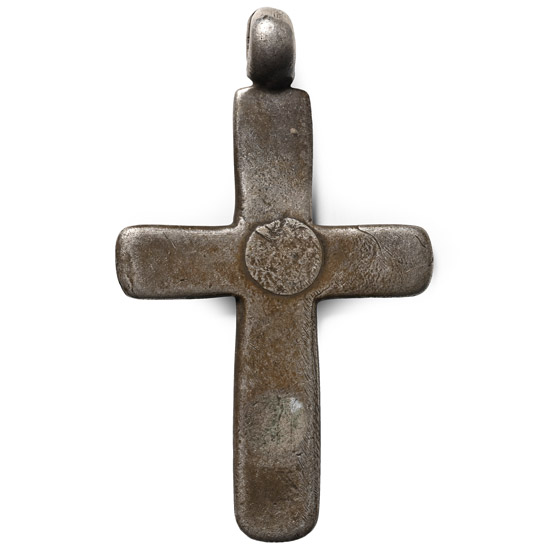
Large Post Medieval Silver Cross
CIRCA 17TH CENTURY A.D.
2 5/8 in. (18.7 grams, 67 mm).
Rectangular-section arms with a round disc to the centre and an integral loop. [No Reserve]
ProvenanceEx Cambridgeshire, UK, collection, 1990s.
CONDITIONTimeLine Auctions follows a vetting process to ensure the authenticity and legality of all items, reinforcing our commitment to integrity and responsible trading. Each antiquity, antique, and coin lot undergoes thorough examination by a vetting committee of at least ten external specialists, professional trade association members, scientists, and archaeologists: Our Vetting Process
AUCTIONS:
TimeLine is a leading auction house specialising in antiquities, ancient art, collectables, natural history, coins, medals, and books. Our auctions offer museums, collectors, historians, and enthusiasts the opportunity to acquire unique and historically significant pieces.
LOT 2072
Large Post Medieval Silver Cross
Estimate £80 - 100€93 - 116 (for guidance only)$108 - 135 (for guidance only)
-
Bourbon Era Gold Devotional Pendant with Verre Eglomise Miniatures of Saint Catherine of Alexandria and Saint John of Nepomuk
Spain, circa 1700 A.D.Estimate: £1,000 - 1,400 (+bp*)
Opening Bid: £500
Featuring a gold mount with twisted ropework border and scalloped edges securing bevelled glass coverings, one side depicting nimbate Saint Catherine of Alexandria wearing a pale blue dress with a red cloak, holding a gilt palm frond; the other side with Saint John of Nepomuk dressed in clerical attire and holding a gilt cross and a palm frond. 29.1 grams, 43 mm
Acquired on the European art market.
Saint Catherine of Alexandria was a Christian saint and virgin who was martyred in the early 4th century at the hands of the Emperor Maxentius. She was both a princess and a noted scholar who became a Christian around the age of 14, converted hundreds of people to Christianity and was martyred around the age of 18. More than 1,100 years after Catherine's martyrdom, Joan of Arc identified her as one of the saints who appeared to and counselled her. Saint John of Nepomuk (c. 1345 – 20 March 1393) was the saint of Bohemia (Czech Republic) who was drowned in the Vltava River at the behest of Wenceslaus IV of Bohemia. Later accounts state that he was the confessor of the queen of Bohemia and refused to divulge the secrets of the confessional. Based on this account, John of Nepomuk is considered the first martyr of the Seal of the Confessional, a patron against calumnies and, because of the manner of his death, a protector from floods and drowning. Verre églomisé is a French term referring to the process of applying both a design and gilding onto the rear face of glass to produce a mirror finish. The name is derived from the 18th-century French decorator and art-dealer Jean-Baptiste Glomy (1711–1786), who was responsible for its revival. Glomy's technique was a relatively simple one of applying decorative designs in a combination of plain colour and gilding, usually to glass picture frames. However, over time, it has come to be used to describe nearly any process involving back-painted and gilded glass, however elaborate. -
Post Medieval Silver-Mounted Glass Pendant
Germany, 17th century A.D.Estimate: £400 - 600 (+bp*)
Opening Bid: £200
Octagonal in plan with ropework and foliage frame, suspension loop. 52.2 grams, 65 mm
Private collection, Europe. Acquired on the English art market. -
Stuart Period Iron Knife with Crown Maker's Mark
Circa 18th century A.D.Estimate: £80 - 100 (+bp*)
Opening Bid: £5
Forge-welded single-edged blade with rounded tip and integral baluster; wooden scales to both sides of the tang held in place with three peened studs on each side; punched crown maker's mark to one face. 28.9 grams, 19.5 cm
From a UK collection formed in the 1980s. Property of an Essex, UK, gentleman.