
Loading, please wait...
LOT 2369
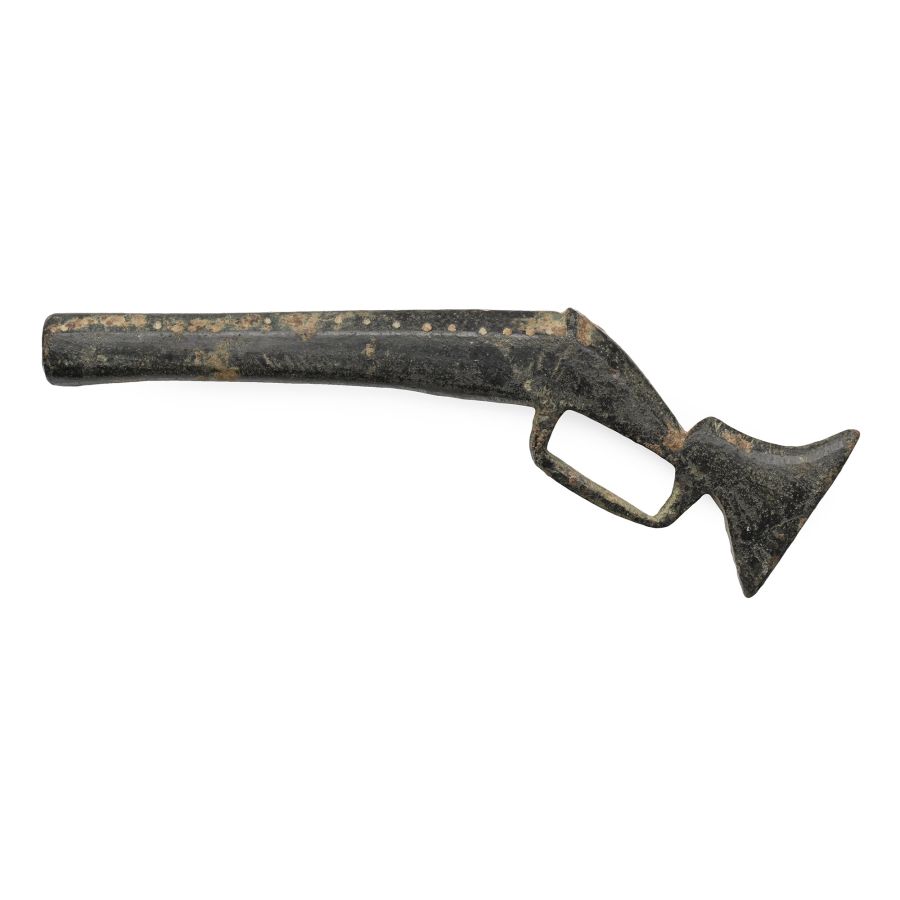
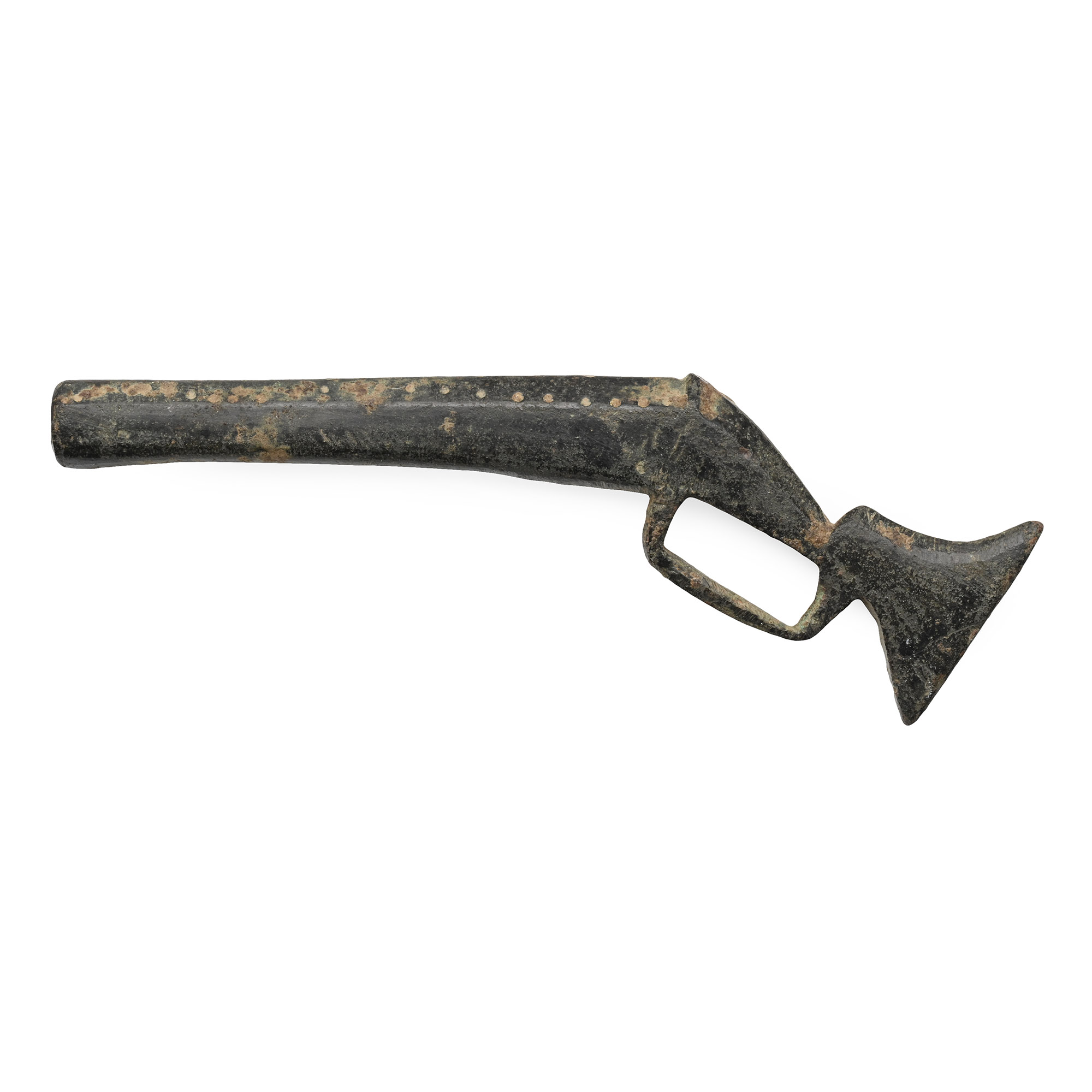
Large Post Medieval Bronze Petronel
17TH CENTURY A.D.
3 1/2 in. (25 grams, 90 mm).
A cast petronel (model musket) of Type 2 Design 1, with fishtail butt, facetted barrel, c-shaped pan and rectangular trigger guard; punched point motifs to the barrel. [No Reserve]
ProvenanceFound Lincolnshire, UK.
LiteratureCf. Forsyth, C. & Egan, G., Toys, Trifles & Trinkets. Base-Metal Miniatures from London 1200-1800, London, 2005, item 1.24.
CONDITIONTimeLine Auctions follows a vetting process to ensure the authenticity and legality of all items, reinforcing our commitment to integrity and responsible trading. Each antiquity, antique, and coin lot undergoes thorough examination by a vetting committee of at least ten external specialists, professional trade association members, scientists, and archaeologists: Our Vetting Process
AUCTIONS:
TimeLine is a leading auction house specialising in antiquities, ancient art, collectables, natural history, coins, medals, and books. Our auctions offer museums, collectors, historians, and enthusiasts the opportunity to acquire unique and historically significant pieces.
-
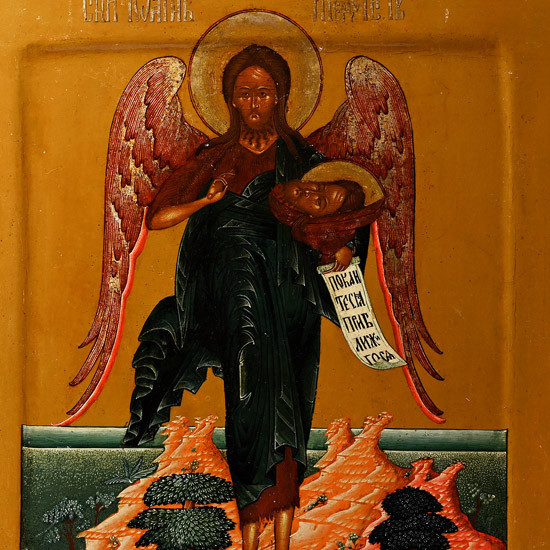
Russian Wooden Icon with St John the Baptist
19th century A.D.Sold for (Inc. bp): £1,430
Comprising a painted board with mounting panel and slots to the reverse, gessoed surface with painting of St John the Baptist standing nimbate with wings spread behind him, left hand supporting a bowl containing his severed head and holding an unfurled scroll with Cyrillic text 'Repent ye, for the Kingdom of Heaven is at hand,' (Matthew 3:2); right hand raised in blessing; landscape with sand-dunes and trees; gilded title above; the upper border with gilt Slavonic inscription reading 'Holy John the Forerunner'; from the Palekh Icon School, probably made in Mstera circa 1890. 1.02 kg, 31 cm high
Fine condition.
Ex property of a London lady, part of her family's collection. This lot has been checked against the Interpol Database of stolen works of art and is accompanied by a search certificate no.11546-196366.
The Palekh icon school emerged in the 17th century, inspired by the Moscow and Suzdal traditions of icon painting. Although preserving many features of traditional Russian iconography, the school created its own style that remained active into the 18th century. The hallmarks of the school include the frequent use of gold on the clothes of the saints and a rich palette. Bodies are shown as tall and slender and abrupt transitions between light and shadow are distinctive features of Palekh icons. The wings of Saint John derive from the double meaning of the Greek word used to describe him in Mark 1:2 - Angelos, meaning both messenger and angel. John is often called a 'Heavenly Man' and 'Earthly Angel' in Orthodoxy. At his feet is shown a small tree with an axe cutting into it, illustrating Luke 3:9, 'And now also the axe is laid unto the root of the tree...' -

Antique Silver Memento Mori Pendant with Skulls and Skeleton
Early 20th century A.D.Sold for (Inc. bp): £208
A cylindrical pendant formed as a rotating capsule, when opened, the inside showing a coffin plate with a skeleton with a skull above and below, five holes on the base of the pendant. 27.6 grams, 87 mm
Ex East Sussex collection, 1980-1990. -

Mizoram Burmese Amber Bead Necklace with Natural Inclusions
Cretaceous Period, circa 99 million years B.P.Estimate: £500 - 700 (+bp*)
Opening Bid: £250
Restrung necklace of dark honey-coloured beads of cylindrical and annular shape formed by hand, containing various organic inclusions. 54 grams, 82 cm
From the Hukawng Valley in northern Myanmar. Acquired in Assam in the 1980s. From the private collection of a Somerset gentleman. Accompanied by a copy of a letter from Dr Andrew J. Ross FRES, of the National Museum of Scotland, concerning testing carried out on the necklace.
Dr Ross states: 'The internal fractures and flow planes are consistent with what you see in amber, and although it does not contain any identifiable insect inclusions, the organic fragments that are present and the general colours appear consistent with Burmese amber.'
