
Loading, please wait...
LOT 2093
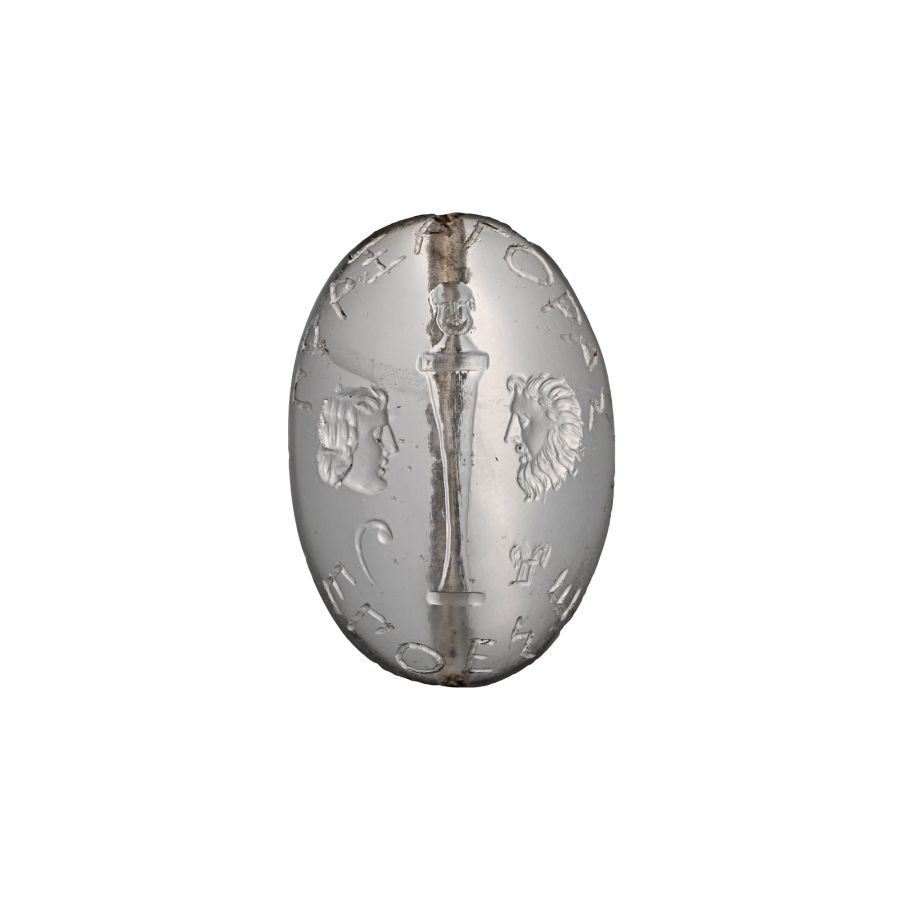
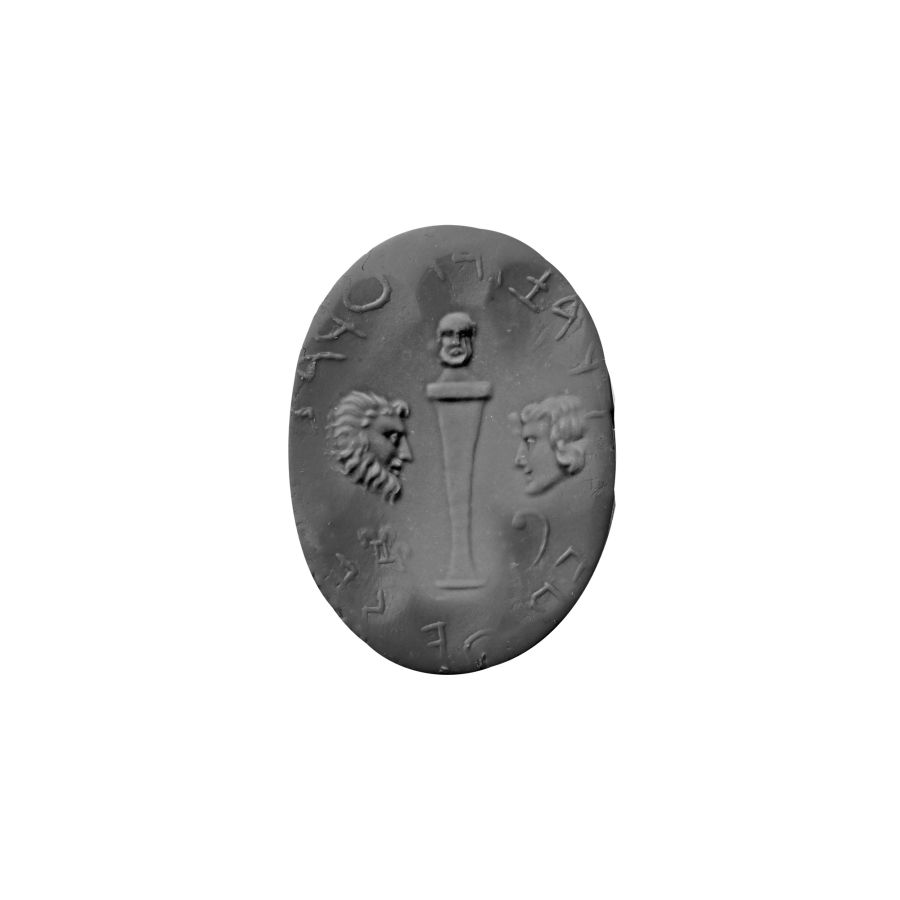
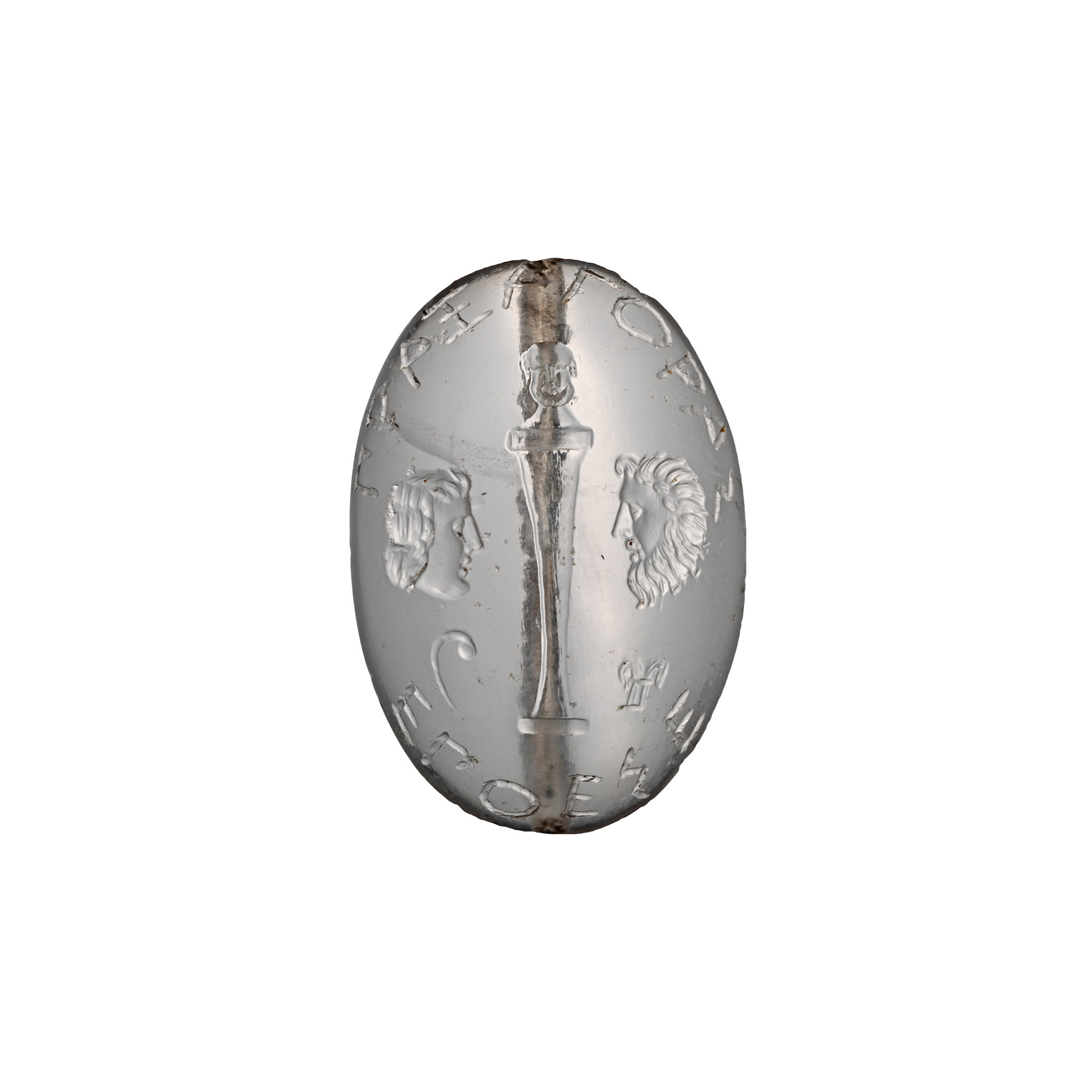
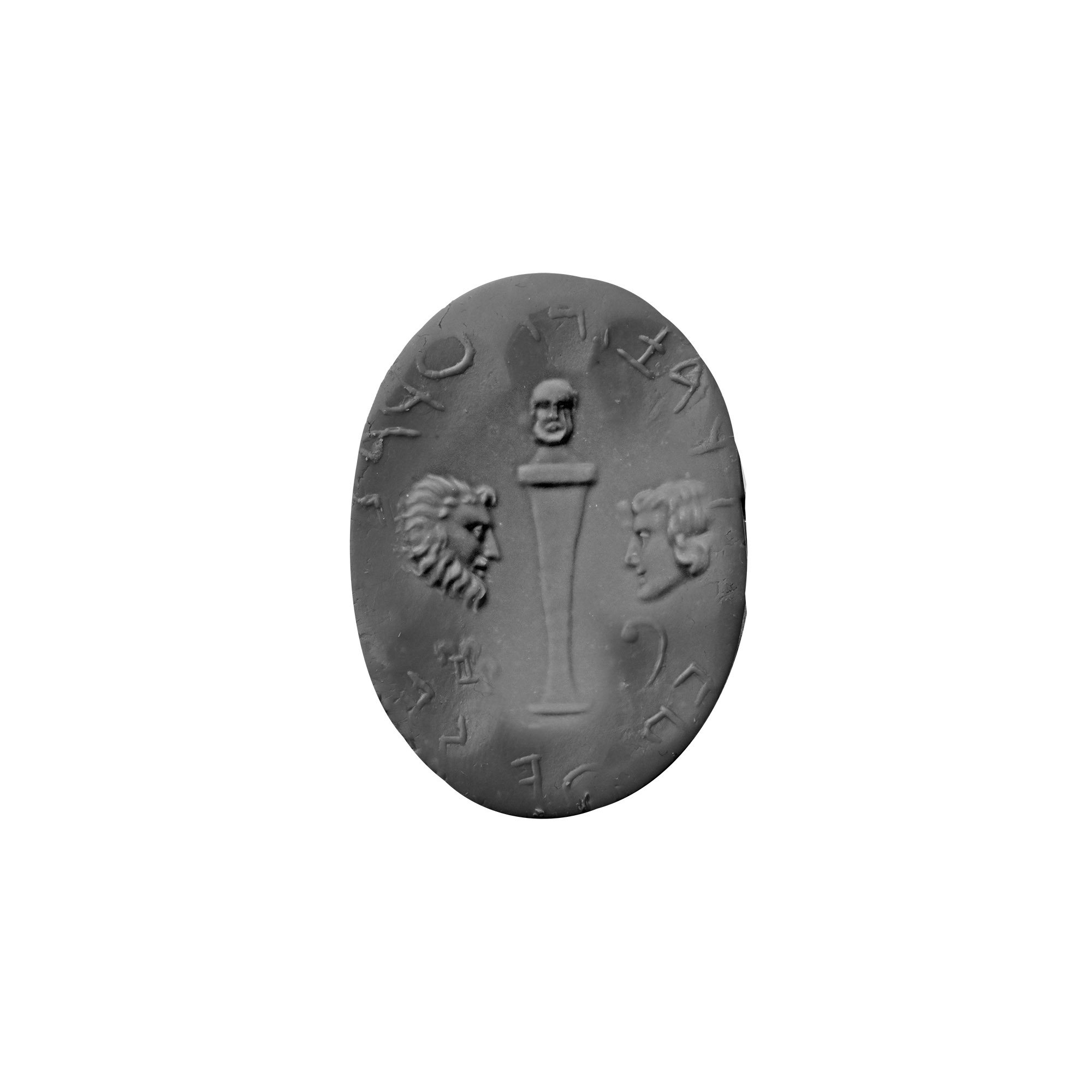
Large Post-Classical Rock Crystal Gemstone with Herm and Two Facing Busts and an Inscription
19TH CENTURY A.D. OR LATER
1 3/8 in. (11.77 grams, 34 mm).
Modified from a plano-convex bead with later allegorical additions: a herm in the centre, flanked by male and female masks, symbols underneath and an enigmatic inscription in the upper and lower parts of the scene.
ProvenanceAcquired on the UK art market.
Private collection, England.
TimeLine Auctions follows a vetting process to ensure the authenticity and legality of all items, reinforcing our commitment to integrity and responsible trading. Each antiquity, antique, and coin lot undergoes thorough examination by a vetting committee of at least ten external specialists, professional trade association members, scientists, and archaeologists: Our Vetting Process
AUCTIONS:
TimeLine is a leading auction house specialising in antiquities, ancient art, collectables, natural history, coins, medals, and books. Our auctions offer museums, collectors, historians, and enthusiasts the opportunity to acquire unique and historically significant pieces.
LOT 2093
Large Post-Classical Rock Crystal Gemstone with Herm and Two Facing Busts and an Inscription
Sold for (Inc. bp): £572
-
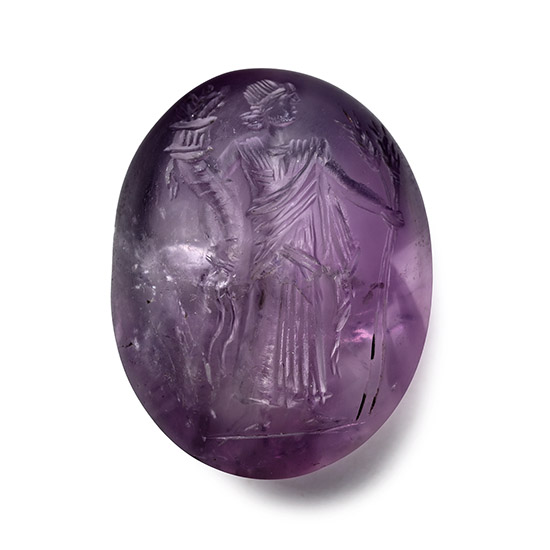
Post-Classical Amethyst Gemstone of the Roman Goddess Fortuna
19th century A.D. or laterSold for (Inc. bp): £1,300
Biconvex in section with intaglio Fortuna standing in ankle-length robe on a baseline, supporting a cornucopia in one arm and holding two stems; supplied with a museum-quality impression. 6.15 grams, 24 mm
Private English collection, formed between the late 1970s and early 1990s. Private collection, London, UK. -
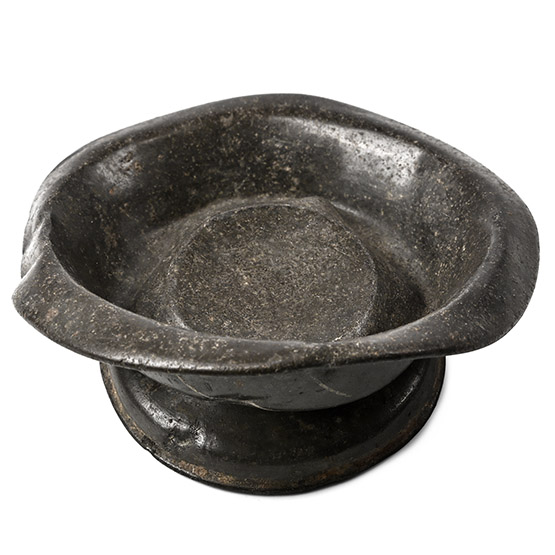
Post Medieval Pewter Goblet
17th-18th century A.D.Sold for (Inc. bp): £20
Comprising a squat cup with broad rounded rim, low base with pedestal foot. 49 grams, 74 mm
From the collection of a Buckinghamshire, UK, collection established from the earlier 1960s. -
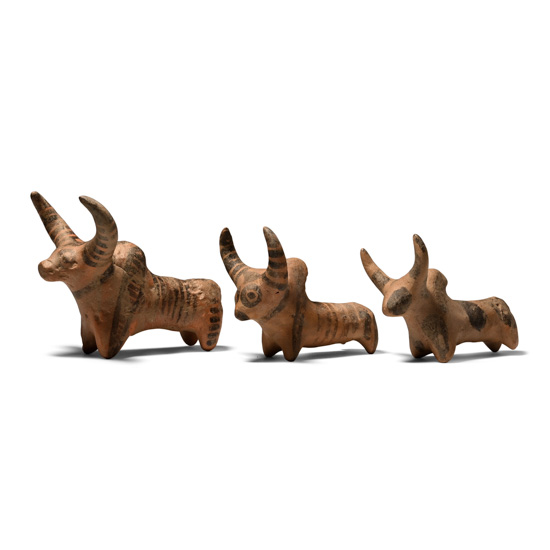
Indus Valley Style Terracotta Bull Group
20th century A.D.Sold for (Inc. bp): £104
A group of three zebu bulls, each with painted details. 294 grams total, 85-105 mm
Very fine condition.
Ex Lockdales, Suffolk, UK, auction 156, nos.892 and 906; and 159, no.1513. From the private collection of John Meredith, acquired since the 1990s; thence by descent.
