Loading, please wait...

Use mousewheel to zoom in and out, click to enlarge

Details

LOT 0430

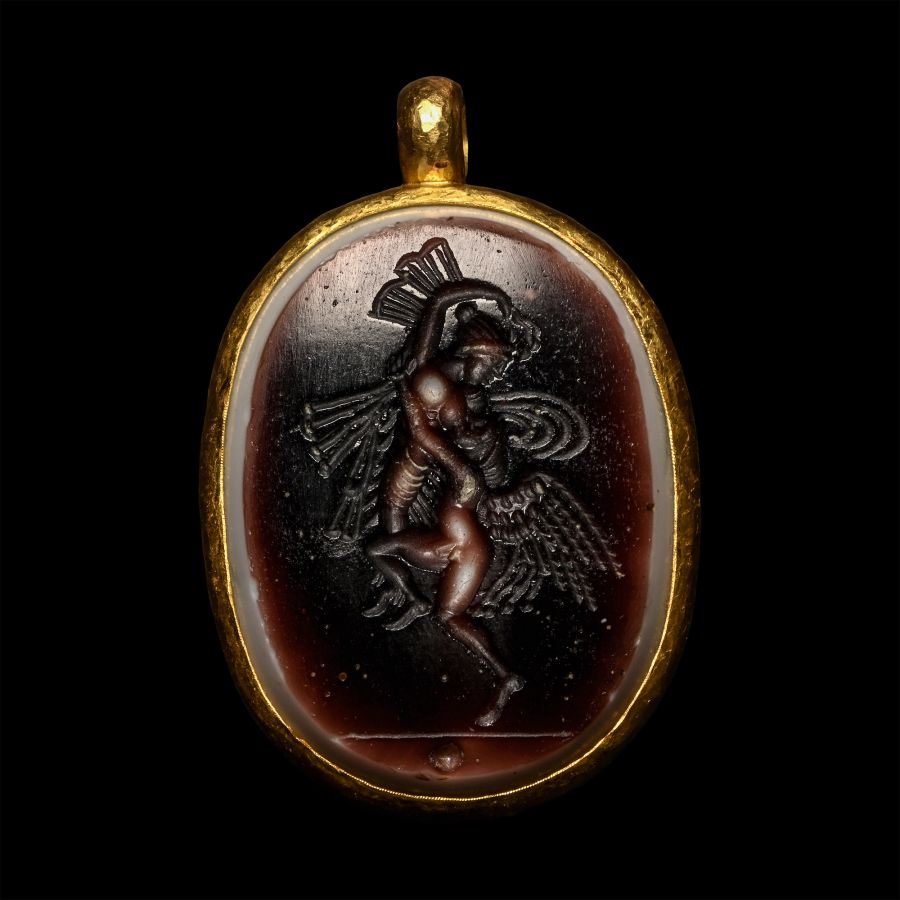
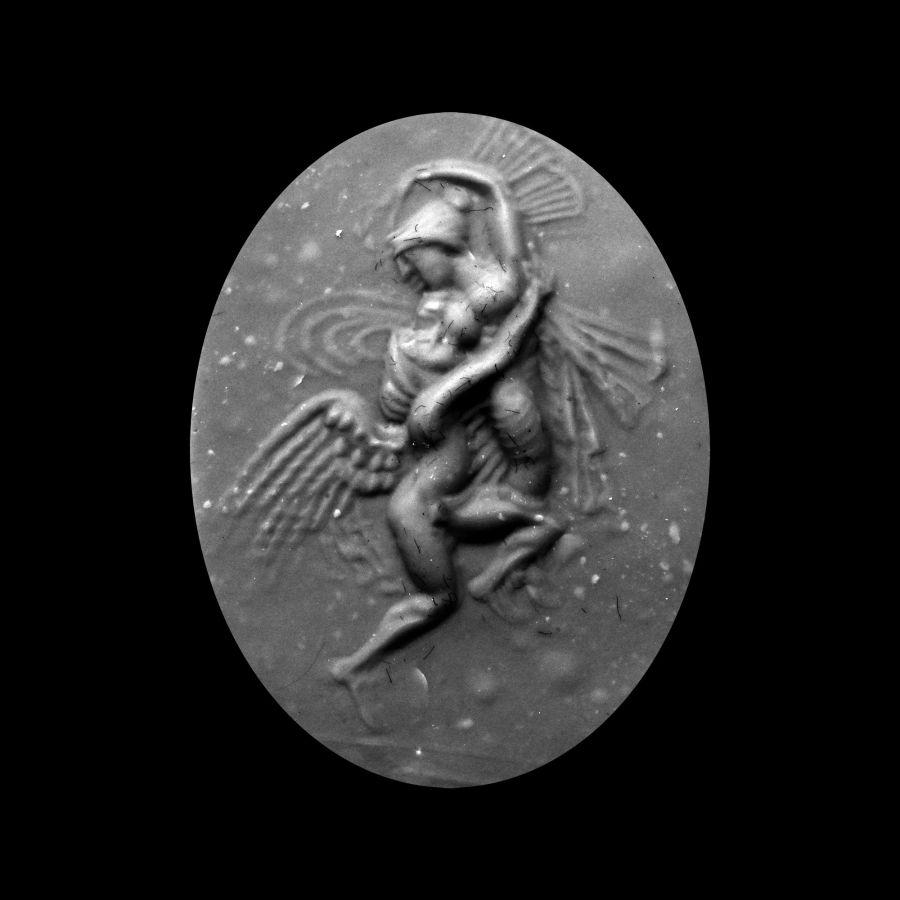
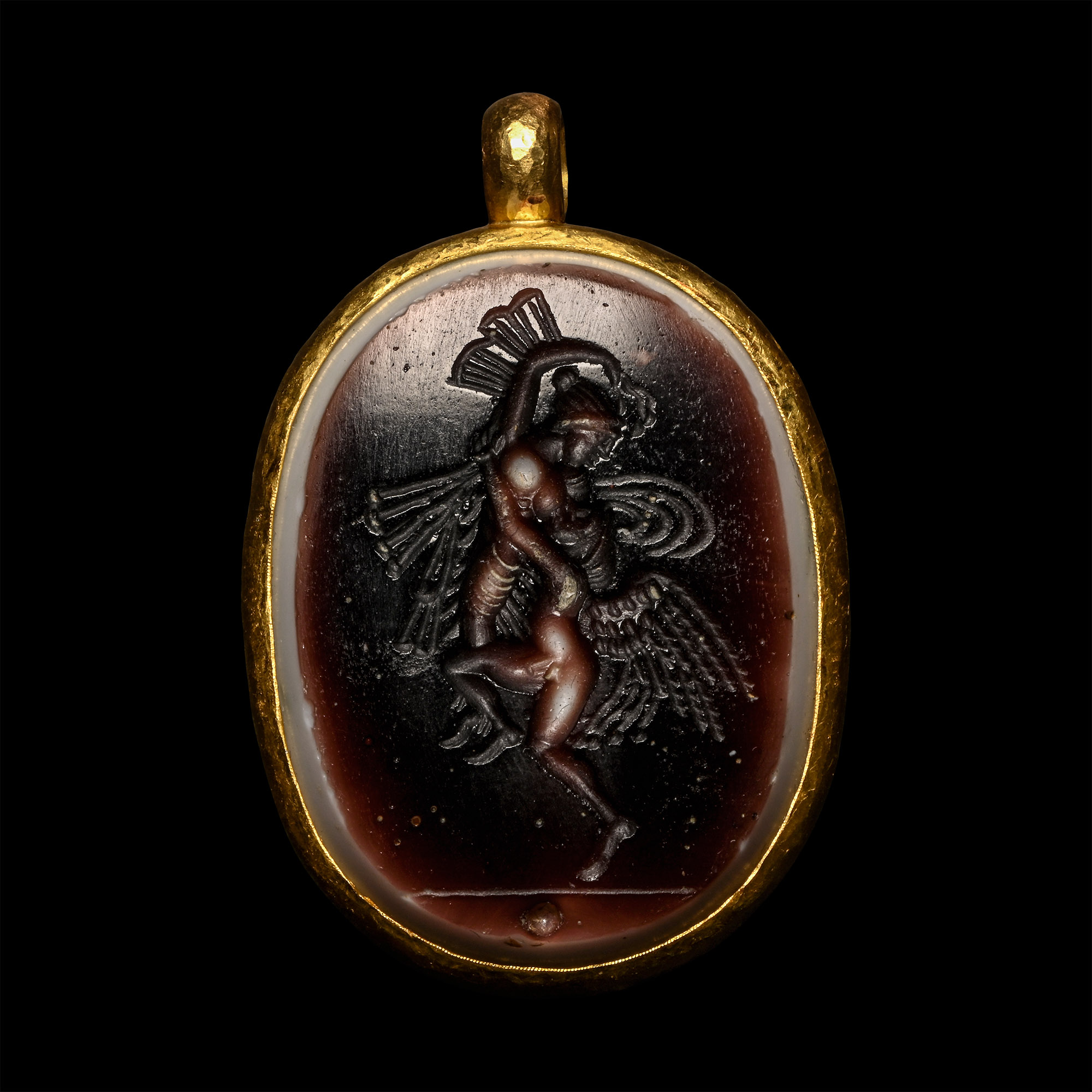
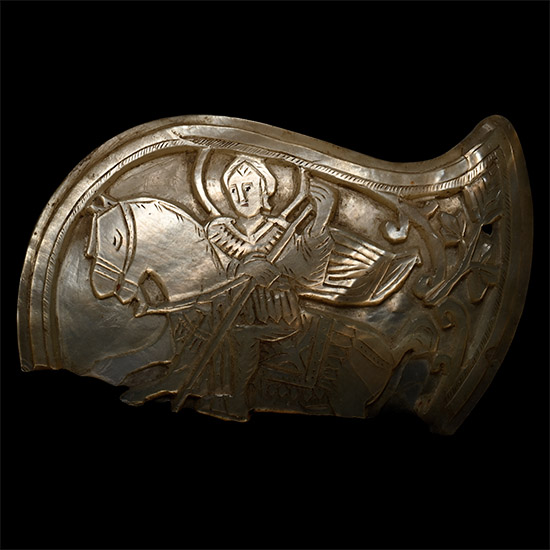
Large Post-Classical Glass Gem with Dancing Figures in Gold Mount

19TH-20TH CENTURY A.D.

2 1/8 in. (34.6 grams, 55 mm).

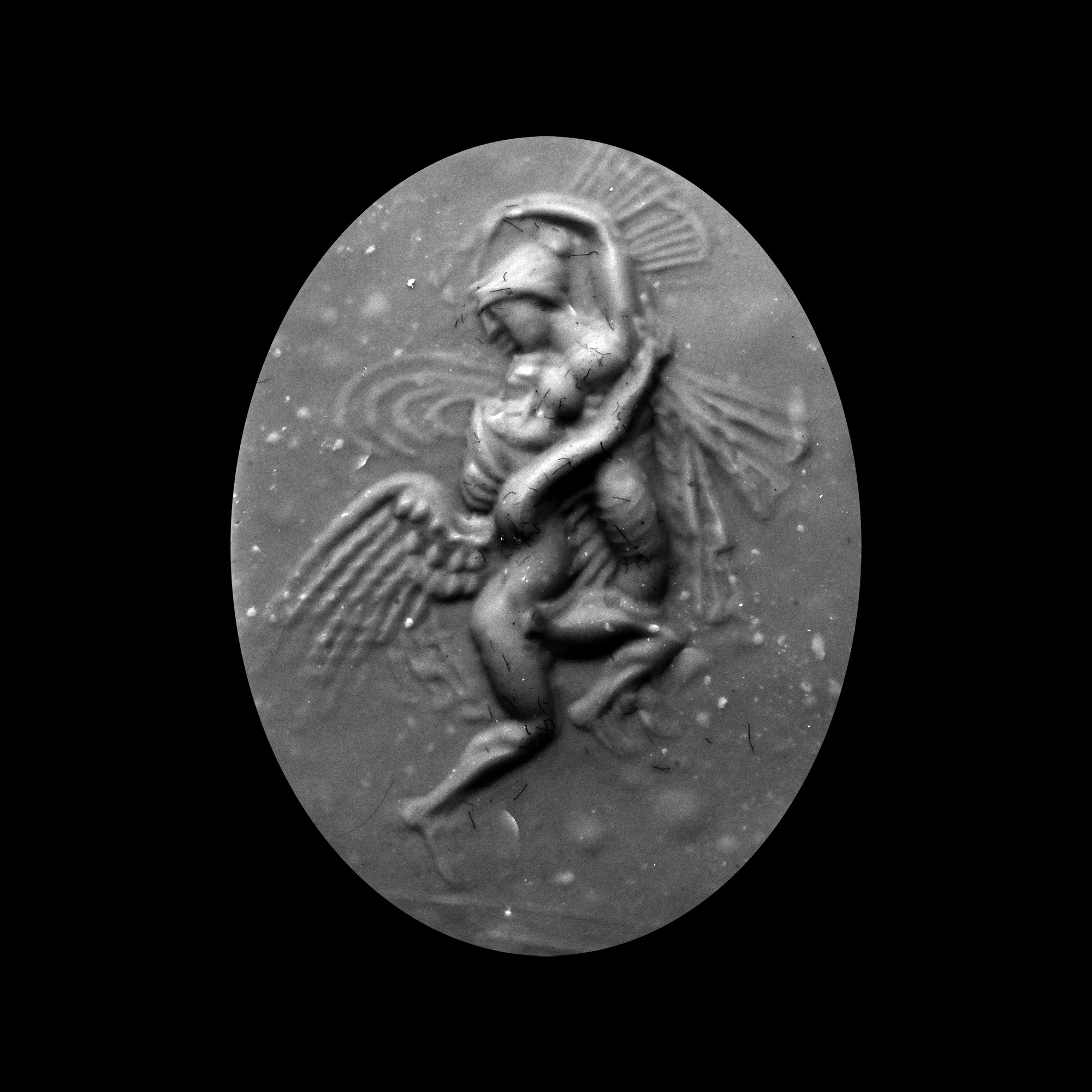
Ellipsoid plaque with incuse winged figures embracing; gold frame and loop; supplied with a museum-quality impression.

Provenance

Acquired on the UK art market.
Private collection, England.

CONDITION

VETTING:

TimeLine Auctions follows a vetting process to ensure the authenticity and legality of all items, reinforcing our commitment to integrity and responsible trading. Each antiquity, antique, and coin lot undergoes thorough examination by a vetting committee of at least ten external specialists, professional trade association members, scientists, and archaeologists: Our Vetting Process


AUCTIONS:

TimeLine is a leading auction house specialising in antiquities, ancient art, collectables, natural history, coins, medals, and books. Our auctions offer museums, collectors, historians, and enthusiasts the opportunity to acquire unique and historically significant pieces.

LOT 0430

Large Post-Classical Glass Gem with Dancing Figures in Gold Mount

Estimate £500 - 700€580 - 810 (for guidance only)$680 - 950 (for guidance only)

Print page

RELATED LOTS

  • Russian Orthodox Enamelled Bronze Travel Icon with Saint Antipas of Pergamum
    Russian Orthodox Enamelled Bronze Travel Icon with Saint Antipas of Pergamum
    19th century A.D.

    Estimate: £250 - 350 (+bp*)

    Opening Bid: £135

    Representing Saint Antipas with a Gospel in his left hand and making the gesture of blessing with his right, dressed as a bishop, with sticharion, covered by omophorion, and surmounted by an epitrachelion; the Mandylion at the centre above the saint, Saint Mary on the left panel and Jesus on the right; Old Slavic inscription around the figures: 'ΙC ΧΡ' (Jesus Christ); 'ΜΡ ϴΥ'(Mother of God); Saint Antipas of Pergamum (Св Анти́па Перга́мский). 238 grams, 11.3 cm


    Acquired from Chris Martin-Zakheim, Iconastas, 5 Piccadilly Arcade, London SW1. From the private collection of a West London, UK, gentleman, formed since the early 2000s.

    The icon features meticulous craftsmanship typical of Orthodox iconography. Saint Antipas was popularly held to be a healer of tooth problems. He was martyred by burning in a brazen bull-shaped altar under the Emperors Nero or Domitian.

    Lot Details

  • Silver-Gilt Mounted Jet Figa Amulet
    Silver-Gilt Mounted Jet 'Figa' Amulet
    Spain, 17th century A.D.

    Estimate: £700 - 900 (+bp*)

    Opening Bid: £350

    Formed as a hand showing figa gesture, silver mount with applied twisted wires; attachment loop and ring to the top. 19.6 grams, 56 mm


    Private collection, Europe. Acquired on the English art market.

    Mano Fico, as protective amulets have been used since the ancient world, it was believed to protect from the evil eye and other dark and magical forces and to promote fertility. In ancient Rome, the fig sign, or mano fico, was made by the pater familias (father of the family) to ward off the evil spirits of the dead as a part of the Lemuria ritual. The ancient Greeks wore amulets of the gesture around the neck to protect from the evil eye, and also used the gesture in artwork. What they considered an overtly sexual gesture was expected to distract evil spirits from causing harm. The pendant would have been worn from a belt or from a chatelaine containing other protective talismans. This carving would have served as a token representing a person's pilgrimage to Santiago de Compostela, one of the very few places in which jet can be found and mined since at least the Middle Ages.

    Lot Details

  • Veneto-Cretan Icon with Forty Martyrs of Sebaste
    Veneto-Cretan Icon with Forty Martyrs of Sebaste
    17th century A.D.

    Estimate: £6,000 - 8,000 (+bp*)

    Opening Bid: £3,000

    Depicting the martyrs freezing to death in a lake in Cappadocia, clad only in their undergarments (esophoria); Jesus above, dressed in gold and red, offering the crowns of martyrdom as a sign of reward; a tower to the side of the martyrs; Greek inscriptions: inside the gold nimbus 'O ѾN' (= The Only One who always exists), the inscription above the martyrs reading: 'Οι Άγιοι Τεσσαράκοντα Μάρτυρες = The Saint Holy 40 Martyrs'. 810 grams, 30 x 22.5 cm


    Acquired on the European art market. Private collection, London, UK. Accompanied by an academic report by Dr Raffaele D’Amato. This lot has been checked against the Interpol Database of stolen works of art and is accompanied by search certificate number no.13063-249294.

    The icon depicts the martyrdom of the 40 soldiers of the Legio XII Fulminata, who died in a frozen lake in Cappadocia in 320 AD. The drama experienced by these courageous men, nourished by their faith in Christ, is evocatively expressed. Their frozen bodies are painted in ochre and olive green, reflecting the stages of their agony. Christ is offering them crowns of glory from heaven as a sign of reward. The cult of the 40 Martyrs spread rapidly, first in Constantinople, where several churches were dedicated to them, then in the Balkans and Russia.

    Lot Details

Stay up-to-date with the latest from TimeLine Auctions by joining our mailing list