
Loading, please wait...
LOT 0043
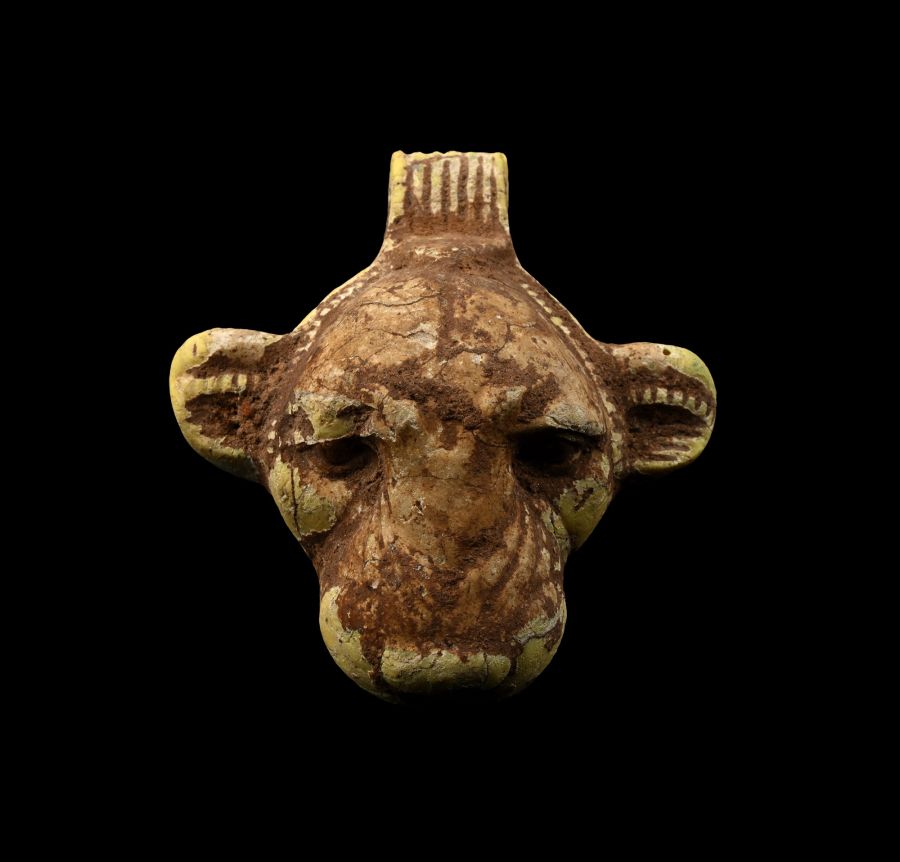
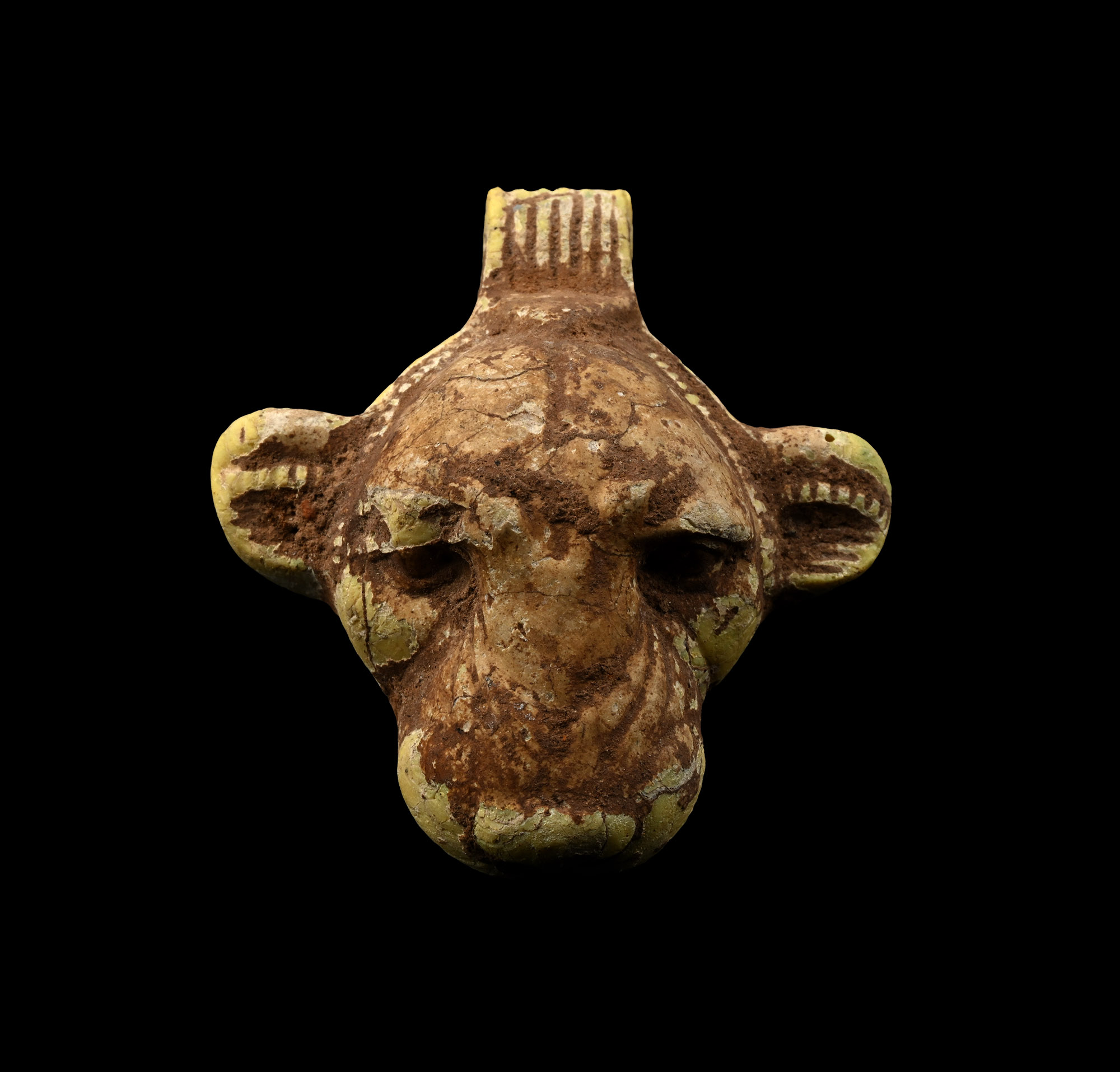
Large Phoenicio-Egyptian Faience Amulet of a Feline Head
LATE 1ST MILLENNIUM B.C.
1 3/4 in. (31.9 grams, 46 mm).
Modelled in the half-round with fine detailing and a ribbed suspension loop.
ProvenanceEx collection of a Surrey lady, circa 1940s.
LiteratureCf. Schweitzer, A., Traunecker, C., Strasbourg Musée archéologique. Antiquités égyptiennes de la collection G. Schlumberger, Paris, 1998, pp. 75-76, nos. 153-154, for two comparable faience amulets.
FootnotesIt is unclear which deity the head represents, though either Sekhmet or Bastet is likely.
CONDITIONTimeLine Auctions follows a vetting process to ensure the authenticity and legality of all items, reinforcing our commitment to integrity and responsible trading. Each antiquity, antique, and coin lot undergoes thorough examination by a vetting committee of at least ten external specialists, professional trade association members, scientists, and archaeologists: Our Vetting Process
AUCTIONS:
TimeLine is a leading auction house specialising in antiquities, ancient art, collectables, natural history, coins, medals, and books. Our auctions offer museums, collectors, historians, and enthusiasts the opportunity to acquire unique and historically significant pieces.
LOT 0043
Large Phoenicio-Egyptian Faience Amulet of a Feline Head
Estimate £800 - 1,000€930 - 1,160 (for guidance only)$1,080 - 1,350 (for guidance only)
-
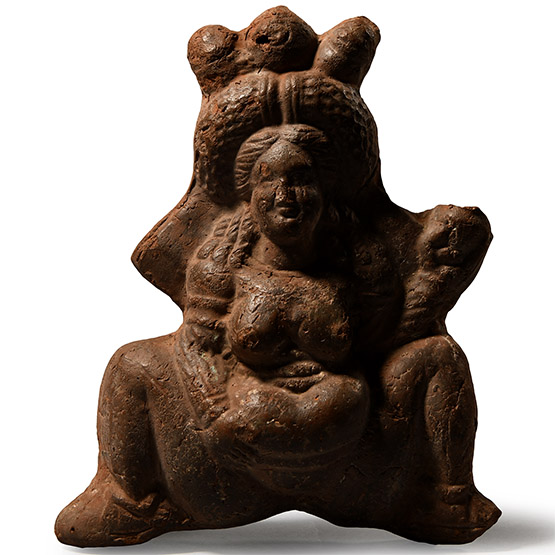
Large Romano-Egyptian Terracotta Figure of Baubo
Ptolemaic Period, 332-30 B.C.Estimate: £800 - 1,000 (+bp*)
Opening Bid: £400
Modelled as a seated plump female figure; the right hand touching the pubic area beneath the rounded abdomen, wearing a tall headdress of thick braids, falling on her shoulders, smooth back with a vent hole; chipped at left foot and arm. 373 grams, 15.5 cm
with Superior Galleries, Los Angeles, USA. Ex Dr W. Benson Harer, Los Angeles, USA, March 1985.
Baubo was a minor divinity of the Greek mythology, linked to the cult of Demeter and Persephone. The statuette belongs to the second type of Baubo figurines, widespread in the last Ptolemaic and Roman period in Egypt. The Egyptian Baubo figures are split into two groups, and this one belongs to the first group depicting a woman seating frontally whilst holding a musical instrument. In some of these figurines her right hand is touching her genitalia. Many of them were used as amulets or as ex-voto. -
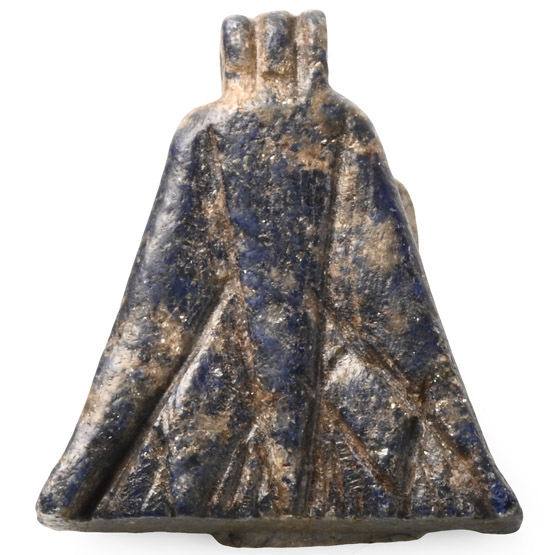
Egyptian Lapis Lazuli Lotus Amulet
Late Period, 664-332 B.C.Sold for (Inc. bp): £117
With ribbed suspension loop bell-shaped plaque; collector's sticker to reverse. 1.77 grams, 17 mm
Ex UK collection, 1970s.
The lotus served as a symbol of both divine beauty and the sun's rejuvenating power. -
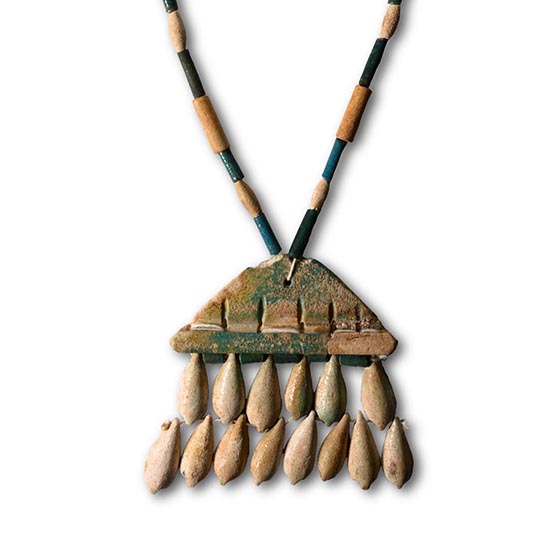
Egyptian Faience Necklace with Pendant
New Kingdom, 1400-1100 B.C.Estimate: £550 - 750 (‡+bp*)
Opening Bid: £300
Restrung group of tubular and fusiform faience beads with D-shaped pendant and two tiers of dangles beneath. 48 grams, 80 cm long
Acquired in the mid 1980s-1990s. Private collection, Switzerland, thence by descent. Private collection, since the late 1990s.
