
Loading, please wait...
LOT 0092
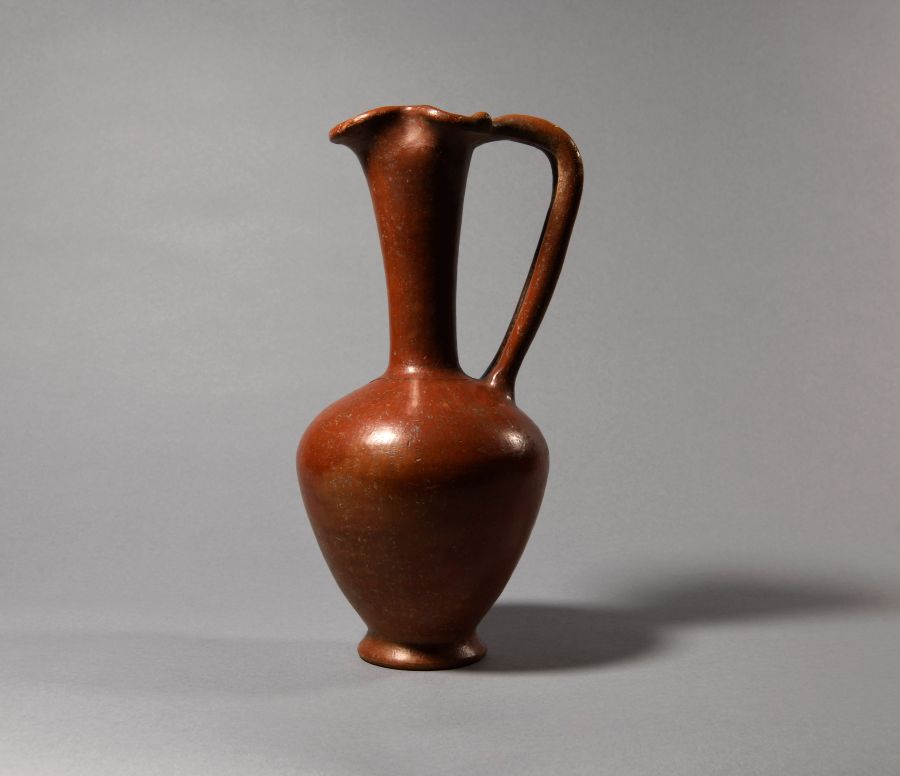
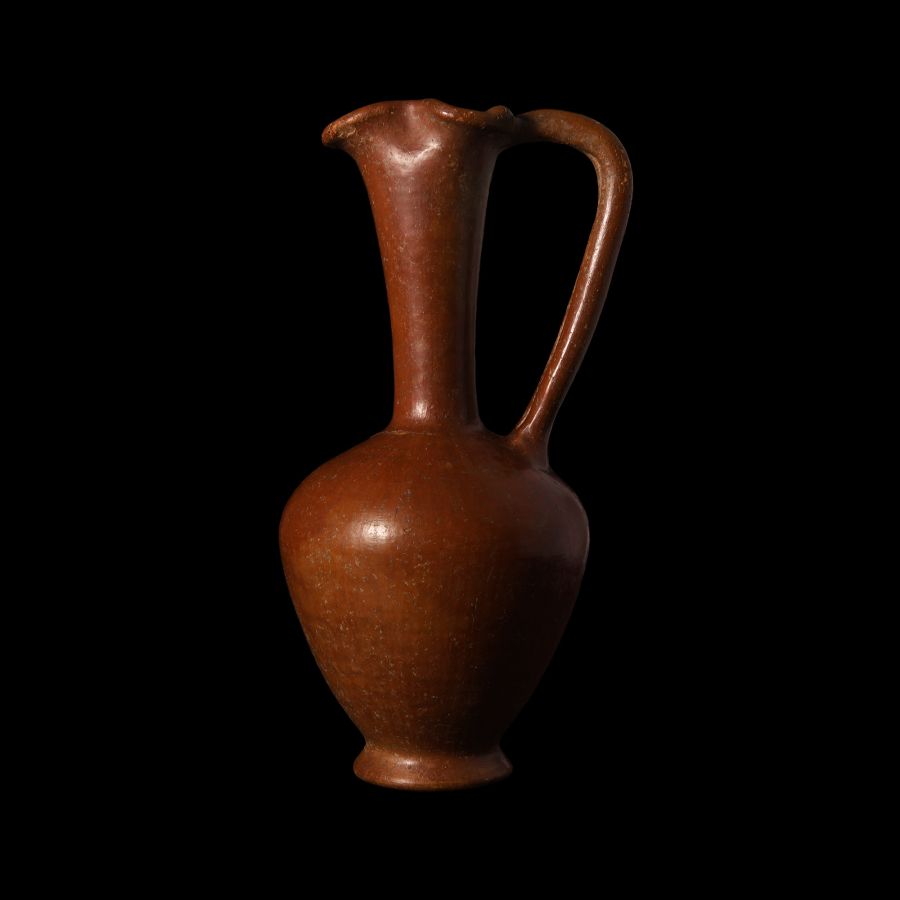
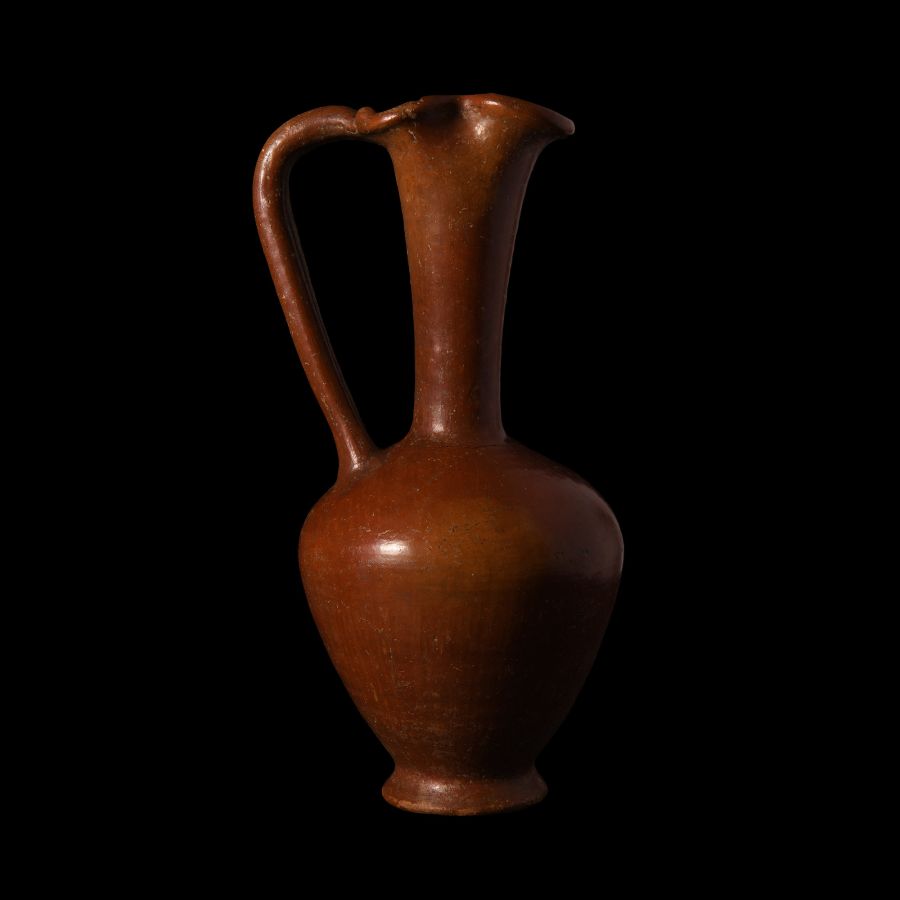
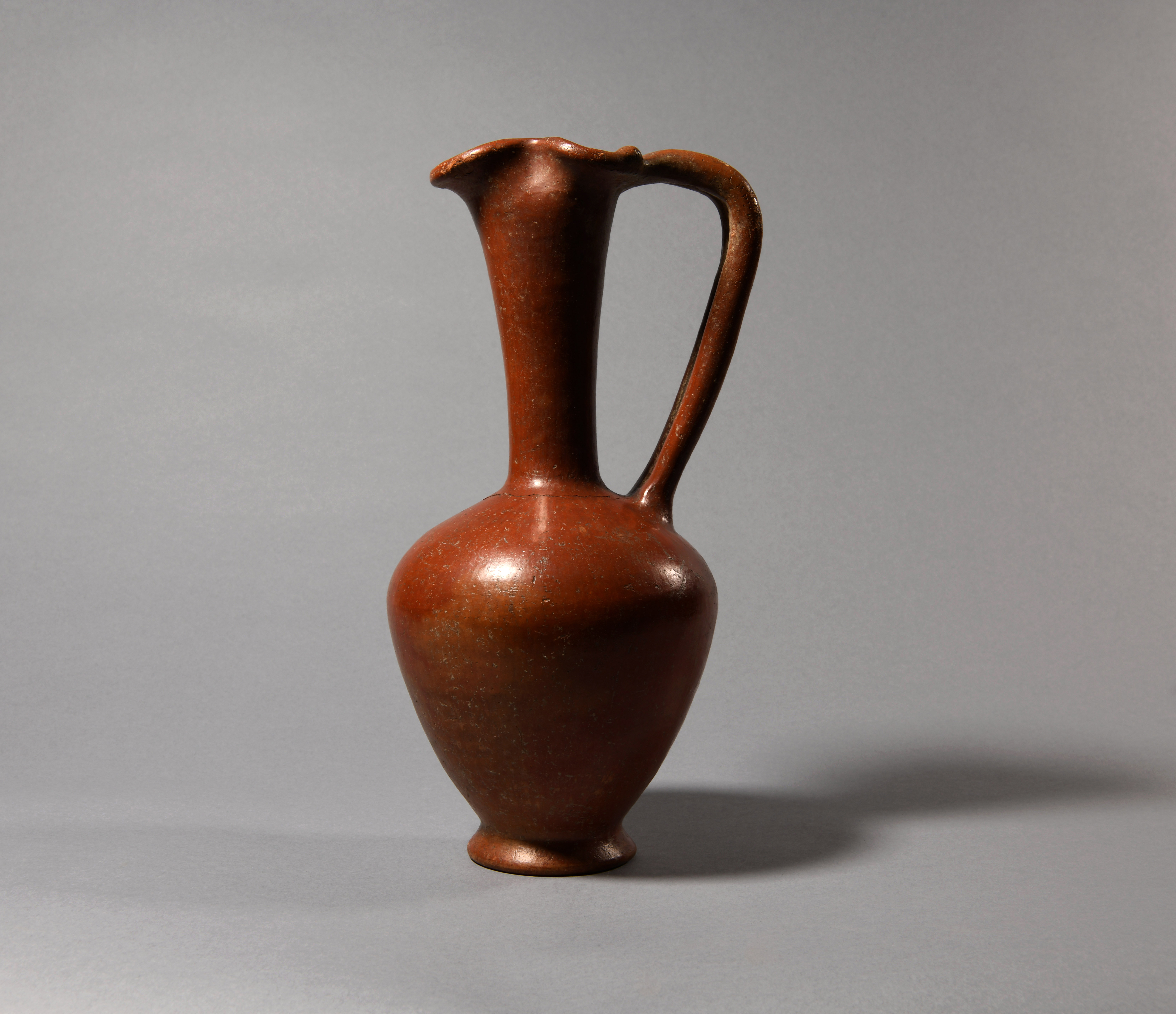
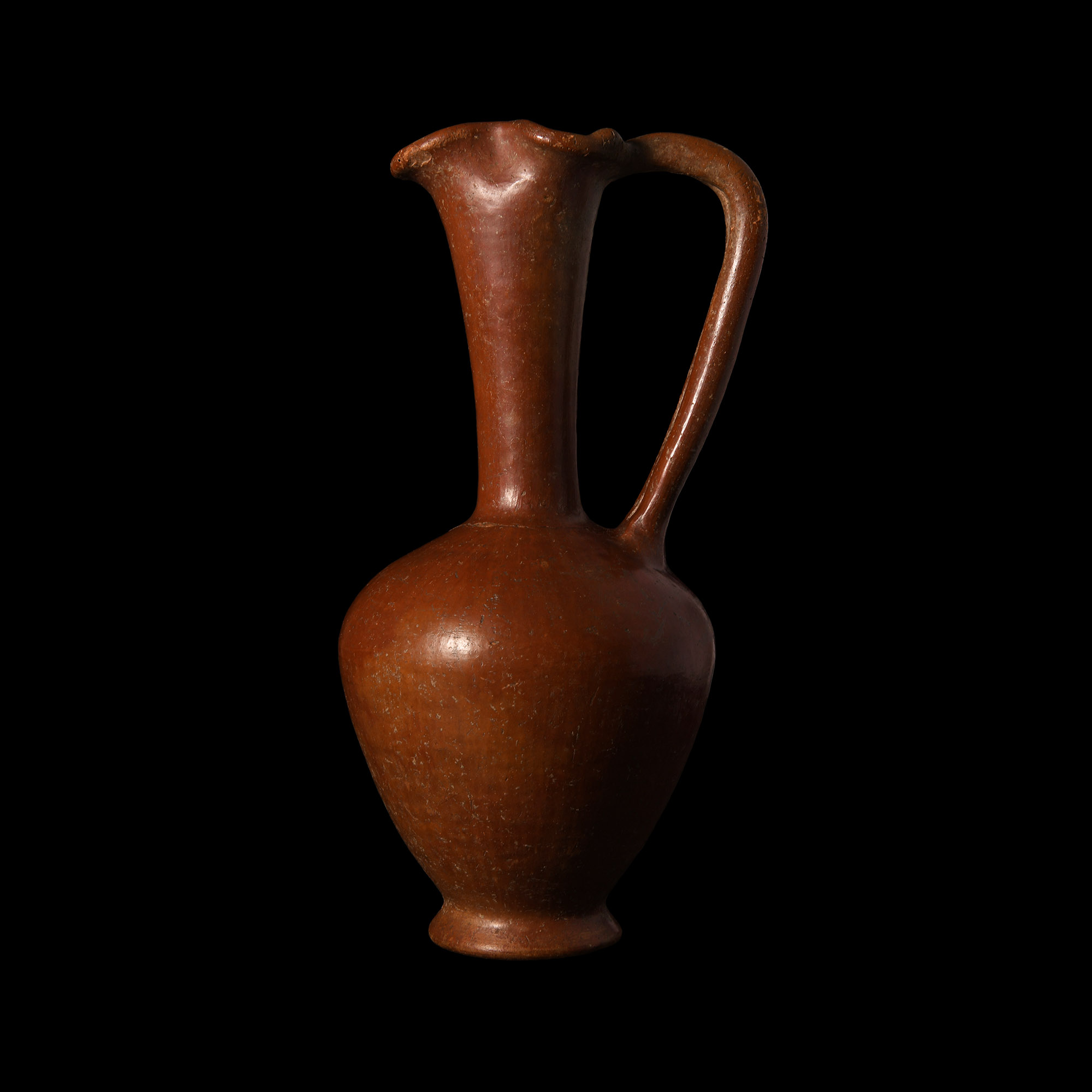
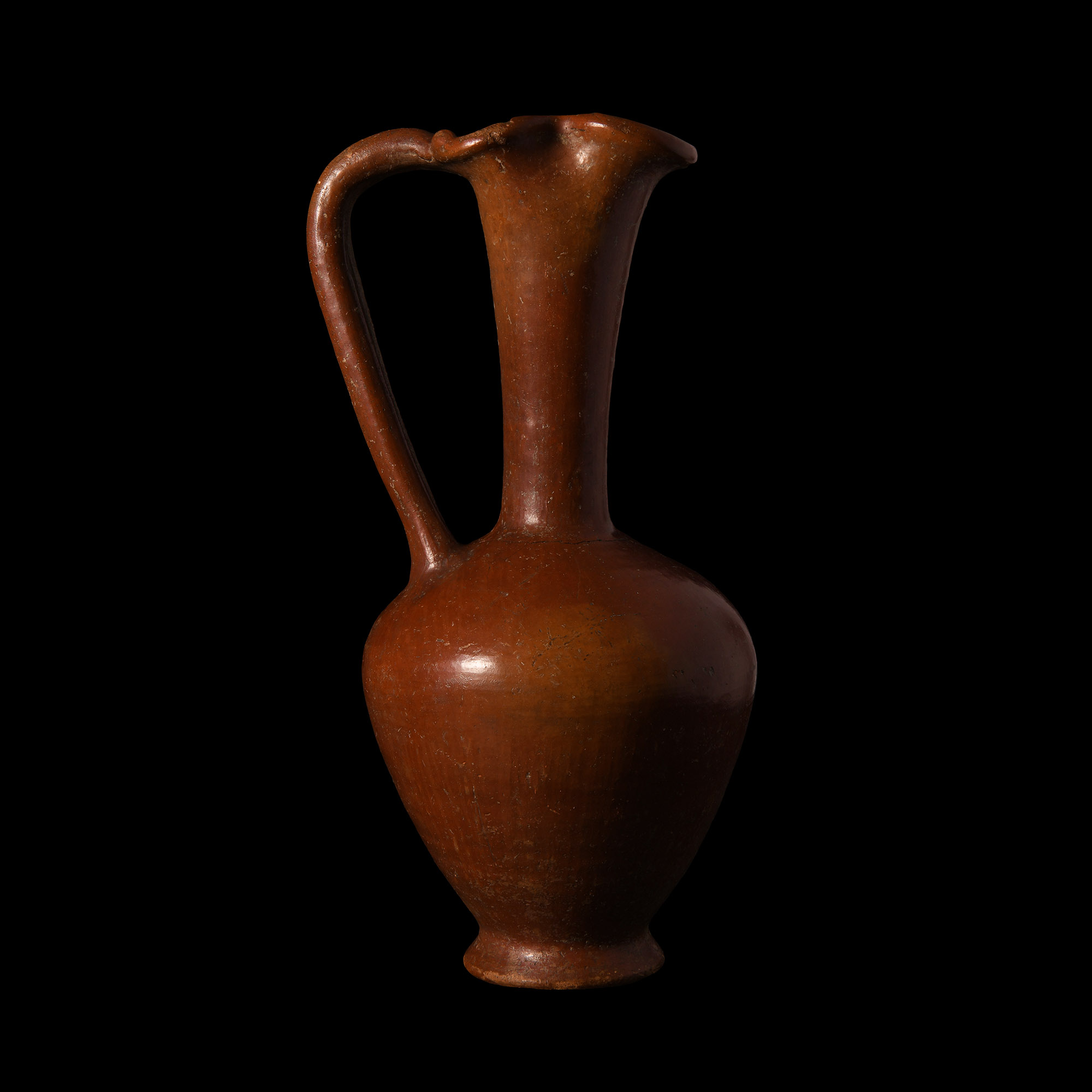
Large Phoenician Ceramic Piriform Jug
LEVANTINE, 8TH CENTURY B.C.
11 in. (1.72 kg, 28 cm).
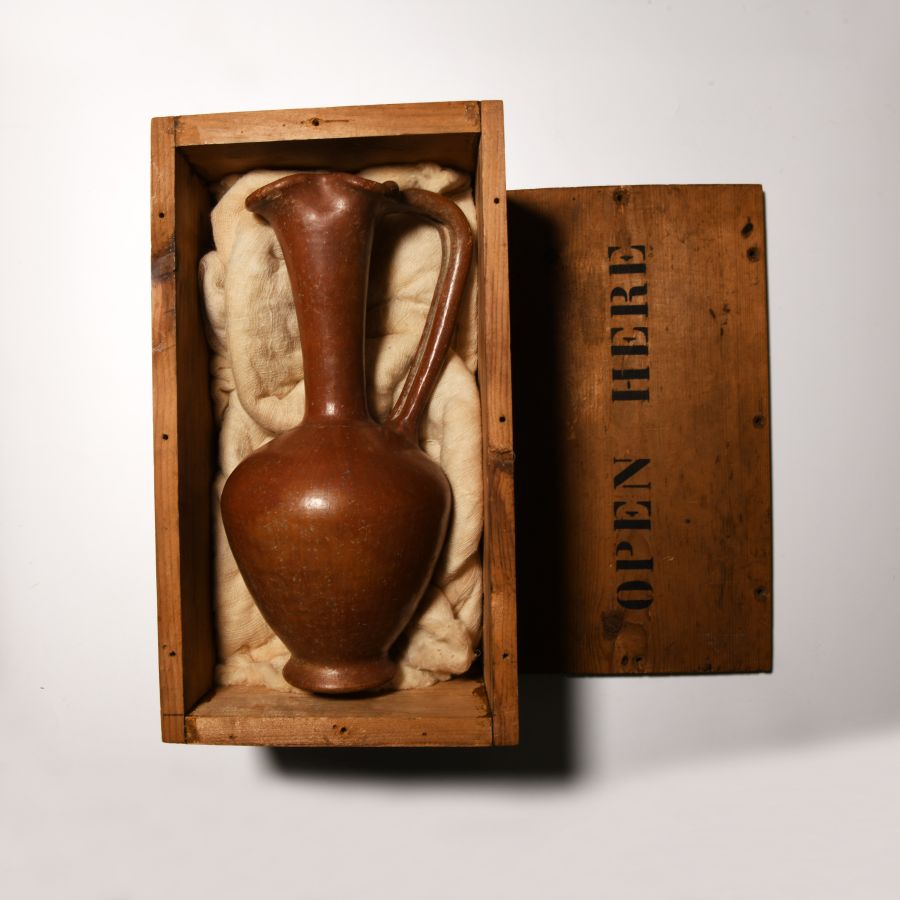
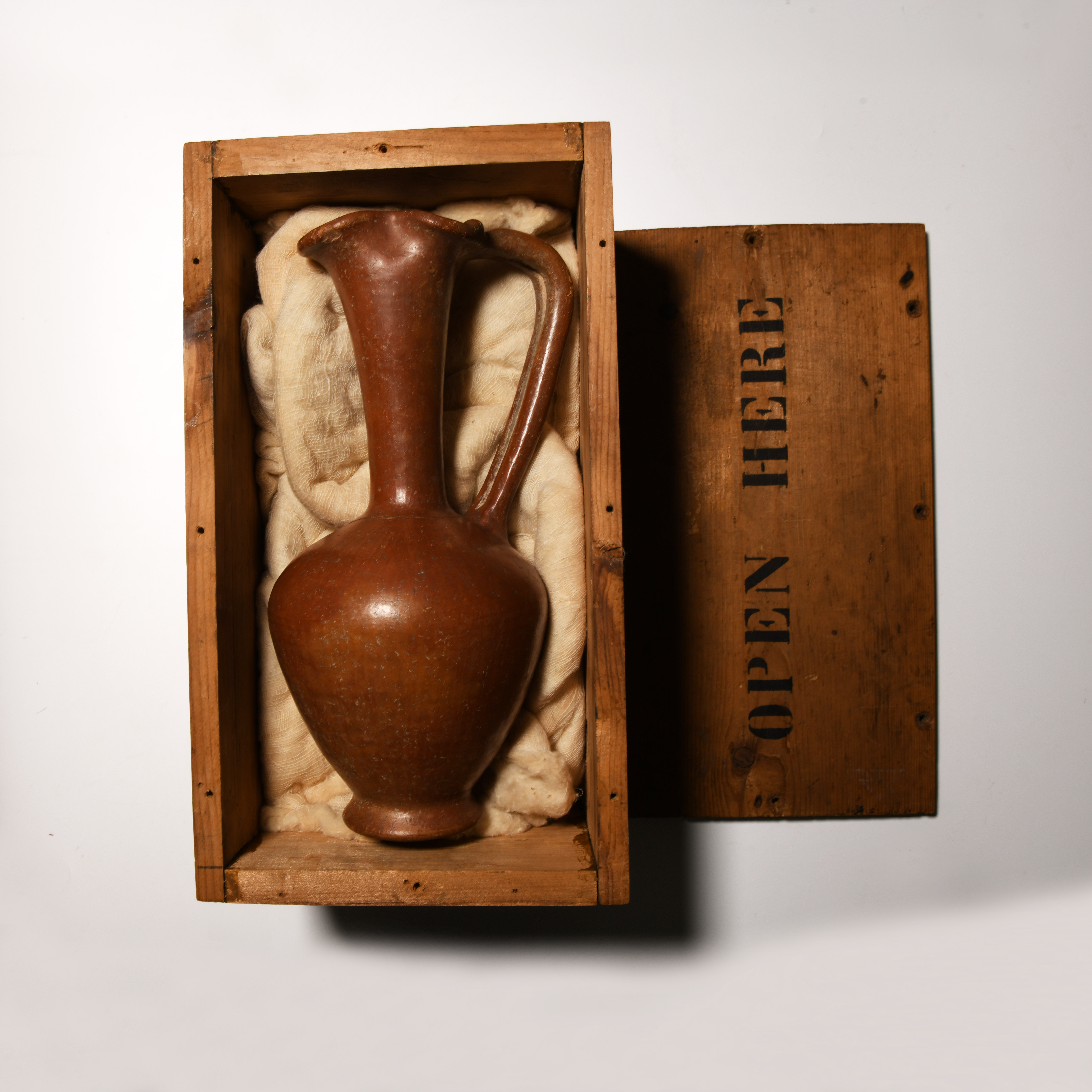
With trefoil mouth and integral ribbed handle, covered in a red slip with burnished surface; held in an antique wooden box crate.
ProvenanceCollected by Miss Patience Townend, in the late 1950s.
Thence by descent to the owner’s godmother.
By gift to Mrs Lucy Manningham-Buller, circa 2002.
Private collection, UK.
Accompanied by a copy of a letter from Rupert Chapman, Curator of Levantine Antiquities, in the Middle Eastern Department at the British Museum, dated 4th March 2013, discussing the piece: ‘…there is no doubt in our minds that the piece is genuine, and that it dates to the eighth century B.C....the piece you have is a very fine one… any museum would be very happy to have such a fine example in its collection’.
This lot has been checked against the Interpol Database of stolen works of art and is accompanied by search certificate number no.13090-248974.
Cf. similar specimen in MET, accession no.74.51.643.
FootnotesThis object exemplifies the high-quality tableware produced during its historical period, intended for use in the wealthiest homes.
CONDITIONTimeLine Auctions follows a vetting process to ensure the authenticity and legality of all items, reinforcing our commitment to integrity and responsible trading. Each antiquity, antique, and coin lot undergoes thorough examination by a vetting committee of at least ten external specialists, professional trade association members, scientists, and archaeologists: Our Vetting Process
AUCTIONS:
TimeLine is a leading auction house specialising in antiquities, ancient art, collectables, natural history, coins, medals, and books. Our auctions offer museums, collectors, historians, and enthusiasts the opportunity to acquire unique and historically significant pieces.
-
.jpg)
Greek Gold Ring Engraved with Goddess Nike
5th-4th century B.C.Sold for (Inc. bp): £9,360
Comprising a round-section U-shaped hoop and a lentoid-shaped bezel bearing the image of flying Nike with her wings spread and wearing a long dress, leaving her feet exposed. 9.61 grams, 23.23 mm overall, 18.22 mm internal diameter (approximate size British L 1/2, USA 6, Europe 11.87, Japan 11)
Focquaert collection, Belgium, 1980s. European private collection, 2012. This lot has been checked against the Interpol Database of stolen works of art and is accompanied by search certificate number no.13020-246779.
The ring belongs to the typology I of Boardman’s classification (Boardman, 2001, p.213). One of the subjects usually represented on this ring type is the flying Nike. A similar flying Nike is visible on a gold ring found in grave 17 of the Nymphaeum, and it is today preserved at the Hermitage. -
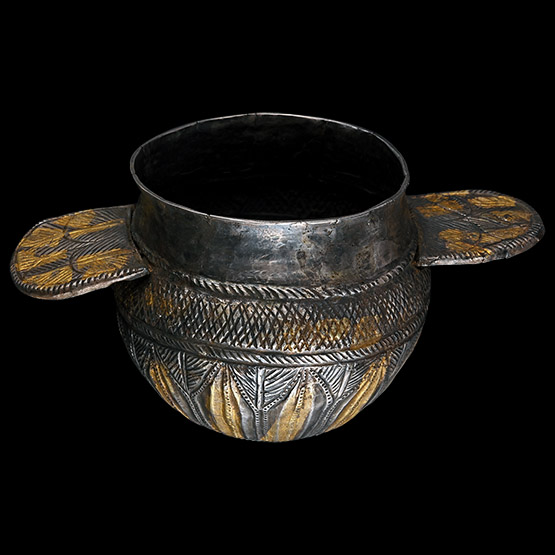
Greek Silver-Gilt Wine Cup with Handles
Hellenistic, 2nd-1st century B.C.Sold for (Inc. bp): £6,240
Comprising a globular body with a rounded underside, a repoussé rosette with ropework border, segmented band with leaf detailing, hatched shoulder framed by ropework bands, scooped neck with chamfered rim; two D-shaped ledge handles with recessed rim, ropework border, hatched panels; accompanied by a custom-made display case. 179 grams, 15.5 cm wide
Acquired on the US art market, early 1990s. Private collection, North America. Ex private collection, USA. TimeLine Auctions, 23 February 2023, no.48. Private collection, London. Accompanied by an academic report by Dr Raffaele D'Amato. This lot has been checked against the Interpol Database of stolen works of art and is accompanied by a search certificate number no.13037-247507. -
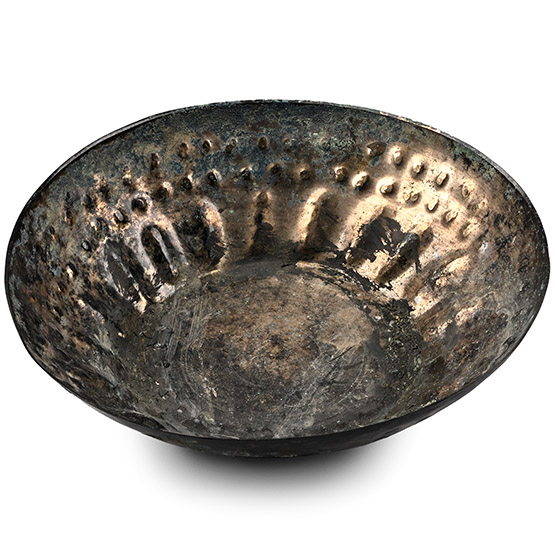
Parthian Punch-Decorated Bronze Bowl
2nd century B.C.-1st century A.D.Sold for (Inc. bp): £130
Broad and shallow with flared sidewall, two parallel circumferential rows of repoussé pellets. 135 grams, 17.1 cm wide
From the collection of North West London, UK, gentleman, 1990-2000s.
