
Loading, please wait...
LOT 1490
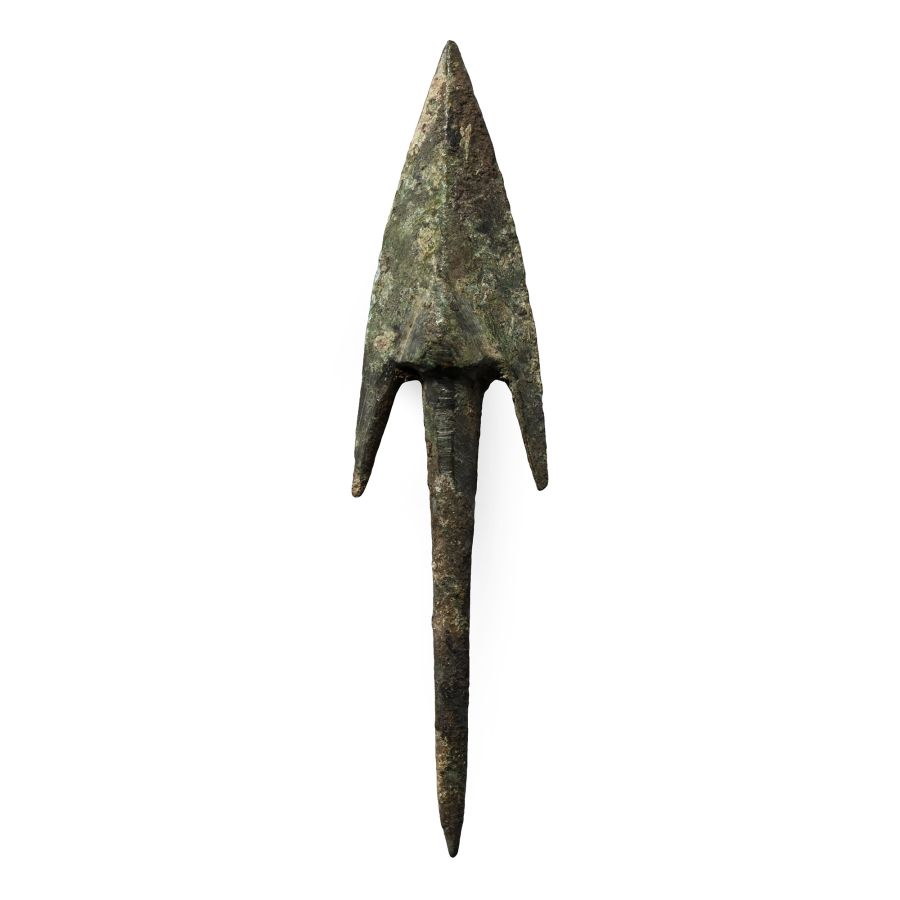
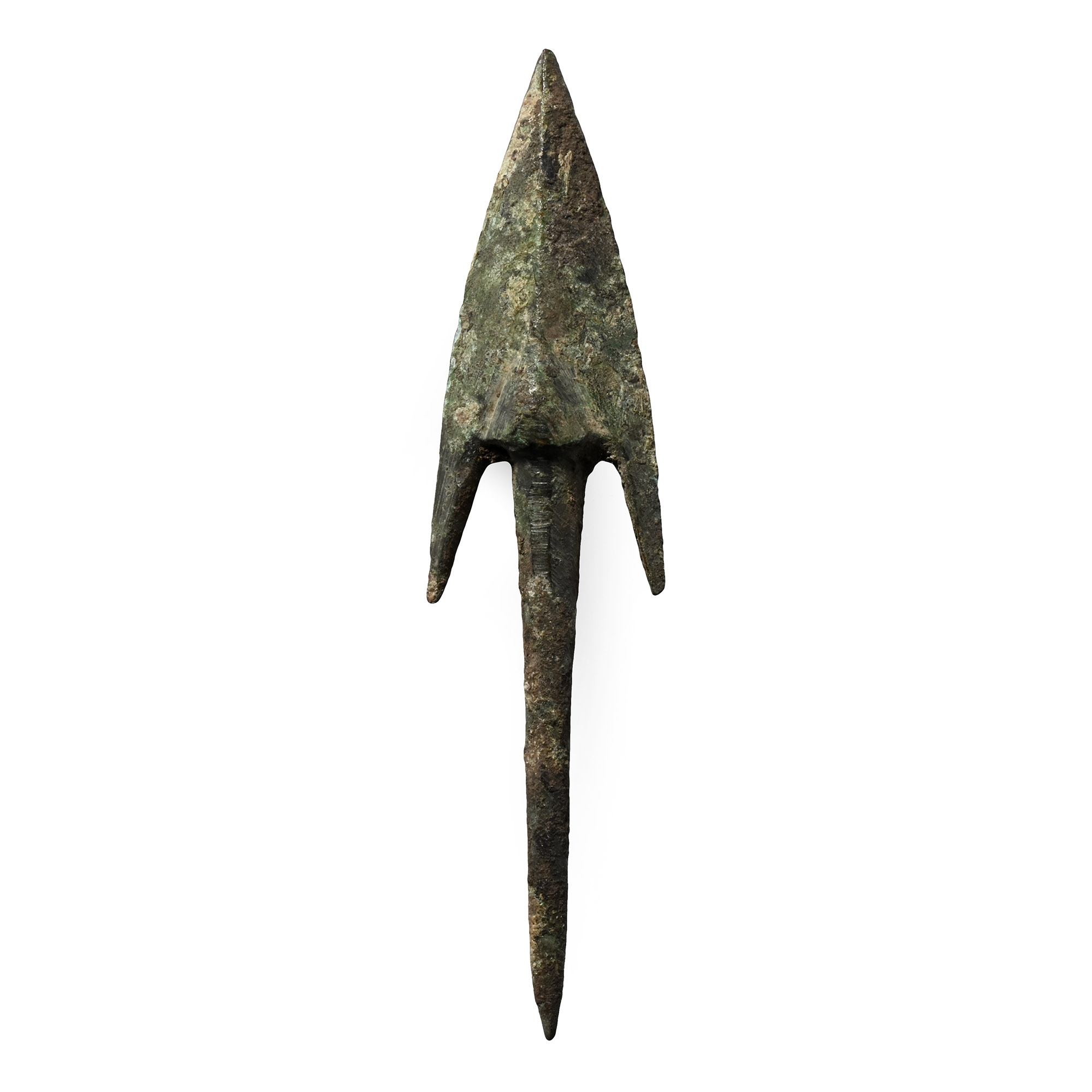
Large Phoenician Bronze Arrowhead
LEVANT, CIRCA 1200-1100 B.C.
3 in. (16.5 grams, 75 mm).
Broad and lentoid in section with spiked tang, elongated barbs, bulb to each face at junction with the head. [No Reserve]
ProvenanceFrom the private collection of Mr Brian Edwards, New Malden, Surrey, UK, formed from the late 1970s-early 1980s; thence by descent.
Accompanied by the original collector's data sheet(s) with reference no.A10.
TimeLine Auctions follows a vetting process to ensure the authenticity and legality of all items, reinforcing our commitment to integrity and responsible trading. Each antiquity, antique, and coin lot undergoes thorough examination by a vetting committee of at least ten external specialists, professional trade association members, scientists, and archaeologists: Our Vetting Process
AUCTIONS:
TimeLine is a leading auction house specialising in antiquities, ancient art, collectables, natural history, coins, medals, and books. Our auctions offer museums, collectors, historians, and enthusiasts the opportunity to acquire unique and historically significant pieces.
-
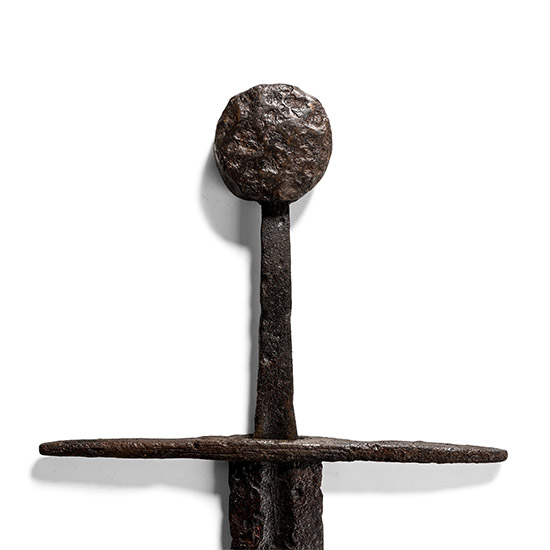
Medieval Iron Single-Handed Sword
12th-13th century A.D.Sold for (Inc. bp): £10,725
Comprising: two-edged lenticular-section piled blade (Oakshott's Type XI) with gentle taper overall to a rounded point and fuller to both faces; quillons round in section with taper to ends; flat-section tang tapering to the upper end; disc pommel of Oakshott's Type G with slightly domed faces. 1.01 kg, 95 cm
From the private collection of a London gentleman, from his grandfather's collection formed before the early 1970s. Accompanied by an academic report by Dr Raffaele D’Amato. This lot has been checked against the Interpol Database of stolen works of art and is accompanied by search certificate number no.13303-257653. -
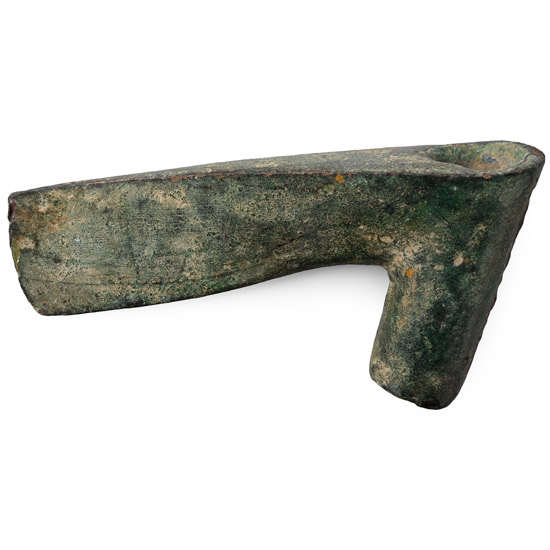
Luristan Bronze Axehead
2nd-1st millennium B.C.Sold for (Inc. bp): £117
With a narrow, slightly angled blade and a tubular socket. 374 grams, 13.1 cm
Ex Abelita collection, 1990s. -
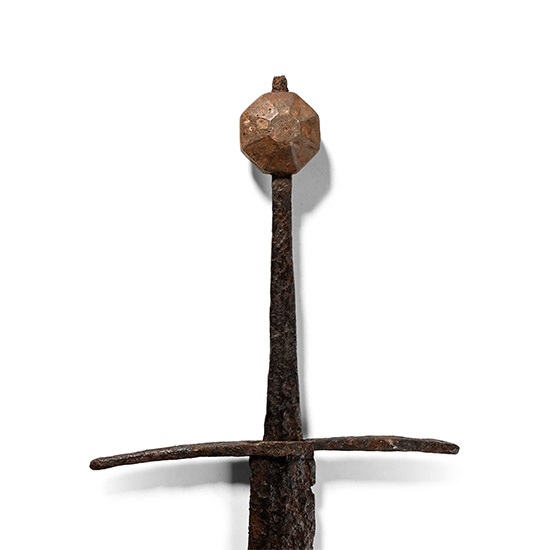
Medieval Iron Hand-and-Half Sword
14th-15th century A.D.Sold for (Inc. bp): £2,340
Longsword of Oakeshott's Type XVIIIa or b, comprising: two-edged, slender lenticular-section piled blade with taper overall to a narrow point; quillons square in section with taper and slight droop to ends; flat-section tang tapering to the upper end; pommel of Oakshott's Type I1 with scooped border to each face, central panel. 873 grams, 99.5 cm
From the private collection of a London gentleman, from his grandfather's collection formed before the early 1970s. Accompanied by an academic report by Dr Raffaele D'Amato. This lot has been checked against the Interpol Database of stolen works of art and is accompanied by search certificate number no.13302-257654.
Examples of this category of swords show almost every kind of hilt used during the 15th century, from the classic forms of the 13th century to all the new varieties of pommel and cross which developed after 1400. Because the previous types of swords were practically useless against the fully armoured man-at-arms, Western European warfare needed a sword able to pierce the weak points of the protective equipment, a circumstance that led to the creation of types XV, XVI and XVII that found their quintessence in the type XVIII. The subtypes XVIIIa and XVIIIb had longer blades, and especially the type XVIIIb was a very long-gripped bastard sword.
