
Loading, please wait...
LOT 0766
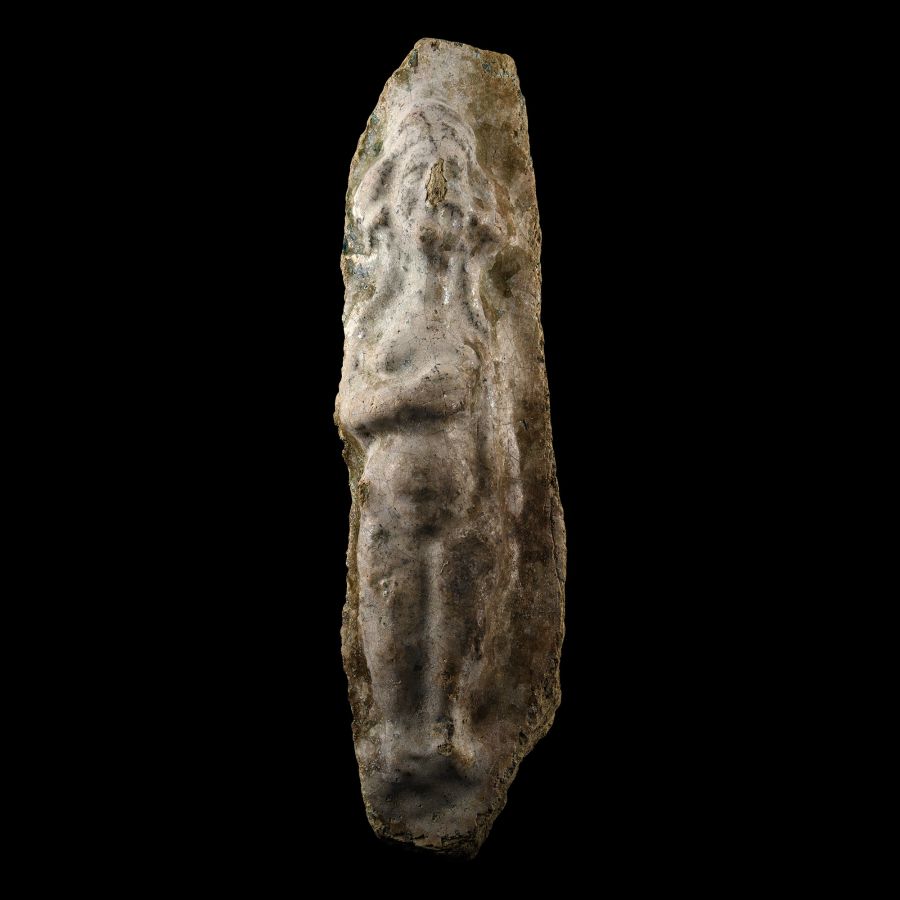
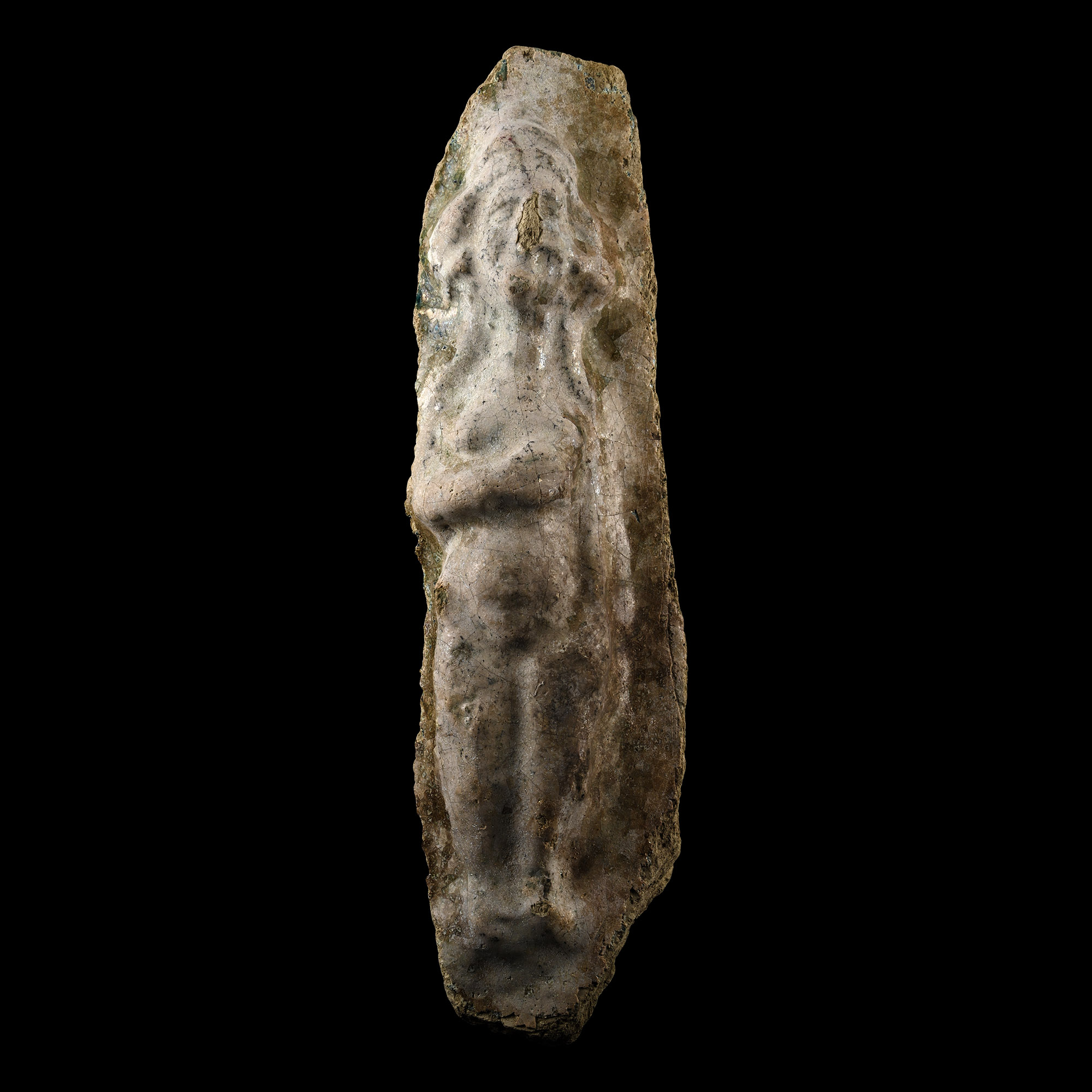
Large Parthian Glazed Faience Figure of the God Astarte
CIRCA 2ND CENTURY B.C.-1ST CENTURY A.D.
13 1/8 in. (885 grams, 33.3 cm).
The nude goddess modelled facing with her right hand resting on her left breast.
ProvenanceMayfair gallery, early 1990s.
Ex North American gentleman collection.
TimeLine Auctions follows a vetting process to ensure the authenticity and legality of all items, reinforcing our commitment to integrity and responsible trading. Each antiquity, antique, and coin lot undergoes thorough examination by a vetting committee of at least ten external specialists, professional trade association members, scientists, and archaeologists: Our Vetting Process
AUCTIONS:
TimeLine is a leading auction house specialising in antiquities, ancient art, collectables, natural history, coins, medals, and books. Our auctions offer museums, collectors, historians, and enthusiasts the opportunity to acquire unique and historically significant pieces.
LOT 0766
Large Parthian Glazed Faience Figure of the God Astarte
Estimate £200 - 300€230 - 350 (for guidance only)$270 - 410 (for guidance only)
Opening Bid
£100 (EUR 116; USD 135) +BP*
-
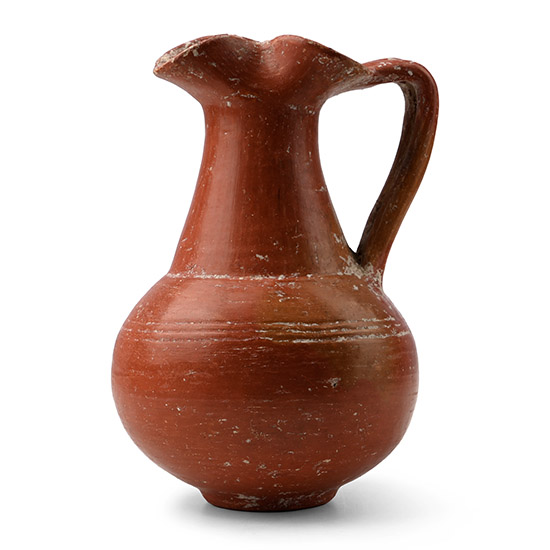
Graeco-Phoenician Glazed Terracotta Oinochoe
7th century B.C.Estimate: £600 - 800 (‡+bp*)
Opening Bid: £325
With a folded trefoil mouth, an applied ribbed handle and basal ring, and incised concentric rings above the equator. 491 grams, 17 cm
Private collection, acquired in the late 1980s-early 1990s; thence by descent.
Throughout the 7th century BC, the Phoenician ports received goods from the East, from Cyprus, Eastern Greece, Pithecussa, and even Etruria, likely in exchange for grain, oil, and wine. Among the various archaeological finds unearthed in these ports are Attic, Corinthian, and Rhodian pottery, some of which was manufactured by the Greek colonies of the West, such as Ischia-Pithecussa. -

Graeco-Persian Gold Ram-Shaped Amulet
3rd-2nd century B.C.Estimate: £12,000 - 17,000 (‡+bp*)
Opening Bid: £6,000
Modelled in the round in the form of a ram lying with its legs folded beneath the body, head turned with hooked horns, collar to the neck with a large pellet pendant; ribbed suspension loop behind the shoulders, mounting lug beneath the trunk. 12.87 grams, 30 mm
Private collection, acquired on the European art market in 2002. Accompanied by a copy of an Art Loss Register certificate, 8 June 2004. This lot has been checked against the Interpol Database of stolen works of art and is accompanied by search certificate number no.13204-249215.
The ram, a male symbol, was associated with various divinities. Turned into a ram as a child by Zeus, and a common sacrifice to the god, the ram was a symbol of Dionysus, which he shared with Aphrodite. Ram heads and pendants frequently occur in jewellery. In the animal kingdom, Eros favours the cockerel and the ram, both of which are indicative of sexual potency. -
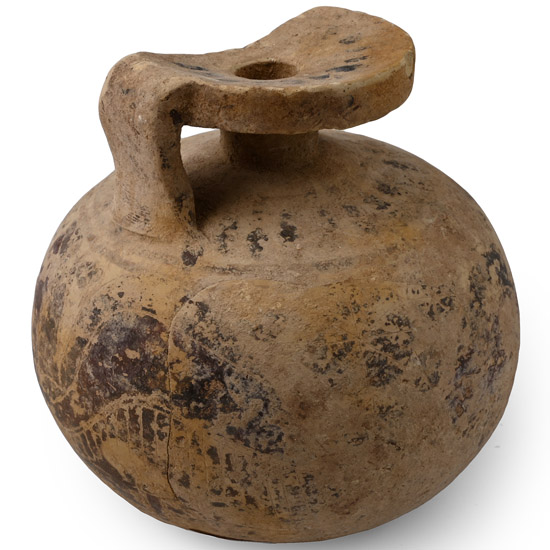
Corinthian Terracotta Round Aryballos with Sirens
7th-6th century B.C.Estimate: £180 - 240 (‡+bp*)
Opening Bid: £90
Bulbous in profile with a short neck and a broad rim to the mouth, a short strap handle to the rear; painted with sirens facing left; vertical lines to the rim, shoulders and bottom. 100 grams, 80 cm high
Ex Lotti Hohl, Switzerland; acquired before 1987.
