
Loading, please wait...
LOT 1580
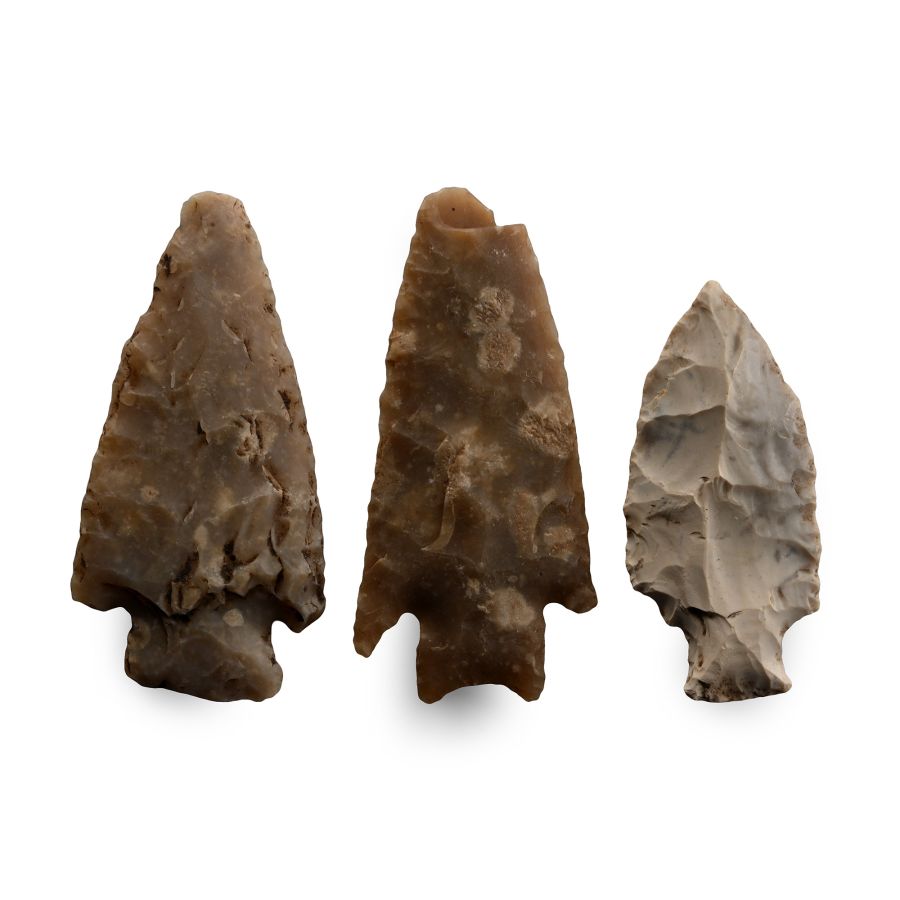
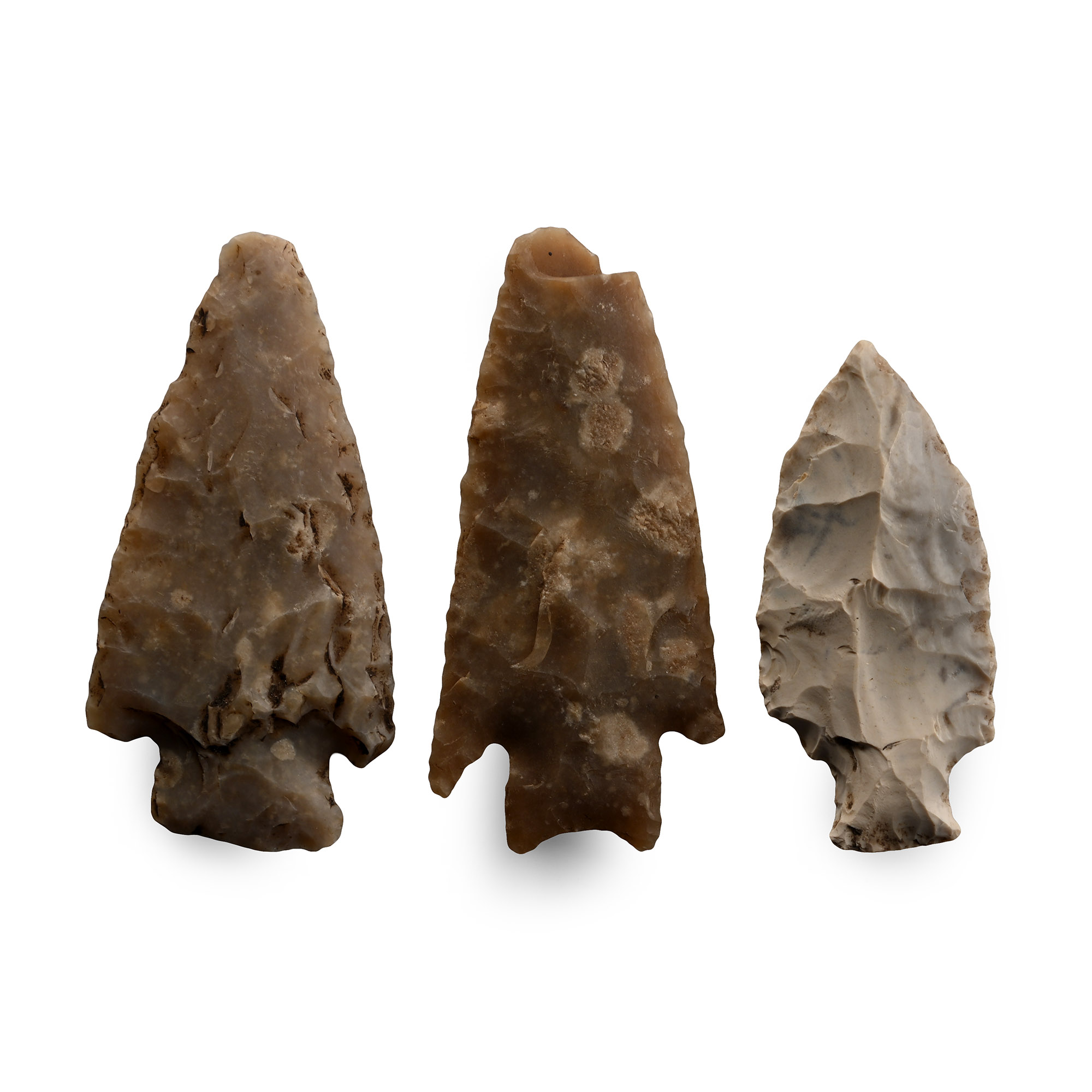
Large North American Stone Age Knapped Spear Point Group
ARCHAIC WOODLAND PERIOD, CIRCA 2500-1900 B.P. OR LATER
2 1/2 - 3 in. (57.9 grams total, 64-78 mm).
Comprising three tanged points in grey-brown stone, two barbed. [3, No Reserve]
ProvenanceFrom a previous old English collection.
From the private collection of a West Midlands lady collector; acquired from a UK auction house.
TimeLine Auctions follows a vetting process to ensure the authenticity and legality of all items, reinforcing our commitment to integrity and responsible trading. Each antiquity, antique, and coin lot undergoes thorough examination by a vetting committee of at least ten external specialists, professional trade association members, scientists, and archaeologists: Our Vetting Process
AUCTIONS:
TimeLine is a leading auction house specialising in antiquities, ancient art, collectables, natural history, coins, medals, and books. Our auctions offer museums, collectors, historians, and enthusiasts the opportunity to acquire unique and historically significant pieces.
LOT 1580
Large North American Stone Age Knapped Spear Point Group
Sold for (Inc. bp): £20
-
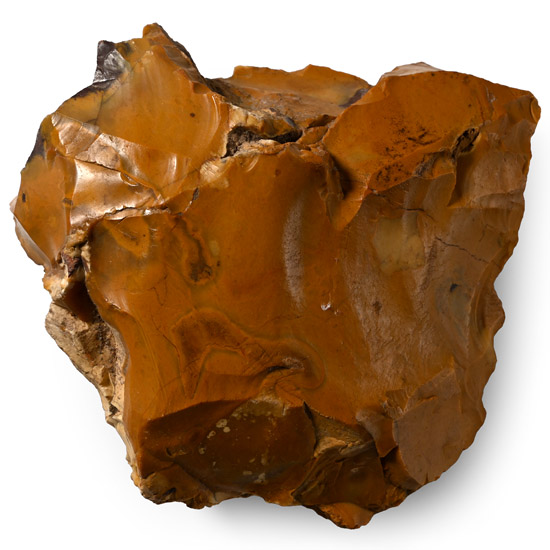
Very Large Stone Age Fontmaure Knapped Jasper Handaxe
Middle Palaeolithic Period, circa 150,000-60,000 B.P.Sold for (Inc. bp): £65
Cordate in profile with deep orange-tan glossy patina; small remains of cortex; made by Neanderthal. 331 grams, 96 mm
From the well-regarded site of Fontmaure, Vienne department, France. Acquired in the 1970s-1990s. From the collections of the famous UK musician and amateur archaeologist, Victor Brox (1941-2023). From a private collection. -
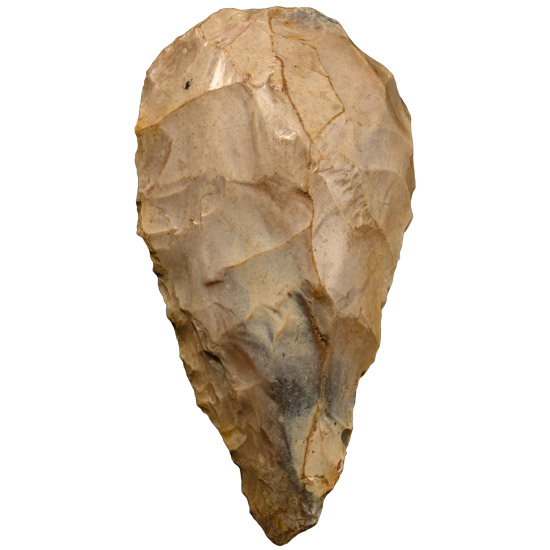
British Stone Age Knapped Flint Axe
Middle Palaeolithic Period, circa 150,000-60,000 B.P.Sold for (Inc. bp): £520
Piriform body with pointed tip, an old handwritten label on one side. 262 grams, 12.3 cm
Found Test Road, Huzbourough Copse, Hampshire, UK, June 1965. From the collection of Martin Doyle, Leverstock, UK, 1980s-2000s. -
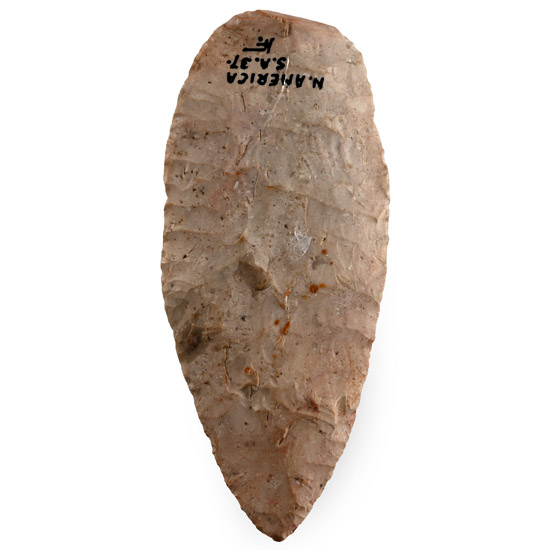
North American Stone Age Knapped Bifacial Knife
Circa 6000-4000 B.P.Sold for (Inc. bp): £78
Ovate blade in cream-coloured stone, narrow point, inked collector's note 'N.America S.A 37' and Hugh Fawcett collection monogram below. 25.4 grams, 79 mm
Ex Dr Hugh Alderson Fawcett (1891-1982), a general practitioner and antiquarian who built up an important collection of ancient implements, weapons and ornaments. From the collection of a West Sussex collector. Acquired from the UK art market in the 2020s.
Dr Hugh Alderson Fawcett (1891-1982) was a general practitioner and antiquarian who built up an important collection of ancient implements, weapons and ornaments. The bulk of his collection is now in the Bristol Museum and Art Gallery, but Fawcett previously sold or traded some examples. His distinctive monogram and careful recording of provenance make his pieces readily identifiable.
