
Loading, please wait...
LOT 1438
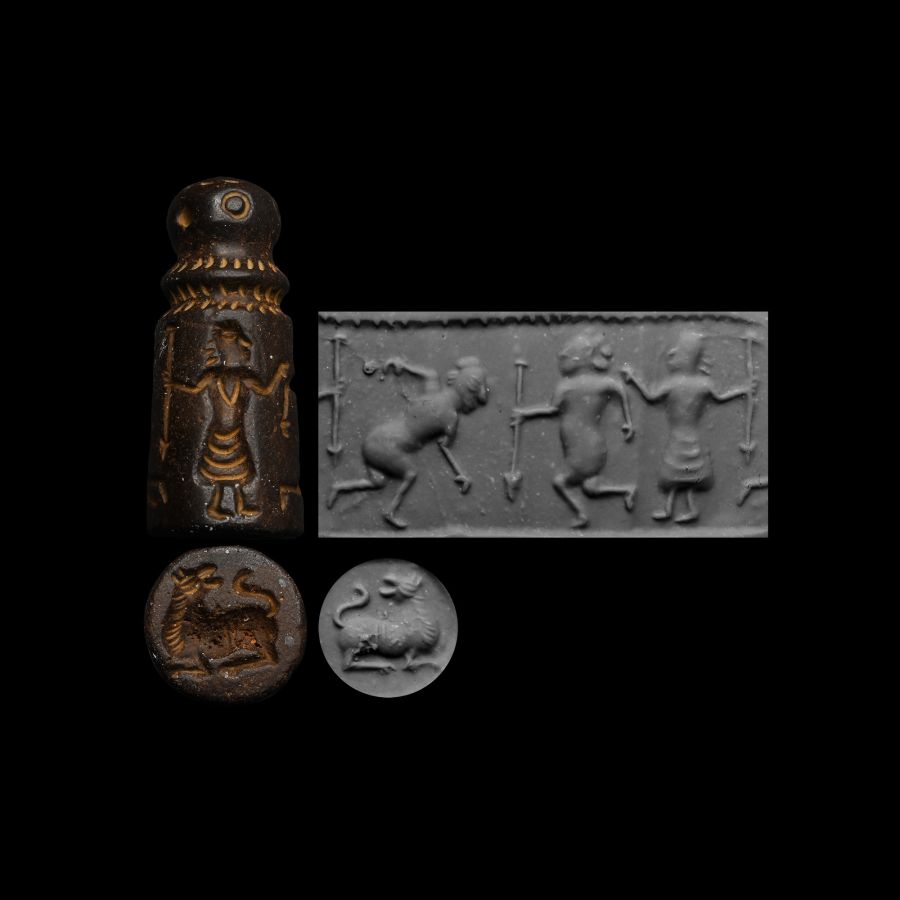
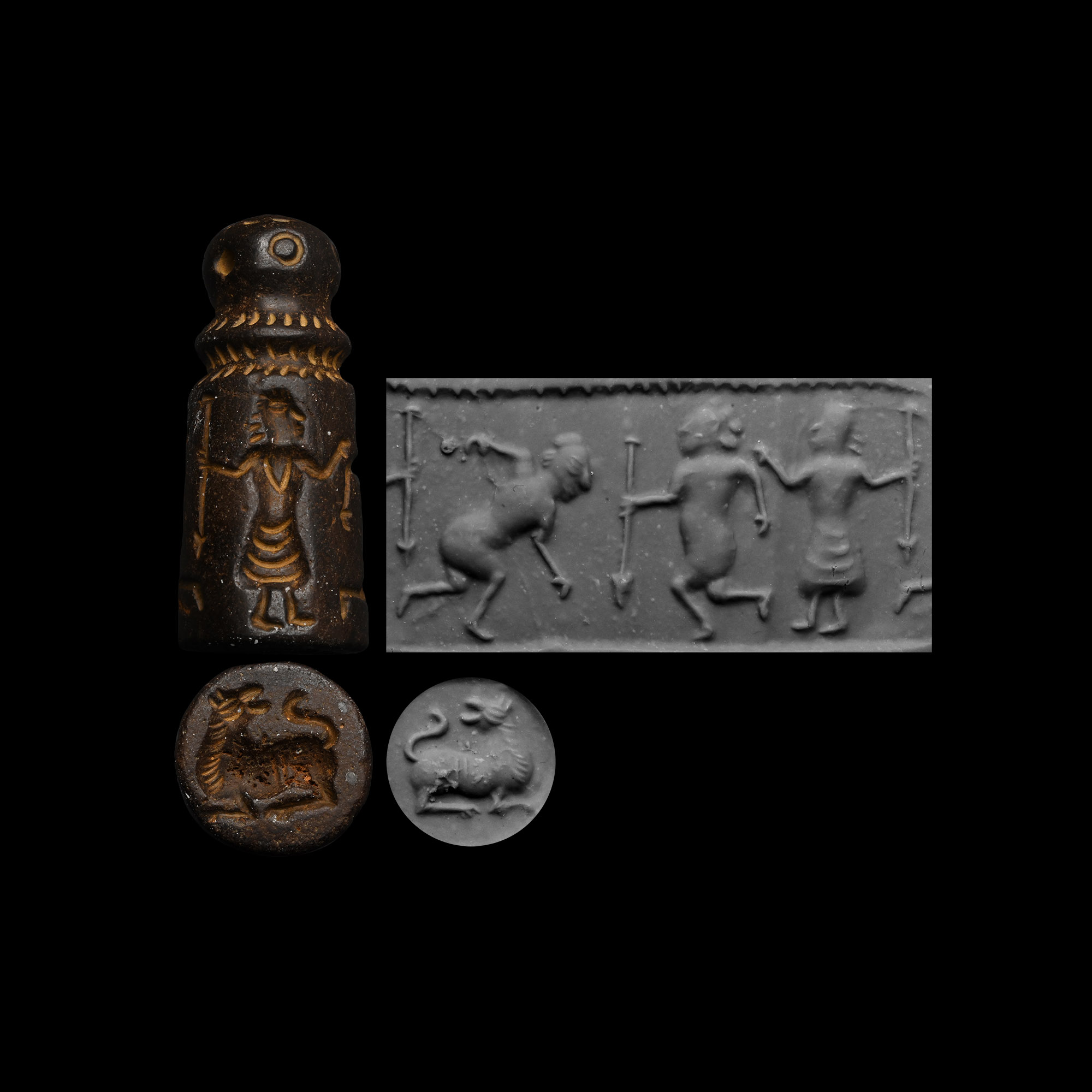
Large Mesopotamian Stone Stamp Seal with Lion and Figural Scene
CIRCA EARLY 1ST MILLENNIUM B.C. OR LATER
2 in. (46 grams, 50 mm).
Conical body with ribbed collar and knob finial pierced longitudinally, plaque to the underside with incuse image of reclining lion facing backwards; three figures to the outer face, two holding spears next to falling figure.
ProvenanceAcquired on the UK art market.
Private collection, England.
TimeLine Auctions follows a vetting process to ensure the authenticity and legality of all items, reinforcing our commitment to integrity and responsible trading. Each antiquity, antique, and coin lot undergoes thorough examination by a vetting committee of at least ten external specialists, professional trade association members, scientists, and archaeologists: Our Vetting Process
AUCTIONS:
TimeLine is a leading auction house specialising in antiquities, ancient art, collectables, natural history, coins, medals, and books. Our auctions offer museums, collectors, historians, and enthusiasts the opportunity to acquire unique and historically significant pieces.
LOT 1438
Large Mesopotamian Stone Stamp Seal with Lion and Figural Scene
Estimate £500 - 700€580 - 810 (for guidance only)$680 - 950 (for guidance only)
-
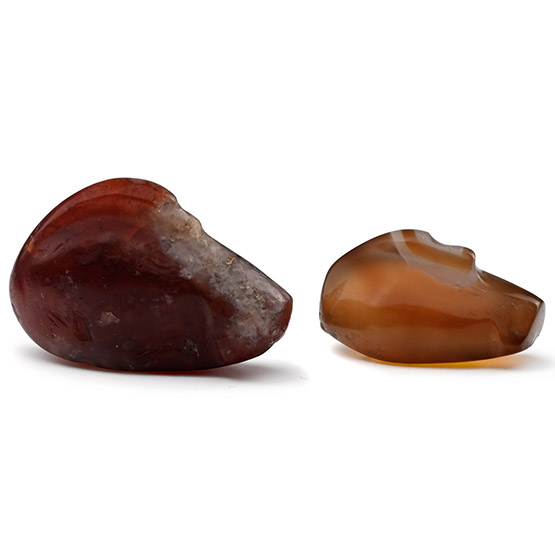
Neo-Babylonian Agate Duck Weight Collection
Circa 700-600 B.C.Estimate: £800 - 1,000 (‡+bp*)
Opening Bid: £400
Each carved in the round as a duck with its head laid back along its spine. 6.67 grams total, 17-22 mm
Private collection, Israel. with Holy Land House of Antiquities, Jerusalem, 1990s. Private European collection, acquired from the above in 2001. -
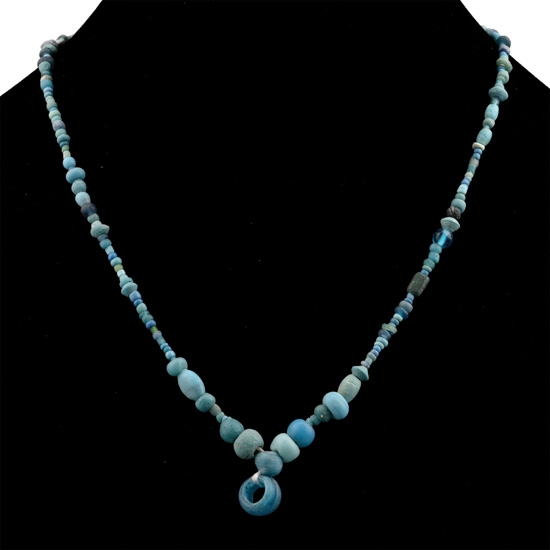
Western Asiatic Mixed Blue Bead Necklace String
1st millennium B.C. and laterSold for (Inc. bp): £52
Composed of annular, oblate and other beads, the central feature composed of a larger oblate and an annular bead; restrung. 12.38 grams, 45 cm
From London, UK, gallery collection, 1990s. -
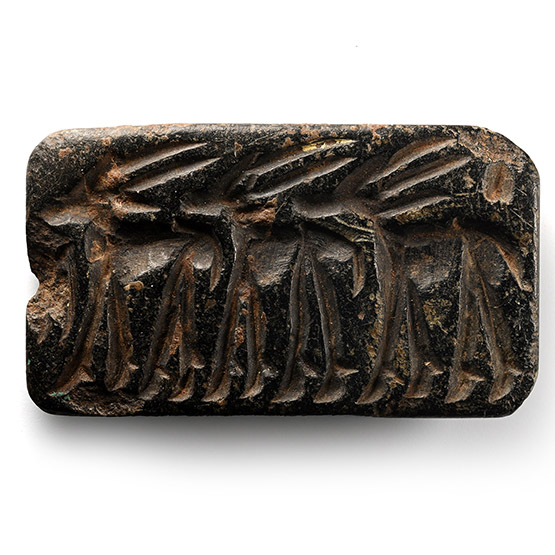
Western Asiatic Steatite Seal with Animals
3300-3000 B.C.Estimate: £800 - 1,000 (‡+bp*)
Opening Bid: £400
Rectangular in plan and triangular in section with median hole, flat face with incuse frieze of ibexes. 38.9 grams, 61 mm
Acquired in the mid 1980s-1990s. Private collection, Switzerland, thence by descent. Private collection, since the late 1990s.
