
Loading, please wait...
LOT 0279
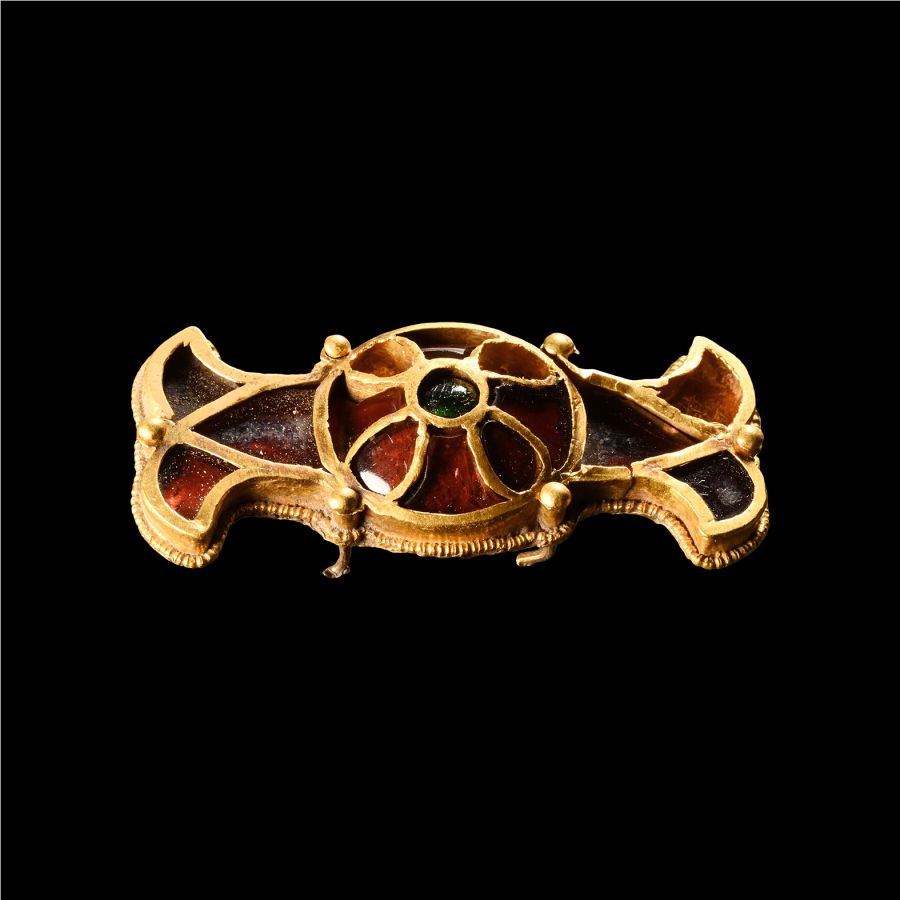
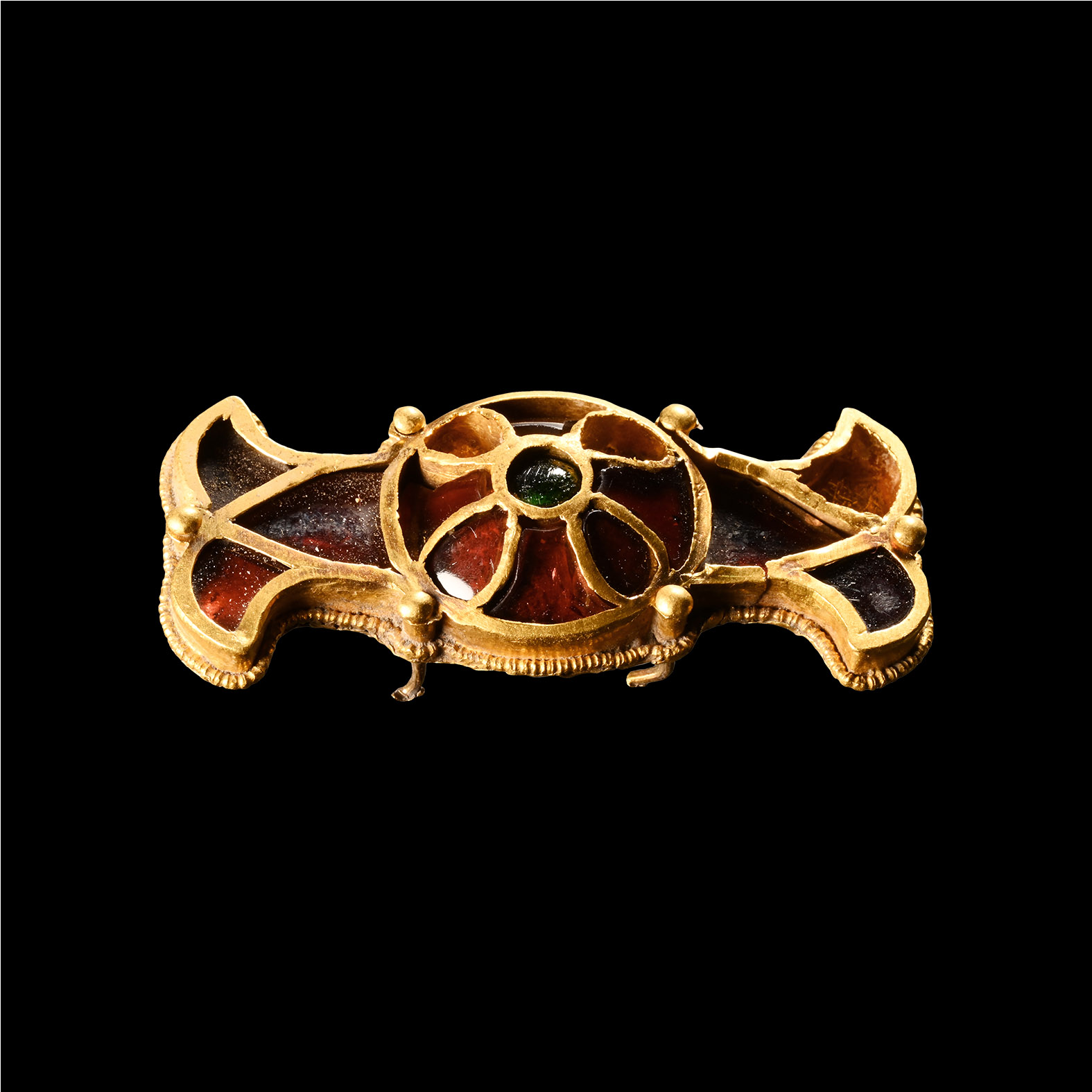
Large Merovingian Gold Fish-Tailed Mount with Garnets
6TH CENTURY A.D.
1 7/8 in. (12.62 grams, 48 mm).
A substantial gold mount or fitting for a shield, belt or bridle comprising a median domed panel with central green glass cabochon, four pelta-shaped radiating-arm cells with inset garnets, two now absent; to each end a fish-tail with inset garnet cloisons, one absent; six fixing pins to the mounting plate with beaded border. [No Reserve]
ProvenanceAcquired by Mr L. Grenacs of Belgium in 1975.
Acquired London, UK, 1999.
This lot has been checked against the Interpol Database of stolen works of art and is accompanied by search certificate no.11650-198616.
See Arrhenius, B., Merovingian Garnet Jewellery, Stockholm, 1985, for discussion; and for a similar corpus, see Wieczorek, A. and Perin, P., Das Gold der Barbarenfursten, Damstadt, 2001.
CONDITIONTimeLine Auctions follows a vetting process to ensure the authenticity and legality of all items, reinforcing our commitment to integrity and responsible trading. Each antiquity, antique, and coin lot undergoes thorough examination by a vetting committee of at least ten external specialists, professional trade association members, scientists, and archaeologists: Our Vetting Process
AUCTIONS:
TimeLine is a leading auction house specialising in antiquities, ancient art, collectables, natural history, coins, medals, and books. Our auctions offer museums, collectors, historians, and enthusiasts the opportunity to acquire unique and historically significant pieces.
LOT 0279
Large Merovingian Gold Fish-Tailed Mount with Garnets
Sold for (Inc. bp): £3,640
-
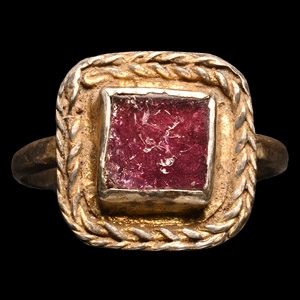
Merovingian Gilt Silver Ring with Garnet
Circa 6th century A.D.Sold for (Inc. bp): £520
A silver finger ring comprising a slender hoop, large bezel with silver-gilt cell and flange with applied filigree braid; inset garnet cloison. 4.36 grams, 23.70 mm overall, 19.18 mm internal diameter (approximate size British P, USA 7 1/2, Europe 16.23, Japan 15)
Acquired in the late 1990s-2000. Property of an East London gentleman. -
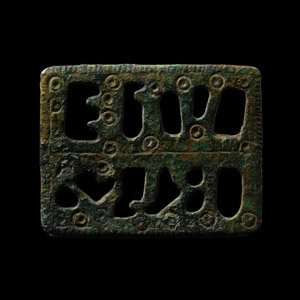
Merovingian Lettered Openwork Plate Brooch
6th-7th century A.D.Sold for (Inc. bp): £165
A rectangular bronze brooch decorated with punched ring-and-dot motifs and openwork lettering, possibly 'RIC/VLF'; hinged pin and catch to reverse. 15.6 grams, 43 mm
Fine condition.
Acquired 1970s-1980s. Ex UK collection. Property of a Portsmouth, UK gentleman.
The item was probably part of a Merovingian belt fitting, later transformed in brooch with the application of the pin and catch. The name 'Riculf' or 'Ricolf' belonged to a bishop of Cologne, Germany, from 763 to 784 A.D. -
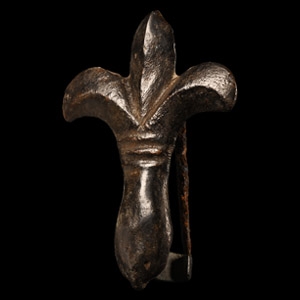
Merovingian Cicada Brooch
5th-6th century A.D.Sold for (Inc. bp): £143
A stylised cicada brooch with minimalistic detailing to the upper face; pin lug, pin and catchplate to reverse. 10 grams, 42 mm
Acquired before 2000. From the collection of a European gentleman living in the UK.
