
Loading, please wait...
LOT 3214
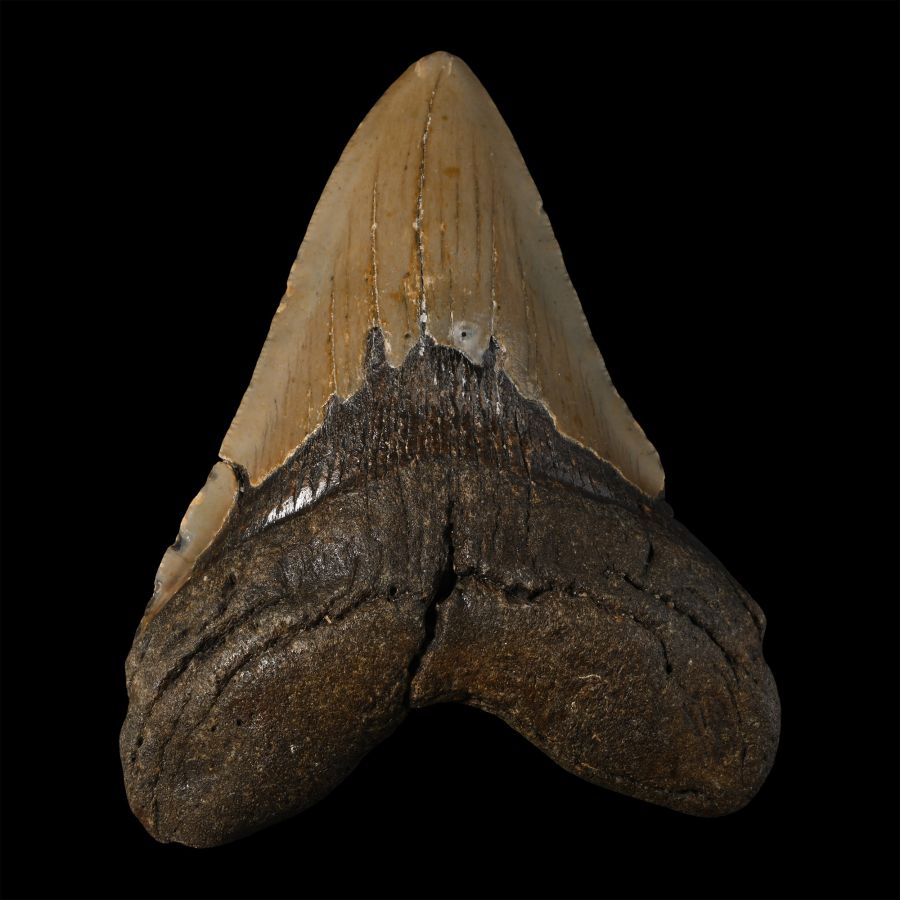
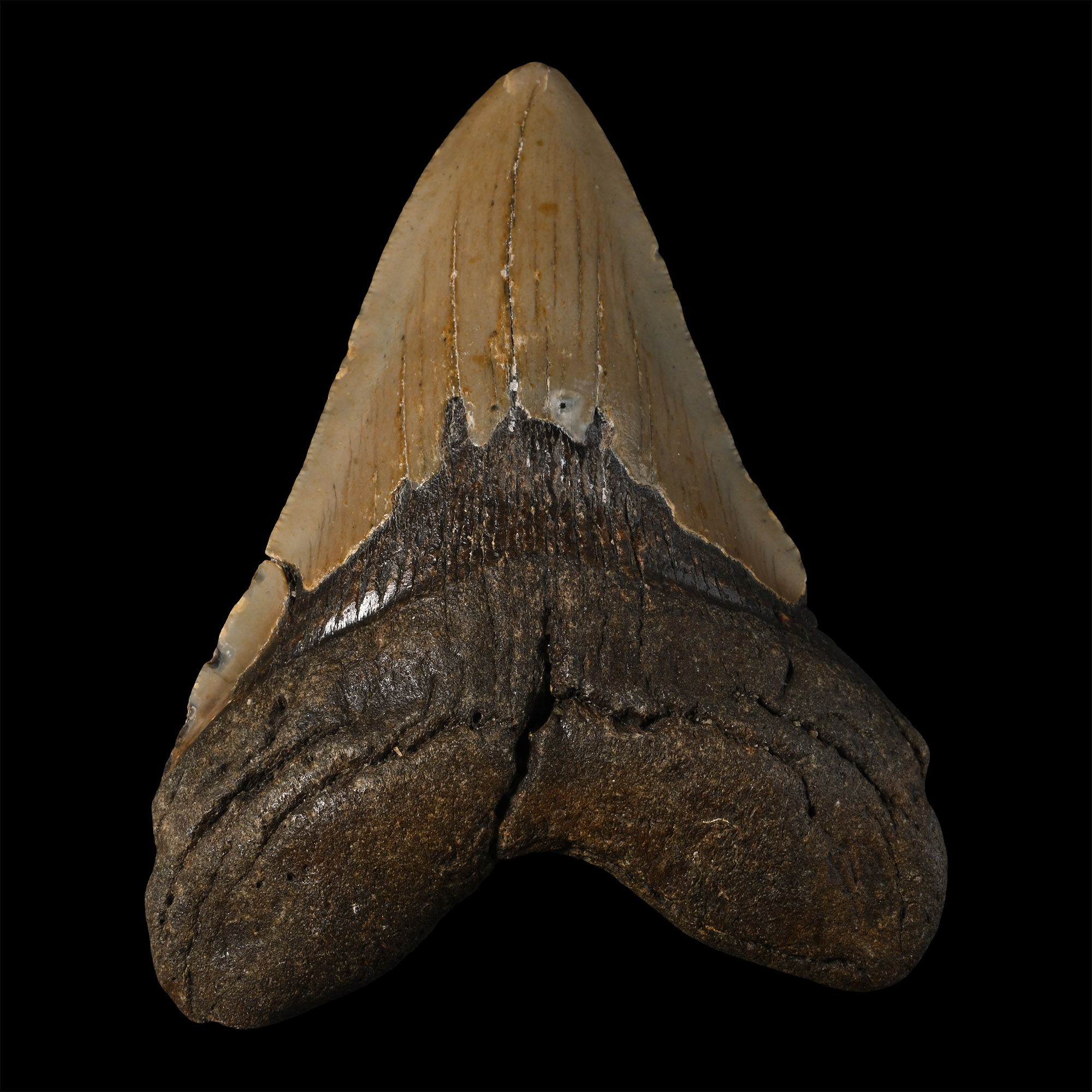
Large Megalodon Extinct Giant Shark Fossil Tooth
PLIOCENE EPOCH, CIRCA 5.6 MILLION YEARS B.P.
5 in. (284 grams, 12.7 cm).
Carcharocles megalodon shark tooth, with serrations and polished light brown tooth enamel. [No Reserve]
ProvenanceFrom a Lincolnshire, UK, collection.
FootnotesCarcharodon megalodon is regarded as one of the largest and most powerful marine predators in vertebrate history and likely had a profound impact on the structuring of marine communities. Fossil remains indicate that this giant shark reached a length of more than 16 metres (52 ft) and also affirm that it had a cosmopolitan distribution. Scientists suggest that in life it looked like a stockier version of the great white shark, Carcharodon carcharias.
CONDITIONTimeLine Auctions follows a vetting process to ensure the authenticity and legality of all items, reinforcing our commitment to integrity and responsible trading. Each antiquity, antique, and coin lot undergoes thorough examination by a vetting committee of at least ten external specialists, professional trade association members, scientists, and archaeologists: Our Vetting Process
AUCTIONS:
TimeLine is a leading auction house specialising in antiquities, ancient art, collectables, natural history, coins, medals, and books. Our auctions offer museums, collectors, historians, and enthusiasts the opportunity to acquire unique and historically significant pieces.
LOT 3214
Large Megalodon Extinct Giant Shark Fossil Tooth
Estimate £100 - 140€120 - 160 (for guidance only)$140 - 190 (for guidance only)
Opening Bid
£5 (EUR 6; USD 7) +BP*
-
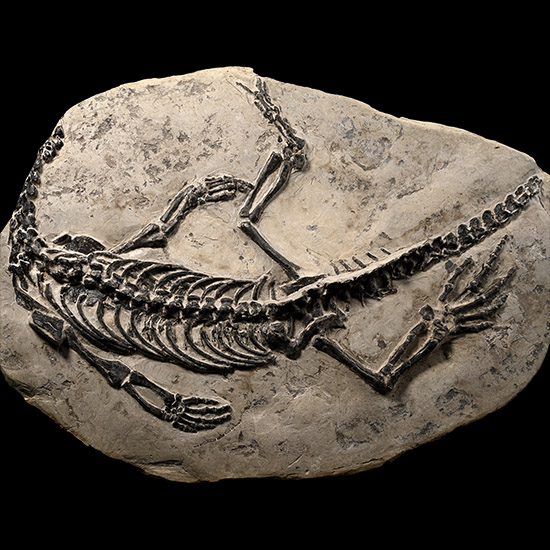
Claudiosaurus Fossil Marine Reptile Skeleton in Matrix
Late Permian Period, circa 260 million years B.P.Estimate: £1,200 - 1,700 (+bp*)
Opening Bid: £600
An extinct genus of diapsid reptiles, Claudiosaurus germanini, beautifully preserved and featuring a full ribcage, limbs, the majority of the tail and neck vertebrae. 7.75 kg, 40 cm
From a UK collection formed in the 1980s. Property of an Essex, UK, gentleman.
In life, the Claudiosaurus's splayed feet would have been webbed. It had a relatively long body and neck, reaching an overall length of about 60 centimetres. It is presumed to have been partially oceanic, living in a similar way to the modern marine iguana. -
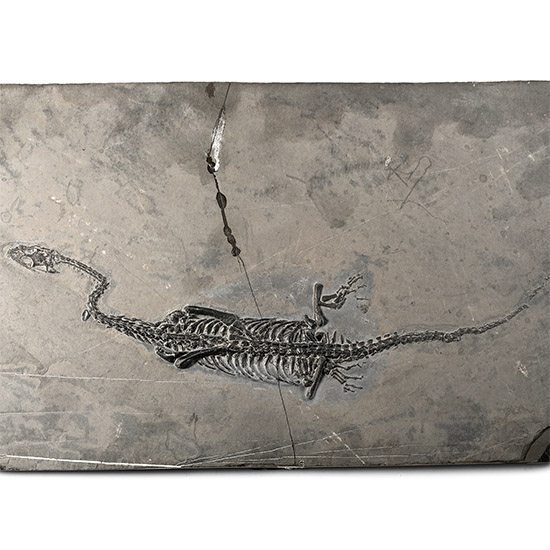
Fossil Keichousaurus Skeleton in Three-Dimensional Dorsal View
Triassic Period, circa 250 million years B.P.Estimate: £800 - 1,000 (+bp*)
Bids: 1 | Current Bid: £250
Showing a complete skeleton Keichousaurus hui shown from above with clearly defined spinous processes, the front legs tucked partially above the ribs, a curving neck and a long tail. 17.7 kg, 28.9 cm
From the Guizhou formation, China. Previously with Shishang Corporation, Taiwan. From a West London gentleman collector; acquired from a professional fossil company in Taiwan.
Keichousaurus was a late Triassic marine reptile, a member of the Pleurosaur family, which went extinct 250 million years ago during the Triassic-Jurassic extinction event. They were specialised fish eaters and were highly unusual amongst marine reptiles in that they gave birth to live young rather than laying eggs. -
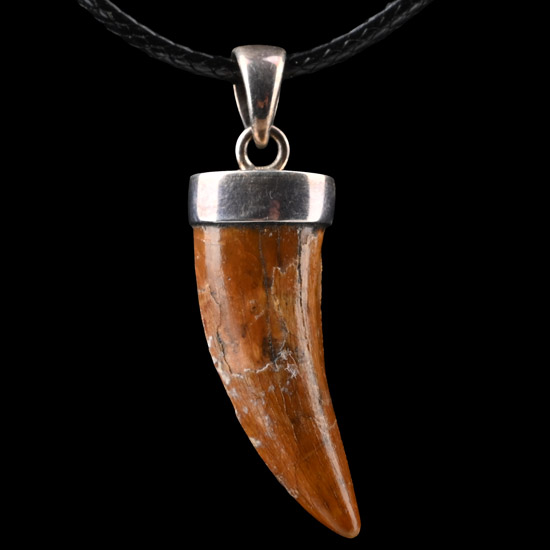
Spinosaurus Dinosaur Fossil Tooth Necklace
Cretaceous Period, circa 125-113 million years B.P.Estimate: £20 - 30 (+bp*)
Bids: 4 | Current Bid: £30
The tooth in a metal collar setting with a loop and suspended from a cord necklace. 6.89 grams, tooth: 33 mm
Ex Cambridgeshire, UK, collection.
The Spinosaurus was both a beachcomber-type scavenger and an active hunter, taking small stranded Plesiosaurs, Pterosaurs, turtles and large fish; adults weighed up to 21 tonnes and grew up to 18 meters long.
