
Loading, please wait...
LOT 1860
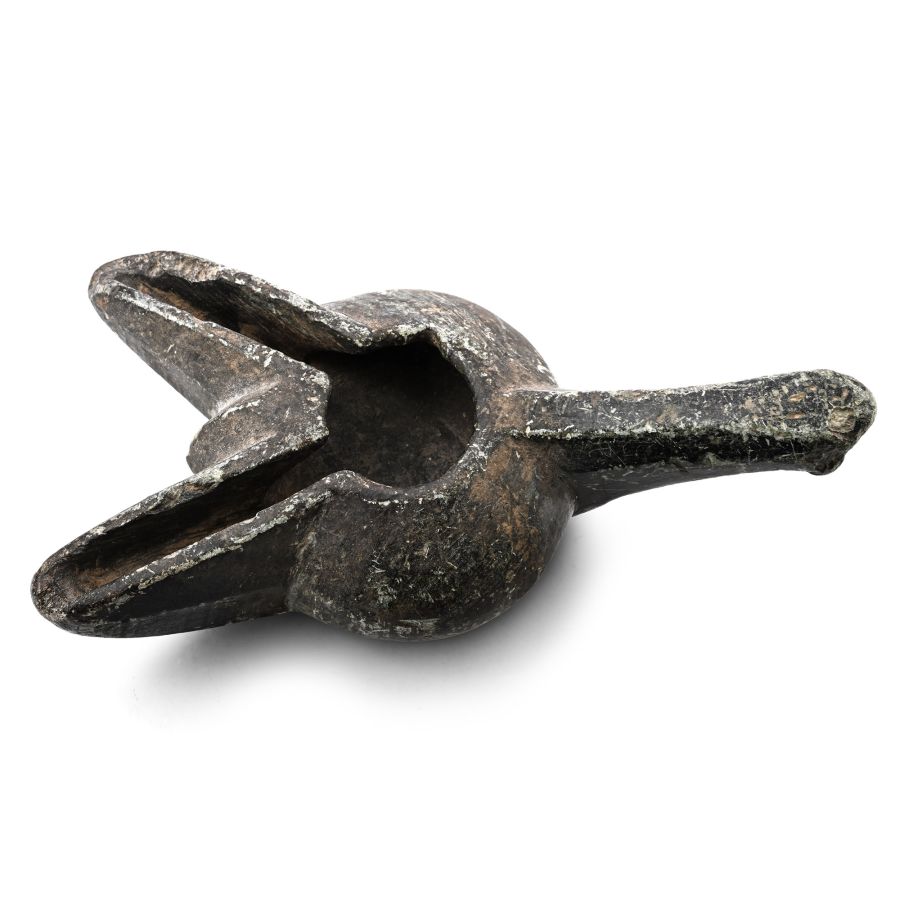
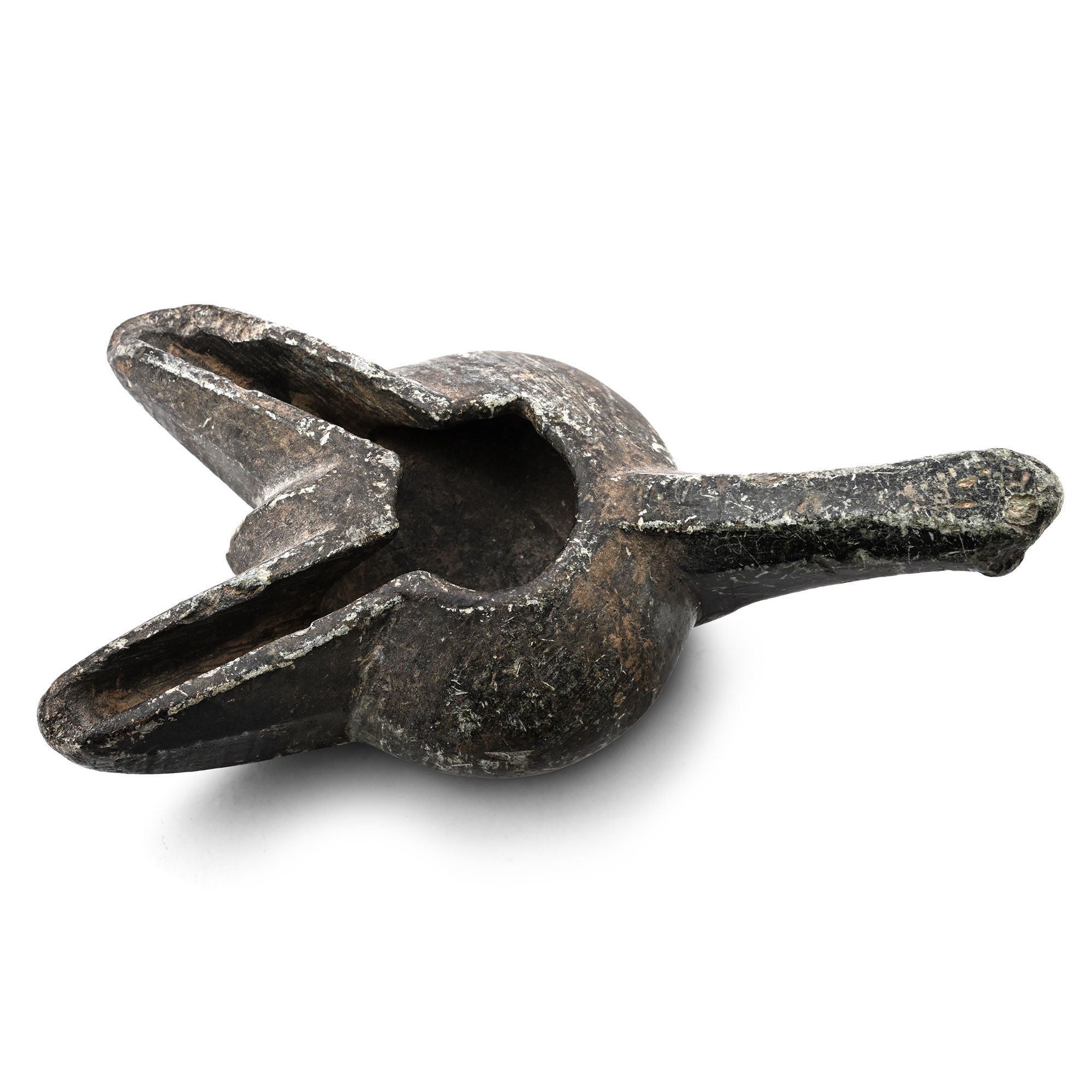
Large Medieval Stone Oil Lamp
9TH-11TH CENTURY A.D.
8 1/2 in. (840 grams, 21.5 cm).
Spherical body with two U-shaped nozzles, a tapering handle to the rear.
ProvenanceFrom an important collection of lamps, Germany, 1970s.
CONDITIONTimeLine Auctions follows a vetting process to ensure the authenticity and legality of all items, reinforcing our commitment to integrity and responsible trading. Each antiquity, antique, and coin lot undergoes thorough examination by a vetting committee of at least ten external specialists, professional trade association members, scientists, and archaeologists: Our Vetting Process
AUCTIONS:
TimeLine is a leading auction house specialising in antiquities, ancient art, collectables, natural history, coins, medals, and books. Our auctions offer museums, collectors, historians, and enthusiasts the opportunity to acquire unique and historically significant pieces.
LOT 1860
Large Medieval Stone Oil Lamp
Estimate £300 - 400€350 - 460 (for guidance only)$410 - 540 (for guidance only)
-
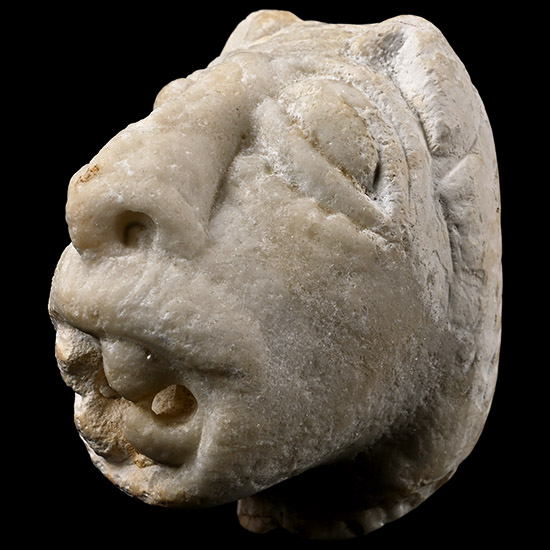
Medieval Marble Head of a Demonic Lion
Spain, 11th-13th century A.D.Sold for (Inc. bp): £936
Carved in the round with low pricked ears and hatched mane to the rear of the head, broad nose developing between domed lentoid eyes, broad upper lip, open mouth displaying teeth; repaired. 610 grams, 94 mm
with a London, UK gallery 1971-early 2000s. Private collection, London, UK. -
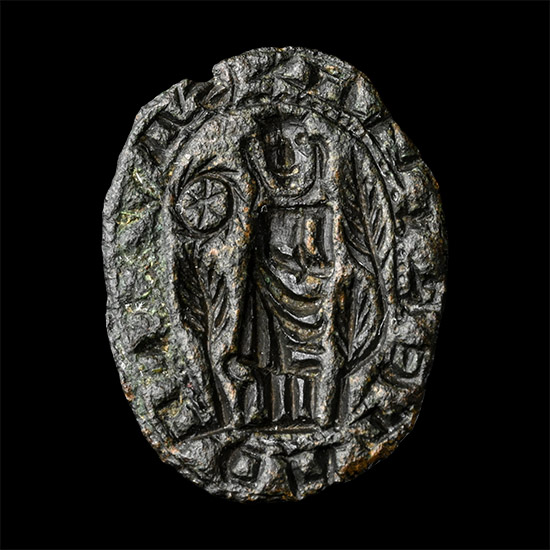
Medieval Ecclesiastical Oval Chess-Piece Type Seal Matrix
Circa 15th century A.D.Sold for (Inc. bp): £91
Oval seal with a tapering hexagonal-section handle surmounted by a suspension loop, underside with a standing nimbate Saint Catherine, a wheel to her side and an inscription 'SAVNC[T]A CATRINA' surrounding. 11.1 grams, 26 mm
Found Suffolk, UK. Property of a Suffolk, UK, gentleman. -
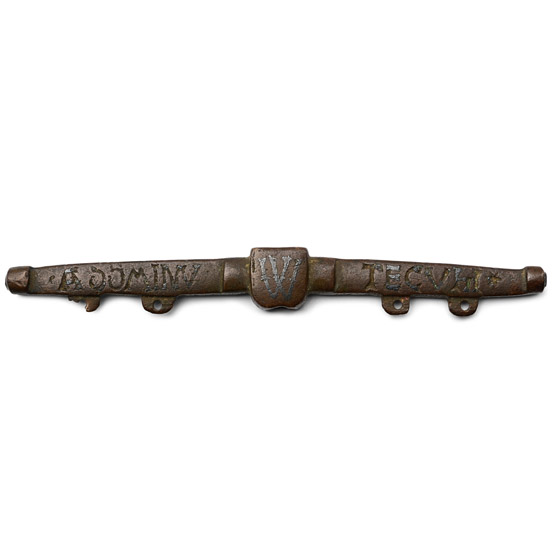
Medieval Inscribed Bronze Purse Bar
14th-15th century A.D.Sold for (Inc. bp): £98
With niello-filled legend to the bar: 'AVE MARIA G[R]ACIA PLE' and to reverse 'A DOMINV TE CVM *'; central heater-shaped plaque with niello-filled 'W' to one face and 'IHS' monogram to reverse. 58 grams, 15.1 cm
Acquired on the European art market in the early 2000s. with Galerie Rhéa, Zurich, Switzerland.
