
Loading, please wait...
LOT 0358
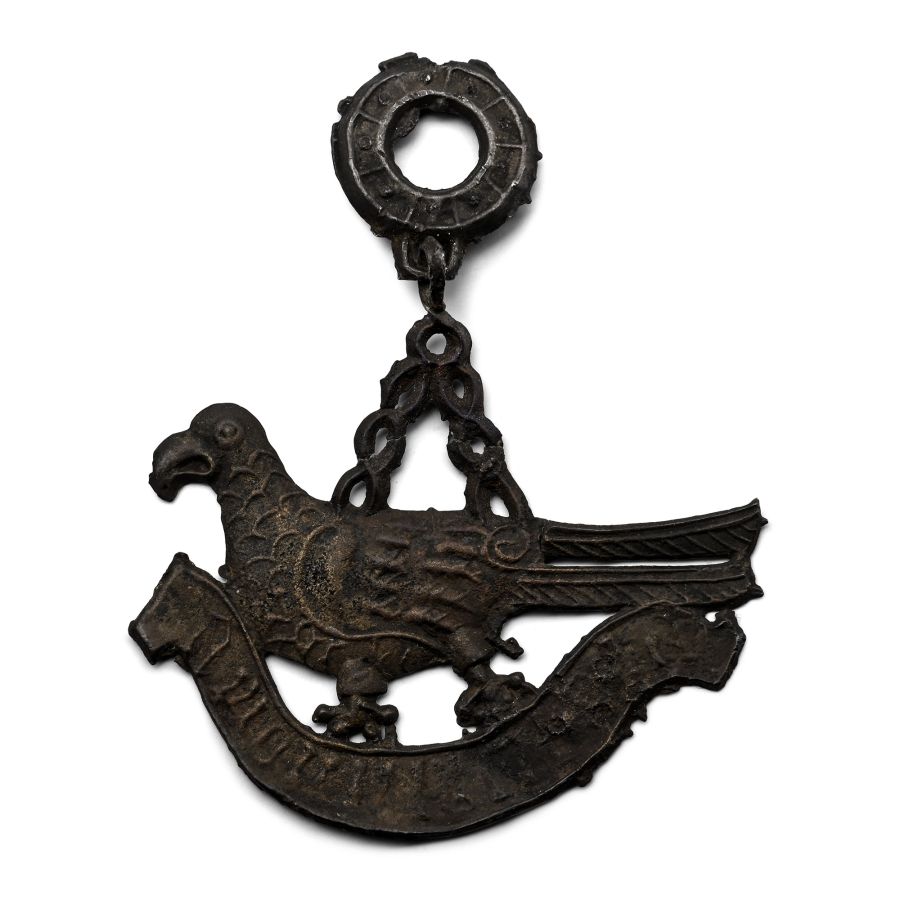
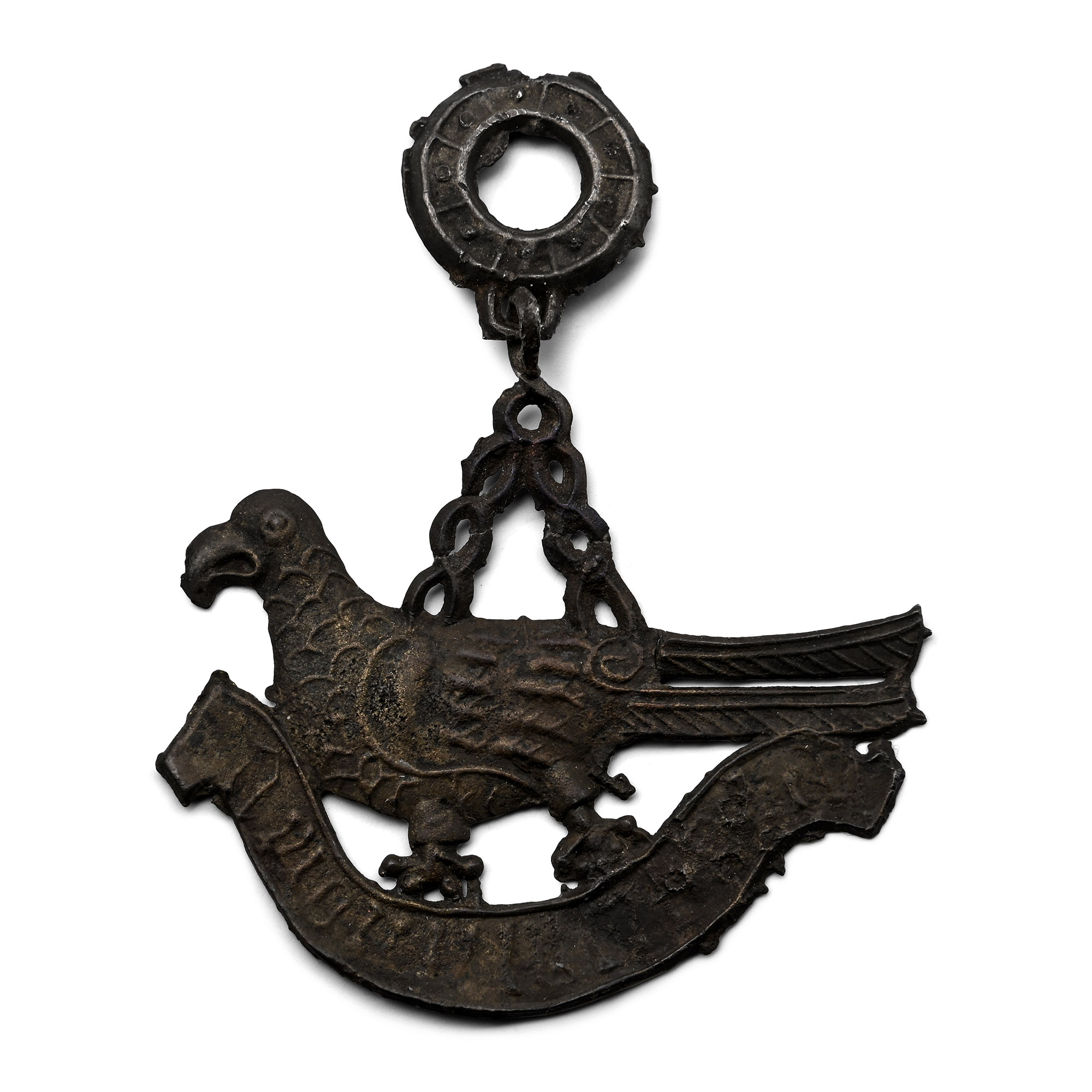
Large Medieval Pewter 'Love Conquers All' Secular Badge
CIRCA 14TH-15TH CENTURY A.D.
3 in. (11 grams, 76 mm).
Formed as a standing bird (dove or popinjay) facing left with elongated tail and curved beak, standing on a scroll with partially faded inscription 'AMOR VINCIT OMNIA' (love conquers all), attachment ring to the top; complete and undamaged.
ProvenanceEx European collection.
Ex Cambridgeshire, UK, collection.
Cf. Gdansk Museum of Archaeology, item MAG/GD/255/4/4/43.
CONDITIONTimeLine Auctions follows a vetting process to ensure the authenticity and legality of all items, reinforcing our commitment to integrity and responsible trading. Each antiquity, antique, and coin lot undergoes thorough examination by a vetting committee of at least ten external specialists, professional trade association members, scientists, and archaeologists: Our Vetting Process
AUCTIONS:
TimeLine is a leading auction house specialising in antiquities, ancient art, collectables, natural history, coins, medals, and books. Our auctions offer museums, collectors, historians, and enthusiasts the opportunity to acquire unique and historically significant pieces.
LOT 0358
Large Medieval Pewter 'Love Conquers All' Secular Badge
Sold for (Inc. bp): £572
-
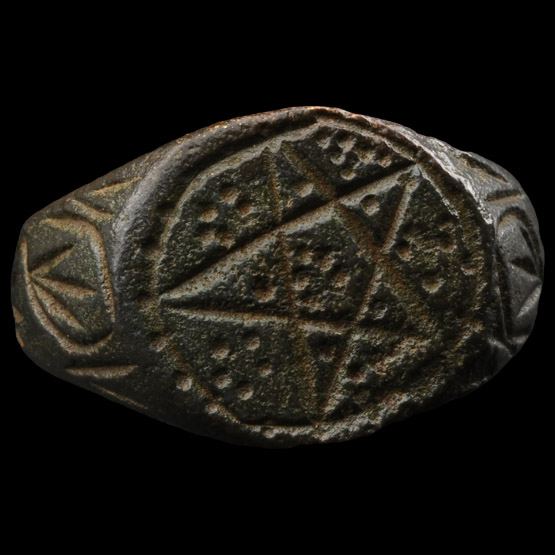
Medieval Bronze Ring with Pentagram
14th-16th century A.D.Sold for (Inc. bp): £124
Hoop with incised foliage to the shoulders, disc bezel with incised pentagram on a pounced field. 4.44 grams, 22.19 mm overall, 19.07 mm internal diameter (approximate size British P, USA 7 1/2, Europe 16.23, Japan 15)
Ex German art market, 2000s. Acquired from an EU collector living in London. From the collection of a Surrey, UK, gentleman. -
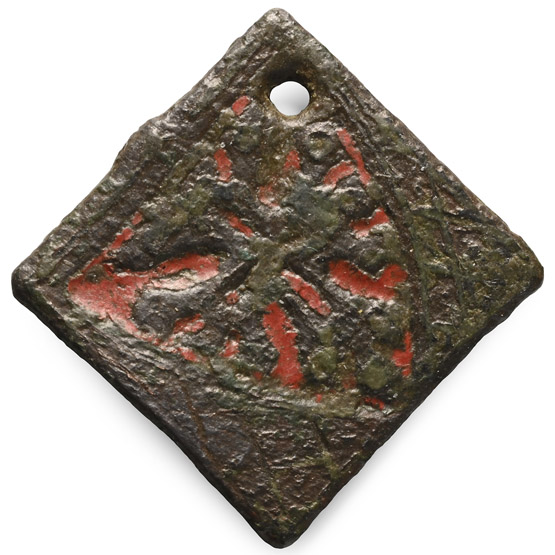
Medieval Knight's Bronze Heraldic Horse Harness Mount
1300-1400 A.D.Sold for (Inc. bp): £65
Rectangular in form with a circular hole in its top right corner, decorated with a heater shield containing a two-strand cross bottony terminals, set within a red enamel field; diagonal hatching in the two outer angles. 5.74 grams, 21 mm
Found Crowmarsh, South Oxfordshire, UK. Accompanied by a copy of the British Museum's Portable Antiquities Scheme (PAS) report no.SUR-CCD479. -
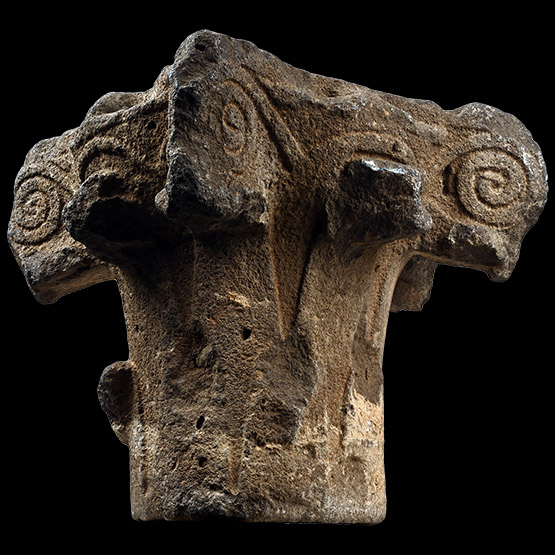
Large Medieval Crusader Period Carved Basalt Capital
Levantine, 12th-13th century A.D.Estimate: £1,000 - 1,400 (+bp*)
Opening Bid: £500
Architectural column capital modelling with curled acanthus leaves rising from a narrow central stem, splayed and with scrolled tendril detailing; pierced to accept locating studs. 118.4 kg, 46 cm
Acquired 1970s-1996. Property of a North American collector. London collection, 2016. Private collection, UK.
