
Loading, please wait...
_900x900.jpg "Large Medieval Gold Ring with Amuletic Turquoise Gemstone")
_200x200.jpg "Large Medieval Gold Ring with Amuletic Turquoise Gemstone")
_900x900.jpg "Large Medieval Gold Ring with Amuletic Turquoise Gemstone")
_200x200.jpg "Large Medieval Gold Ring with Amuletic Turquoise Gemstone")
.jpg "Large Medieval Gold Ring with Amuletic Turquoise Gemstone")
.jpg "Large Medieval Gold Ring with Amuletic Turquoise Gemstone")
LOT 0317
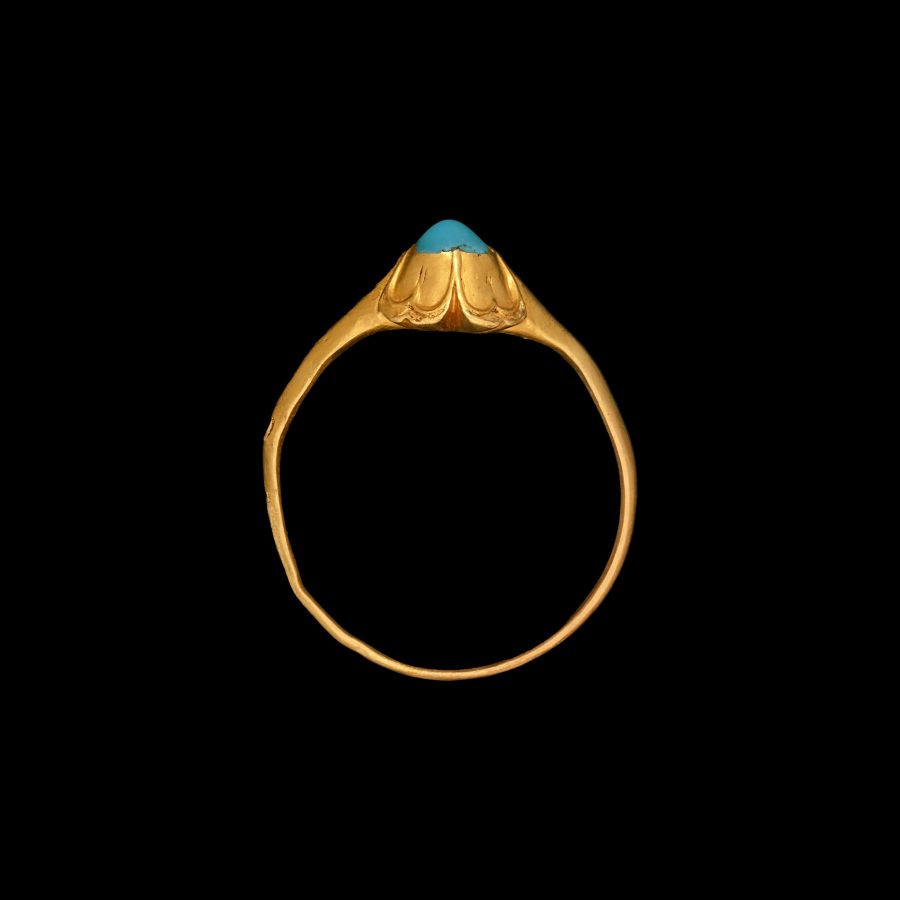
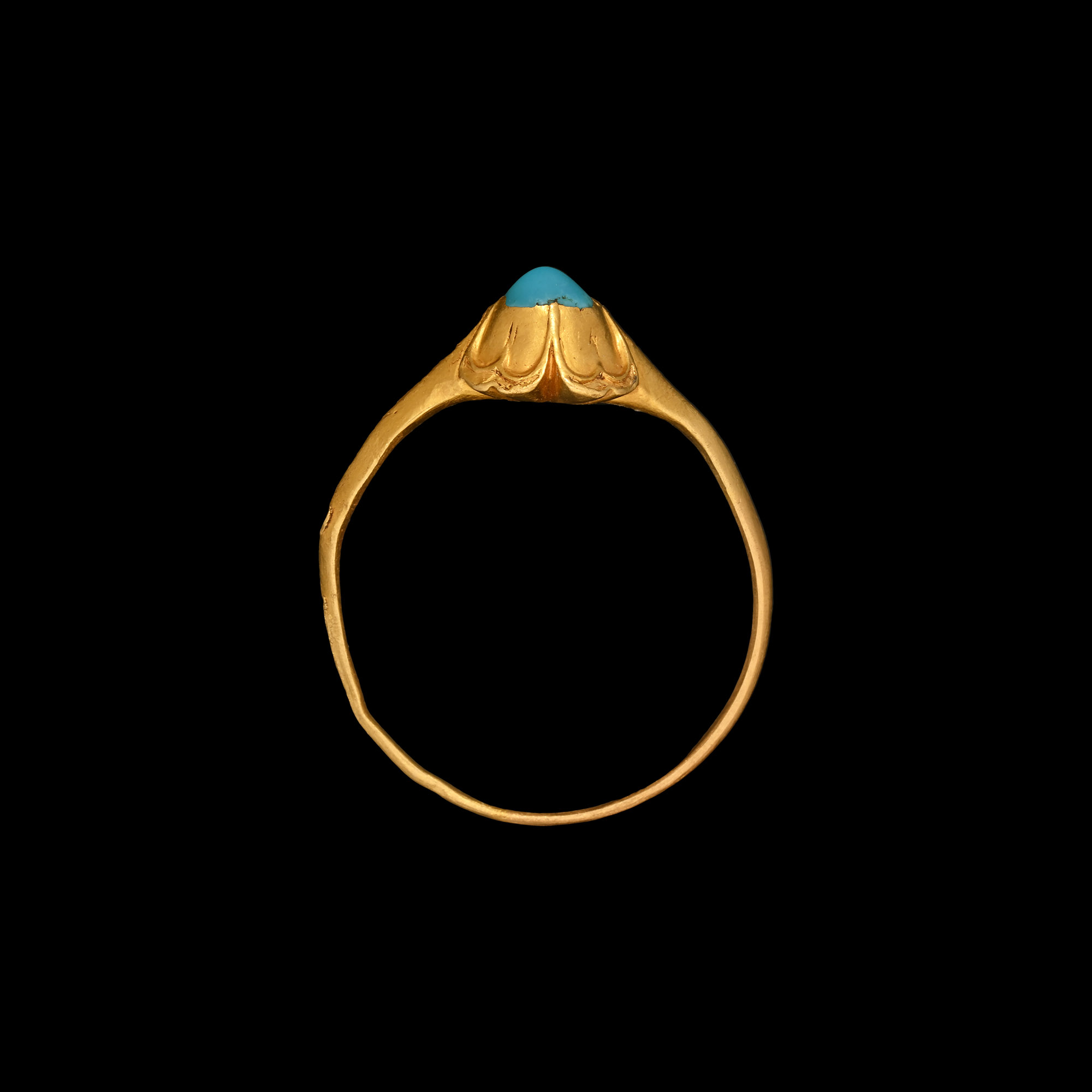
Large Medieval Gold Ring with Amuletic Turquoise Gemstone
1200-1500 A.D.
1 1/8 in. (2.75 grams, 27.20 mm overall, 20.05 mm internal diameter (approximate size British U, USA 10, Europe 22.52, Japan 21)).
With a high conical bezel decorated with four bifid scallop-shaped depressions to the outer surface forming a quatrefoil, flower-like design with the scallops acting as petals; a circular and deep central setting holding a turquoise cabochon; the decoration continuing to the reverse of the bezel resulting in a scalloped design, the shoulders sloping down and extending from between two of the quatrefoil petals at opposite sides of the bezel, with restored fine narrow hoop of large wearable size.
ProvenanceFound by Jason Ashley whilst searching with a metal detector near Hutton Conyers, Harrogate, North Yorkshire, UK, on Sunday, 2nd November 2025.
Accompanied by a copy of the Report for H M Coroner on find of Potential Treasure with Treasure reference no.2025T1429.
Accompanied by a copy of a letter from the British Museum disclaiming the Crown's interest in the find.
Accompanied by a copy of the British Museum's Portable Antiquities Scheme (PAS) report no.YORYM-1E3B30.
This lot has been checked against the Interpol Database of stolen works of art and is accompanied by search certificate number no.13293-255044.
See Portable Antiquities Scheme (PAS) report no.YORYM-1E3B30.
FootnotesThe PAS report discusses that: 'Turquoise was not a particularly valuable stone in the Middle Ages, but one that was valued for its amuletic properties, protecting the wearer against poisoning, drowning, or having an accident while riding. It was also supposed to have the property of indicating the state of health of the wearer by the shade the Turquoise went.'
CONDITIONTimeLine Auctions follows a vetting process to ensure the authenticity and legality of all items, reinforcing our commitment to integrity and responsible trading. Each antiquity, antique, and coin lot undergoes thorough examination by a vetting committee of at least ten external specialists, professional trade association members, scientists, and archaeologists: Our Vetting Process
AUCTIONS:
TimeLine is a leading auction house specialising in antiquities, ancient art, collectables, natural history, coins, medals, and books. Our auctions offer museums, collectors, historians, and enthusiasts the opportunity to acquire unique and historically significant pieces.
LOT 0317
Large Medieval Gold Ring with Amuletic Turquoise Gemstone
Sold for (Inc. bp): £5,980
-
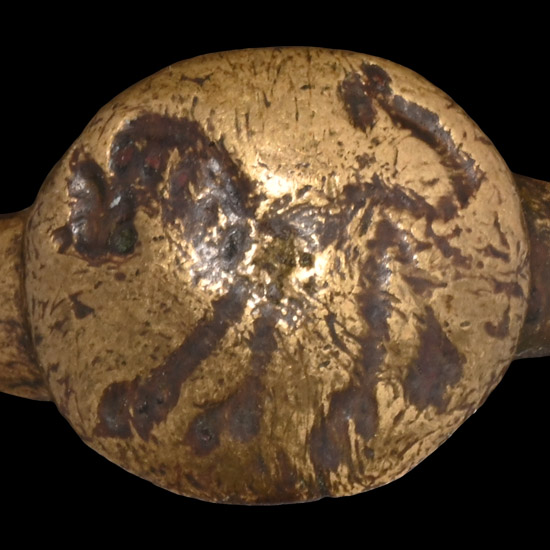
Medieval Bronze Ring with Standing Lion
Circa 14th-15th century A.D.Sold for (Inc. bp): £46
Comprising a D-section hoop and a domed, circular bezel with a stylised lion. 3.27 grams, 22.14 mm overall, 17.46 mm internal diameter (approximate size British N 1/2, USA 6 3/4, Europe 14.35, Japan 13)
From the private collection of a European gentleman (1942-2024), formed since the 1970s. -
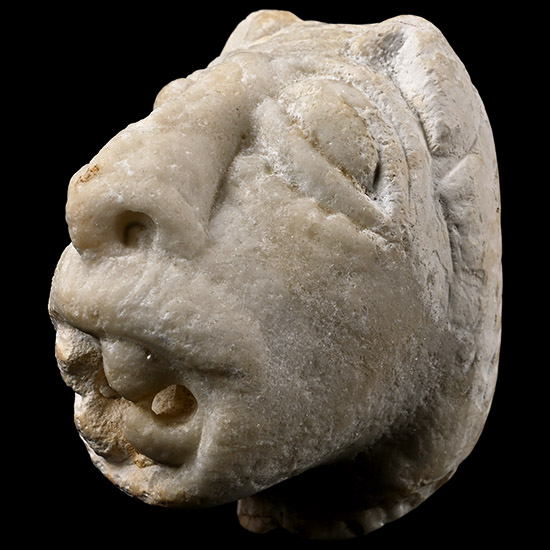
Medieval Marble Head of a Demonic Lion
Spain, 11th-13th century A.D.Sold for (Inc. bp): £936
Carved in the round with low pricked ears and hatched mane to the rear of the head, broad nose developing between domed lentoid eyes, broad upper lip, open mouth displaying teeth; repaired. 610 grams, 94 mm
with a London, UK gallery 1971-early 2000s. Private collection, London, UK. -
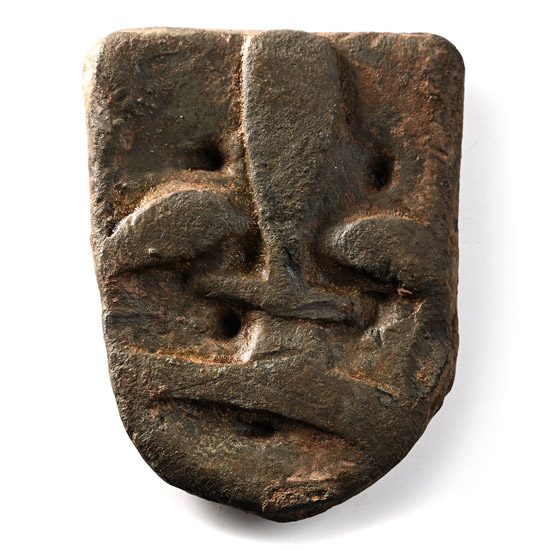
Large Medieval Lead Trade Weight
Circa 14th-16th century A.D.Sold for (Inc. bp): £72
Shield-shaped weight with a fleur-de-lys motif and five indentations. 422 grams, 85 mm
Found North Yorkshire, UK.
