
Loading, please wait...
LOT 0306
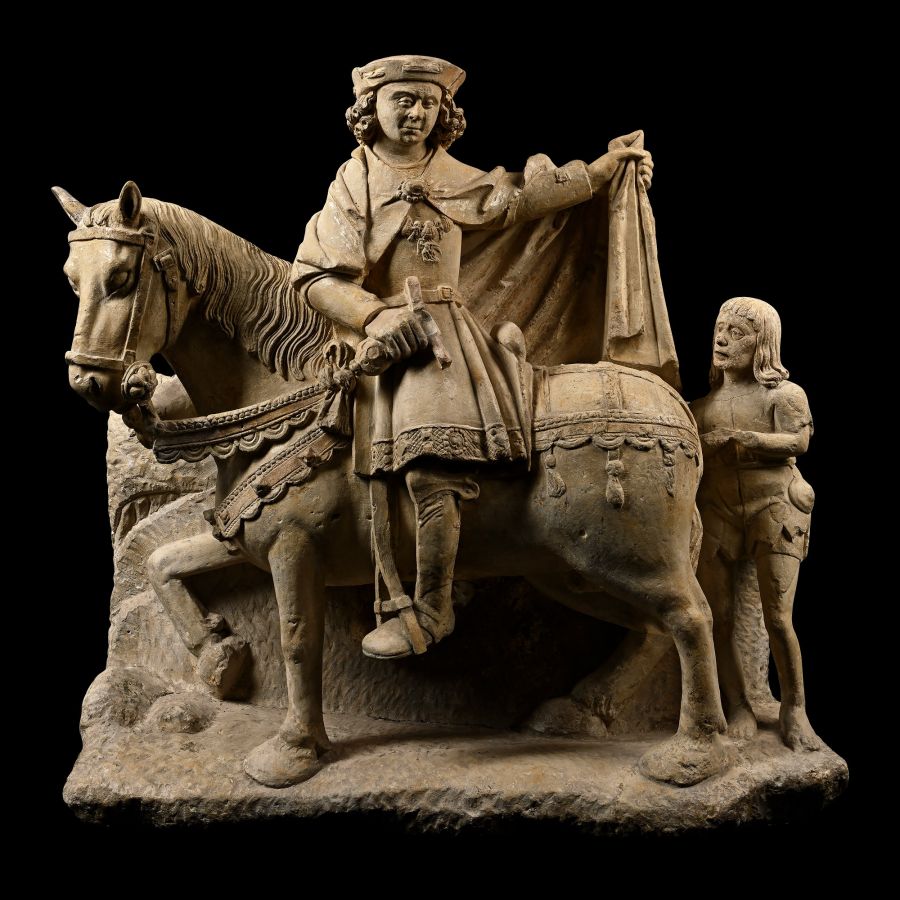
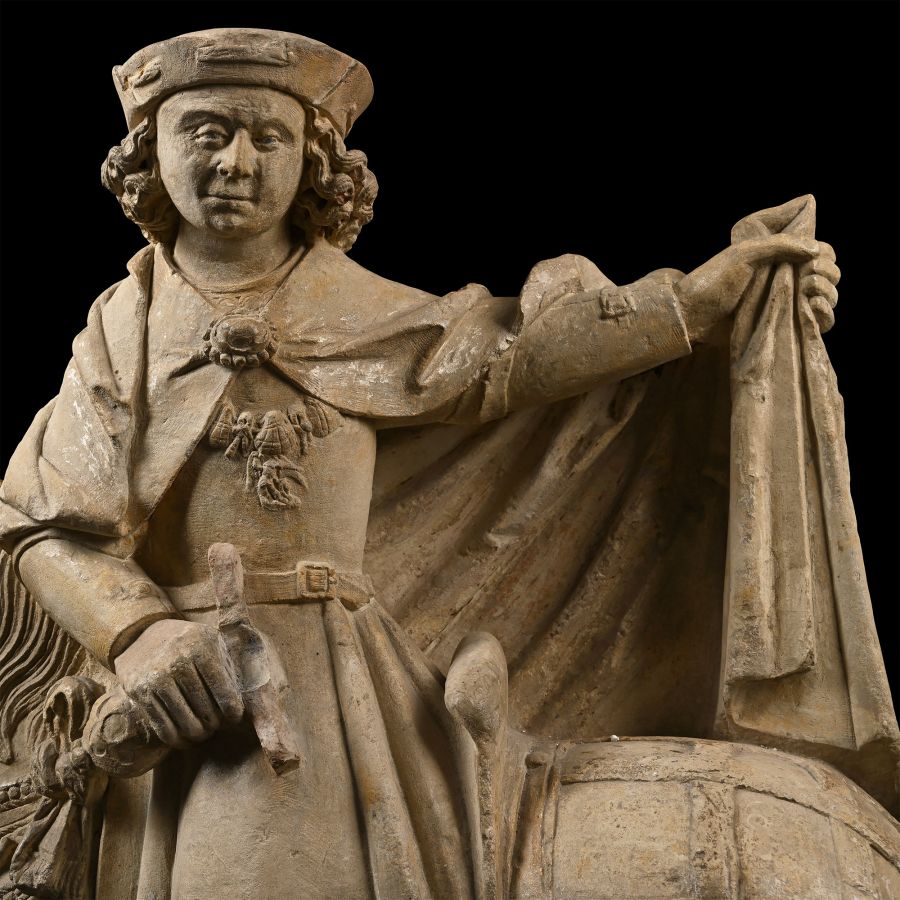
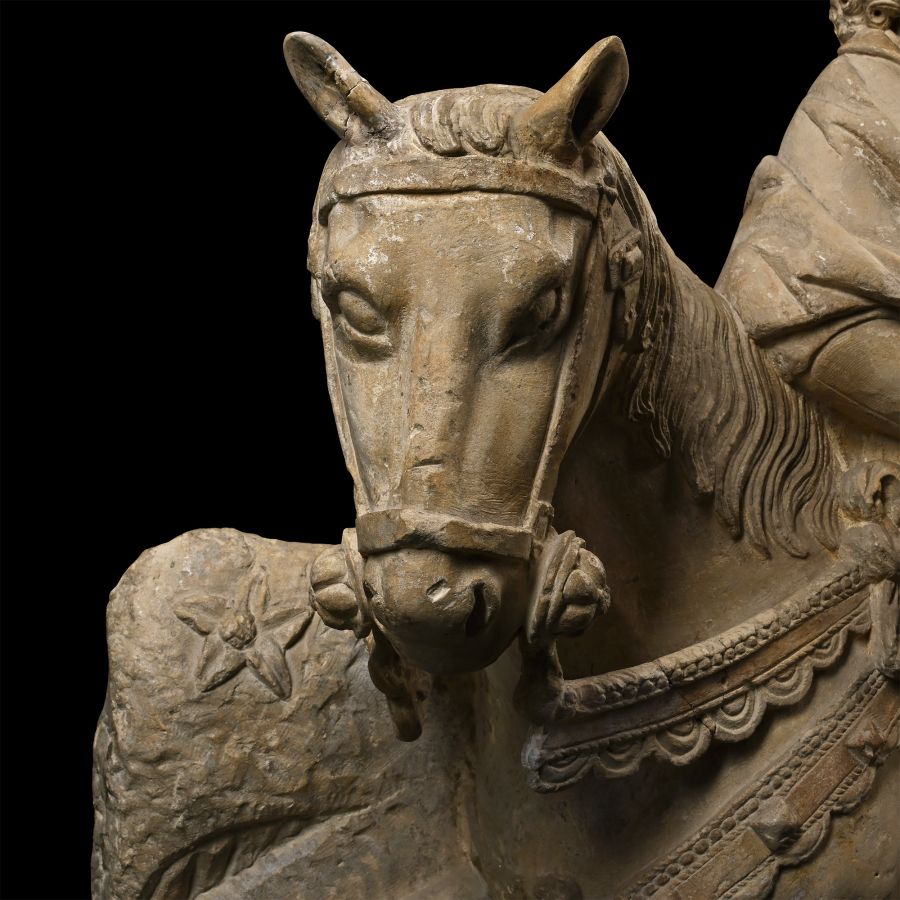
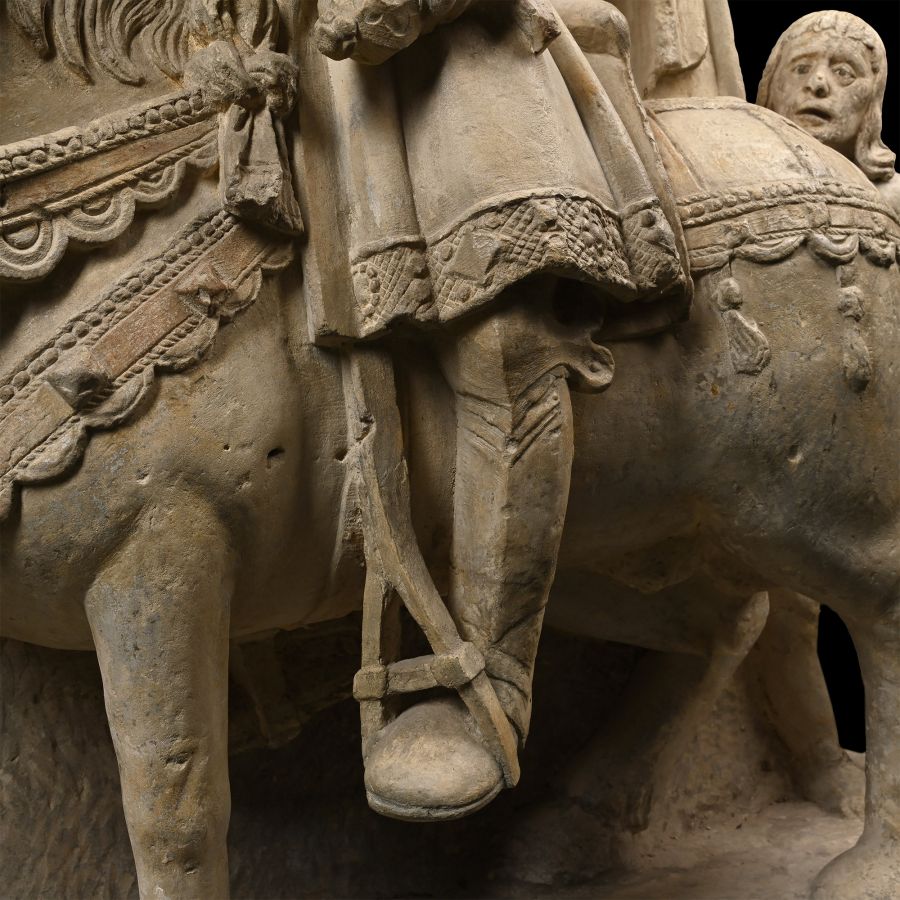
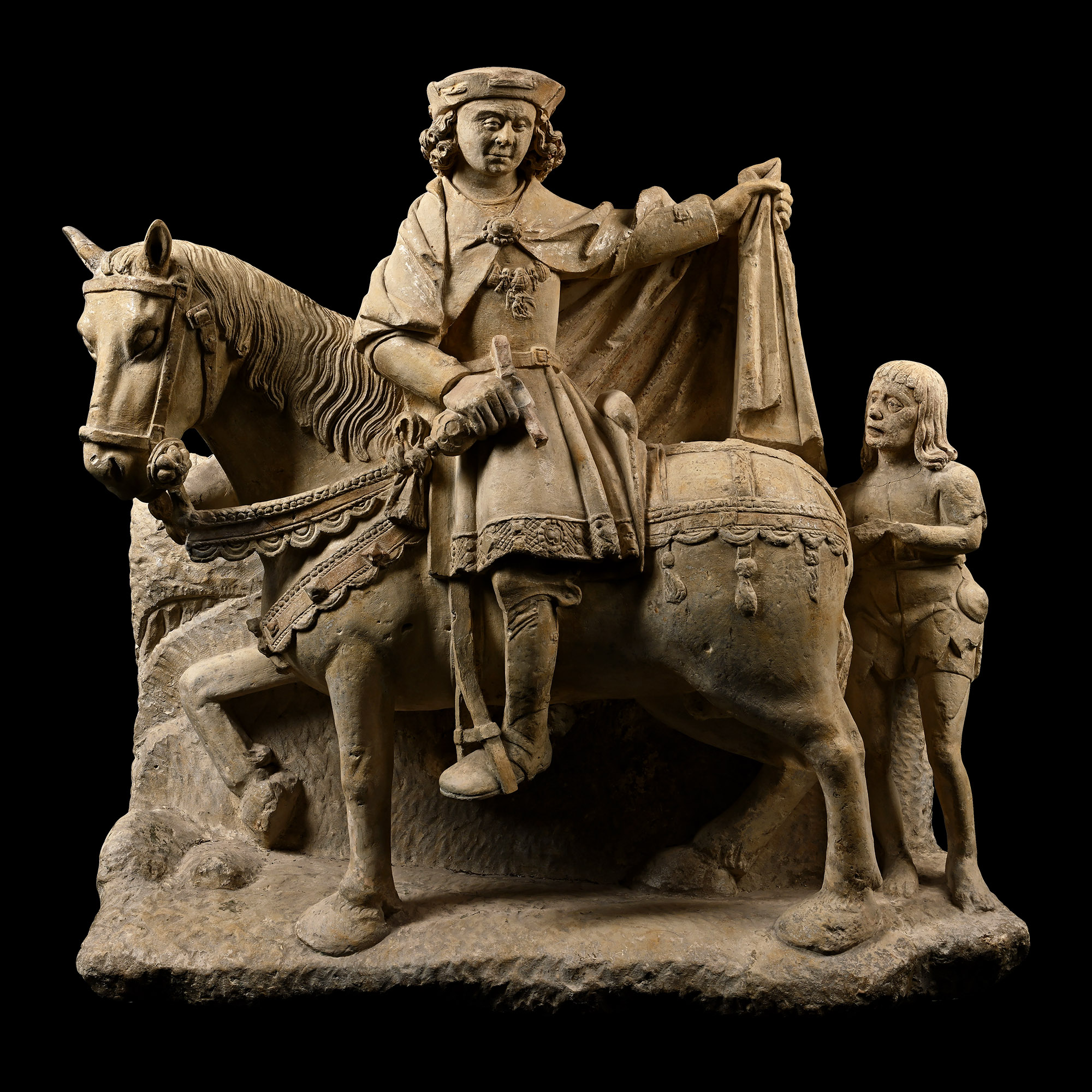
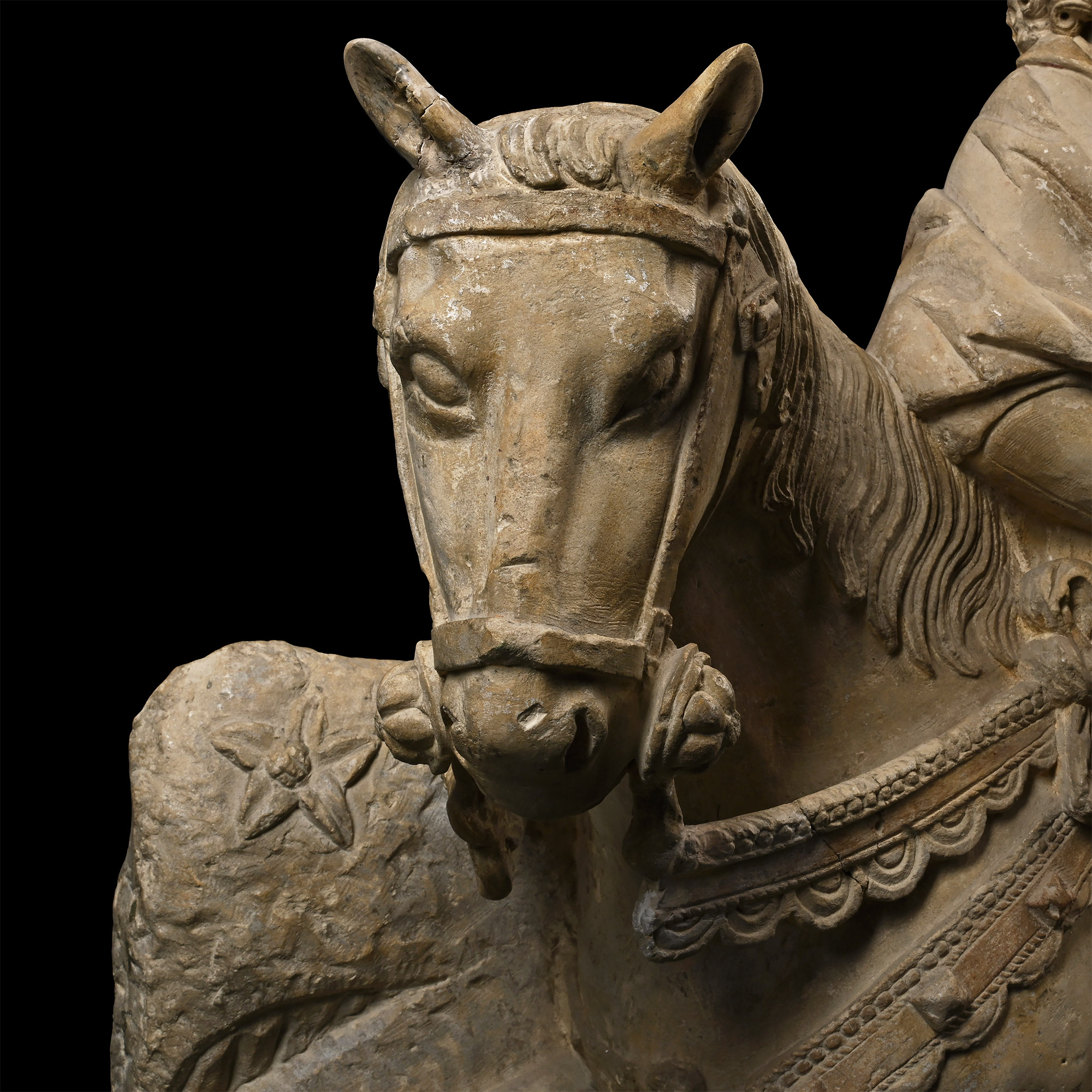
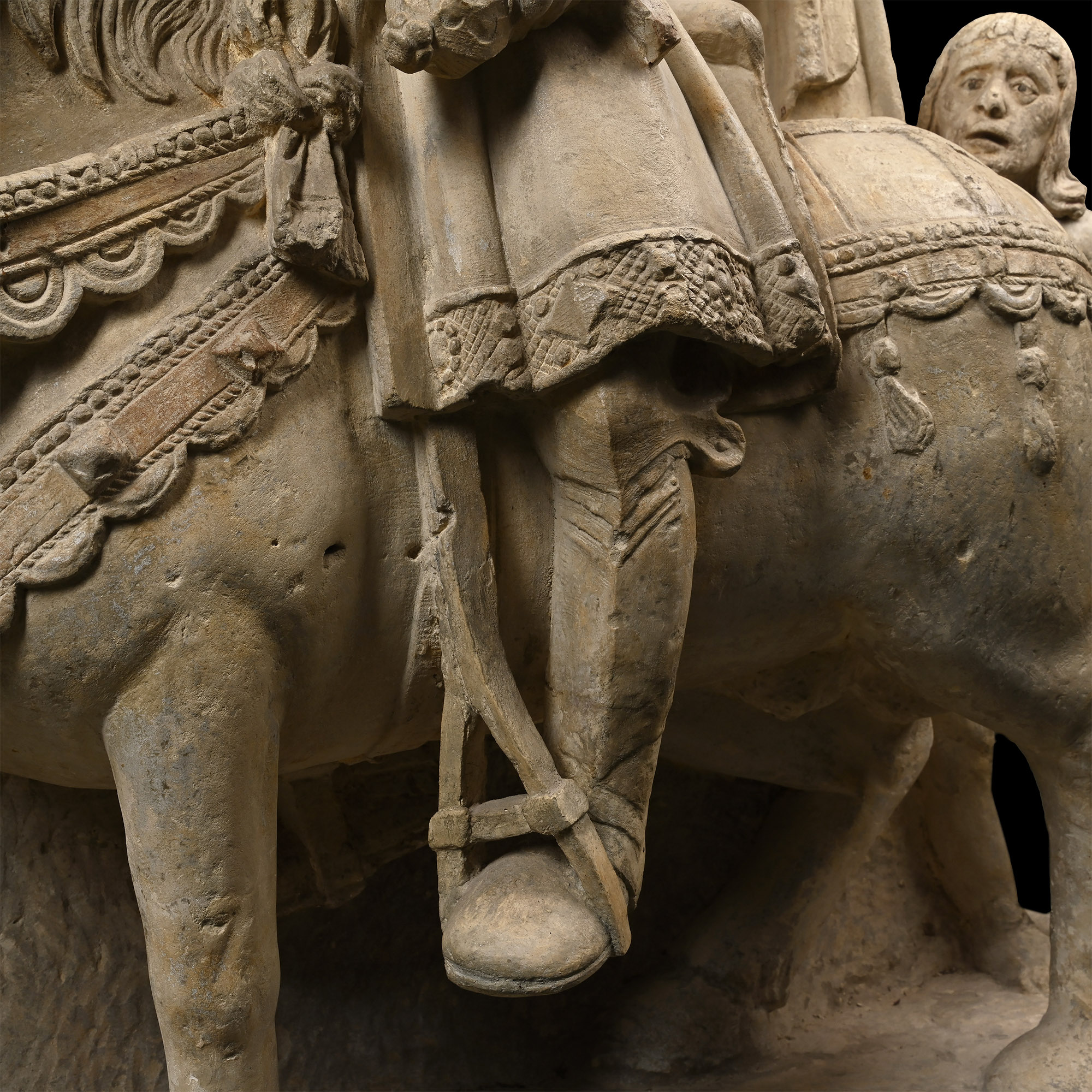
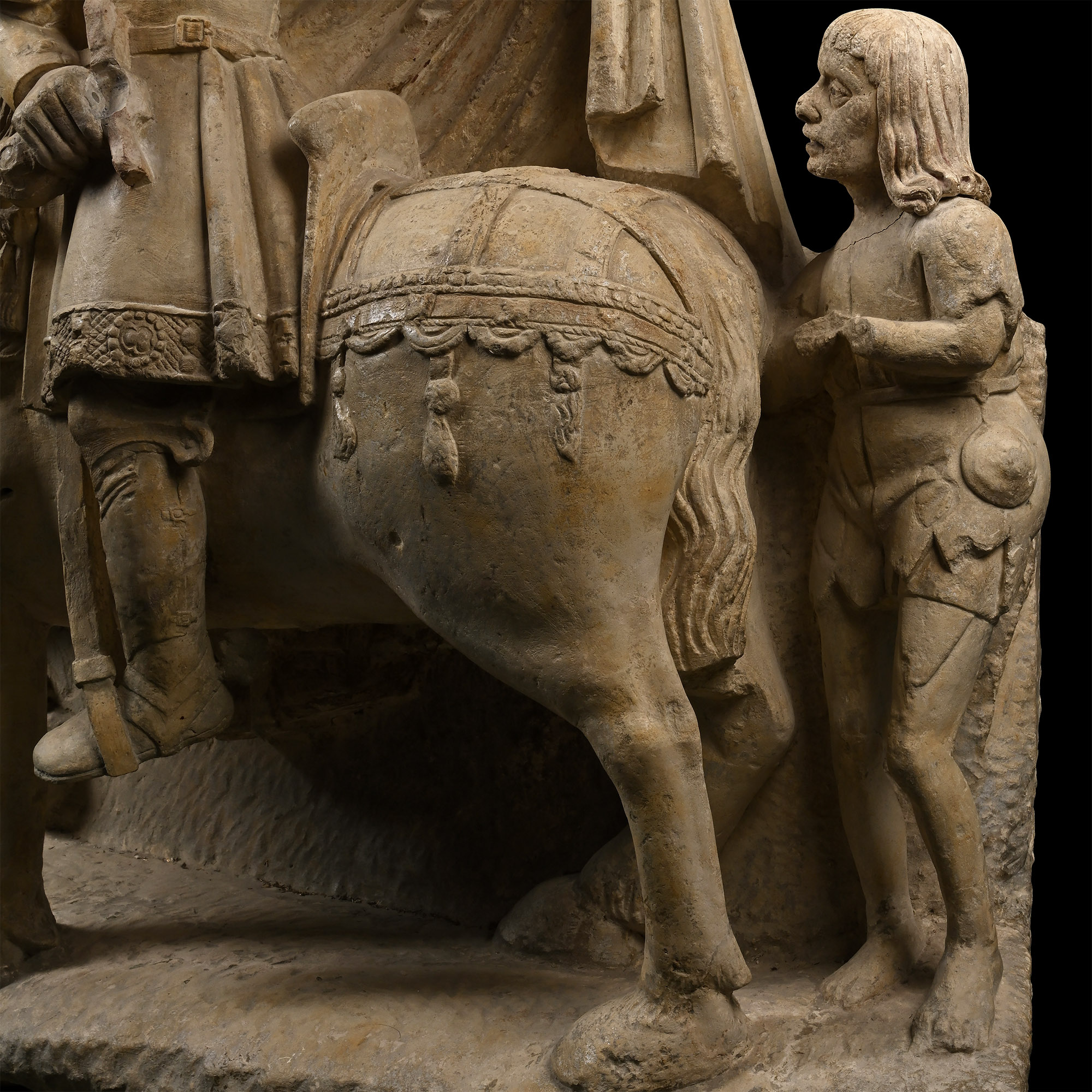
Large Medieval Carved Limestone of St Martin on Horseback with Cloak and Beggar
FLEMISH, 15TH CENTURY A.D.
30 3/4 in. (108 kg, 78.5 cm high).
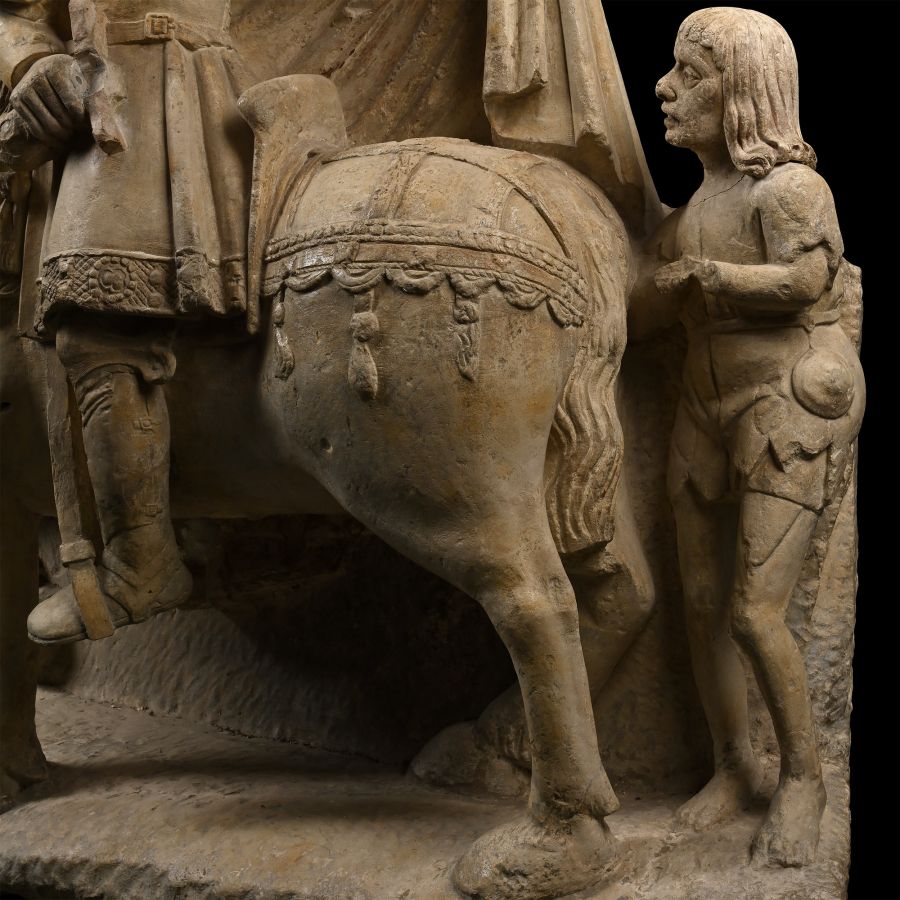
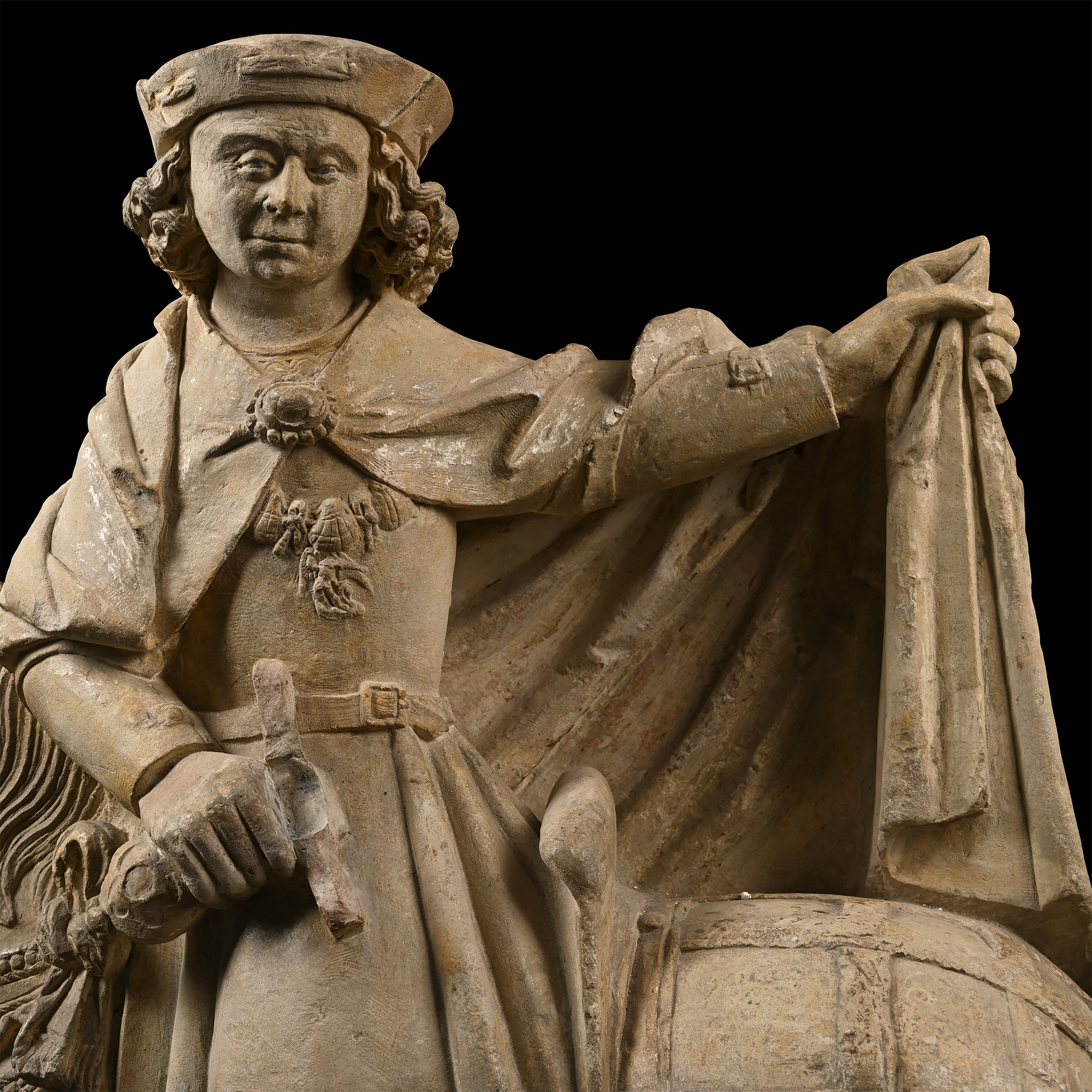
Carved in high relief, limestone scene depicting Saint Martin of Tours on horseback with his sword raised to cut off a portion of his military cloak to share it with a beggar; the saint wearing articulated armour buckled at his forearms and on his lower leg, with a billowing cloak draped across his shoulders; the horse shown in a contrapposto stance with one foreleg raised, with ornamental caparison and harness pendants; the beggar depicted with emaciated form wearing only underclothes, hands pressed together in supplication; to the reverse, traces of original fixing to a wall or architectural setting; restored.
ProvenanceEx Richard Chester Master, Cirencester, UK.
Kate Thurlow & Robin Thompson Collection, 21 October 1998.
This lot has been checked against the Interpol Database of stolen works of art and is accompanied by search certificate number no.13384-259005.
Cf. statue with similar theme in the Calouste Gulbenkian Museum, Lisbon.
FootnotesThe subject derives from the episode recorded by Sulpicius Severus in his Vita Sancti Martini (c. 397 A.D.), in which the young Roman soldier Martin, stationed at Amiens, divided his cloak to share it with a freezing beggar; that same night, he dreamt that Christ appeared to him wearing the half of the garment which he had given away. Martin subsequently converted to Christianity and eventually became Bishop of Tours, where he was venerated as one of the most important saints of early medieval Western Europe; his feast day is celebrated on 11th November. The present relief belongs to a tradition of Flemish devotional sculpture that flourished in the 15th century, when the prosperous towns of the Low Countries — Bruges, Ghent, Brussels, and Mechelen — became pre-eminent centres of religious carving exported across Northern Europe. Comparable examples to this piece are held in the collections of the Musée de Cluny, Paris, and the Rijksmuseum, Amsterdam.
CONDITIONTimeLine Auctions follows a vetting process to ensure the authenticity and legality of all items, reinforcing our commitment to integrity and responsible trading. Each antiquity, antique, and coin lot undergoes thorough examination by a vetting committee of at least ten external specialists, professional trade association members, scientists, and archaeologists: Our Vetting Process
AUCTIONS:
TimeLine is a leading auction house specialising in antiquities, ancient art, collectables, natural history, coins, medals, and books. Our auctions offer museums, collectors, historians, and enthusiasts the opportunity to acquire unique and historically significant pieces.
LOT 0306
Large Medieval Carved Limestone of St Martin on Horseback with Cloak and Beggar
Sold for (Inc. bp): £31,200
-
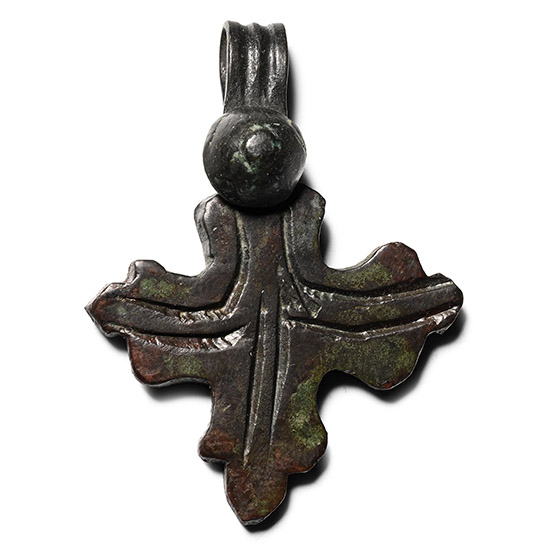
Medieval Bronze Cross Pendant
Eastern Europe, circa 14th century A.D.Sold for (Inc. bp): £39
The cross with deeply incised linear decoration on both sides and an applied ribbed suspension loop with a domed rivet. 15.4 grams, 46 mm
Ex German art market, 2000s. Acquired from an EU collector living in London. From the collection of a Surrey, UK, gentleman. -
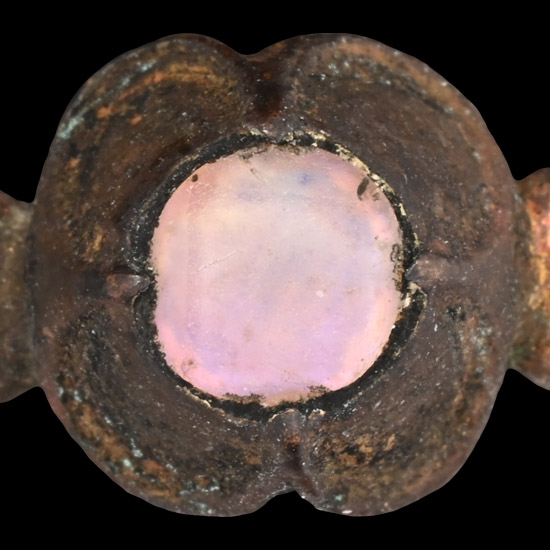
Medieval Bronze Ring with Gem
Circa 14th century A.D.Sold for (Inc. bp): £59
Featuring a narrow hoop and expanding shoulders, a conical bezel with four petals, set with a pale purple glass gem. 1.64 grams, 23.82 mm overall, 17.73 mm internal diameter (approximate size British N 1/2, USA 6 3/4, Europe 14.35, Japan 13)
From the private collection of a European gentleman (1942-2024), formed since the 1970s. -
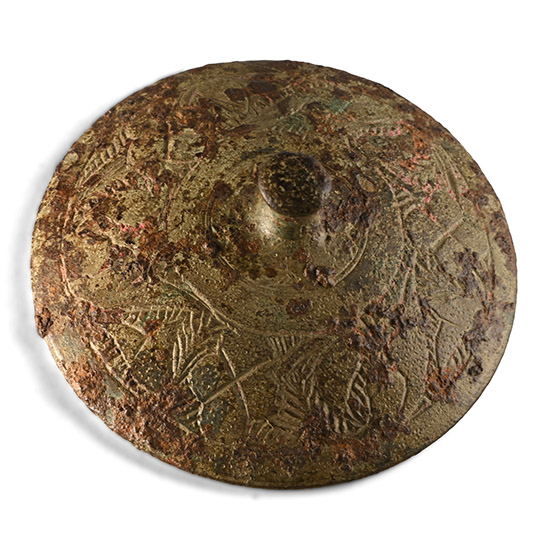
Medieval Bronze Lid with Engraved Floral Design
Circa 15th-16th century A.D.Sold for (Inc. bp): £59
Gently domed in profile with knop handle; concentric incised bands with reserved foliage and flowers on a hatched field; lip to underside. 74.3 grams, 71 mm
Found near Grimsby, North East Lincolnshire, UK. Property of an Essex, UK, gentleman.
