
Loading, please wait...
LOT 1379
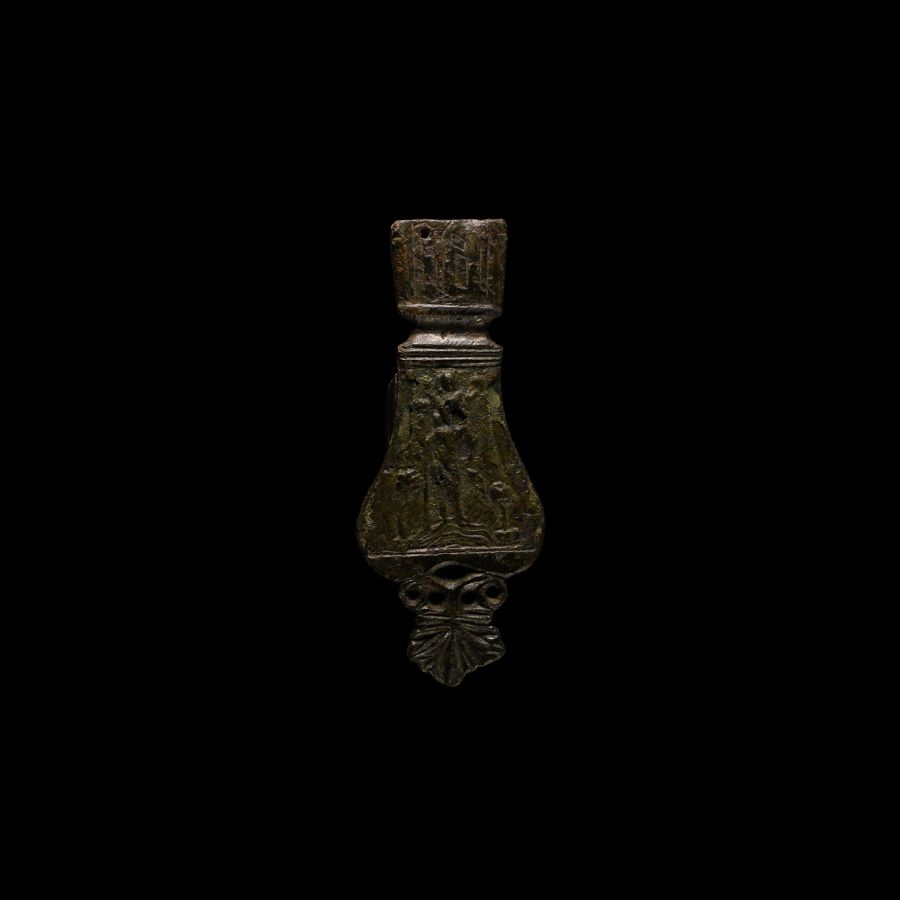
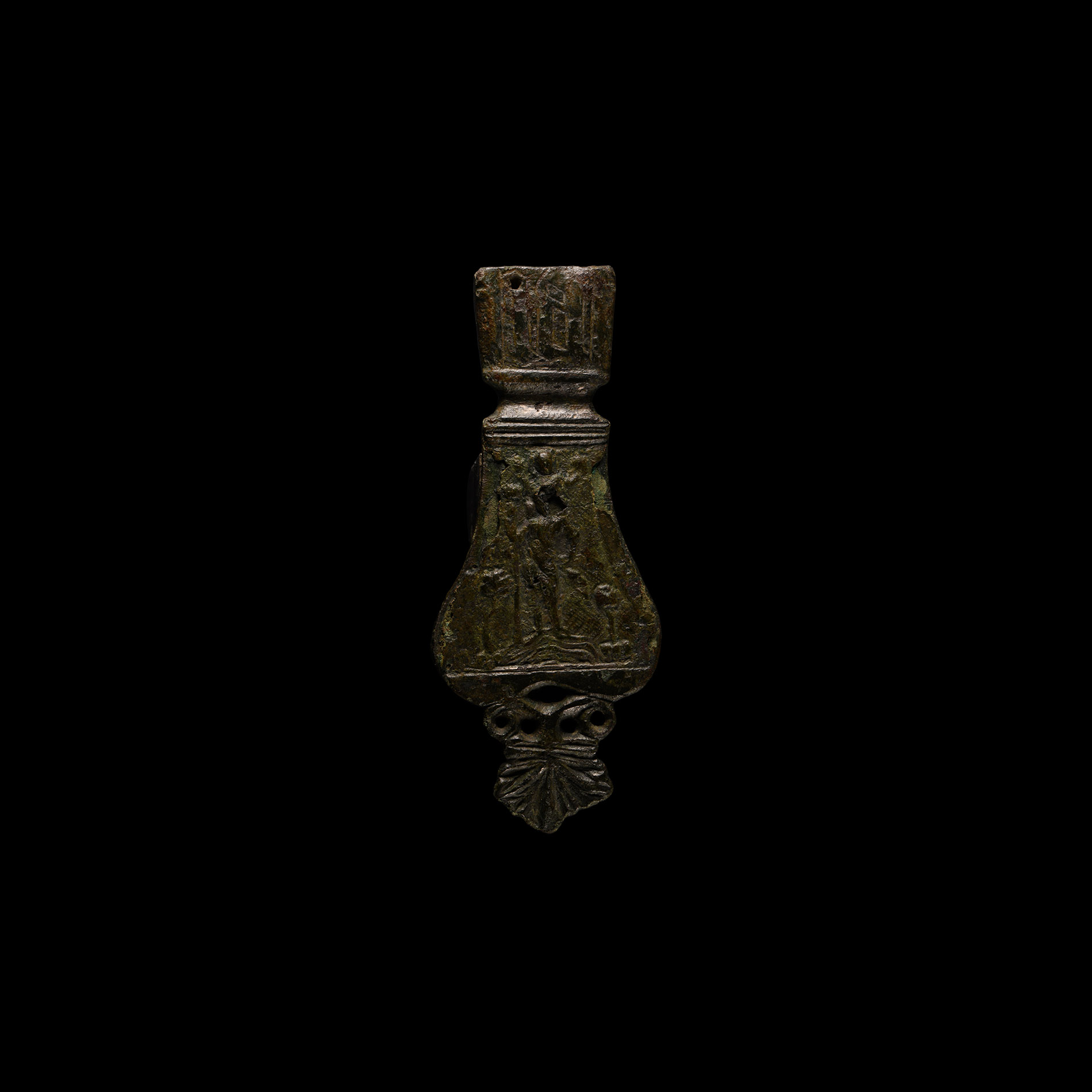
Large Medieval Bronze Strap End with St Christopher
14TH-15TH CENTURY A.D.
3 1/2 in. (45 grams, 90 mm).
Socket finial to one end, waisted stem, heart-shaped plaque, bar of four rivet holes and shell or leaf-shaped finial, the body displaying Saint Christopher standing on a mound with a young boy on his shoulder and holding a staff in relief, Gothic letters 'ID' to the socket.
ProvenanceAcquired early 1990s.
From an East Anglian private collection.
Cf. Hammond, A., Artefacts of England and the United Kingdom, Benet's fourth edition, p.692, M12-0111, for type.
CONDITIONTimeLine Auctions follows a vetting process to ensure the authenticity and legality of all items, reinforcing our commitment to integrity and responsible trading. Each antiquity, antique, and coin lot undergoes thorough examination by a vetting committee of at least ten external specialists, professional trade association members, scientists, and archaeologists: Our Vetting Process
AUCTIONS:
TimeLine is a leading auction house specialising in antiquities, ancient art, collectables, natural history, coins, medals, and books. Our auctions offer museums, collectors, historians, and enthusiasts the opportunity to acquire unique and historically significant pieces.
LOT 1379
Large Medieval Bronze Strap End with St Christopher
Estimate £180 - 240€210 - 280 (for guidance only)$240 - 320 (for guidance only)
-
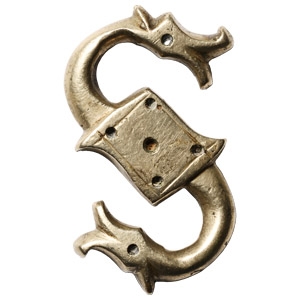
Medieval Silver Dragon Belt Fitting
15th-16th century A.D. or laterEstimate: £200 - 300 (+bp*)
Opening Bid: £100
Rectangular block with two curved bars and dragon-head finials, the block with incised square and five roundels, similar forming the eyes; fastener for a sword-belt. 49 grams, 52 mm
Ex old English collection. London art market, pre 2000. Property of a London, UK, gentleman. -
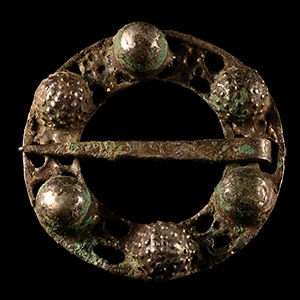
Medieval Large Silver Annular Brooch
Circa 13th-15th century A.D.Sold for (Inc. bp): £52
With openwork frame and six spherical bosses alternating plain and granulated; triangular pin intact. 15 grams, 49 mm
Acquired in the 1990s. Ex private collection, Suffolk, UK. Acquired on the UK art market in 2011. Property of a Kent lady collector. -
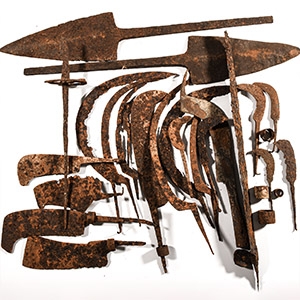
Medieval Iron Artefact Group
Circa 15th-16th century A.D.Sold for (Inc. bp): £182
Group including a sickles, bill-hooks, knives and other tools. 8 kg total, 3-66.5 cm
Acquired 1990s-early 2000s. From an East Anglian private collection.
